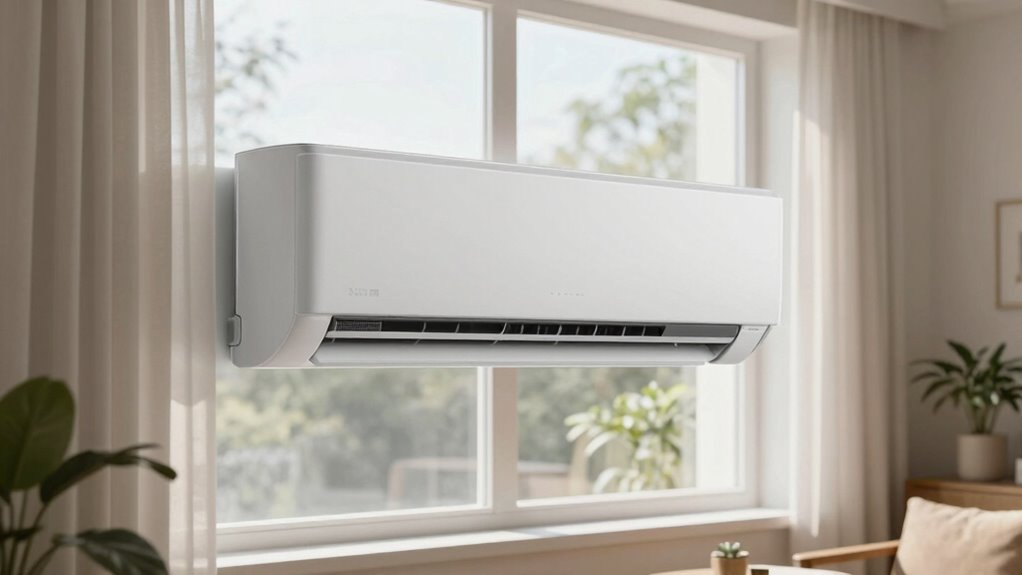

Finding a quiet window air conditioner can be a game-changer for restful sleep and a peaceful home environment. The best models balance effective cooling with noise levels that won’t disturb your daily activities. The LG 8,000 BTU model stands out for its reliable performance, while the Midea U-Shaped units are praised for their quiet inverter technology. However, some tradeoffs include higher price tags or limited cooling coverage. Keep reading for a detailed comparison to help you choose the ideal quiet window air conditioner for your space.

Get wellness gear delivered free with Prime
- Fast, free delivery on millions of items
- Prime Video, Amazon Music and more included
- Member-only deals all year
Key Takeaways
- The quietest models often use inverter technology, which significantly reduces noise during operation.
- Cooling capacity must match your room size; larger units tend to generate more noise, even if they are quiet for their class.
- Price correlates with noise reduction features—more expensive options typically offer lower decibel levels and advanced controls.
- Ease of installation and maintenance are critical factors that can impact overall satisfaction with a quiet window AC.
- Energy efficiency varies widely; quieter units often consume more power but save on long-term electricity costs.
| LG 8,000 BTU Window Air Conditioner (LW8024RD), 115V, Cools 350 Sq. Ft. |  | Best Overall for Medium Rooms with Quiet Operation | Brand: LG | Model: LW8024RD | Cooling Capacity: 8,000 BTU | VIEW ON AMAZON | See Our Full Breakdown |
| Midea 10,000 BTU U-Shaped Window Air Conditioner, Cools up to 450 Sq Ft |  | Best for Larger Spaces with Quiet Operation and Smart Control | Cooling Capacity: 10,000 BTU | Coverage Area: Up to 450 sq ft | Noise Level: As low as 32 dBA | VIEW ON AMAZON | See Our Full Breakdown |
| Frigidaire 5,000 BTU Window-Mounted Air Conditioner, Cools Up to 150 Sq. Ft., Quiet Operation, Effortless Temperature Control, 2 Fan Speeds, Auto Restart, White |  | Best for Small, Quiet Spaces Without Smart Features | BTU: 5,000 | Room Coverage: Up to 150 sq. ft. | Noise Level: 52 dBA | VIEW ON AMAZON | See Our Full Breakdown |
| Midea 8,000 BTU U-Shaped Smart Inverter Window Air Conditioner |  | Best for Quiet, Energy-Efficient Smart Cooling in Medium Rooms | Cooling Capacity: 8,000 BTU | Coverage Area: 350 sq ft | Noise Level: As low as 32 dBA | VIEW ON AMAZON | See Our Full Breakdown |
| Midea 7,800 BTU Window Air Conditioner with Inverter Technology, Cools Up to 340 Sq Ft |  | Best for Energy Efficiency and Smart Control | Cooling Capacity: 7,800 BTU | Coverage Area: 340 sq ft | CEER: 15.1 | VIEW ON AMAZON | See Our Full Breakdown |
| Amazon Basics 5000-BTU Window Air Conditioner with Quiet Operation, Cools Up to 150 Sq. Ft., White |  | Best for Small Rooms and Budget-Friendly Quiet Cooling | Cooling Capacity: 5000 BTU | Room Coverage: Up to 150 sq ft | Noise Level: Up to 56 dB | VIEW ON AMAZON | See Our Full Breakdown |
| quiet window air conditioner | Noise Level | Cooling Capacity | Coverage Area | Energy Certification |
|---|---|---|---|---|
| LG 8,000 BTU Window Air Condit | As low as 53dB | 8,000 BTU | 350 sq. ft. | — |
| Midea 10,000 BTU U-Shaped Wind | As low as 32 dBA | 10,000 BTU | Up to 450 sq ft | ENERGY STAR |
| Frigidaire 5,000 BTU Window-Mo | 52 dBA | — | — | — |
| Midea 8,000 BTU U-Shaped Smart | As low as 32 dBA | 8,000 BTU | 350 sq ft | ENERGY STAR |
| Midea 7,800 BTU Window Air Con | As low as 39 dBA | 7,800 BTU | 340 sq ft | Energy Star |
| Amazon Basics 5000-BTU Window | Up to 56 dB | 5000 BTU | — | — |
More Details on Our Top Picks
LG 8,000 BTU Window Air Conditioner (LW8024RD), 115V, Cools 350 Sq. Ft.
The LG LW8024RD stands out by offering a balance of quiet performance and user-friendly features, making it ideal for those who prioritize minimal noise during sleep or work. Its noise level as low as 53dB surpasses many traditional units, including the GE 5,000 BTU, which operates at around 52dB but lacks advanced features. The three speeds and Auto Cool mode give flexible control over comfort, and the remote adds convenience. However, its cooling capacity is limited to 350 sq. ft., and installation requires window space, which may be a drawback for some. Compared to larger or more sophisticated units, this model emphasizes quietness and ease of use over maximum power or smart controls.
Pros:- Extremely quiet operation with noise as low as 53dB
- Multiple fan and cooling speeds for customizable comfort
- Remote control and electronic interface for easy adjustments
- Auto Restart feature for seamless power recovery
Cons:- Limited to rooms up to 350 sq. ft., not suitable for larger spaces
- Requires window installation, which may not fit all window types
Best for: Small to medium-sized rooms up to 350 sq. ft. where quiet operation is a priority
Not ideal for: Large open-concept spaces or users seeking smart home integration and advanced features
- Brand:LG
- Model:LW8024RD
- Cooling Capacity:8,000 BTU
- Voltage:115V
- Coverage Area:350 sq. ft.
- Noise Level:As low as 53dB
- Speeds:3 cooling and fan speeds
- Controls:Electronic with remote
- Special Features:Auto Restart, Auto Cool
Our verdict“This model is perfect for small to medium rooms where quiet operation and ease of control matter most.”
Midea 10,000 BTU U-Shaped Window Air Conditioner, Cools up to 450 Sq Ft
The Midea U Smart Inverter redefines quiet cooling through its innovative U-shape design that blocks outside noise, operating at a mere 32 dBA—significantly quieter than the LG or Frigidaire models. Its inverter technology not only reduces noise but also delivers over 37% energy savings, making it a smart choice for energy-conscious users. The Wi-Fi connectivity and voice control compatibility with Alexa and Google Assistant provide seamless remote operation. Compared with the LG LW8024RD, this unit offers larger coverage and smarter features, but the installation might be more complex, especially with sealing requirements. Its unique design allows the window to remain open for fresh air, a feature absent in most traditional units.
Pros:- Exceptional noise reduction at 32 dBA
- Energy savings over traditional units
- Smart control options for convenience
- Allows window to stay open for fresh air
Cons:- More complex to install than basic units
- Limited window size compatibility
Best for: Homeowners seeking quiet operation, energy efficiency, and smart home integration for rooms up to 450 sq. ft.
Not ideal for: Those with small windows or who prefer simple, manual operation without smart features.
- Cooling Capacity:10,000 BTU
- Coverage Area:Up to 450 sq ft
- Noise Level:As low as 32 dBA
- Energy Savings:Over 37%
- Connectivity:Wi-Fi, Alexa, Google Assistant
- Window Width Range:22″-36″
- Minimum Window Height:13.75″
- Energy Certification:ENERGY STAR
Our verdict“This unit is ideal for quiet, energy-efficient cooling paired with smart home features in larger rooms.”
Frigidaire 5,000 BTU Window-Mounted Air Conditioner, Cools Up to 150 Sq. Ft., Quiet Operation, Effortless Temperature Control, 2 Fan Speeds, Auto Restart, White
The Frigidaire 5,000 BTU is tailored for small rooms up to 150 sq. ft., offering quiet operation at 52 dBA that makes it suitable for bedrooms or offices. Compared to the LG LW8024RD, its lower BTU capacity limits its cooling range but results in a quieter, more energy-efficient performance for tiny spaces. The manual controls with simple dials make it straightforward to operate, but lack of smart features means less flexibility for tech-savvy users. Its adjustable side panels ensure a snug fit, reducing noise and air leaks. This model emphasizes simplicity and quietness over bells and whistles, making it ideal for those who want effective cooling without added complexity.
Pros:- Quiet operation, especially in low mode at 52 dBA
- Simple mechanical controls with easy adjustments
- Adjustable side panels for secure fit
- Energy-efficient and easy to maintain
Cons:- Limited cooling capacity for larger spaces
- No smart or remote control features
- Fixed size limits installation flexibility
Best for: Small room occupants who prioritize quiet, reliable cooling without smart controls
Not ideal for: Larger rooms or users seeking advanced features like Wi-Fi or app control
- BTU:5,000
- Room Coverage:Up to 150 sq. ft.
- Noise Level:52 dBA
- Fan Speeds:2
- Controls:Mechanical dials
- Dimensions:16.4″ W x 13.4″ D x 12.6″ H
- Power Draw:440W
- Window Fit:Double-hung, 27.125″–36″ wide
Our verdict“Ideal for small rooms where straightforward, quiet cooling is all that’s needed without smart features.”
Midea 8,000 BTU U-Shaped Smart Inverter Window Air Conditioner
The Midea 8,000 BTU U-Shaped Smart Inverter combines quiet operation with smart technology, operating at just 32 dBA—making it one of the quietest options in this roundup. Its inverter technology not only ensures minimal noise but also delivers over 37% energy savings, similar to the larger Midea model. The U-shape design allows the window to stay open, creating a versatile solution for those who want fresh air and quiet cooling. It supports Wi-Fi control via the SmartHome app, Alexa, and Google Assistant, providing seamless remote operation. Installation may require careful sealing, but the included quick-snap bracket simplifies setup. Compared with the LG and Frigidaire units, this model emphasizes smart control and energy efficiency while maintaining a very low noise profile.
Pros:- Exceptional noise reduction at 32 dBA
- Energy-efficient inverter technology
- Smart remote control options
- Flexible window opening for ventilation
Cons:- Installation complexity may be higher
- Limited window size range
Best for: Tech-savvy users seeking whisper-quiet, energy-efficient cooling with fresh air options for rooms up to 350 sq. ft.
Not ideal for: Those with small or uniquely shaped windows or who prefer simple non-smart units.
- Cooling Capacity:8,000 BTU
- Coverage Area:350 sq ft
- Noise Level:As low as 32 dBA
- Energy Savings:Over 37%
- Smart Home Compatibility:Alexa, Google Assistant
- Window Width Range:22″-36″
- Minimum Window Height:13.75″
- Energy Certification:ENERGY STAR
Our verdict“This model is perfect for quiet, smart, energy-saving cooling in medium-sized rooms where ventilation is also desired.”
Midea 7,800 BTU Window Air Conditioner with Inverter Technology, Cools Up to 340 Sq Ft
This Midea model stands out for its advanced inverter technology, offering up to 37% energy savings compared to standard units like the Frigidaire 5,000 BTU. Its ultra-quiet operation, as low as 39 dBA, makes it ideal for bedrooms or home offices where noise is a concern. Unlike less sophisticated models, it integrates seamlessly with smart home systems, enabling remote control and voice commands. The quick-snap installation and versatile modes enhance convenience, but the unit isn’t compatible with casement windows and requires a minimum window height of 19.6 inches—potential hurdles for some. Compared to traditional units, this model’s efficiency and smart features justify its higher price, though it may be overkill for small spaces.
Pros:- Inverter technology delivers significant energy savings
- Ultra-quiet operation ideal for bedrooms and calls
- Smart controls via app and voice assistants
- Easy installation with quick-snap brackets
Cons:- Not compatible with casement windows
- Requires minimum window height of 19.6 inches
Best for: Homeowners seeking energy savings and smart control in rooms up to 340 sq ft
Not ideal for: Renters with casement windows or those needing a simple, budget-friendly unit
- Cooling Capacity:7,800 BTU
- Coverage Area:340 sq ft
- CEER:15.1
- Noise Level:As low as 39 dBA
- Modes:Auto, Cool, Dry, Fan
- Fan Speeds:Auto/High/Medium/Low
- Timer:24-hour
- Energy Certification:Energy Star
- Window Compatibility:Single- or double-hung, 23″-36″ wide, minimum 19.6″ height
Our verdict“This model is perfect for those prioritizing energy efficiency, smart features, and quiet operation in medium-sized rooms.”
Amazon Basics 5000-BTU Window Air Conditioner with Quiet Operation, Cools Up to 150 Sq. Ft., White
Compared with larger models like the LG 8,000 BTU unit, this Amazon Basics 5000 BTU provides sufficient cooling for small spaces up to 150 sq ft, making it ideal for bedrooms or offices. Its noise level of up to 56 dB strikes a good balance between quiet operation and affordability, especially for those who need a peaceful environment for sleeping or working. The washable filter and straightforward installation with expandable side panels simplify maintenance and setup, although the unit’s cooling capacity limits its use to small rooms. The absence of advanced smart features means it’s less suited for tech-savvy users seeking remote control, but its simplicity and reliability make it a strong value pick.
Pros:- Effective cooling for small rooms
- Quiet operation suitable for sleep and work
- Washable filter simplifies maintenance
- Quick installation with expandable panels
Cons:- Limited to small room sizes
- Screwdriver not included for installation
- Basic controls, no smart features
Best for: Individuals with small rooms up to 150 sq ft looking for quiet, easy-to-maintain cooling
Not ideal for: Larger spaces or users wanting smart connectivity and advanced features
- Cooling Capacity:5000 BTU
- Room Coverage:Up to 150 sq ft
- Noise Level:Up to 56 dB
- Temperature Settings:7
- Speeds:2-speed cooling and fan
- Air Direction:2-way
- Filter:Washable
- Window Fit:23″-36″ wide, minimum 13″ high
- Color:White
Our verdict“This unit is well-suited for small, quiet spaces where ease of use and affordability are priorities.”
How We Picked
Our evaluation focused on noise levels measured in decibels, cooling capacity relative to room size, build quality, ease of installation, and energy efficiency. We prioritized models with proven quiet operation, especially inverter-based units, and considered user reviews for real-world performance. The ranking reflects a balance between sound levels, cooling effectiveness, and value, ensuring options suit different budgets and needs. We also assessed features like smart controls and ease of maintenance, which contribute to long-term satisfaction.Factors to Consider When Choosing Quiet Window Air Conditioner
Choosing a quiet window air conditioner involves more than just decibel ratings. It’s important to consider how well the unit matches your room size, how easy it is to install and operate, and whether it offers energy-efficient features. Understanding these factors helps prevent overspending on features you don’t need or ending up with a noisy model that disrupts your environment.Cooling Capacity vs. Room Size
Matching the cooling capacity of your window unit to your room size is essential for efficient and quiet operation. An undersized unit will struggle to cool the space and may run constantly, increasing noise. Conversely, an oversized unit will cycle less frequently, which can cause more noise and humidity issues. Carefully measure your space and choose a model with the appropriate BTU rating to balance performance and noise levels.
Noise Levels and Inverter Technology
Noise is a primary concern for quiet window air conditioners, and inverter technology often makes a significant difference. Inverter units adjust compressor speed based on cooling demand, reducing noise and energy use. Look for models rated below 55 decibels for truly quiet operation. Keep in mind that some lower-noise models may come with higher price tags, but they often provide a more peaceful environment.
Ease of Installation and Maintenance
Ease of setup can vary greatly among models, especially for those with complex installation requirements. Some units include detailed instructions, quick-install kits, or flexible mounting options that simplify the process. Maintenance features like washable filters and accessible parts also impact long-term quiet operation. Investing in a model with straightforward installation and simple upkeep can prevent noise from improper filter changes or loose parts over time.
Energy Efficiency and Operating Costs
Quiet units often use inverter technology, which tends to be more energy-efficient but can cost more upfront. Consider the Seasonal Energy Efficiency Ratio (SEER) ratings—higher ratings indicate lower energy consumption. A more efficient unit not only saves money on electricity but also runs more smoothly, often producing less noise due to stable compressor operation. Weigh initial costs against long-term savings to determine the best value.
Additional Features and Controls
Smart controls, remote operation, and programmable timers enhance convenience and can contribute indirectly to quieter operation by allowing better management of cycling times. Some models feature sleep modes or noise-reduction settings, which are especially useful for bedrooms or workspaces. Although these features add convenience, they may also increase the purchase price, so consider their importance relative to your budget and needs.
Frequently Asked Questions
How quiet should a window air conditioner be?
For a truly quiet experience, look for units rated below 55 decibels. Typical outdoor noise levels are around 60 decibels, so anything significantly below that offers a noticeable reduction in sound. Many modern models focus on lowering noise by using inverter compressors and sound-insulating materials. Keep in mind that the noise level also depends on the size of the unit and the room it is installed in, so choose a model rated for your specific space for the best results.
Do inverter window air conditioners really operate more quietly?
Yes, inverter technology allows the compressor to run at variable speeds, which significantly reduces noise during operation. Unlike traditional units that turn the compressor on and off, inverter models run continuously at lower speeds when less cooling is needed. This leads to a steadier, quieter operation with less vibration and sound. However, they tend to be more expensive upfront, but this cost is often offset by energy savings and quieter performance over time.
Can I install a quiet window air conditioner myself?
Many models are designed for straightforward installation, with detailed instructions and all necessary hardware included. However, the complexity varies depending on the unit and window type. Some units require special mounting kits or additional tools, so if you are unsure or uncomfortable with DIY tasks, professional installation may be worth considering. Proper installation not only ensures safety but also helps maintain the unit’s noise-reduction features and overall performance.
Are expensive models always quieter?
Generally, higher-priced units tend to feature advanced noise-reduction technology such as inverter compressors, insulation, and vibration dampening, making them quieter. However, price alone isn’t the only factor—look at decibel ratings and reviews to confirm noise performance. In some cases, budget models with good ratings can meet your noise expectations, especially for smaller spaces. Balancing features and budget is key to finding a quiet, cost-effective solution.
What maintenance helps keep my window AC running quietly?
Regularly cleaning or replacing filters, checking for loose parts, and ensuring proper drainage can prevent unnecessary noise and vibration. Dust buildup on the fan blades or filters can cause imbalance, increasing sound during operation. Keeping the unit free of debris and ensuring it is securely mounted reduces rattling and vibrations. Routine maintenance not only prolongs the lifespan but also helps maintain the quiet operation you expect from your window air conditioner.
Conclusion
For those prioritizing overall performance and quiet operation, the LG 8,000 BTU Window Air Conditioner offers a reliable balance of power and low noise. Budget-conscious buyers may find the Amazon Basics 5000-BTU Unit sufficient for small spaces, providing quiet cooling at an attractive price. If you want a premium, ultra-quiet model, inverter-based units like the Midea U-Shaped AC are worth the investment. Beginners or renters will appreciate models that are easy to install, like the GE 5,000 BTU. Ultimately, selecting the right model depends on your room size, noise tolerance, and budget, but this guide simplifies the decision-making process.