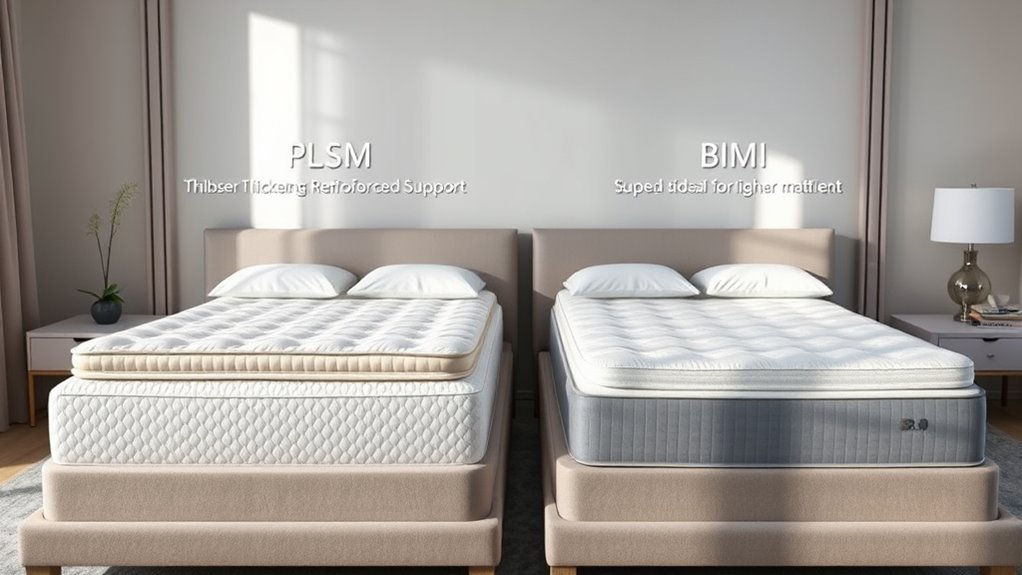

Your weight and BMI markedly influence how a mattress supports you and your comfort levels. Heavier or higher BMI individuals exert more pressure, making it important to choose a mattress with high-density foam, hybrid support, or reinforced coils that evenly distribute weight and prevent sagging. Durability becomes key, so look for options designed to withstand more pressure over time. To find the best match for your needs, exploring specific support features and testing different mattresses can make all the difference.
Key Takeaways
- Heavier individuals require mattresses with high-density foam or hybrid constructions for better pressure distribution.
- Increased weight demands more durable materials like reinforced coils to prevent sagging and maintain support.
- Higher BMI individuals benefit from reinforced edges to prevent sagging and ensure consistent support near the mattress sides.
- Proper mattress choice should include testing in person to assess pressure relief and support in typical sleeping positions.
- Selecting a mattress that balances firmness and comfort tailored to body weight enhances overall sleep quality and longevity.

Your weight and BMI play a significant role in choosing the right mattress, as they directly affect comfort, support, and durability. When you’re trying to find the perfect fit, understanding how your body weight impacts pressure distribution is essential. Heavier individuals tend to exert more force on the mattress, which can lead to uneven pressure points. A mattress that doesn’t distribute pressure evenly may cause discomfort, pain, or even long-term health issues like pressure sores. To avoid this, you’ll want a mattress designed to provide better pressure relief, such as those with high-density foam or hybrid constructions that balance softness and support. These materials help spread your weight more evenly across the surface, reducing stress on specific body parts like hips, shoulders, or back.
In addition to pressure distribution, mattress durability becomes increasingly important as your weight increases. A mattress that isn’t durable may sag, lose its shape, or become less supportive over time, compromising your sleep quality and potentially leading to aches and pains. With higher weight, you should look for mattresses with stronger core materials, such as reinforced coils or high-density foams, which can withstand greater pressure without deteriorating quickly. Investing in a well-constructed mattress ensures you’ll get more longevity from your purchase and maintain proper spinal alignment night after night.
If you have a higher BMI, you might also consider mattresses with reinforced edges. These prevent sagging at the sides, offering consistent support no matter where you sleep on the bed. This is especially helpful if you tend to sit or sleep near the edges, as it maintains the integrity of the mattress over time. Conversely, lighter individuals may prioritize softer mattresses that contour more precisely to their shape but still provide adequate support. Remember, the goal is to find a mattress that balances firmness with comfort, tailored to your weight to optimize pressure distribution and enhance durability.
Ultimately, your choice should reflect a combination of your body weight and personal preferences. Don’t forget to test mattresses in person if possible, lying in your usual sleeping position for several minutes. This helps you feel how well pressure is distributed and whether the mattress can support your weight comfortably over time. In the end, selecting a mattress that aligns with your weight and BMI not only improves sleep quality but also prolongs its lifespan, making your investment worthwhile.
Frequently Asked Questions
How Does Sleep Quality Vary With Different Mattress Types?
Your sleep quality varies with mattress types because different materials and sleep postures influence comfort and support. Memory foam contours to your body, promoting better sleep posture and reducing pressure points, while innerspring mattresses offer bounce and ventilation. If you sleep on your side, a softer mattress may ease shoulder pressure, but back sleepers might prefer firmer options. Selecting the right mattress material guarantees improved sleep quality tailored to your sleep posture and preferences.
Are There Specific Mattress Features Recommended for Heavy Individuals?
If you’re a heavy individual, look for mattresses with heavy-duty construction and reinforced support. These features guarantee durability and prevent sagging under your weight. Opt for high-density foam or innerspring systems with reinforced coils for better support. A mattress with targeted reinforcement offers increased longevity and comfort, helping you sleep soundly without worry about wear and tear. Prioritizing these features will improve your sleep quality and mattress durability.
What Is the Recommended Mattress Firmness for Different BMI Categories?
You should choose a firmer mattress if your BMI is higher, as firmness preferences for better body support help prevent sinking and maintain proper spinal alignment. For lower BMI categories, a medium firmness often provides enough support without sacrificing comfort. It’s essential to pick a mattress that offers adequate body support based on your BMI, ensuring you wake up refreshed and free from aches.
How Often Should Heavy Sleepers Replace Their Mattresses?
You should replace your mattress every 7 to 10 years, especially if you’re a heavy sleeper. The truth is, mattress durability depends on your sleep surface materials and how much pressure you exert on them. Heavy sleepers tend to wear out mattresses faster due to increased weight, which can cause sagging and reduce support. Regularly updating your sleep surface ensures better comfort and maintains proper spinal alignment.
Do Mattress Warranties Differ Based on Weight or BMI?
Yes, mattress warranties can differ based on your weight or BMI. Some brands offer enhanced warranty coverage or specific mattress replacement policies for heavier sleepers, recognizing the increased wear and tear. It’s crucial to read the warranty details carefully, as some warranties may exclude coverage or limit mattress replacement if excessive sagging or damage occurs due to weight. Always choose a mattress with warranty coverage suited to your body type for better protection.
Conclusion
Just as a sturdy ship needs a strong hull to navigate rough waters, your weight and BMI determine the mattress that supports you best. Choosing the right mattress is like selecting the right sail—it’s about balance and alignment, guiding you smoothly through restful nights. When you prioritize your body’s needs, you set sail on a journey toward better sleep and well-being. Remember, the right support is your anchor in the voyage to health.