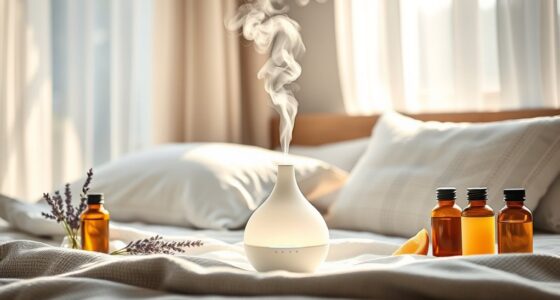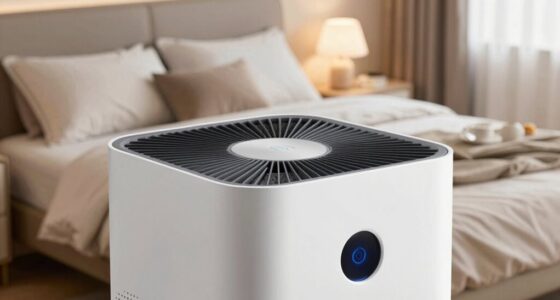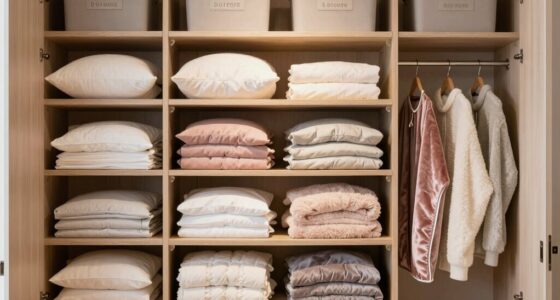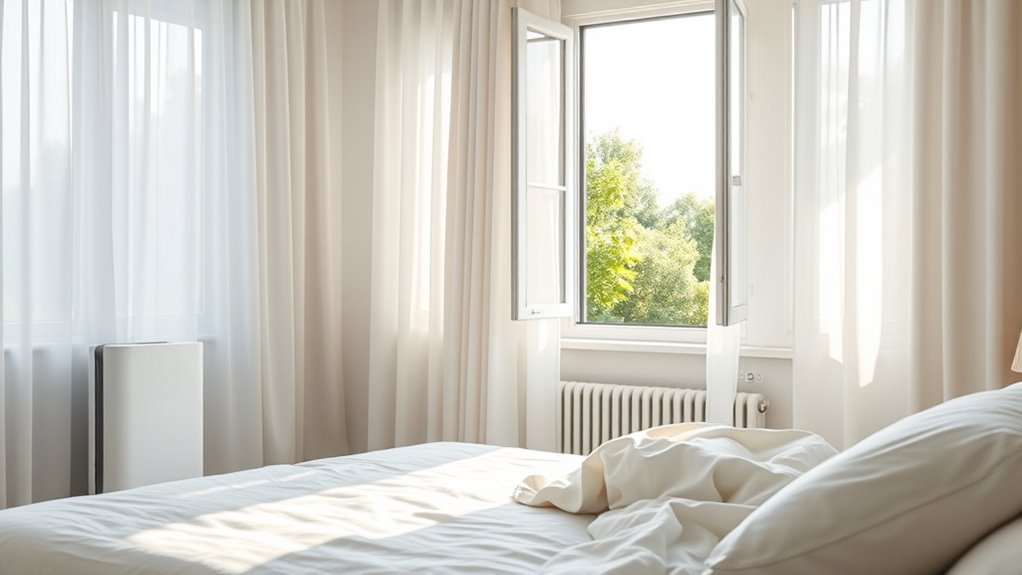
Improving your indoor air quality helps you sleep better by reducing allergens like dust mites and mold spores that can cause congestion and respiratory issues. Using purifiers clears out pollutants, while humidifiers add moisture that keeps air comfortable—just don’t overdo it to avoid mold growth. Proper ventilation ensures fresh air flows in, removing irritants and maintaining ideal humidity. Keep exploring these strategies to create a healthier sleep environment that benefits your rest every night.
Key Takeaways
- Air purifiers reduce airborne allergens like dust mites and mold spores, decreasing respiratory irritation during sleep.
- Humidifiers help maintain optimal indoor humidity, preventing dry air that disrupts sleep and limiting mold growth.
- Proper ventilation removes indoor pollutants and excess moisture, creating a cleaner, healthier sleeping environment.
- Overusing humidifiers or poor ventilation can increase humidity, promoting dust mites and mold, which impair sleep quality.
- Combining air purifiers, controlled humidification, and good airflow optimizes air quality for restful, uninterrupted sleep.
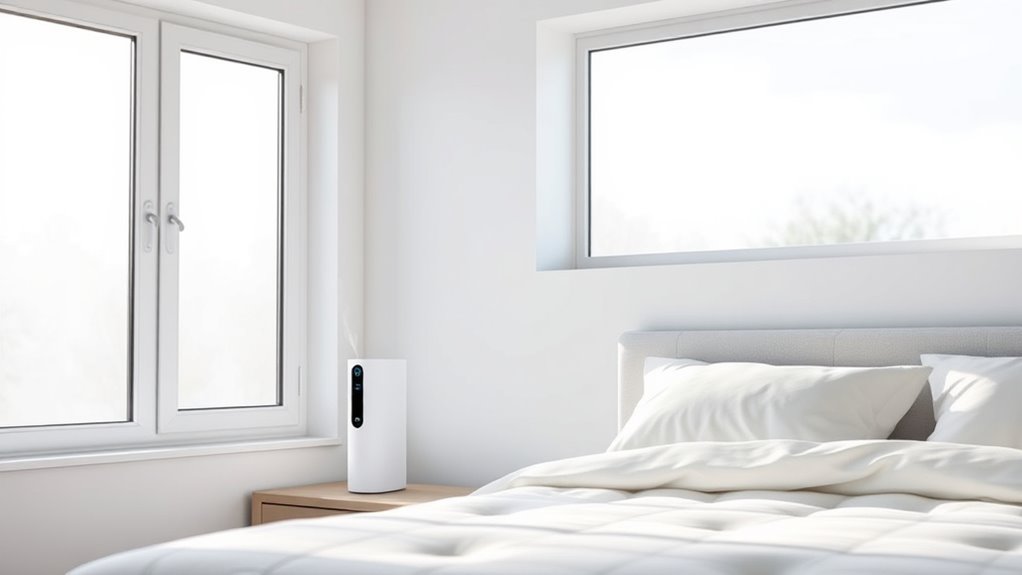
Poor air quality can considerably disrupt your sleep, making it harder to fall asleep and stay asleep throughout the night. One of the common culprits is dust mites, tiny creatures that thrive in warm, humid environments, feeding on dead skin cells shed by humans. These microscopic pests are often invisible to the naked eye, but their presence can trigger allergies and asthma, which in turn can cause frequent awakenings and restless nights. If your bedroom isn’t properly cleaned or ventilated, dust mites can accumulate on bedding, pillows, and upholstery, aggravating respiratory issues that interfere with restful sleep. To combat this, using allergen-proof covers on pillows and mattresses can help reduce dust mite exposure. Regular washing of bedding in hot water also diminishes their numbers, making your sleep environment more comfortable.
Indoor plants, while generally beneficial for air quality, can sometimes contribute to poor sleep if not managed correctly. Plants release moisture into the air through a process called transpiration, which can increase indoor humidity levels. Elevated humidity creates an ideal environment for dust mites and mold growth, both of which can trigger allergies and respiratory problems. If you keep indoor plants, it’s important to choose varieties that don’t excessively humidify the room and to ensure proper watering practices. Overwatering plants can raise humidity levels too much, encouraging mold spores to develop, which can be inhaled during sleep and cause congestion or allergic reactions. Proper ventilation and humidity control are essential to keep indoor plants beneficial rather than problematic. Using a dehumidifier or ensuring good air circulation can help maintain ideal humidity levels, reducing the risk of mold and dust mite proliferation. Additionally, maintaining proper ventilation helps to remove indoor pollutants and allergens, creating a healthier sleeping environment.
In addition, fresh air exchange through good ventilation helps clear out indoor pollutants, allergens, and excess moisture that could worsen sleep quality. Opening windows regularly or using exhaust fans can reduce indoor dust and mold buildup, making the environment healthier for sleep. Combining these strategies—keeping dust mites at bay, managing indoor plant care, and ensuring proper ventilation—can markedly improve your sleep quality. When your sleeping environment is cleaner, less humid, and better ventilated, you reduce exposure to airborne allergens and irritants that disturb your rest. Ultimately, paying attention to indoor air quality isn’t just about breathing easier; it’s about creating a space where your body can relax, recover, and enjoy uninterrupted, restorative sleep every night.

Air Purifiers for Home Large Room up to 2200sq.ft, MOOKA Air purifier for Home Pets with Washable Filter, PM 2.5 Display Air Quality Sensor Air Cleaner for Bedroom, Dorm room, Pets, Office PR1 (White)
MORE AIR INTAKE & HIGH-EFFICIENCY: This is the 2024 latest MOOKA PR1 HEPA air purifiers for home. To…
As an affiliate, we earn on qualifying purchases.
As an affiliate, we earn on qualifying purchases.
Frequently Asked Questions
How Do Different Air Pollutants Specifically Affect Sleep Quality?
Different air pollutants from indoor sources, like dust, mold, and smoke, can disrupt your sleep by irritating your respiratory system and triggering allergies or asthma. Particulate matter and volatile organic compounds (VOCs) can cause sleep disruptions through mechanisms like coughing, sneezing, or nasal congestion. You might find it harder to fall asleep or stay asleep, leading to restless nights and poor sleep quality. Improving ventilation and reducing indoor pollutants helps minimize these sleep disruption mechanisms.
Can Air Purifiers Eliminate All Indoor Allergens Impacting Sleep?
Air purifiers with HEPA filters can substantially reduce indoor allergens, improving your sleep environment. However, they can’t eliminate all allergens, especially those embedded in carpets, bedding, or beyond the purifier’s reach. To maximize allergen reduction, combine the purifier with regular cleaning, washing bedding, and maintaining good ventilation. This thorough approach helps create a healthier indoor space, allowing you to enjoy better sleep quality.
What Is the Optimal Humidity Level for Restful Sleep?
Think of your room as a cozy garden where ideal humidity keeps your sleep comfortable. The perfect humidity level for restful sleep is between 40-60%. This balance prevents dryness and condensation, allowing your body to relax fully. Maintaining this range creates a harmonious environment, much like a well-tended garden, ensuring you wake up refreshed. Keep your room within this range for the best sleep comfort and overall well-being.
How Often Should Ventilation Systems Be Maintained for Healthy Sleep Environments?
You should maintain your ventilation system at least every 3 to 6 months. Regular HVAC calibration guarantees it’s working efficiently, while timely filter replacement keeps indoor air clean. Proper maintenance prevents dust, allergens, and pollutants from accumulating, creating a healthier sleep environment. Check your system regularly, especially during seasonal changes, to optimize airflow and air quality, helping you sleep more soundly and wake up refreshed.
Are There Specific Air Quality Standards for Bedrooms?
Did you know that poor indoor air quality can reduce sleep quality by up to 30%? Bedroom air standards focus on maintaining low levels of pollutants like PM2.5 and VOCs, guaranteeing a healthy sleep environment. Following sleep environment guidelines, you should keep CO2 levels below 1000 ppm and ensure proper ventilation. These standards help you breathe easier and sleep better, creating a safer, more comfortable space for restorative rest.

DREO Humidifiers for Bedroom, 3L Top Fill 30H & 26dB Quiet Runtime for Large Room, Cool Mist Ultrasonic Humidifier with Humidity Sensor, Night Light for Home, Baby, Nursery, Plants, New Edition
𝐅𝐨𝐫𝐠𝐞𝐭 𝐚𝐛𝐨𝐮𝐭 𝐜𝐨𝐧𝐬𝐭𝐚𝐧𝐭 𝐫𝐞𝐟𝐢𝐥𝐥𝐬: With a 3L tank and convenient top-fill design, this humidifier large room for baby…
As an affiliate, we earn on qualifying purchases.
As an affiliate, we earn on qualifying purchases.
Conclusion
Just like a clear window lets in sunlight, good air quality brightens your sleep. Imagine trying to rest in a room filled with smoke—you’d find it hard to breathe and relax. Studies show that purifiers, humidifiers, and proper ventilation can substantially improve sleep quality by reducing pollutants. When you prioritize clean air, you’re opening the curtains to restful nights. Clear air is your key to waking up refreshed, ready to face the day.

DREO Tower Fan for Bedroom, 2026 Upgraded DC Motor, 28ft/s High Velocity, 20dB Ultra Quiet Standing Fan, 8 Speeds 4 Modes, 90° Oscillating Bladeless Fan for Indoors, Floor Fans with Remote, Black
𝐌𝐨𝐫𝐞 𝐏𝐨𝐰𝐞𝐫𝐟𝐮𝐥 𝐰𝐢𝐭𝐡 𝐮𝐩𝐠𝐫𝐚𝐝𝐞𝐝 𝐃𝐂 𝐦𝐨𝐭𝐨𝐫: Thanks to DREO's upgraded brushless DC motor combined with TurboWind technology, the…
As an affiliate, we earn on qualifying purchases.
As an affiliate, we earn on qualifying purchases.

Set of 4 Standard/Queen AllerEase Pillow Protectors – Temperature Balancing, Allergist Recommended – Premium Breathable, Zippered Protectors
ADVANCED ALLERGY PROTECTION: AllerEase pillow protectors have tightly woven, expertly-designed fabric to prevent unhealthy household particles from collecting…
As an affiliate, we earn on qualifying purchases.
As an affiliate, we earn on qualifying purchases.