
To quiet your floors, choose dense, plush rugs with thick, natural fibers like wool, which trap sound effectively. Layering rugs over soundproof underlays can boost noise reduction and prevent gaps. Make sure they have non-slip backing for stability and proper installation for a seamless barrier. Regular maintenance, like vacuuming, helps preserve their sound-absorbing qualities. Keep exploring the options to discover how the right rug can turn your space into a peaceful haven.
Key Takeaways
- Opt for dense, plush pile rugs made of natural fibers like wool for superior sound absorption.
- Layer rugs over dense underlays or padding to enhance noise reduction.
- Ensure proper installation with seamless placement and non-slip backing to minimize sound leaks.
- Choose thicker, high-pile rugs to improve dampening of footsteps and household noises.
- Regular maintenance, including vacuuming and prompt cleaning, preserves the acoustic and durability qualities.

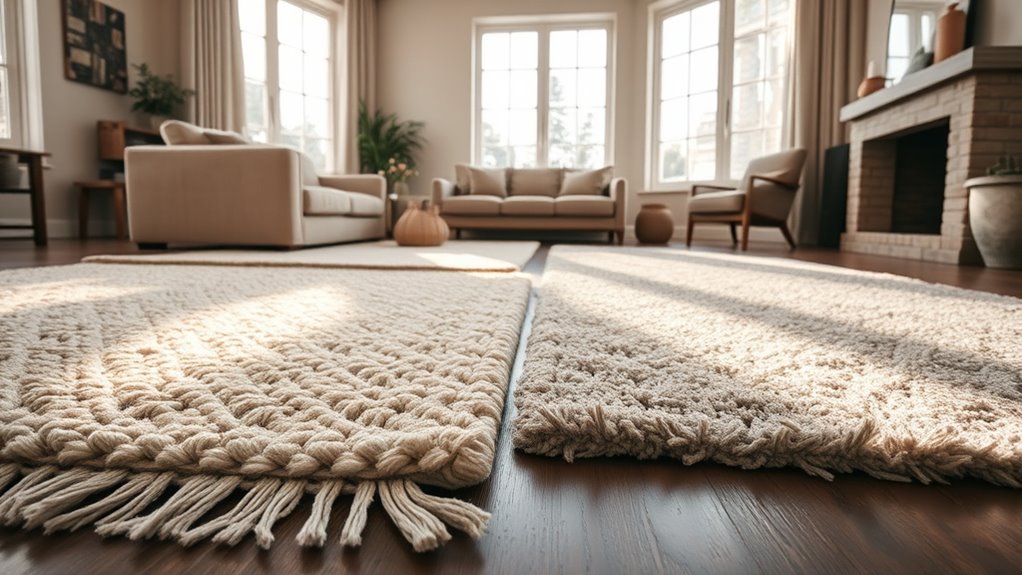
If noise from upstairs disturbances disrupts your daily life, quiet floors offer an effective solution. Choosing the right rugs and carpets can considerably reduce sound transmission, making your home more peaceful. When selecting these floor coverings, focus on their ability to absorb sound, which directly impacts how much noise travels between floors. Rugs with dense, plush pile tend to provide better sound absorption because they trap sound waves more effectively than thin or flat-weave options. Thicker materials also help muffle footsteps and other household noises, creating a quieter environment for everyone below.
Material durability is another essential factor to contemplate. You want rugs and carpets that not only dampen sound but also withstand daily wear and tear. Durable materials like wool are excellent because they resist crushing and maintain their sound-absorbing qualities over time. Synthetic fibers such as nylon or polyester can also be good choices—they’re often more affordable and resistant to stains and fading, though they might not offer the same level of sound absorption as natural fibers. When selecting a rug or carpet, check the density and pile height. Higher-density materials tend to be more resilient and effective at sound absorption, offering a longer-lasting solution for noise reduction.
In addition to material choices, the backing and installation of your rugs contribute to their noise-reducing capabilities. Non-slip backing can prevent movement and gaps that might allow sound to travel, while proper installation ensures the rug lies flat and creates a seamless barrier. Layering rugs—placing a smaller, plush rug over a larger, dense underlay—can further enhance sound absorption. This layering not only boosts the noise-blocking properties but also adds to the overall comfort underfoot.
Keep in mind that regular maintenance is key to preserving both sound absorption and material durability. Vacuuming frequently removes dirt and debris that can flatten fibers and diminish their effectiveness. Spot-cleaning spills promptly prevents staining and material breakdown, extending the life of your rugs. When selecting carpets, opt for those with tight weaves and high-quality fibers, as they tend to maintain their sound-absorbing qualities longer and resist damage better. Additionally, understanding the impact of contrast ratio can help you choose rugs that complement your overall home acoustics by minimizing unwanted echoes and enhancing sound clarity.
Ultimately, investing in the right rugs and carpets tailored for sound absorption and durability can transform your noisy home into a quieter, more comfortable space. By prioritizing these qualities, you ensure that your floors not only look good but also serve as effective barriers against unwanted noise, giving you peace of mind and a more serene environment.
Frequently Asked Questions
How Do I Clean Noise-Reducing Rugs Effectively?
To clean noise-reducing rugs effectively, you should regularly vacuum to maintain their soundproofing qualities. Make sure your vacuum has a gentle setting and a clean filter to avoid damaging the fibers. For stain removal, act quickly using a mild detergent and spot clean with a soft cloth. Avoid harsh chemicals, and always follow the rug’s care instructions to keep it looking good and performing well.
Are Certain Rug Materials Better for Sound Absorption?
Think of rug materials as a forest of different trees, each with unique fiber textures and color options. Wool, with its dense, plush fibers, acts like thick tree branches, absorbing sound effectively. Felt and cork backing also excel at sound absorption, while synthetic fibers tend to be less effective. So, choose materials with tight, dense fibers to maximize noise reduction, and pick colors that blend seamlessly into your decor.
Can Underlays Enhance Noise Reduction for Carpets?
Yes, underlays can considerably enhance noise reduction for carpets. They act as soundproofing techniques by absorbing impact noise and reducing footstep sounds. When you choose the right underlay, it complements your flooring installation methods, creating a quieter environment. Make sure to select a dense, quality underlay designed for soundproofing, and install it properly under your carpet to maximize the noise-reducing benefits and improve overall acoustics in your space.
How Long Do Quiet-Floor Rugs Typically Last?
Quiet-floor rugs can last an astonishing 10-15 years with proper care! You’ll be amazed at their durability expectations, but remember, lifespan factors like foot traffic, maintenance, and material quality influence their longevity. To maximize their life, vacuum regularly, avoid harsh chemicals, and rotate the rug. With these tips, your noise-reducing rug stays beautiful and effective for years, reducing noise and enhancing comfort in your space like never before!
Do Noise-Reducing Rugs Affect Indoor Air Quality?
Noise-reducing rugs can impact indoor air quality, especially if they trap dust and allergens. You might notice increased allergen concerns if the rug isn’t kept clean regularly. Look for rugs with low VOC emissions and hypoallergenic materials to minimize air quality impact. Regular vacuuming and prompt cleaning help reduce dust buildup, ensuring your space stays healthier. Choosing the right rug guarantees noise reduction without compromising your indoor air quality.
Conclusion
Choosing the right rug or carpet transforms your space into a sanctuary of serenity. Think of it as wrapping your floors in a cozy, whispering embrace that muffles life’s clatter. With each step, you create a peaceful haven where noise softly fades into the background, allowing you to breathe easier and feel more at home. Let your floors sing a gentle lullaby, inviting calm and comfort to settle underfoot.