
TL;DR

Get wellness gear delivered free with Prime
- Fast, free delivery on millions of items
- Prime Video, Amazon Music and more included
- Member-only deals all year
Fit&Well describes four stretches to do after a longer walk or hike: a standing calf stretch, cat-cow, figure-four and standing hamstring stretch. Physical therapist Margaret Tsai recommends easing into each movement, holding static stretches for 10 to 30 seconds—up to 30 to 60 seconds for older adults—and stopping if there is pain.
Fit&Well has published a four-stretch routine for people looking to ease into movement after a longer walk or hike, drawing on advice from Dr Margaret Tsai, a physical therapist with Sutter Health. The guide covers the calves, back, hips and hamstrings, and says to stretch only to a comfortable tension, not into pain.
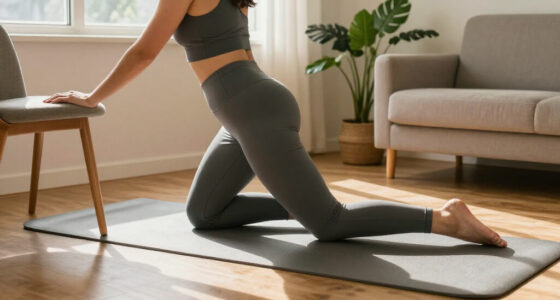
The routine includes a standing calf stretch, performed with the toes against a wall and heel on the ground; cat-cow, which alternates gentle rounding and arching of the back on hands and knees; a lying figure-four stretch for the hip and glute area; and a standing hamstring stretch that hinges the hips back while one leg extends in front. The guide recommends repeating one-sided stretches on both sides.
Tsai says the moves target muscle groups used during walking, including the core, back, hips and glutes, hamstrings, and calves. For static stretches, she suggests holding for 10 to 30 seconds. She says older adults may benefit from holding for 30 to 60 seconds. Cat-cow is different from a static hold: the guide suggests alternating slowly for about one minute, coordinating movement with breathing.
The advice is to begin with stretching two to three times a week and build toward daily practice if comfortable. Tsai advises people with injuries or concerns to check with a doctor first. The guide also recommends keeping the back neutral during the static stretches, using a wall or chair for support if balance is an issue, and adjusting positions to avoid excessive intensity.
A Gentle Cooldown After Longer Walks
The report addresses a common practical concern: a long walk can leave some people feeling stiff or sore, especially around the legs and hips. Its recommendations offer a short sequence readers can try after walking, while distinguishing gradual stretching from pushing through discomfort.
The distinction matters because the guide does not present stretching as a guaranteed way to prevent injury or eliminate stiffness. It relays a physical therapist’s suggestions for targeting muscles used in walking and emphasizes comfortable tension, controlled movement and individual limits. Readers can use that guidance to judge whether a stretch feels appropriate rather than treating the listed duration as a requirement.
For people with balance limitations or existing injuries, the practical cautions are as relevant as the exercises themselves. The guide recommends support from a stable surface for the standing hamstring stretch and medical advice when there are injuries or reservations.
Products Worth Considering

Blueair Blue Pure 211i Max Air Purifier for Large Rooms

Withings Sleep Under-Mattress Sleep Tracking Pad

Garmin Forerunner 965 GPS Multisport Smartwatch with AMOLED Display and Charging Bundle
As an affiliate, we earn on qualifying purchases.
How the Four Moves Are Performed
The sequence combines three static positions with one moving stretch. For the calf stretch, stand facing a wall, place the toes of one foot against it and keep that heel down; lean forward only as far as needed to feel a comfortable stretch. Moving the heel closer to the wall increases intensity, so the guide advises adjusting its position.
For cat-cow, start on hands and knees. Round the back gently for cat, then arch it gently for cow, moving slowly between the two for about a minute. Tsai advises exhaling as the back rounds and inhaling as it arches. In the figure-four, lie on the back with knees bent, cross one ankle below the opposite knee, and draw the uncrossed leg toward the chest. The guide says to stay in the starting position if that already gives a strong stretch.
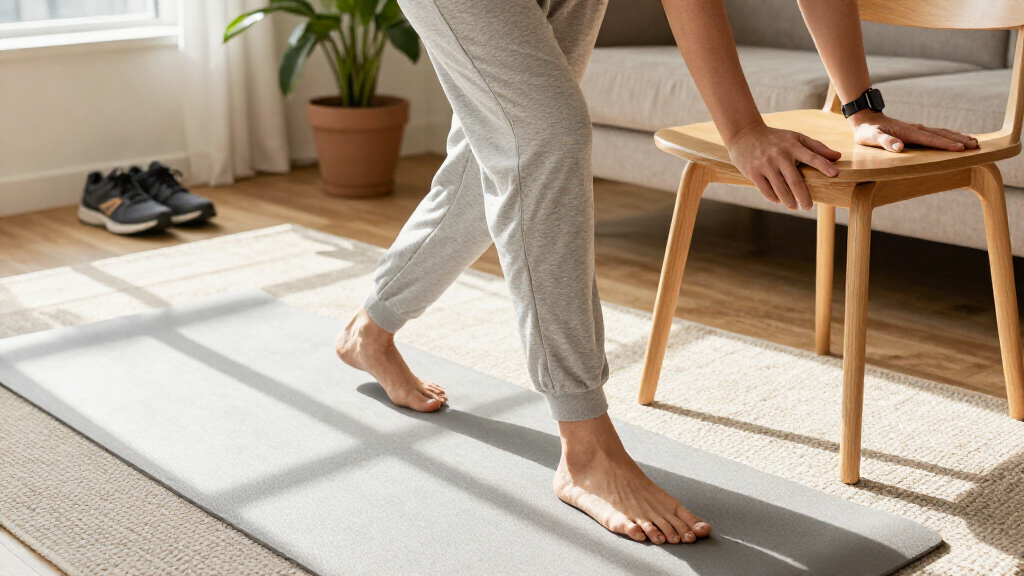
For the standing hamstring stretch, place one foot forward with the heel down and toes lifted, bend the other knee, and hinge the hips back while using the bent leg for support. A wall or chair can help with balance. The report says a raised surface can deepen the stretch, but its broader advice is to ease into each position rather than seek maximum intensity.
“These stretches target the major muscle groups that are utilized [during walking], specifically the core, back, hip/glutes, hamstrings, and calves.”
— Dr Margaret Tsai, physical therapist with Sutter Health, as quoted by Fit&Well
Limits of the Stretching Advice
The source material does not provide research data comparing these four stretches with other cooldowns, or evidence that the routine prevents soreness, injury or mobility loss. The recommendations are attributed to Tsai and presented as practical guidance, not as a treatment or a promise of results. The report also does not specify how long an individual should follow the routine before judging whether it helps.
People’s flexibility, fitness, balance and health conditions differ. The guide does not set a single suitable intensity for everyone; it advises people with injuries or concerns to consult a doctor and to stop short of pain. Its suggested frequency and hold times should not be read as individualized medical instructions.
How Readers Can Start Safely
The report suggests starting with two or three stretching sessions per week and increasing frequency gradually, potentially to daily practice if the movements remain comfortable. Readers can begin with shorter holds within the suggested range and adjust the stretch rather than forcing a deeper position.
Anyone with an injury, a health concern or difficulty balancing should seek appropriate professional guidance before trying the routine. The source does not announce a follow-up study or a new clinical recommendation; its next step for readers is to try the movements cautiously and pay attention to how their bodies respond.
Key Questions
Which four stretches does the report recommend after walking?
It lists a standing calf stretch, cat-cow, figure-four stretch and standing hamstring stretch. The guide suggests repeating one-sided stretches on the other side as well.
How long should each stretch be held?
Tsai recommends holding static stretches for 10 to 30 seconds. She says older adults may benefit from 30 to 60 seconds. Cat-cow is performed as a slow sequence for about one minute rather than as a static hold.
How often should someone do the routine?
The guide suggests starting with two to three times a week and gradually building toward daily stretching if it feels comfortable.
Should a stretch hurt?
No. Tsai advises easing into a comfortable degree of tension and never stretching into pain. People with injuries or concerns should check with a doctor before trying the moves.
What if balance is difficult during the hamstring stretch?
The guide recommends doing the standing stretch near a stable wall or chair and holding it for support. It also advises adjusting the position to keep the stretch comfortable.
Source: fitandwell.com