
TL;DR

Get wellness gear delivered free with Prime
- Fast, free delivery on millions of items
- Prime Video, Amazon Music and more included
- Member-only deals all year
Fit&Well published a beginner-friendly, four-move yoga flow created by Yogalina Studios founder Alina Boyett. The sequence uses gentle poses and breathing as a way to slow down after exercise or a day of sitting; its stated benefits are guidance from the instructor, not evidence that the routine treats pain or injury.
Fit&Well has published a four-pose beginner yoga flow created by Alina Boyett, founder of UK-based Yogalina Studios, as a gentle option for people looking to stretch and slow down after exercise or prolonged sitting. The routine requires no equipment or prior yoga experience, according to the report, and Boyett advises moving within a comfortable range rather than forcing a stretch.
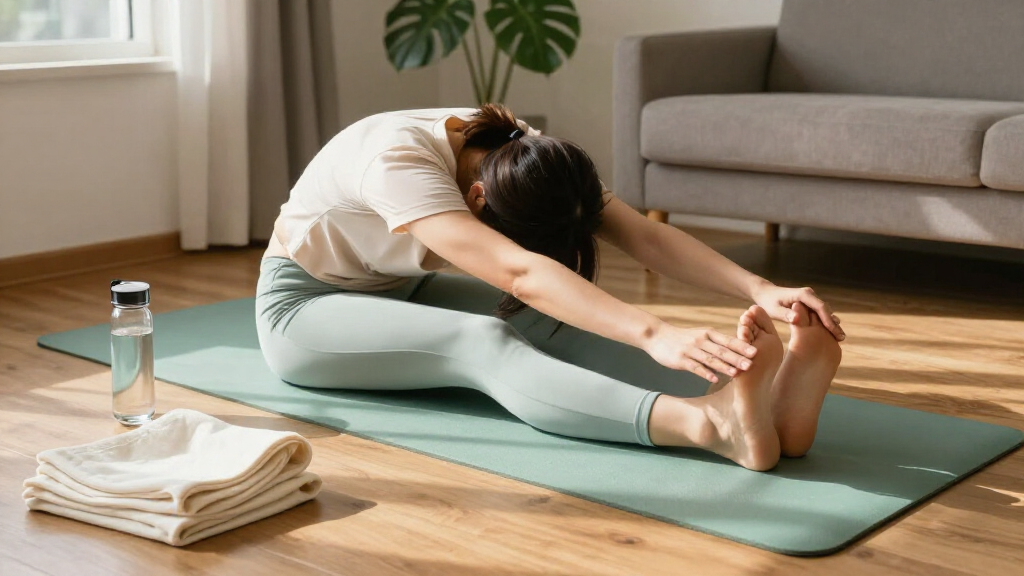
The sequence includes Waterfall pose, Child’s pose, a Ragdoll forward fold and a Seated spinal twist. The instructions call for a few breaths in each position, with the fold and twist repeated as specified. Yogalina teacher Misha Clarke demonstrates the movements in a video accompanying Fit&Well’s report.
Boyett said the four poses were chosen to address areas that commonly feel tense after activity, including the legs, hips, spine and shoulders. She describes the routine as a mix of restorative postures, gentle twists and forward folds, intended to be accessible without advanced flexibility. Her guidance is to move slowly, breathe, and stop short of pain.
The report presents the flow as a brief recovery practice that can be done at home. It does not establish a fixed total duration: the instructions specify holds of three to five breaths for Waterfall and Child’s pose, two rounds of the forward fold for three to five breaths, and two rounds of the twist for two to three breaths per side. Boyett says people with an injury or relevant medical condition should seek professional guidance before trying it.
A Short Routine for Rest Days
The report highlights recovery as part of an exercise routine rather than as time that must be spent doing nothing. For readers who have completed a workout, run, or long spell at a desk, the sequence offers a low-equipment way to pause and move gently. That may make it easier to include a brief wind-down practice, particularly for beginners who are unsure where to start.
The distinction between a gentle stretch and a treatment is important. Boyett’s comments describe her teaching approach and intended experience; the article does not provide clinical evidence that these poses prevent injury, speed recovery, or resolve pain. The practical takeaway is narrower: people can try the movements at a comfortable intensity, while taking symptoms and individual health needs seriously.
Products Worth Considering

Oura Ring 4 Smart Ring – Silver – Size 8

Oral-B iO5 Rechargeable Electric Toothbrush with 3 Brush Heads and Travel Case, Black

Oral-B iO Series 3 Rechargeable Electric Toothbrush for Adults, Black
As an affiliate, we earn on qualifying purchases.
Four Poses, One Gentle Sequence
Boyett frames the routine around recovery after both physical activity and everyday stillness. She told Fit&Well that people often focus on how much or how hard they exercise, while recovery also deserves attention. In her view, a few minutes of slower movement and breathing can help people reconnect with how their bodies feel.
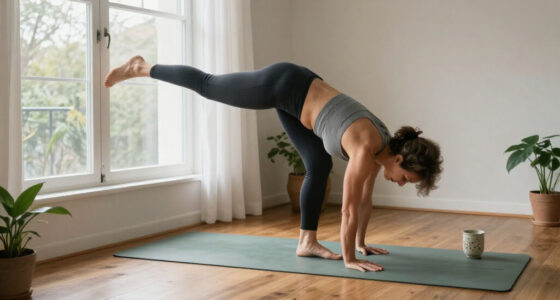
The sequence moves through different positions rather than requiring a continuous workout. In Waterfall, the practitioner lies near a wall and raises the legs, with knees softly bent if needed. Child’s pose begins on hands and knees before the hips lower toward the heels. The Ragdoll variation is performed standing with softened knees, while the seated twist is done gently to each side. These are the source’s instructions, not a requirement to reach a particular depth or range.
Boyett’s cues emphasize comfort and ease over intensity. She says the poses may address commonly tense areas, but the report does not compare the flow with other recovery methods or include measured outcomes. Readers should treat it as general movement guidance rather than individualized instruction.
Limits of the Routine’s Claims
The source report does not provide clinical research, participant results, or measurements showing whether the flow changes flexibility, soreness, or recovery time. Statements about easing tension, helping tired legs feel less heavy, or encouraging calm are attributed to Boyett and should not be read as guaranteed outcomes.
The report also does not specify a single total session length, beyond the breath counts for each pose. Individual comfort and mobility will differ, and the article does not assess whether any particular pose is suitable for a reader’s injury or condition. It advises professional guidance in those circumstances.
How Readers Can Approach the Flow
Readers who choose to try the sequence can follow the published instructions at a slow pace, make comfortable adjustments, and stop if a movement causes pain. Boyett advises people with injuries or relevant medical conditions to consult an appropriate professional first. The Fit&Well report includes a demonstration by Yogalina teacher Misha Clarke, which readers can use to follow the poses.
No further study, medical assessment, or follow-up development is identified in the source material. The immediate next step is simply for readers to decide whether a gentle movement break suits their needs, without treating the routine as a substitute for tailored advice or care.
Key Questions
What poses are included in the beginner yoga flow?
The sequence includes Waterfall pose, Child’s pose, a Ragdoll forward fold and a Seated spinal twist.
Does the routine require equipment or yoga experience?
Boyett describes it as requiring no equipment or previous yoga experience. The Waterfall pose uses a wall as support, and the movements should be adapted to a comfortable range.
How long does the flow take?
The report gives breath counts for each pose rather than one total session time: most holds are three to five breaths, with the twist held for two to three breaths per side. It does not state an exact overall duration.
Can the flow treat soreness or an injury?
The report does not establish that the sequence treats soreness or injury. Boyett advises against pushing through pain and recommends professional guidance for anyone with an injury or relevant medical condition.
Source: fitandwell.com