TL;DR

Get wellness gear delivered free with Prime
- Fast, free delivery on millions of items
- Prime Video, Amazon Music and more included
- Member-only deals all year
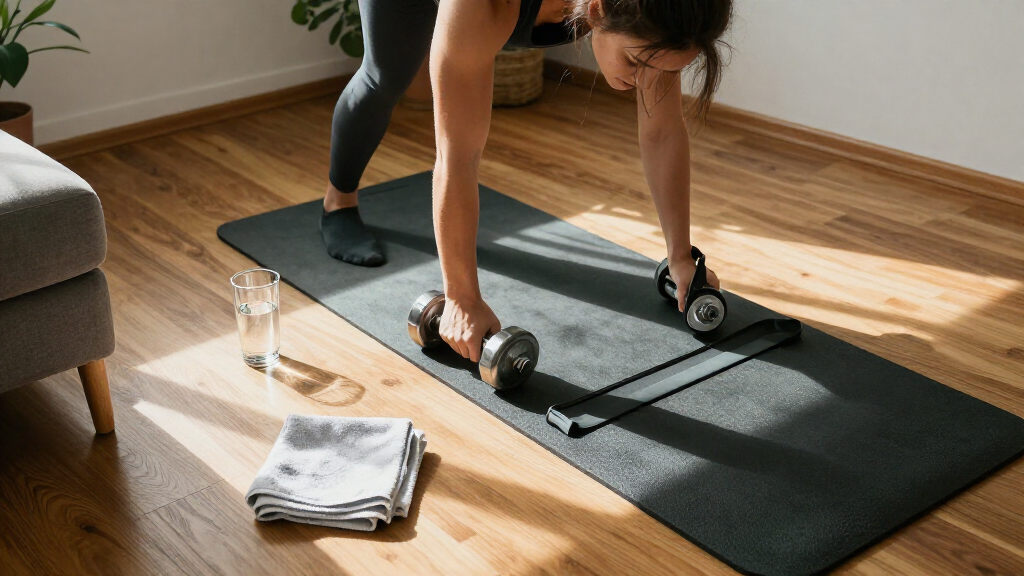
Personal trainer Pippa Sealey recommends shorter rest periods and unilateral exercises to make home dumbbell workouts more challenging when heavier weights are not available. A Fit&Well report outlines a routine using supersets and one-sided movements, but the workout is aimed at people already comfortable with basic strength exercises.
Personal trainer Pippa Sealey recommends shorter rests and unilateral exercises—movements performed one side at a time—to make home dumbbell workouts more challenging when heavier weights are unavailable. A Fit&Well report pairs those methods in a routine for people who are already confident with fundamental exercises such as squats and deadlifts.
Sealey says she uses shorter recovery periods and one-sided movements when training at home without access to heavier loads. The approaches change the demands of a session without requiring a new set of dumbbells. Her advice is presented as a way to keep training challenging; the source does not report measured outcomes or claim that the methods work equally well for everyone.
The example routine uses supersets and tri-sets. A superset means performing one exercise and then moving straight to a second before resting; a tri-set adds a third movement to the sequence. The report says each group is repeated three times before moving on. Some exercise pairings target similar muscles, an approach Sealey describes as agonist supersets, intended to increase the challenge to those areas.
Exercises listed include deficit calf raises, hamstring bridge marches, wall sits, single-leg Romanian deadlifts, split squats, push-ups, a single-arm dumbbell push press, single-arm rows, side-plank hip lifts, plank dumbbell pull-throughs and dumbbell sit-ups. The provided routine calls for three rounds of each group, with rest after the sequence; its listed rest periods are generally 60 to 90 seconds where specified. The source excerpt does not provide complete instructions for every movement.
Making Lighter Home Weights Work Harder
For people training at home with a limited set of dumbbells, Sealey’s suggestions offer ways to vary a workout without buying heavier equipment. Shorter rests can make sessions feel more demanding, while unilateral movements require the exerciser to work one side at a time and can expose differences in balance or control between sides.
The practical value depends on the person, their technique and the weights available. These methods are not a guarantee of continued progress, and the report does not compare them with increasing load. Its workout is described for people already comfortable with basic strength movements, so it is not presented as a beginner routine.
adjustable dumbbells for home strength training
As an affiliate, we earn on qualifying purchases.
As an affiliate, we earn on qualifying purchases.
The Routine Behind Sealey’s Advice
The Fit&Well report frames the advice around a common home-training constraint: using the same dumbbells for months may leave some exercisers looking for ways to raise the challenge. Sealey’s answer is to adjust rest intervals and exercise format, rather than rely only on heavier loads.
The workout combines bodyweight movements with dumbbell exercises. In the listed sequence, a calf raise, bridge march and wall sit form a tri-set; later groups include single-leg and split-squat work. A push-up section is also listed alongside upper-body movements. Because the supplied article text cuts off during the push-press instructions and does not include full details for the whole routine, the exact complete sequence and all coaching cues cannot be confirmed from the material provided.
non-slip exercise mat for home workouts
As an affiliate, we earn on qualifying purchases.
As an affiliate, we earn on qualifying purchases.
Limits of the Published Workout Details
The source material does not provide a publication date, independent testing, or evidence quantifying how much these methods affect strength or fitness outcomes. It also does not establish that shorter rests or unilateral movements are suitable for every exerciser. The supplied text ends partway through the push-press instructions, so several listed exercises lack full directions in the available material.
It is also unclear what weights readers should choose, how frequently to perform the routine, or how to adapt it to injuries, health conditions or individual training experience. The report identifies the routine as intended for people already confident with basic movements, but it does not give a detailed screening process or individualized modifications.
resistance bands for strength training and mobility
As an affiliate, we earn on qualifying purchases.
As an affiliate, we earn on qualifying purchases.
Choosing a Safe Next Workout
The report does not announce a follow-up study or a scheduled next development. For readers considering the routine, the immediate next step is to review the complete exercise instructions and choose a level of difficulty they can manage with controlled form. The workout’s stated audience is people already familiar with foundational movements, not those learning them for the first time.
Anyone uncertain about technique, or managing an injury or health condition, can seek guidance from a qualified fitness professional before changing their training. Progress should be judged against personal goals and ability rather than assumed from the workout format alone.
Key Questions
What are the two methods Sealey recommends?
She recommends shorter rest periods and unilateral exercises, which train one side at a time, when heavier dumbbells are not available.
What is a superset?
A superset is a sequence in which a person completes one set of an exercise and then performs a set of another exercise before resting. The report also describes tri-sets, which add a third exercise before the break.
Is the workout intended for beginners?
The report says the routine is designed for people already confident with fundamental movements such as squats and deadlifts. It does not present it as a beginner program.
Do these methods mean heavier weights are unnecessary?
The report presents them as ways to make home sessions more challenging without buying extra equipment. It does not claim they replace heavier loads in every training plan or guarantee continued progress.
How many rounds does the sample workout call for?
The report says to complete each exercise group three times before moving to the next group. It lists rest after the sequence, including 60 to 90 seconds for some groups.
Source: rss
Halloween Picks
halloween
As an affiliate, we earn on qualifying purchases.