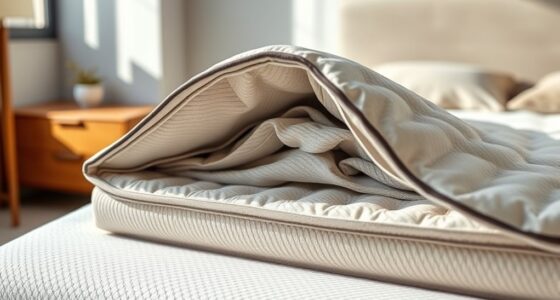
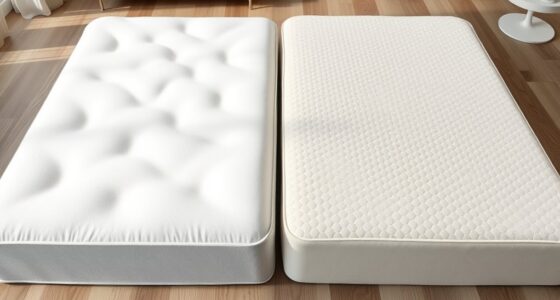
To find the best mattress for your sleep position, focus on support and pressure relief tailored to your needs. Side sleepers should prioritize memory foam for its contouring and cushioning, while back sleepers benefit from medium-firm options that keep the spine aligned. Stomach sleepers need slightly firmer mattresses to prevent hips from sinking. Good edge support enhances stability for all positions. Keep these tips in mind, and you’ll discover more ways to optimize your sleep comfort.
Key Takeaways
- Match your mattress firmness to your sleep position: medium for back sleepers, slightly firmer for stomach sleepers, softer for side sleepers.
- Prioritize pressure relief for side sleepers using memory foam to cushion shoulders and hips.
- Ensure proper support and spinal alignment with balanced support for back sleepers.
- Opt for firmer mattresses for stomach sleepers to prevent hips from sinking and maintain a neutral spine.
- Consider edge support to enhance stability and ease of movement, especially for those who sit or sleep near the bed’s edge.

Your sleep position plays a crucial role in selecting the right mattress, as it directly affects comfort and spinal alignment. Whether you sleep on your back, side, or stomach, your choice impacts how well your mattress supports your body and relieves pressure points. For side sleepers, a mattress with good pressure relief is essential, and memory foam is often the ideal choice. It contours closely to your body, cushioning shoulders and hips, which are areas prone to pressure buildup when lying on your side. Memory foam’s ability to conform helps keep your spine aligned, reducing discomfort and preventing aches. Additionally, selecting a mattress with proper support and stability** can enhance overall comfort. Side sleepers should also consider edge support, especially if they tend to sit or sleep near the edge of the bed. Strong edge support prevents sagging and provides a stable surface, making it easier to get in and out of bed without feeling like you might roll off. Look for mattresses that feature reinforced edges** or a dense foam border, as these will enhance stability while maintaining the benefits of memory foam’s contouring.
If you’re a back sleeper, your priority is a mattress that offers balanced support with enough cushioning to prevent pressure points but firmness enough to keep your spine properly aligned. Memory foam can be a good fit here because it provides gentle contouring that supports the natural curve of your back. Choose a mattress with a medium firmness level, ensuring it’s not too soft to cause your hips to sink or too firm to create discomfort. Edge support remains important for back sleepers who like to sit at the edge of their bed or switch positions frequently. Adequate edge reinforcement prevents the mattress from compressing excessively when you sit or lean against it, giving you a more consistent sleeping surface.
Stomach sleepers need a slightly firmer mattress to prevent their hips from sinking too deeply, which can lead to lower back pain and misalignment. Memory foam options may work if they’re on the firmer side, providing enough support to keep your spine in a neutral position. Edge support isn’t as critical for stomach sleepers, but still beneficial if you often sleep near the edge or roll around during the night. A mattress with good edge support ensures stability, so you don’t feel like you’re slipping off or that the mattress is collapsing under your weight.

Novilla Bliss Queen Size Mattress, 12 Inch Gel Memory Foam Mattress Queen
- Pressure Relief & Spinal Support: 3-layer foam design for pressure relief and alignment
- Breathable Cooling Cover: Knitted fabric keeps surface cool and fresh
- Gel Memory Foam Technology: Dissipates heat and minimizes moisture buildup
As an affiliate, we earn on qualifying purchases.
As an affiliate, we earn on qualifying purchases.
Frequently Asked Questions
How Does Mattress Firmness Affect Sleep Quality for Side Sleepers?
A medium-firm mattress provides ideal support for side sleepers by offering a comfortable sleep surface that cushions your shoulders and hips. It guarantees proper mattress support, aligning your spine naturally and reducing pressure points. If the mattress is too firm, it may cause discomfort, while too soft could lead to misalignment. Finding the right firmness enhances sleep quality by promoting comfort and support tailored to your side sleeping position.
Can the Wrong Mattress Cause Chronic Back Pain?
Yes, the wrong mattress can cause chronic back pain. If your mattress materials don’t support your sleep posture properly, it can lead to misalignment and strain on your back muscles. An unsuitable mattress may be too firm or too soft, which forces your spine out of its natural position. Over time, this stress can result in persistent back pain. Ensuring you select a mattress suited to your sleep posture helps prevent this issue.
Are Hybrid Mattresses Better for Combination Sleepers?
Aren’t hybrid mattresses ideal for combination sleepers? They offer the perfect blend of support and softness, making them suitable for shifting between sleeping positions. Hybrid mattresses combine foam and innerspring coils, providing pressure relief and responsiveness. If you switch from side to back or stomach, these mattresses adapt well, ensuring comfort and spinal alignment throughout the night. So yes, hybrid mattresses are often better suited for combination sleepers.
How Often Should I Replace My Mattress Based on Sleep Position?
You should replace your mattress roughly every 7 to 10 years, depending on your sleep position. Your mattress lifespan affects how well it supports you, especially if you sleep on your side or stomach, which can wear it out faster. Pay attention to signs like sagging or discomfort. Regular replacement guarantees ideal support and sleep quality, reducing pain and improving overall rest. Stay proactive to maintain a healthy sleep environment.
Do Sleep Position and Mattress Choice Impact Sleep Apnea?
Your sleep position and mattress material can influence sleep apnea symptoms. If you sleep on your back, a firmer mattress may help keep your airway open, while side sleepers might benefit from softer mattresses that support their sleep posture. Choosing a mattress that promotes proper alignment reduces pressure on your neck and airway, potentially easing breathing issues. Always consider your sleep posture when selecting mattress material to improve sleep quality and manage apnea symptoms.

14 inch Medium Firm Queen Mattress Extra Back Support, 365 Nights Trial
- Size and Type: 14-inch medium firm queen hybrid mattress
- Targeted Support: High-compression springs for personalized support
- Durable Springs: Reinforced with industrial-grade steel
As an affiliate, we earn on qualifying purchases.
As an affiliate, we earn on qualifying purchases.
Conclusion
Choosing the right mattress isn’t just about comfort; it’s about supporting your sleep style. Whether you prefer the plush feel for side sleeping or the firm support for back and stomach positions, the right mattress balances softness with stability. It’s not just about sinking in but also about staying aligned. Find that perfect harmony, and you’ll wake up refreshed, ready to face the day—because choosing the right mattress isn’t just about sleep; it’s about quality of life.
firm mattress for stomach sleepers
As an affiliate, we earn on qualifying purchases.
As an affiliate, we earn on qualifying purchases.

(High-End Upgraded) Luxury 12 Inch Full Size Hybrid Mattress in a Box
- Ultimate Comfort: Memory foam and pocket springs for support
- Quiet & Motion Isolation: Individual pocket coils reduce noise and movement transfer
- Enhanced Support & Durability: Upgraded pocket springs and edge support for stability
As an affiliate, we earn on qualifying purchases.
As an affiliate, we earn on qualifying purchases.