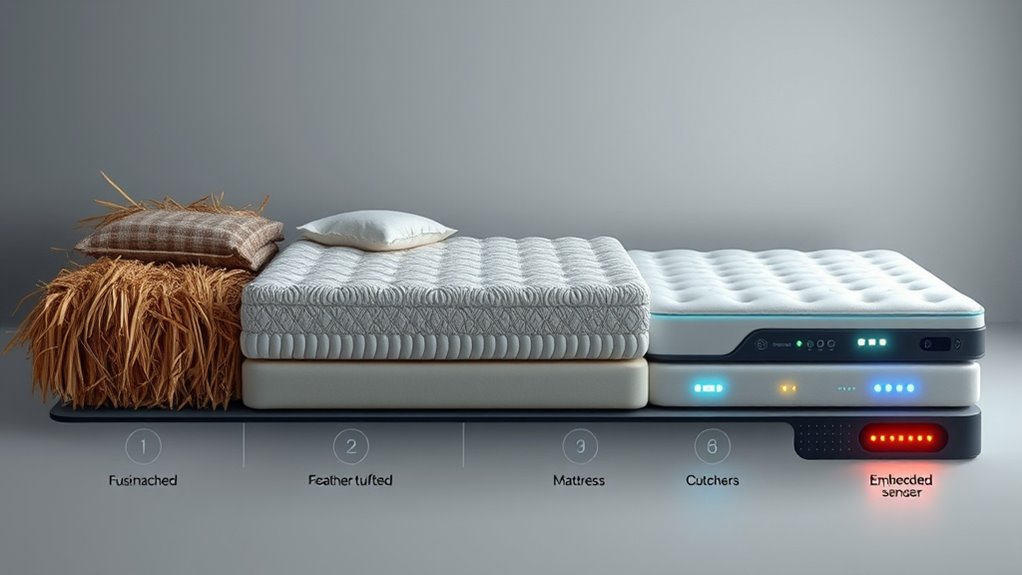

The history and evolution of mattresses show how we’ve gone from simple straw and feather cushions to advanced smart sleep systems. Early mattresses used natural materials like reeds, wool, and feathers mainly for support and insulation. With technological advances during the Industrial Revolution, support systems like springs and foam emerged, improving comfort and durability. Today, innovations like gel-infused foams and smart features enhance sleep quality. Continue exploring to discover how these changes have shaped modern mattresses and your sleep experience.
Key Takeaways
- Ancient mattresses used natural materials like straw, wool, and feathers for basic comfort and insulation.
- Material innovations in civilizations such as Egypt, Greece, and Medieval Europe improved hygiene and support.
- The Industrial Revolution enabled mechanized production, leading to larger-scale manufacturing and new support systems.
- Innerspring coils and foam technologies like polyurethane and memory foam revolutionized comfort and durability from the late 19th century onward.
- Modern mattresses incorporate smart features, hybrid designs, and health-focused innovations, continuously evolving for better sleep quality.
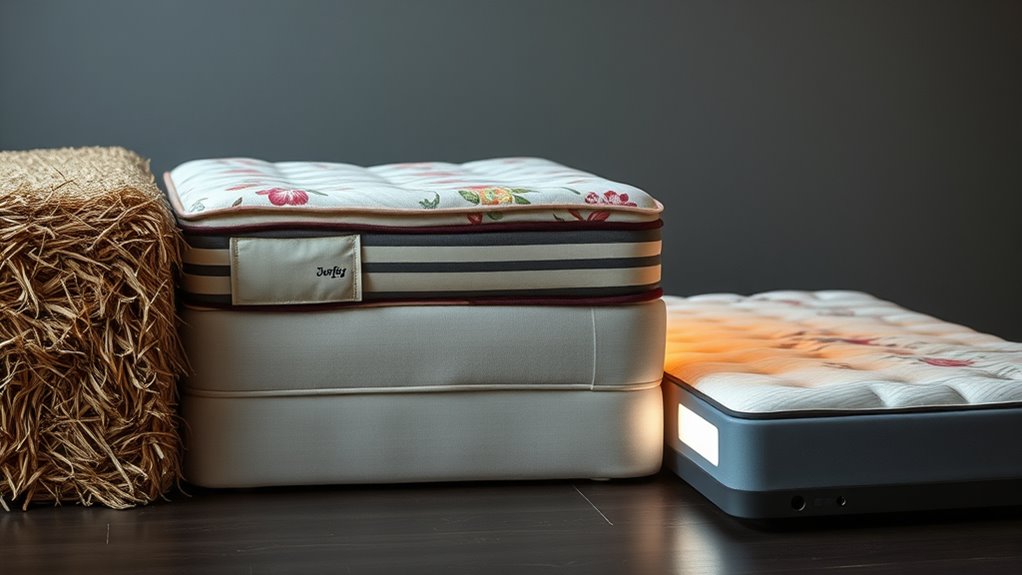
Have you ever wondered how the mattress beneath you has transformed over centuries? It’s fascinating to think about how early designs evolved into the sophisticated sleep technology we rely on today. Throughout history, mattress materials and construction methods have advanced dramatically, reflecting both cultural shifts and technological innovation. In ancient times, people used natural materials like straw, wool, and feathers to create basic sleeping surfaces. These early mattresses offered minimal comfort but served their purpose of providing a slightly softer place to rest. Over time, civilizations began experimenting with different materials, aiming to improve comfort and hygiene.
As civilizations progressed, so did their approach to mattress materials. The Egyptians, for instance, used layers of reeds and linen, while the Romans and Greeks incorporated wool and cotton when these became more accessible. During the Middle Ages, mattresses increasingly contained stuffing made from straw or feathers, which were easier to source and offered better insulation. However, these materials had drawbacks—they could harbor pests and fungi, prompting continuous improvements. With the advent of the Industrial Revolution, the manufacturing process shifted from handmade to mechanized production, allowing for larger-scale innovations in mattress construction.
This era also marked the beginning of integrating new sleep technology into mattress design. Manufacturers started using innerspring coils in the late 19th century, revolutionizing comfort and support. The introduction of spring mattresses provided better weight distribution, durability, and a significant step forward in sleep technology. Later, foam materials emerged, notably polyurethane foam in the mid-20th century, offering greater pressure relief and customization. Memory foam, introduced in the 1960s, further refined sleep technology by conforming precisely to body contours, reducing pressure points, and enhancing sleep quality.
Today, mattress materials continue to evolve with advancements in sleep technology. Modern mattresses incorporate gel-infused foams, hybrid designs combining innersprings and memory foam, and even smart features like temperature regulation and sleep tracking. The focus has shifted not just to comfort but also to health benefits, such as improved spinal alignment and allergy resistance. Innovations in mattress materials continue to drive this evolution, making sleep more comfortable and restorative than ever before. These innovations are driven by a desire to enhance sleep quality, which is increasingly recognized as essential to overall well-being.
In essence, the journey from primitive straw-filled pads to smart mattresses reflects a continuous quest for better sleep technology. Each breakthrough in mattress materials has aimed to improve comfort, hygiene, and support, making sleep a more restorative experience. As technology advances, so will the ways we rest, highlighting that the evolution of mattresses is far from over. Instead, it’s an ongoing story of innovation designed to help you sleep more soundly night after night.

Pipishell Queen Adjustable Bed Frame with Massage, Electric Bed Base with Head & Foot Incline, USB-A & USB-C Ports, LED Under-Bed Lighting, 4 Leg Height Options, and Easy 3-Step Assembly
Customizable Head & Foot Elevation: This queen adjustable bed base enables you to raise your head up to...
As an affiliate, we earn on qualifying purchases.
Frequently Asked Questions
How Did Ancient Cultures Customize Their Sleeping Surfaces?
Ancient cultures customized their sleeping surfaces by using natural fillings like straw, feathers, or wool to guarantee comfort and support. They often added decorative covers made from textiles or woven materials to personalize their beds and reflect status. You can see how these early innovations aimed to improve sleep quality and aesthetics, laying the foundation for modern mattress design. Their creativity made sleeping surfaces both functional and visually appealing.
What Materials Were Most Popular During Different Historical Periods?
Historical bedding innovations highlight the popularity of plush feathers during the Renaissance, while straw and reeds dominated ancient periods. In different cultures, cozy cotton and cool cowhide were common, reflecting distinct customs. You’ll notice that materials like wool, silk, and down evolved over time, shaped by cultural sleeping customs and climate. These choices reveal how societies prioritized comfort, practicality, and tradition in their pursuit of peaceful, personalized slumber.
How Did Technological Advances Influence Mattress Comfort and Support?
Technological advances like memory foam and adjustable firmness revolutionized mattress comfort and support. You benefit from memory foam’s ability to contour to your body, providing personalized pressure relief, while adjustable firmness lets you customize your sleep experience. These innovations improve sleep quality by offering tailored support, reducing aches, and enhancing overall comfort. As technology continues to evolve, you can expect even more sophisticated options to improve your sleep experience.
When Did the Shift From Handmade to Mass-Produced Mattresses Occur?
The shift from handmade to mass-produced mattresses happened around the late 19th to early 20th centuries, transforming the industry like a switch being flipped. You can thank industrial manufacturing for this change, replacing artisan craftsmanship with factory-made comfort. This revolution made mattresses more affordable and accessible, like catching a wave of innovation that swept through the industry, giving many people a better night’s sleep without breaking the bank.
Are There Traditional Mattress Designs Still in Use Today?
Yes, traditional mattress designs are still in use today alongside modern mattress trends. You’ll find classic styles like innerspring and natural latex mattresses, often crafted with sustainable bedding materials. Many people appreciate these designs for their durability and comfort, while others prefer innovative features. By combining traditional craftsmanship with eco-friendly materials, you get a balanced sleep experience that respects both history and sustainability.

Marsail NS3 Queen Smart Adjustable Bed Base | Zero Gravity, Anti-Snore, Dual Motor, and 4 USB for Quick 3-Min Assembly
Quick Setup & Memory Control: Assemble your base quickly with a 3-minute, tool-free setup. Easily find your ideal...
As an affiliate, we earn on qualifying purchases.
Conclusion
Your journey through mattress history shows how far we’ve come—from humble straw beds to the mind-blowing smart mattresses that seem to almost read your thoughts. Today’s sleep technology is so advanced, it’s like sleeping on a spaceship! Remember, each upgrade isn’t just about comfort, but about transforming your entire life. So, next time you hit snooze, think about how your mattress has become your personal sleep superhero—protecting, nurturing, and elevating your dreams every single night.

Amada Queen Adjustable Bed Frame with Massage, Head & Foot Incline, Wireless Remote, 4 Built-in USB Ports, LED Night Light, 4 Height-Adjustable Legs, Electric Bed Base, 01B-Q1
Charging & LED Lighting: This bed frame features a USB-A and USB-C charging port on each side, making...
As an affiliate, we earn on qualifying purchases.

Adamson B10 Gray Bed Cooling System - Twin 75” L x 39” W - Water Bed Cooler Ideal for Hot Sleepers - 100% Cotton Mattress Cooling Bed Pad for Night Sweats - 5-Year Assurance
KEEP YOUR BODY COOL: Thanks to an ingenious system using the principle of evaporative cooling, this bed cooler...
As an affiliate, we earn on qualifying purchases.