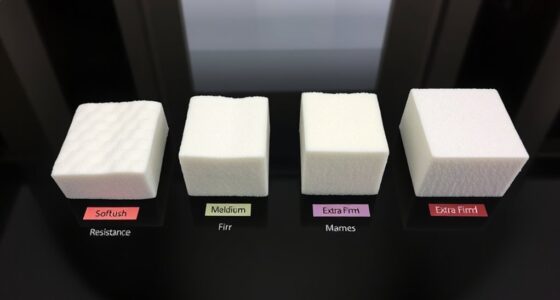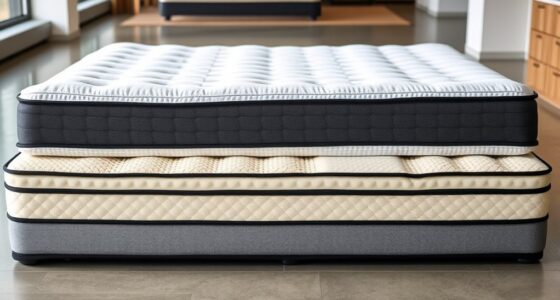
Innovations in mattress recycling and disposal now use advanced technologies like foam separation techniques that efficiently extract usable materials such as foam, metal, fabric, and wood. These methods help you reduce waste, lower environmental impact, and promote resource reuse. Modern recycling centers utilize specialized machinery and closed-loop systems to process mattresses sustainably on-site. As these eco-friendly practices continue to evolve, you’ll discover how they contribute to a cleaner planet and better waste management strategies.
Key Takeaways
- Foam separation technologies enable efficient extraction of foam from mattress components, enhancing recycling processes.
- Advanced machinery allows for rapid, eco-friendly breakdown of mattresses into reusable materials like metal, fabric, and wood.
- Closed-loop systems facilitate on-site reuse of materials, minimizing waste and reducing transportation emissions.
- Innovations in disposal methods reduce landfill reliance, promoting sustainable and environmentally friendly mattress recycling.
- Companies now offer specialized pickup and drop-off programs supporting responsible disposal and material recovery.

As mattresses reach the end of their lifespan, recycling and proper disposal become essential to reduce environmental impact and free up space. You might be surprised to learn that innovative methods are transforming how we handle old mattresses, making the process more sustainable and efficient. One key step in this evolution is foam separation, which allows recyclers to efficiently extract foam from the mattress. This process involves carefully separating the foam from other components like fabric and metal springs, ensuring that each part can be recycled or disposed of appropriately. Foam separation not only minimizes waste but also maximizes the reuse of valuable materials, reducing the need for virgin resources. By implementing advanced separation techniques, recycling centers can process mattresses faster and more cleanly, lowering their environmental footprint while providing eco friendly disposal options. Additionally, understanding recycling regulations helps ensure that disposal practices meet environmental standards and optimize resource recovery.
The push toward eco friendly disposal methods is driven by a desire to lessen landfills’ burden and curb pollution. Traditional mattress disposal often ends with tossing the entire mattress into a landfill, where it can take decades to decompose and potentially release harmful chemicals. Now, innovative recycling facilities utilize specialized machinery and environmentally conscious practices to break down mattresses into their basic components. These include metal springs, foam, fabric, and wood, each of which can be repurposed into new products. Some facilities even develop closed-loop systems that reuse materials on-site, cutting down on transportation emissions and waste.
You can also play a role in supporting these innovations by choosing recycling programs that prioritize eco friendly disposal. Many companies now offer pick-up services or drop-off locations specifically for old mattresses, ensuring they’re processed responsibly. These programs often incorporate foam separation techniques to maximize material recovery. By opting for such services, you help promote sustainable practices that reduce landfill overflow and conserve resources. Plus, you contribute to a cleaner environment by encouraging the development of recycling technologies that focus on environmental benefits.

Adamson B10 Gray Bed Cooling System - Twin 75” L x 39” W - Water Bed Cooler Ideal for Hot Sleepers - 100% Cotton Mattress Cooling Bed Pad for Night Sweats - 5-Year Assurance
KEEP YOUR BODY COOL: Thanks to an ingenious system using the principle of evaporative cooling, this bed cooler...
As an affiliate, we earn on qualifying purchases.
Frequently Asked Questions
What Are the Environmental Benefits of Mattress Recycling?
Recycling your mattress offers significant environmental benefits by promoting foam reuse and supporting eco-friendly processes. When you recycle, you reduce landfill waste and prevent harmful chemicals from leaching into the environment. This process also conserves natural resources by repurposing materials into new products, decreasing the need for raw material extraction. Your participation helps lower pollution, conserve energy, and foster sustainable practices, making a positive impact on the planet.
How Can Consumers Identify Eco-Friendly Mattress Disposal Options?
You can identify eco-friendly mattress disposal options by checking for eco labels and disposal certifications on the company’s website or product tags. Look for certifications like Green Seal or EcoLabel, which indicate environmentally responsible practices. Additionally, ask retailers or disposal services about their recycling programs, guaranteeing they follow certified and sustainable disposal methods. This way, you make certain your mattress gets disposed of in an eco-conscious manner, reducing environmental impact.
Are There Government Incentives for Recycling Old Mattresses?
Think of government incentives like hidden treasure chests—yes, there are grants and rebates available for recycling old mattresses. Many local recycling programs offer these benefits to encourage eco-friendly disposal. You can often find government grants or subsidies that reduce your disposal costs, making it easier to choose responsible options. Check with your local waste management agency or environmental department to discover current programs and maximize your eco-friendly efforts.
What Materials Are Most Commonly Recovered From Mattress Recycling?
When you recycle a mattress, the most common materials recovered are foam and metal. Foam recovery involves separating and processing the polyurethane foam for reuse, reducing waste. Metal extraction focuses on reclaiming steel or other metals from springs and frames, which can be recycled into new products. These processes help minimize landfill waste and support sustainable resource management, making mattress recycling an eco-friendly choice for disposal.
How Does Mattress Recycling Impact Landfill Space Reduction?
Think of mattress recycling as a shield protecting our planet’s landfill space. By diverting waste from landfills, you help reduce landfill volume and extend their lifespan. Recycling materials like foam, metal, and fabric means fewer mattresses end up buried, which accelerates landfill reduction. Your efforts in supporting mattress recycling directly contribute to waste diversion, preserving natural resources, lowering pollution, and creating a cleaner environment for future generations.

AquaPad Breeze Water Cooling Mattress Pad, 5 YR AquaCoverage, Remote Control, EvapoChill & SuperBlue Technology, Smooth, Hydro Cooled Mattress Topper, Bed Chiller (Double (for Queen/King/Calking))
[ USA + COVERAGE ] With our 5-year AquaCoverage and top-tier U.S.-based customer service, we provide unparalleled experiences....
As an affiliate, we earn on qualifying purchases.
Conclusion
As you consider your mattress options, remember that innovative recycling methods turn what once was waste into valuable resources. Instead of filling landfills, these advancements give old mattresses a new life, reducing environmental impact. Picture a world where your choice leads to cleaner streets and healthier ecosystems, a stark contrast to the heaps of discarded mattresses that clutter our land. By choosing sustainable disposal, you become part of the solution, transforming waste into opportunity.

Adamson B10 Bed Cooling System - Twin 75” L x 39” W - New - 100% Cotton Mattress Cooling Bed Pad for Night Sweats - Water Bed Cooler Ideal for Hot Sleepers - Improved Mattress Cooling System
KEEP YOUR BODY COOL: Thanks to an ingenious system using the principle of evaporative cooling, this bed cooler...
As an affiliate, we earn on qualifying purchases.

Adamson B10 Midnight Bed Cooling System - Twin 75” L x 39” W - New - 100% Cotton Mattress Cooling Bed Pad for Night Sweats - Ideal for Hot Sleepers - 5-Year Assurance
KEEP YOUR BODY COOL: Thanks to an ingenious system using the principle of evaporative cooling, this bed cooler...
As an affiliate, we earn on qualifying purchases.