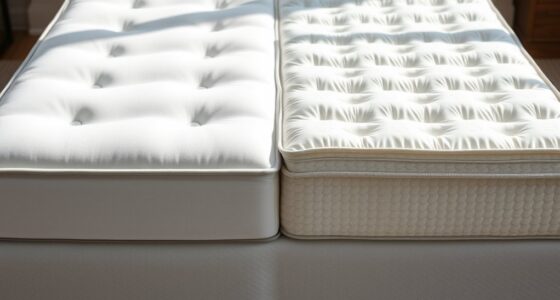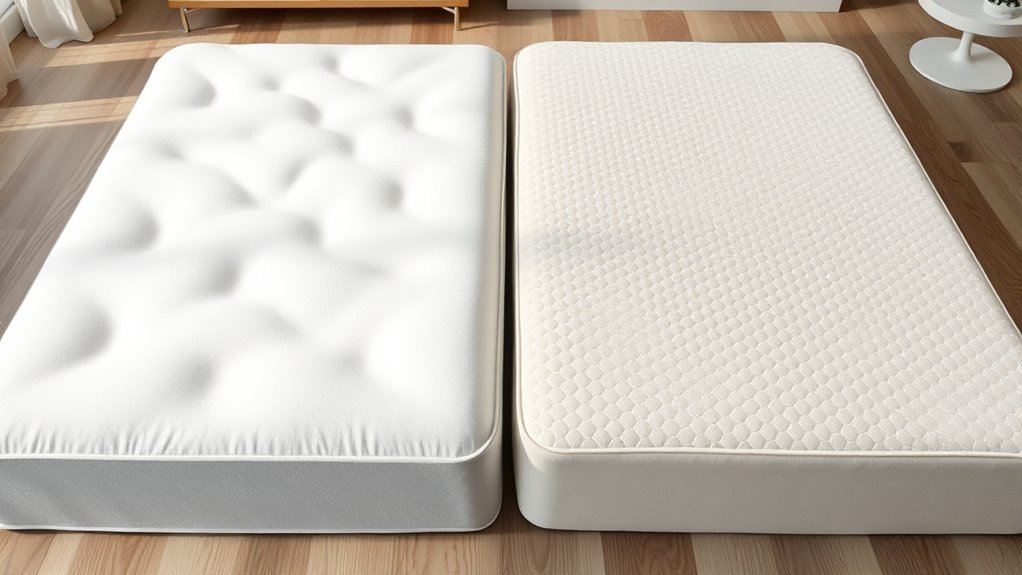

If you’re choosing between memory foam and latex mattresses, consider your comfort preferences, support needs, durability, temperature regulation, and budget. Memory foam offers excellent pressure relief and isolates motion but can trap heat and may wear out sooner. Latex provides resilient support, better breathability, and lasts longer but usually costs more upfront. To make an informed decision that suits your sleep style, explore the detailed pros and cons ahead.
Key Takeaways
- Memory foam offers superior pressure relief and contouring but tends to trap heat, while latex provides responsive support with better breathability.
- Latex mattresses are more durable and longer-lasting, often lasting 10-20 years, compared to 6-8 years for memory foam.
- Latex is naturally hypoallergenic and eco-friendly, whereas memory foam may contain chemicals and has a higher environmental footprint.
- Memory foam usually costs less upfront but may require earlier replacement; latex has higher initial costs but offers better long-term value.
- Latex resists dust mites and mold naturally, making it easier to maintain, while memory foam requires more careful cleaning and protective measures.
Comfort and Support Differences
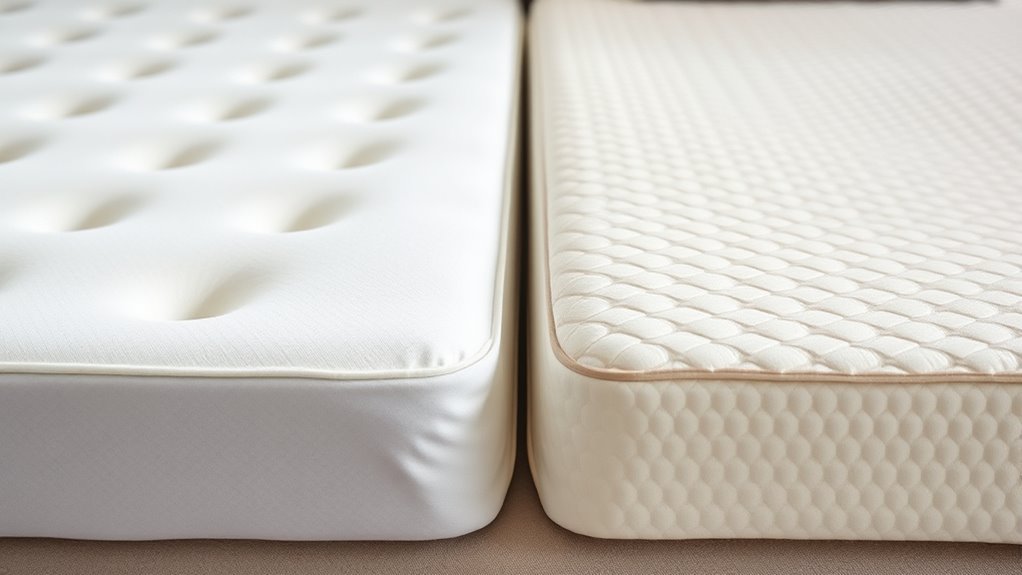
While both memory foam and latex mattresses aim to provide comfort and support, they do so in different ways. Memory foam conforms closely to your sleep posture, offering excellent pressure relief by cradling your body’s curves. This helps reduce pain points, especially around your hips and shoulders. Latex mattresses, on the other hand, offer a more resilient support system, maintaining a balanced feel that responds quickly to movement. They provide good pressure relief too but tend to be slightly more responsive, which can help you change positions easily during the night. If you prefer sinking in and feeling supported in specific areas, memory foam might suit you best. If you want a balance of support and responsiveness, latex could be your ideal choice.
Durability and Longevity

When it comes to durability, latex mattresses generally stand up better over time, resisting wear and tear more effectively than memory foam. You’ll find that latex retains its shape longer, offering a consistent sleeping surface for years. Typically, latex beds last around 10 to 20 years, while memory foam tends to need replacement sooner. Additionally, the filtration systems in some mattresses can influence their longevity by reducing dust and allergen buildup.
Material Durability Differences
Material durability plays a crucial role in how long your mattress will last, and understanding these differences can help you make a smarter choice. Latex mattresses typically boast excellent elasticity, allowing them to bounce back and maintain shape over years. Higher foam density in memory foam enhances durability, resisting sagging and indentations longer. Latex’s resilience often results in a longer lifespan compared to lower-density foams. Conversely, foam density varies widely, impacting how quickly the foam compresses or deteriorates. Factors like material quality and construction also influence longevity. To compare:
- Latex elasticity provides continuous support over time
- Foam density determines resistance to sagging
- Higher foam density prolongs foam life
- Latex’s natural resilience offers longevity advantages
- Density fluctuations in foam affect durability
Choosing based on these factors ensures your mattress lasts and maintains its supportive properties. Additionally, the material quality plays a significant role in overall durability and performance.
Wear and Tear Resistance
Both latex and memory foam mattresses are designed to withstand daily use, but their resistance to wear and tear can vary considerably. Latex mattresses generally offer better surface resilience, which helps them maintain their shape and comfort over time. They also tend to have superior edge stability, allowing you to sit or sleep near the edges without sagging. Memory foam, on the other hand, may develop permanent indentations or sagging with frequent use, especially if the quality isn’t high. Its surface can become less resilient, leading to reduced comfort and support. While both types can last several years, latex’s durability often makes it a more resilient choice for long-term wear and tear. Proper care and quality materials further influence how well each mattress resists damage over time. Additionally, tuning techniques and maintenance can extend the lifespan of each mattress by ensuring they remain in optimal condition.
Lifespan Expectations
On average, latex mattresses tend to last between 8 to 12 years, while memory foam mattresses typically endure for about 6 to 8 years. Your mattress’s lifespan depends on factors like bed frame compatibility and mattress weight limitations, which can influence durability. Choosing a suitable bed frame ensures even support and prevents premature sagging. Additionally, exceeding mattress weight limitations can accelerate wear and tear. Latex generally offers better resilience, resisting impressions longer, whereas memory foam may develop permanent indentations sooner. Proper maintenance, such as regular rotation, also extends lifespan. Keep in mind that quality materials and construction impact longevity. Ultimately, understanding these factors helps you select a mattress that offers ideal durability and matches your sleeping needs. Proper support and maintenance play a crucial role in extending your mattress’s life.
Temperature Regulation and Sleep Climate
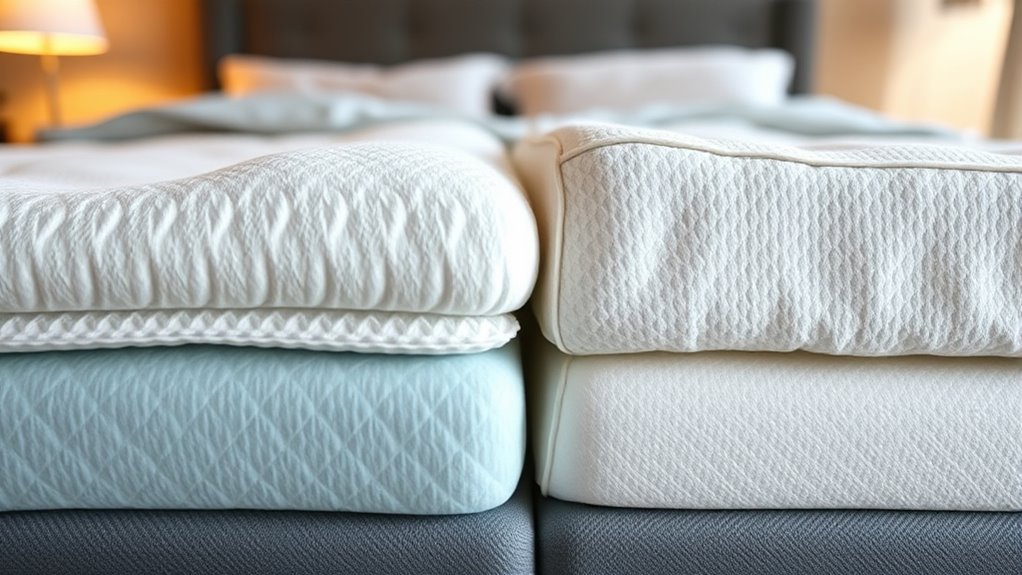
When it comes to ensuring a comfortable night’s sleep, temperature regulation plays a crucial role, and your choice of mattress can make a significant difference. Memory foam tends to retain heat, which can lead to overheating, while latex offers better cooling benefits due to its natural breathability. For ideal temperature control, consider how each material manages heat and moisture.
| Mattress Type | Temperature Regulation Features |
|---|---|
| Memory Foam | Traps heat, may cause sweating |
| Latex | Naturally breathable, promotes airflow |
Choosing a latex mattress can help you maintain a more consistent sleep climate, especially if you tend to sleep hot. Remember, good temperature regulation reduces discomfort and improves sleep quality.
Motion Isolation Capabilities

Memory foam absorbs movement quickly, providing excellent motion isolation so you won’t feel your partner’s shifts. Latex offers responsive support, meaning it reacts swiftly to movements but still minimizes disturbance. Understanding these differences helps you choose the mattress that best suits your sleep needs.
Foam’s Steady Response
Because foam mattresses are known for their ability to absorb and distribute movement, they offer steady response in motion isolation. This quality guarantees minimal disturbance when your partner moves or gets out of bed. Foam’s steady response relies on memory foam contouring, which conforms closely to your body’s shape, effectively dampening motion transfer. This makes foam mattresses ideal if you value sleep privacy and undisturbed rest. The following factors enhance foam’s steady response:
- Superior pressure point relief
- Reduced partner disturbance
- Enhanced sleep comfort
- Consistent contouring over time
- Reduced bounce and noise
Latex’s Responsive Support
Latex mattresses offer responsive support that effectively minimizes motion transfer, making them a strong choice if you want fewer disturbances from a partner’s movements. Their natural elasticity allows them to respond quickly to your movements, reducing the ripple effect common with other mattresses. This responsiveness also enhances bed frame compatibility, ensuring you can find a suitable base without sacrificing support. Additionally, latex’s hypoallergenic properties make it a good option for allergy considerations, as it resists dust mites and mold. For couples, this means less wake-up noise or movement disturbance. The table below highlights key aspects of latex’s motion isolation and support features:
| Feature | Benefit |
|---|---|
| Responsiveness | Quick recovery, reduces motion transfer |
| Bed Frame Compatibility | Works well with various bed frames |
| Allergy considerations | Naturally hypoallergenic, ideal for sensitive users |
| Support Level | Provides resilient, supportive surface |
| Suitability for Couples | Minimizes partner disturbance |
Allergies and Hypoallergenic Features
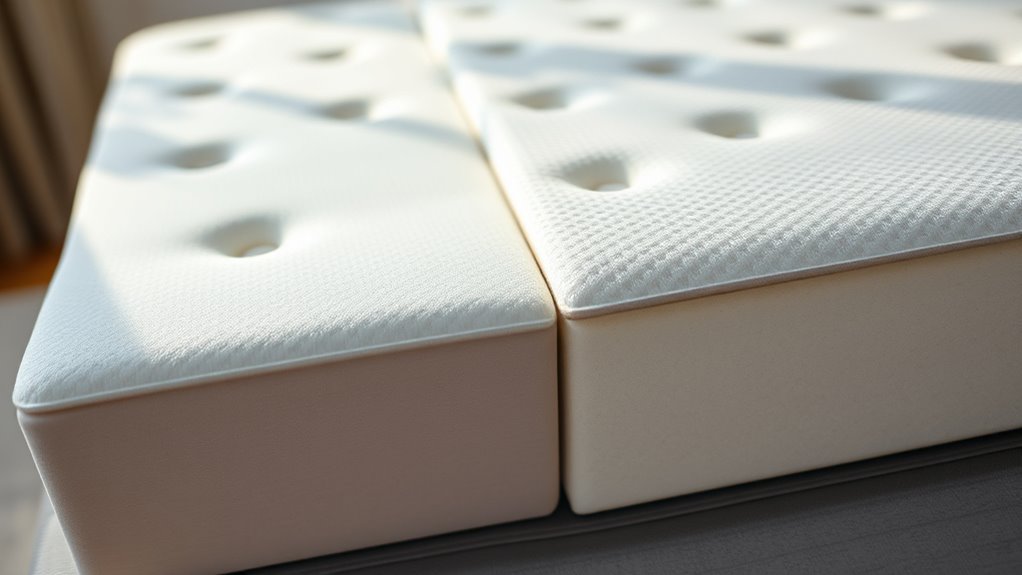
If you’re concerned about allergies, choosing the right mattress material can make a significant difference. Memory foam and latex mattresses differ in their allergy prevention capabilities. Latex naturally resists dust mites and mold, making it an excellent hypoallergenic choice. Memory foam, being dense and less porous, also discourages dust mites and minimizes allergen buildup. However, some memory foam mattresses may contain chemical adhesives or additives that could trigger sensitivities. To enhance allergy prevention, consider mattresses with certified hypoallergenic materials. Additionally, proper mattress covers can provide an extra barrier against allergens. Regular cleaning and ventilation can further reduce dust and allergen accumulation, promoting a healthier sleeping environment.
Maintenance and Care Requirements

Maintaining your mattress properly guarantees its longevity and keeps it comfortable over time. For latex mattresses, stain resistance is naturally higher, but you should still act quickly on spills. Use a mild soap and water solution or a gentle upholstery cleaner for spot cleaning, avoiding harsh chemicals that can damage the material. Memory foam mattresses require careful cleaning—avoid soaking and instead use a damp cloth with mild detergent for stains. Regularly vacuum your mattress to remove dust and allergens. Rotate your mattress every few months to prevent uneven wear. Keep a protective cover on your mattress to shield against spills and stains. Following these cleaning methods helps preserve both types of mattresses, ensuring they stay fresh, stain-free, and comfortable longer. Additionally, understanding organic and natural juices can contribute to overall health, supporting your body’s ability to recover and rejuvenate during sleep.
Price Range and Value for Money

When comparing price ranges, latex mattresses tend to be more expensive upfront but often offer better long-term value due to their durability and natural materials. Your choice depends on affordability factors and pricing strategies that suit your budget. While memory foam mattresses generally have lower initial costs, they may require replacement sooner, impacting overall value. To make a smart decision, consider:
- Initial investment versus longevity
- Cost differences based on material quality
- Potential savings from longer-lasting latex options
- How warranties influence value
- Overall affordability factors in your financial plan
Understanding these aspects helps you weigh immediate costs against long-term benefits. Remember, investing in a higher-quality mattress might seem costly now but can save you money and hassle in the future. Additionally, considering the long-term durability of materials can significantly influence the overall value of your purchase.
Environmental Impact and Sustainability

While both memory foam and latex mattresses impact the environment in different ways, latex mattresses generally have a smaller ecological footprint due to their natural materials and renewable resources. Latex is derived from rubber tree sap, making it more sustainable and biodegradable than memory foam, which relies on petrochemicals. However, recyclability concerns arise with latex mattresses, especially if they contain synthetic additives or non-natural components. Sourcing sustainability is vital; responsible harvesting of rubber trees ensures minimal environmental disruption and supports forest health. Memory foam, on the other hand, often involves energy-intensive manufacturing and chemical treatments, increasing its environmental impact. If eco-friendliness matters to you, latex offers a more sustainable choice, especially when sourced from companies committed to environmentally responsible practices. Additionally, sustainable harvesting methods play a crucial role in maintaining ecological balance and minimizing environmental harm.
Frequently Asked Questions
How Do Memory Foam and Latex Mattresses Affect Spinal Alignment?
When considering how memory foam and latex mattresses affect spinal alignment, you notice that both offer excellent pressure distribution, which helps reduce aches. Memory foam molds to your body, providing tailored spinal support, especially for side sleepers. Latex mattresses provide a more resilient surface, maintaining proper spinal alignment and support for back sleepers. Your choice depends on your sleeping position and preference for firmness, ensuring a comfortable, supportive night’s sleep.
Which Mattress Type Is Better for Couples With Different Firmness Preferences?
When choosing a mattress for couples with different firmness preferences, consider firmness compatibility to guarantee both partners get restful sleep. You might opt for a split or hybrid mattress that offers customizable firmness levels, promoting sleep harmony. This way, each person can enjoy their preferred comfort, reducing disruptions and enhancing overall sleep quality. Prioritizing flexibility and support helps you find a solution that satisfies both firmness needs.
Are There Any Health Conditions That Favor One Mattress Type Over the Other?
You might find that allergy concerns and joint pain influence your choice. For allergy sufferers, latex mattresses often resist dust mites and mold, making them a healthier option. If you experience joint pain, memory foam‘s contouring support can ease pressure points and improve comfort. Coincidentally, your specific health needs could make one mattress type more suitable, helping you sleep better and wake up refreshed.
How Do Different Brands Compare in Quality and Reliability?
When comparing brands, you should consider their reputation for quality and reliability. Reputable brands often offer better warranty coverage, giving you peace of mind. Look for customer reviews to gauge durability and support. Established brands tend to use higher-quality materials, ensuring longer-lasting mattresses. By researching brand reputation and warranty policies, you can make a confident choice that meets your needs and provides reliable comfort for years to come.
Can Memory Foam or Latex Mattresses Be Customized for Specific Needs?
You can customize memory foam or latex mattresses to meet your niche needs by exploring various customization options. Many brands offer adjustable firmness levels, specialized support zones, or customized layers to cater to specific sleep preferences or health concerns. By choosing these options, you guarantee your mattress aligns perfectly with your unique needs, providing better comfort, support, and overall sleep quality tailored specifically for you.
Conclusion
Choosing between memory foam and latex mattresses depends on what you value most in your sleep. Picture sinking into a cloud of comfort or waking refreshed on a firm, natural surface—both options offer unique benefits. As you consider durability, temperature regulation, and eco-friendliness, remember that your perfect mattress is waiting just beneath the surface, ready to support your dreams. Sometimes, the best choice feels like a coincidence—like finding the one mattress that fits you perfectly.