Organic mattress certifications like GOTS and GOLS guarantee that key materials are safe, sustainable, and free from harmful chemicals. GOTS focuses on organic fibers and strict environmental and social standards, while GOLS certifies organic latex for purity and safety. These labels help you identify products that meet high standards for health and eco-friendliness. But it’s important to understand what they cover and what they don’t—discover more to make informed choices.

Get wellness gear delivered free with Prime
- Fast, free delivery on millions of items
- Prime Video, Amazon Music and more included
- Member-only deals all year
Key Takeaways
- GOTS certifies organic fibers and strict environmental and social standards in textile processing, ensuring minimal chemical residues.
- GOLS certifies organic latex, focusing on purity, safety, and eco-friendly latex production.
- Both labels verify specific materials but may not cover all mattress components like foams or adhesives.
- Authentic certifications include official logos, certification numbers, and can be verified through certifying organizations’ websites.
- Certification guarantees compliance with organic and safety standards, but does not necessarily mean the entire mattress is chemical-free.
As an affiliate, we earn on qualifying purchases.
Why Organic Mattress Certifications Matter for Your Health and the Environment

Have you ever wondered if your mattress is truly safe and eco-friendly? Certifications confirm that your mattress comes from eco-friendly farming practices, reducing the use of harmful chemicals. They also guarantee chemical-free manufacturing processes, meaning fewer toxins off-gas into your home. When a mattress is certified organic, you can trust it’s made without synthetic pesticides, fertilizers, or toxic dyes. This benefits your health by minimizing exposure to irritants and allergens. It also supports environmental sustainability by promoting farming methods that conserve water and soil health. Incorporating eco-friendly practices in your choice of bedding further enhances your commitment to a healthier lifestyle. Without these certifications, you risk exposure to potentially hazardous substances. Choosing certified organic mattresses helps protect your well-being and the planet, giving you peace of mind knowing your sleep environment is safe, natural, and environmentally responsible. Additionally, understanding effective filtration can help you make informed decisions about the products you purchase online.
As an affiliate, we earn on qualifying purchases.
What Are Organic Mattress Certifications and Why Are They Important

Organic mattress certifications set clear standards to verify that products meet specific organic and safety criteria. They guarantee transparency, so you can trust what’s inside your mattress and how it’s made. Ultimately, these certifications protect your health and support better environmental practices. Additionally, choosing certified mattresses can enhance your overall sleep comfort and promote healthier sleep environments. By opting for certified products, consumers contribute to sustainable practices, reinforcing the importance of ethical choices in modern consumer life. Furthermore, many certified mattresses also prioritize energy-saving practices, which can lead to lower energy consumption in your home. This commitment to effective personal finance not only benefits your well-being but also reflects a thoughtful approach to long-term investment in quality sleep. Moreover, understanding these certifications can help consumers navigate the complexities of organic materials in the marketplace.
Certification Standards Explained
Understanding what qualifies a mattress as “organic” requires knowing the certification standards behind it. These standards verify that the materials used come from organic farming, which avoids synthetic chemicals and pesticides. The certification process involves rigorous inspections of farms and manufacturers to ensure they meet strict guidelines. For organic mattresses, organizations like GOTS and GOLS set specific criteria, including limits on chemical residues and the use of sustainable practices. This process guarantees that the mattress’s fibers and foams are genuinely organic and free from harmful substances. Furthermore, the horsepower of electric dirt bikes can be compared to the efficiency of sustainable practices in organic mattress production. By understanding these standards, you can confidently choose a mattress that aligns with organic principles, assure healthier sleep and a smaller environmental footprint. Certification standards provide trust and transparency in the organic mattress industry, fostering innovative content formats that enhance consumer awareness. Additionally, proper care of the mattress materials helps maintain their integrity and longevity. Investing in top car protection can also enhance your overall comfort and health while sleeping, just as organic mattresses prioritize your well-being. Moreover, maintaining indoor air quality is crucial, as many organic materials contribute to a healthier living environment.
Ensuring Product Transparency
Ever wondered how you can be sure that an organic mattress truly meets its claims? Certification plays a vital role in ensuring product transparency. It helps you distinguish genuine organic products from those that use synthetic alternatives or misleading marketing tactics. Unfortunately, certification myths often lead consumers to believe that all “organic” labels are trustworthy, but that’s not always the case. Reputable certifications like GOTS and GOLS set strict standards, verifying that materials are genuinely organic and free from harmful chemicals. When a mattress bears these certifications, you can trust it has undergone rigorous testing and inspection. This transparency empowers you to make informed choices, knowing your mattress aligns with your health and environmental values, rather than just relying on marketing claims or vague labels. Additionally, just as color accuracy is crucial for enhancing visual experiences in home cinema projectors, it is equally essential for ensuring that the materials in your mattress contribute to a healthier sleep environment. Proper humidity levels in your home also play a significant role in maintaining the integrity of organic materials, ensuring a comfortable sleep environment. Understanding the importance of straining paint can also lead to better quality and longevity in products, similar to how certifications ensure the integrity of organic mattresses. Moreover, being aware of poolside entertaining can inspire creative approaches to creating a calming and enjoyable sleep environment, much like how thoughtful decor enhances a gathering. Additionally, focusing on holistic SEO can provide a comprehensive approach to understanding and improving the visibility of organic mattress brands.
Impact on Health and Environment
Certifications for organic mattresses play a crucial role in protecting both your health and the environment. They reduce your exposure to harmful chemicals often found in conventional mattresses, lowering the risk of chemical exposure that can cause health issues. Certified organic materials also help prevent allergic reactions by avoiding synthetic dyes, flame retardants, and chemical treatments. When you choose a certified organic mattress, you’re supporting eco-friendly farming practices that minimize environmental harm, such as soil degradation and water pollution. These certifications guarantee the mattress is made without toxic substances that can impact ecosystems. Additionally, opting for certified organic mattresses often includes a commitment to sustainable textile care, which emphasizes responsible production methods. Overall, investing in certified organic mattresses contributes to a healthier home environment and a more sustainable planet, giving you peace of mind with every night’s sleep. Furthermore, understanding dark psychology tactics can help you make informed choices about the products you bring into your home. Additionally, many organic mattresses are made from natural materials that further enhance their health benefits, including ergonomic designs that promote better sleep posture. Research indicates that astrological compatibility may also play a role in enhancing personal well-being, which can be complemented by a restful sleep experience.
certified organic mattress with no chemicals
As an affiliate, we earn on qualifying purchases.
As an affiliate, we earn on qualifying purchases.
Understanding GOTS Certification for Organic Textile Materials

Understanding GOTS Certification for Organic Textile Materials
Understanding GOTS certification sets the standards for organic textile materials, ensuring they meet strict environmental and social criteria. You’ll learn about the specific requirements for organic materials and the step-by-step process to verify compliance. Understanding these elements helps you confidently choose products that truly meet organic standards. Additionally, incorporating NEAT principles into your lifestyle can further enhance your overall well-being while managing weight and diabetes. Furthermore, the emphasis on cultural identity in various certifications highlights the importance of ethical sourcing in the textile industry.
Certification Standards Overview
Understanding GOTS certification is essential if you want to guarantee that textile products meet strict organic and social standards. GOTS sets thorough criteria, including limits on chemical residues to ensure products are safe for consumers and the environment. Many certification myths suggest that GOTS only covers organic farming, but it also enforces social responsibility and environmental practices throughout processing. It requires strict controls on toxic substances, dyes, and chemical residues, ensuring the final product is free from harmful chemicals. This means that when you see a GOTS label, you can trust that the mattress’s textile components adhere to rigorous standards. By understanding these certification standards, you can make informed choices, knowing that certified products genuinely meet organic and safety commitments.
Organic Material Requirements
To meet GOTS standards, at least 95% of the textile material must originate from organic sources. This means that the material sourcing relies heavily on organic farming practices, which avoid synthetic chemicals, pesticides, and genetically modified organisms. The focus is on guaranteeing that fibers come from farms committed to sustainable and environmentally friendly methods. When evaluating organic material requirements, it’s vital to verify that the fibers are genuinely organic, not just labeled as such. GOTS certification mandates strict controls to confirm that the raw materials meet these criteria from farm to finished product. This assures that your mattress contains fibers produced through responsible organic farming, supporting both environmental health and consumer safety.
Certification Process Steps
The certification process for organic textile materials involves a series of well-defined steps that guarantee compliance with GOTS standards. You’ll start with a thorough application, demonstrating your materials meet organic requirements and guaranteeing minimal chemical residues. Next, an on-site inspection verifies that your manufacturing processes align with GOTS criteria. During this phase, certification validity is assessed, confirming ongoing adherence. You’ll also need to submit documentation proving your supply chain’s transparency and purity. Regular audits follow to maintain certification, assuring no chemical residues compromise organic integrity.
| Step | Key Focus |
|---|---|
| Application Submission | Demonstrate organic compliance |
| Inspection | Verify manufacturing processes |
| Documentation Review | Confirm supply chain transparency |
| Certification Validity | Ensure ongoing standards compliance |
| Re-evaluation & Audits | Maintain certification and chemical residues control |
As an affiliate, we earn on qualifying purchases.
What GOLS Certification Means for Organic Latex Mattresses

GOLS certification, which stands for Global Organic Latex Standard, verifies that organic latex mattresses meet strict environmental and social criteria. It assures the latex used comes from responsible latex farming practices that avoid harmful chemicals and prioritize sustainable methods. This certification also confirms fair labor conditions and social responsibility. While gaining GOLS certification involves certification costs, these expenses reflect the rigorous standards suppliers must meet. For you, it guarantees that the latex mattress is produced with environmentally friendly processes and ethically sourced materials. Knowing a mattress has GOLS certification gives you peace of mind about its quality and sustainability. It also signifies that the product adheres to global standards, making it a reliable choice for eco-conscious consumers seeking organic latex mattresses.
How to Recognize GOTS and GOLS Labels When Shopping

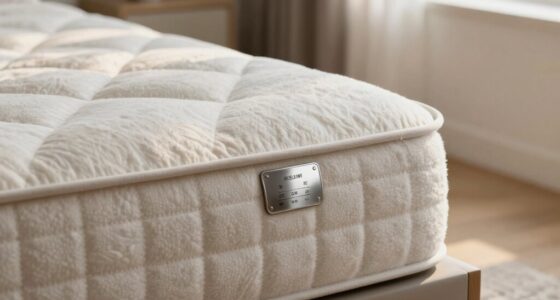
When shopping for an organic mattress, spotting genuine certifications guarantees you’re making an eco-friendly and ethical choice. To recognize authentic GOTS and GOLS labels, examine the label closely for clear, official logos and specific certification numbers. Authentic labels will often include detailed information about the certifying body and date of certification. Be cautious of labels that look generic or lack transparency, as they may not be genuine. Conduct a quick certification comparison by visiting the certifying organizations’ websites to verify the label’s legitimacy. Remember, label authenticity is key to ensuring your mattress truly meets organic standards. By paying attention to these details, you can confidently select a product that aligns with your eco-conscious values and trust the certification claims.
Differences Between GOTS and GOLS Certifications for Mattresses

Understanding the key differences between GOTS and GOLS certifications helps you make informed choices when selecting an organic mattress. GOTS focuses on organic fiber processing, guaranteeing minimal chemical residues and strict environmental standards. GOLS, on the other hand, certifies organic latex, emphasizing the purity and safety of latex products. Certification validity varies: GOTS requires annual renewal to maintain standards, while GOLS also mandates regular audits. Recognizing these distinctions helps you assess a mattress’s overall safety and organic integrity.
- GOTS emphasizes fiber processing, not just materials
- GOLS centers on organic latex quality
- Chemical residues are minimized through strict standards
- Certification validity depends on ongoing compliance
- Both ensure higher safety and sustainability than conventional labels
What Certification Labels Say About Safety and Sustainability

Certifications like GOTS and GOLS are more than just labels—they communicate a product’s safety and environmental impact to consumers. These certifications require rigorous chemical testing to guarantee harmful substances are minimized or eliminated, giving you confidence in your mattress’s safety. However, certification myths can lead to misconceptions, such as believing all certified products are completely chemical-free. In reality, they indicate that the product meets strict standards for safety and sustainability, but some chemical exposure may still occur in trace amounts. These labels serve as a trustworthy guide, showing that manufacturers have undergone independent testing and certification processes. Ultimately, they help you make informed choices about healthier, eco-friendly sleep options, emphasizing safety and sustainability without oversimplifying complex standards.
Common Misconceptions About Organic Mattress Certifications

Many people believe that once a mattress has an organic certification, it’s completely free of chemicals, but that’s a common misconception. Certifications like GOTS and GOLS focus on organic fibers, but they have limitations. They don’t necessarily ban synthetic alternatives used in other parts of the mattress, such as foams or adhesives. This means a certified mattress might still contain non-organic components. It’s important to understand these certification limitations and ask questions about the entire mattress composition.
- Some certifications only cover specific materials, not the whole mattress
- Synthetic alternatives may be present in non-fiber components
- Labels don’t guarantee absence of all chemicals, just certain ones
- Organic certification doesn’t mean chemical-free manufacturing processes
- Always verify what parts of the mattress are certified and what aren’t
Questions to Ask When Buying an Organic Mattress With Certification

When shopping for an organic mattress with certification, asking the right questions can make all the difference in guaranteeing you get what you’re paying for. Understanding the historical context of certifications helps you recognize their credibility, while current market trends reveal how brands meet these standards. Ask about the specific certification body—whether it’s GOTS or GOLS—and request details on the materials used. Find out if the product has third-party testing and verification, and inquire about supply chain transparency. As the market trends toward stricter environmental and health standards, questioning manufacturers about their practices ensures you’re making an informed choice. Ultimately, clear questions help you confirm that the mattress’s certifications genuinely reflect organic quality and align with your health and sustainability values.
Frequently Asked Questions
Are GOTS and GOLS Certifications Globally Recognized?
Yes, GOTS and GOLS certifications are globally recognized, adhering to strict certification standards. These certifications prove that products meet high environmental impact criteria and social responsibility guidelines. When you see these labels, you can trust that the mattress is made with organic materials and sustainable practices, regardless of where you buy it. They provide assurance that the manufacturers prioritize environmental impact and ethical standards worldwide.
How Often Do Certifications Need Renewal or Verification?
Imagine you buy a mattress with GOTS certification, and after five years, you wonder about its Certification validity. Typically, GOTS and GOLS certifications require annual renewal and verification to guarantee ongoing compliance. Renewal procedures involve submitting updated documentation and undergoing inspections if necessary. Staying on top of these ensures your mattress remains certified, maintaining its organic integrity and trusting its certification status over time.
Can a Mattress Be Partially Certified?
Yes, a mattress can be partially certified. Certification limitations mean that only certain components, like organic cotton or natural latex, may meet standards like GOTS or GOLS, leading to partial compliance. This can be beneficial if you prioritize specific materials but still want some assurance of organic quality. Keep in mind, partial certification may not cover the entire mattress, so review the details to understand what’s certified versus what isn’t.
Do Certifications Guarantee Chemical-Free Manufacturing?
Certifications like GOTS and GOLS guarantee a high standard of chemical safety and manufacturing practices, but they don’t guarantee a mattress is completely chemical-free. They set strict guidelines for natural materials and safe processes, reducing harmful chemicals, but some residues or treatments might still be present. So, while certifications substantially improve safety and eco-friendliness, it’s wise to check product details for specific chemical disclosures if you want truly chemical-free options.
Are There Costs Associated With Obtaining These Certifications?
Back in the day, obtaining certifications like GOTS and GOLS involves some costs. You should know that the certification process can be expensive, covering application fees, testing, and ongoing audits. Certification costs vary depending on your product size and complexity. While it’s an investment, these costs help assure consumers of your product’s organic and sustainable integrity, ultimately boosting your brand’s credibility and market appeal.
Conclusion
Exploring the world of organic mattress certifications is like charting a course through a lush forest—each label a guiding star illuminating your path to health and sustainability. By understanding what GOTS and GOLS truly signify, you’ll wield the compass needed to pick a mattress that nurtures your wellbeing and safeguards the planet. Trust your instincts, ask the right questions, and let these certifications be the lanterns leading you to restful, eco-conscious slumber.
Fall Picks
fall essentials
As an affiliate, we earn on qualifying purchases.