The fabric weave markedly impacts your bedding’s comfort by shaping its softness, breathability, and durability. For example, percale weaves feel crisp and allow airflow, making them ideal for hot sleepers, while sateen offers a silky smoothness but may trap heat. The weave also affects how well sheets wear over time. By understanding how different weaves influence your sleep experience, you’ll discover ways to choose bedding that feels just right for you—explore further to learn more.
Key Takeaways
- The weave type affects how the fabric feels against the skin, influencing comfort and tactile sensation.
- Well-made weaves can enhance softness and smoothness regardless of thread count.
- Open weaves like percale promote airflow, improving breathability and temperature regulation.
- Dense weaves such as twill offer durability but may feel less breathable than lighter weaves.
- Choosing the right weave balances personal preferences for softness, crispness, and breathability for optimal comfort.
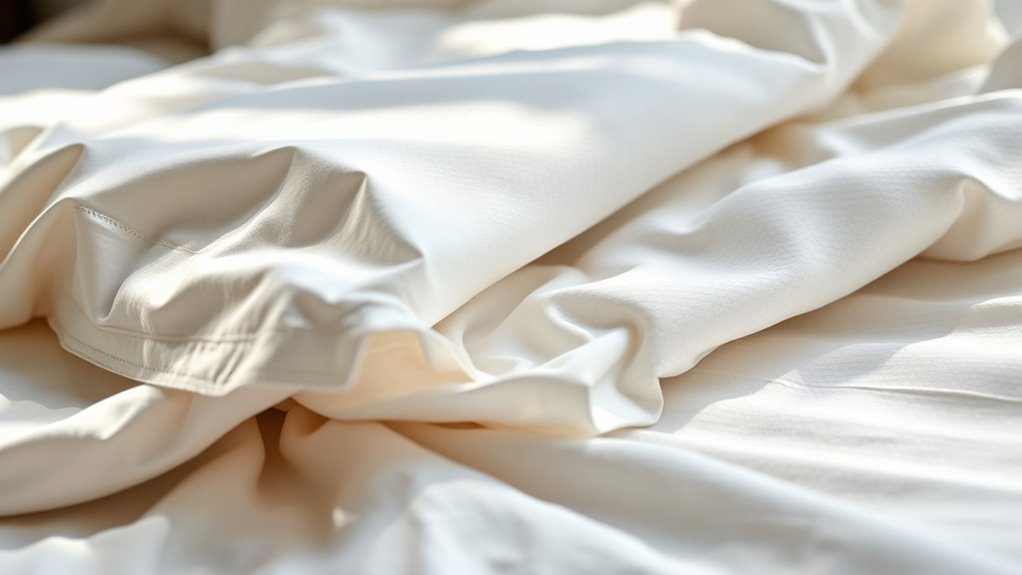
Choosing the right fabric weave can considerably impact your bedding’s comfort and durability. When selecting sheets, one of the key factors to consider is the thread count, which often correlates with the fabric’s density and softness. A higher thread count typically means more yarns are woven into each square inch, resulting in a smoother, more luxurious feel. However, it’s essential to remember that thread count isn’t the only indicator of quality. Sometimes, a lower thread count with a well-made weave can outperform a higher count that’s poorly woven. The weave itself influences how the fabric feels against your skin and how long it maintains its integrity over time.
Breathability is another crucial aspect influenced by the fabric weave. If you tend to sleep hot or live in a warmer climate, you’ll want sheets that allow air to circulate freely. Certain weaves, like percale, are tightly woven but still breathable because of their lightweight construction. Others, like sateen, have a smoother surface but may trap more heat, making them less suitable for hot sleepers. The way the threads are interlaced determines how much air passes through the fabric; more open weaves tend to promote better airflow. This can help regulate your body temperature during the night, preventing overheating and ensuring a more restful sleep. Additionally, different weaves also impact durability, with some being more resistant to pilling and wear over time.
Different weaves also impact durability. For example, a twill weave, recognizable by its diagonal pattern, is known for its strength and resistance to wear. Conversely, a plain weave offers a balanced, straightforward pattern that is generally durable and easy to care for. The choice of weave affects how well your sheets will stand up after repeated washes, so if longevity matters to you, opting for a tighter, more durable weave could be a smart move.
Ultimately, selecting the right fabric weave involves balancing your personal preferences for feel, temperature regulation, and longevity. If you prioritize softness and smoothness, sateen might be appealing, but if breathability and crispness are more important, percale could be the better choice. Pay close attention to the thread count and weave type, as these elements directly influence your sleep experience. By understanding how different weaves work, you can find bedding that feels just right, enhances your comfort, and lasts longer, making every night’s sleep more enjoyable. Exploring fabric quality can further help you choose the most suitable bedding for your needs.
Frequently Asked Questions
How Do I Choose the Best Weave for Sensitive Skin?
To choose the best weave for sensitive skin, look for hypoallergenic fabrics that minimize irritation. Opt for smooth, tightly woven fabrics like sateen or percale, which reduce skin contact with rough fibers. Avoid coarse or loosely woven textiles that trap allergens and irritate skin sensitivity. Always check product labels for hypoallergenic options, and consider natural fibers like cotton or silk, which are gentle and breathable, enhancing comfort for sensitive skin.
Do Different Weaves Affect Bed Durability Over Time?
Different weaves do impact bed durability over time. For example, a tightly woven percale fabric often shows higher thread strength and wear resistance, making it last longer. As you use your bedding, these qualities help prevent pilling and tearing, maintaining its appearance. So, choosing a weave with strong thread and good wear resistance guarantees your bedding stays durable, even after repeated washes and daily use.
Can Fabric Weaves Influence Bedding Temperature Regulation?
Yes, fabric weaves can influence bedding temperature regulation. When you choose a breathable weave, it enhances breathability, allowing air to circulate and keep you cool. Additionally, a good weave improves moisture management, drawing sweat away from your skin and preventing overheating. Opting for fabrics with better breathability enhancement and moisture-wicking properties helps you stay comfortable and cool throughout the night.
Are Certain Weaves More Eco-Friendly Than Others?
You’ll be happy to know that some weaves are more eco-friendly than others. For example, bedding made with sustainable fibers like organic cotton or hemp reduces environmental impact by 50% compared to conventional fabrics. Using eco-friendly dyes further minimizes pollution. Tighter weaves often require less dye and fewer chemicals, making them a better choice for eco-conscious consumers. Choosing these options helps you sleep well while caring for the planet.
How Does Weave Tightness Impact Allergy Prevention?
A tighter weave can help prevent allergies by reducing fiber breathability, which limits allergen trapping. When the weave is tight, fewer dust mites, pollen, and other allergens can pass through or settle into your bedding. You’ll notice less sneezing and irritation. Conversely, looser weaves allow more fiber breathability, increasing allergen trapping. So, choosing bedding with a tightly woven fabric can notably improve allergy prevention and overall comfort.
Conclusion
Just as Da Vinci’s brushstrokes create masterpiece textures, your choice of fabric weave shapes your bedding’s comfort. By understanding how different weaves influence breathability, softness, and durability, you can craft a sleep sanctuary as timeless as art itself. Remember, selecting the right weave isn’t just about style—it’s about creating a haven where you can rest as peacefully as a sleeping beauty in her enchanted slumber. Your perfect bedtime story begins with the right weave.