To manage allergies at night, choose hypoallergenic pillows and bedding made from synthetic fibers like microfiber or polyester, which resist dust mites and mold. Wash your bedding weekly in hot water and use allergen-proof covers to prevent mite buildup. Keep your bedroom dry and well-ventilated with humidity levels between 30-50%. Incorporating these tips can greatly reduce allergy symptoms, and exploring additional strategies can help you create a healthier sleep environment.

Get wellness gear delivered free with Prime
- Fast, free delivery on millions of items
- Prime Video, Amazon Music and more included
- Member-only deals all year
Key Takeaways
- Use hypoallergenic pillows and bedding made from synthetic materials like microfiber to reduce dust mite buildup.
- Wash bedding weekly in hot water and use allergen-proof covers to prevent mite and allergen accumulation.
- Maintain bedroom humidity between 30-50% with dehumidifiers or air purifiers to inhibit dust mite growth.
- Replace pillows every 1-2 years and select products labeled hypoallergenic for ongoing allergy management.
- Regularly air out bedding and keep the sleeping environment clean to minimize allergen exposure overnight.
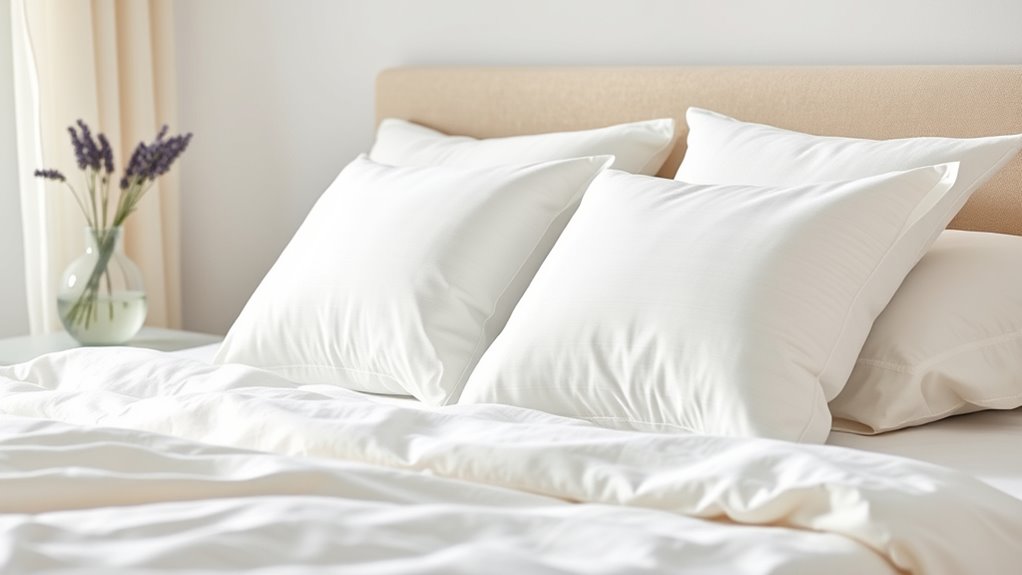
Are you tired of waking up sneezing or with itchy eyes? If so, your sleeping environment might be contributing to your allergy symptoms. Many allergens, especially dust mites, thrive in bedding and pillows, triggering reactions that disrupt your rest. Fortunately, you can take control by choosing hypoallergenic pillows and bedding designed specifically to manage allergies. One key step is focusing on dust mite prevention. Regularly washing your bedding in hot water helps eliminate these tiny invaders, but investing in dust mite-proof covers is even more effective. These covers create a barrier that prevents dust mites from settling into your pillows and mattress, making it harder for allergens to affect you overnight.
Protect your sleep by using hypoallergenic bedding and dust mite-proof covers to reduce allergy triggers overnight.
Switching to allergy friendly materials can markedly reduce your exposure to common allergens. Look for pillows and bedding made from synthetic fibers like microfiber or polyester, which don’t harbor dust mites as easily as natural materials such as down or feather. Natural fibers tend to trap moisture and provide a cozy environment for dust mites, while allergy friendly materials are engineered to resist mold, bacteria, and dust mite accumulation. Not only do these materials help keep allergens at bay, but they also tend to be hypoallergenic themselves, reducing the risk of skin irritation or allergic reactions. When shopping, check labels for products specifically designed to be hypoallergenic, so you know you’re choosing items that prioritize allergy management.
In addition to selecting the right materials, make sure to maintain your bedding properly. Wash your pillows and sheets regularly—ideally once a week—in hot water to kill dust mites and remove allergens. Use a gentle, allergen-free detergent to avoid irritating your skin or worsening your allergies. Airing out your bedding during the day can also help reduce moisture buildup, which dust mites love. If you’re prone to allergies, consider replacing pillows every one to two years, as they can accumulate allergens over time even with regular cleaning.
Furthermore, recent advancements in AI-driven household maintenance suggest that smart devices can monitor humidity and air quality, helping you optimize your sleeping environment for allergy prevention. Finally, pay attention to your bedroom environment. Keep humidity levels low—ideally between 30-50%—since high humidity encourages dust mite growth. Using a dehumidifier or air purifier with a HEPA filter can further reduce airborne allergens. By combining dust mite prevention strategies with allergy friendly materials and good maintenance habits, you create a sleep environment that supports your health and helps you breathe easier through the night. Taking these steps can make a real difference in managing allergy symptoms, so you can wake up feeling refreshed rather than congested.
Products Worth Considering

Levoit Vital 100S-P Air Purifier with Washable Pre-Filter

Blueair Blue Pure 211i Max Air Purifier for Large Rooms

Blueair Blue Pure 511i Max Smart Air Purifier
As an affiliate, we earn on qualifying purchases.
Frequently Asked Questions
How Long Do Hypoallergenic Pillows Typically Last?
Hypoallergenic pillows typically last around 1 to 3 years, depending on their pillow lifespan and durability. You should replace them when they start to lose shape, develop persistent odors, or trap allergens despite regular cleaning. The durability of hypoallergenic pillows varies based on materials like memory foam or latex, which tend to be more durable than down or polyester. Regularly inspect your pillow to guarantee it continues to support your sleep and allergy management.
Are Hypoallergenic Bedding Materials Eco-Friendly?
Your hypoallergenic bedding materials are often eco-friendly, making them a smart choice for the planet. They typically use sustainable fabrics, and brands prioritize eco-conscious manufacturing processes. While some might think eco-friendly means sacrificing quality, that’s not true here—you get durability and comfort too. By choosing these options, you help reduce environmental impact and support sustainable practices, making your sleep not only healthier but also kinder to Earth.
Can Hypoallergenic Pillows Help Reduce Asthma Symptoms?
Yes, hypoallergenic pillows can help reduce your asthma symptoms by minimizing pillow allergies that often trigger asthma flare-ups. When you switch to these pillows, you create a cleaner sleeping environment, which promotes better asthma relief. By reducing exposure to dust mites and allergens, you may notice fewer nighttime asthma attacks and improved sleep quality. Making this change supports your overall respiratory health and helps you breathe easier throughout the night.
How Do I Properly Clean and Maintain Hypoallergenic Bedding?
To properly clean and maintain your hypoallergenic bedding, use a gentle, fragrance-free detergent to avoid skin irritation and preserve its hypoallergenic qualities. Wash your bedding weekly in hot water, ideally above 130°F, to eliminate dust mites and allergens. When drying, use a low heat setting or air dry to prevent damage and keep the bedding fresh. Regular cleaning guarantees your bedding remains allergen-free and comfortable.
Are Hypoallergenic Pillows Suitable for All Sleep Positions?
Is a hypoallergenic pillow the chameleon of your sleep setup? Yes, it’s compatible with most sleep postures, adapting to your preferred style. Whether you sleep on your side, back, or stomach, hypoallergenic pillows support your neck and spine effectively. They’re designed for versatility, ensuring a comfortable night’s rest regardless of your sleep posture. So, rest assured, hypoallergenic pillows suit nearly everyone’s sleeping habits, making allergy management seamless and comfortable.
Conclusion
Switching to hypoallergenic pillows and bedding can markedly improve your sleep quality and reduce allergy symptoms. Did you know that up to 30% of allergy sufferers experience fewer issues after making the switch? By choosing the right materials, you create a healthier sleep environment and wake up feeling more refreshed. Investing in hypoallergenic options isn’t just a comfort upgrade—it’s a simple step toward better respiratory health and a more restful night’s sleep.