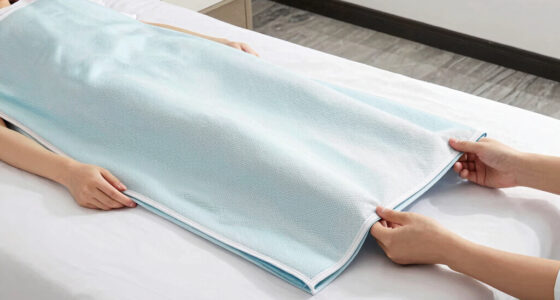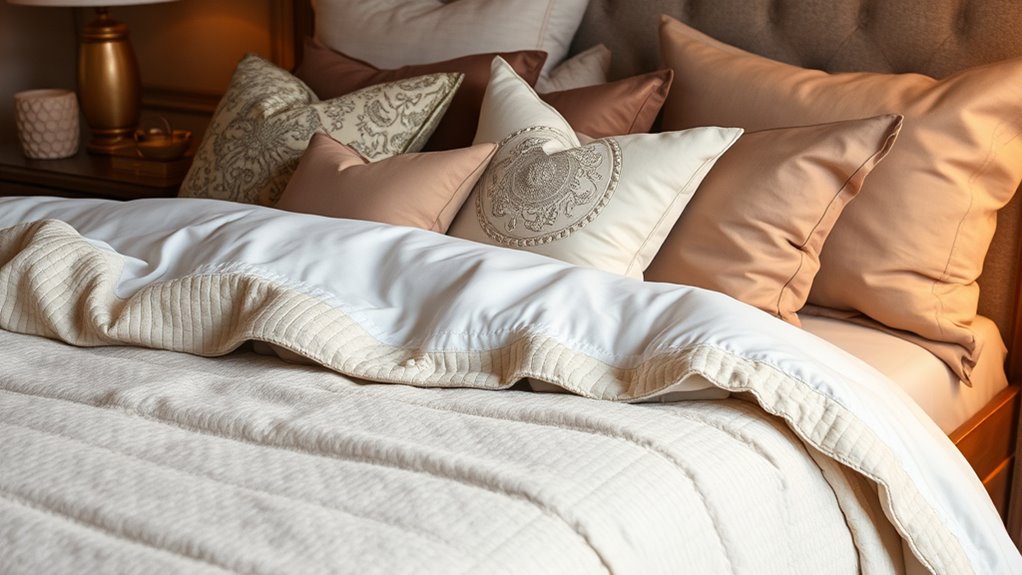

To layer bedding for texture and warmth, start with a comfy base like a fitted sheet and duvet. Add a variety of pillows with different sizes, shapes, and textures—think velvet, knits, or embroidered designs—to create depth. Mix smooth fabrics with textured throws or quilts, sticking to a cohesive color palette to keep things balanced. Play with contrast and arrangement, and you’ll craft a cozy, stylish retreat that invites relaxation and interest. Keep exploring to learn more tips!
Key Takeaways
- Start with a comfortable base layer using fitted sheets and a duvet or comforter for warmth.
- Incorporate textured pillows like knits, velvet, or embroidered designs to add tactile interest.
- Mix materials such as silky pillowcases with chunky throws for visual and tactile contrast.
- Layer larger pillows at the headboard with smaller decorative pillows in front for dimension.
- Use warm, harmonious color schemes and contrasting textures to create an inviting, cozy bedding ensemble.

Layering your bedding is an easy way to add both texture and warmth to your bedroom. When you start with a solid, comfortable base like a fitted sheet and a cozy duvet or comforter, you set the foundation for an inviting and stylish look. From there, you can build layers that not only enhance comfort but also showcase your personal style. One of the most effective ways to achieve this is by incorporating decorative pillows. These pillows bring immediate visual interest, allowing you to introduce different shapes, sizes, and textures into your bed. Whether you opt for plush velvet, textured knits, or embroidered designs, decorative pillows add depth and dimension, making your bed look more inviting.
Layering bedding with decorative pillows adds texture, warmth, and personal style to your bedroom.
Color coordination plays a *vital* role in creating a cohesive and appealing layered bedding look. You want your decorative pillows to complement the overall color scheme of your room, tying everything together seamlessly. If your bedroom features neutral tones, you can add pops of color with vibrant pillows or patterned cases. Conversely, if your space already boasts bold hues, consider selecting pillows in more subdued shades or coordinating patterns to keep the look balanced. Mixing and matching different shades within a harmonious palette enhances visual interest without overwhelming the senses.
When layering, think about not just the colors but also the textures. Combining smooth, silky pillowcases with textured throws or quilted shams creates a tactile experience that invites you to settle in. Be mindful of how these textures interact; too many competing patterns or overly busy designs can detract from the overall aesthetic. Instead, aim for a curated mix that feels intentional and balanced. For example, pair a sleek, monochromatic duvet with a set of patterned decorative pillows and a chunky knit throw at the foot of the bed. This approach adds richness without clutter.
Don’t hesitate to experiment with different arrangements to find what looks best. Start by stacking a few larger pillows at the head of the bed, then layer smaller decorative pillows in front. Use contrasting colors or patterns to highlight certain pieces, but keep the overall look unified through consistent color themes. Remember, layering bedding is about creating a cozy, stylish retreat that feels personalized. Incorporating natural textures and rustic decor can further enhance the farmhouse charm and make your space truly inviting. With thoughtful placement of decorative pillows and careful attention to color coordination, you’ll craft a layered bedding ensemble that’s both visually stunning and irresistibly comfortable.

Cooling Blanket Queen Size, Cooling Blankets for Hot Sleepers, Absorbs Heat to Keep Body Cool for Summer Nights Sweats, Cold Blanket for Bed Couch Sofa, Ice Blanket 90x90 Inches, Dark gray
- Heat-wicking for temperature regulation: Regulates skin temperature and wicks moisture
- Instant cooling sensation: Provides quick chill to help fall asleep
- Double-sided versatile design: Suitable for all seasons with premium fabric
As an affiliate, we earn on qualifying purchases.
Frequently Asked Questions
How Do I Choose Bedding Colors That Complement My Room?
To choose bedding colors that complement your room, focus on color coordination with your walls and decor. Opt for shades that enhance your room’s mood, like calming blues or energizing yellows. Consider your existing color palette and pick bedding that either blends seamlessly or creates a striking contrast. This approach not only boosts visual harmony but also elevates your space’s overall ambiance, making it more inviting and personalized.
What Are the Best Materials for Allergy-Friendly Bedding Layers?
You should look for bedding layers made from hypoallergenic fibers like silk, bamboo, or microfiber, which resist dust mites and allergens. Natural materials such as organic cotton and wool are also great options because they breathe well and are less likely to cause irritation. These materials help you enjoy cozy, layered bedding without triggering allergies, ensuring a comfortable and healthy sleep environment every night.
How Can I Maintain and Wash Layered Bedding Properly?
To maintain your layered bedding, follow proper bed linen care by washing each layer regularly with gentle, allergy-friendly detergents. Use warm water for deep cleaning and avoid bleach, which can damage fabrics. Always check care labels for specific washing tips, and tumble dry on low heat or air dry to preserve textures. Regular cleaning keeps your bedding fresh, cozy, and allergen-free, ensuring a comfortable sleep environment.
What Seasonal Variations Should I Consider When Layering?
You should embrace seasonal fabric swaps and temperature-sensitive layering, my friend. When winter hits, toss in cozy wool or flannel for extra warmth, while summer calls for lightweight cotton or linen. Don’t forget to adapt your layers to the changing climate—think thinner blankets in spring and heavier duvets in winter. This way, you stay comfortable year-round, proving that bedding can be both stylish and perfectly suited for any season.
How Do I Prevent My Bedding From Becoming Too Bulky?
To prevent your bedding from becoming too bulky, use space-saving tricks like choosing thinner, high-quality layers and avoiding overly thick comforters. Focus on proportion balancing by selecting bedding pieces that complement each other in size and weight, which keeps your bed looking tidy and comfortable. Opt for versatile, lightweight options for warmer months and add layers sparingly during winter, ensuring your bedding remains cozy without excess bulk.

Ultra Pain Relief Cooling Pillow for Neck Support, Adjustable Cervical Pillow Cozy Sleeping, Odorless Ergonomic Contour Memory Foam Pillows, Orthopedic Bed Pillow for Side Back Stomach Sleeper
- Innovative Hollow Concave Design: Cradles head and aligns neck naturally
- Six Contour Zones for Support: Supports neck, shoulders, and arms effectively
- Cooling Pillowcase with Arc-Chill: Reduces skin temperature by 5℃ instantly
As an affiliate, we earn on qualifying purchases.
Conclusion
Layering your bedding is like weaving a cozy tapestry that invites comfort and personality into your space. By mixing textures and adding layers, you create a warm, inviting retreat that feels uniquely yours. Think of your bed as a symphony of softness where each layer plays its part. So, don’t be afraid to experiment and craft a bedding ensemble that wraps you in warmth and style, turning your bed into your favorite sanctuary.
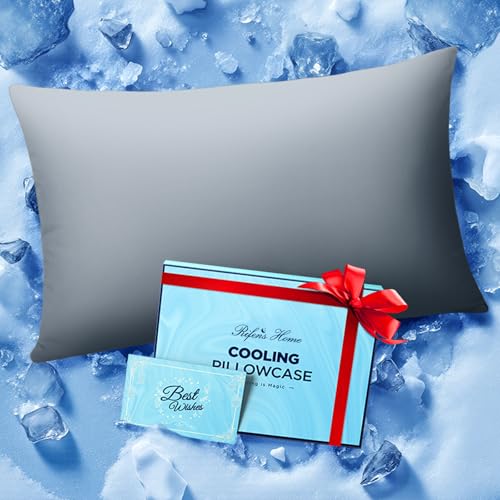
Ice Cooling Pillowcase for Hot Sleepers, Instantly Cool, Stay Cold All Night, Softer Than Silk Pillow Cases, Pillow Covers with Invisible Zipper, Gift for Men & Women - Standard, Light Gray (1 Pack)
- Instant Cooling Effect: Cools down in 1 second with Q-Max > 0.5
- All-Night Temperature Control: Keeps you cool throughout the night
- Luxuriously Soft Material: Softer than silk and cotton
As an affiliate, we earn on qualifying purchases.

inhand Cooling Blanket Queen Size for Hot Sleepers (90"x90", Gray)
- Instantly Lowers Skin Temperature: Reduces skin heat by 4-9℉ for comfort
- Breathable, Cooling Fabric: Front nylon and high-performance reverse side
- Safe and Skin-Friendly: Oeko-tex certified for direct skin contact
As an affiliate, we earn on qualifying purchases.