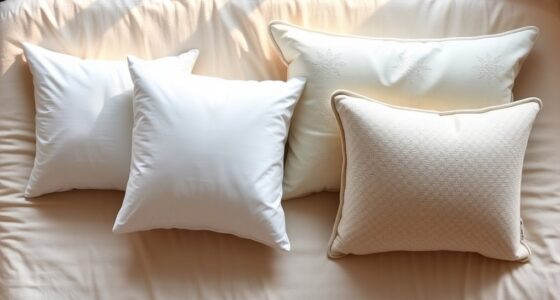
Mattress pads and toppers serve different purposes: pads sit directly on your mattress to protect and add slight comfort, while toppers are thicker layers that dramatically boost support and softness. Pads are easy to remove and clean, ideal for spill protection and minor comfort. Toppers help customize your sleep experience by addressing firmness or pressure issues. To find out which option suits your needs best and how each benefits your sleep, keep exploring the details.
Key Takeaways
- Mattress pads are thin, protective layers mainly used for spill resistance and minor comfort, while toppers are thicker and designed to significantly enhance comfort or support.
- Toppers often feature memory foam or gel-infused materials to contour and cool, whereas pads focus on protection and slight cushioning.
- Mattress pads are easier to remove and clean, making them practical for spill and allergen protection; toppers may require more maintenance.
- Toppers can address mattress firmness issues and improve sleep quality, while pads primarily extend mattress lifespan and add minimal comfort.
- Gel-infused materials in both pads and toppers help regulate temperature, with toppers offering more substantial comfort benefits.
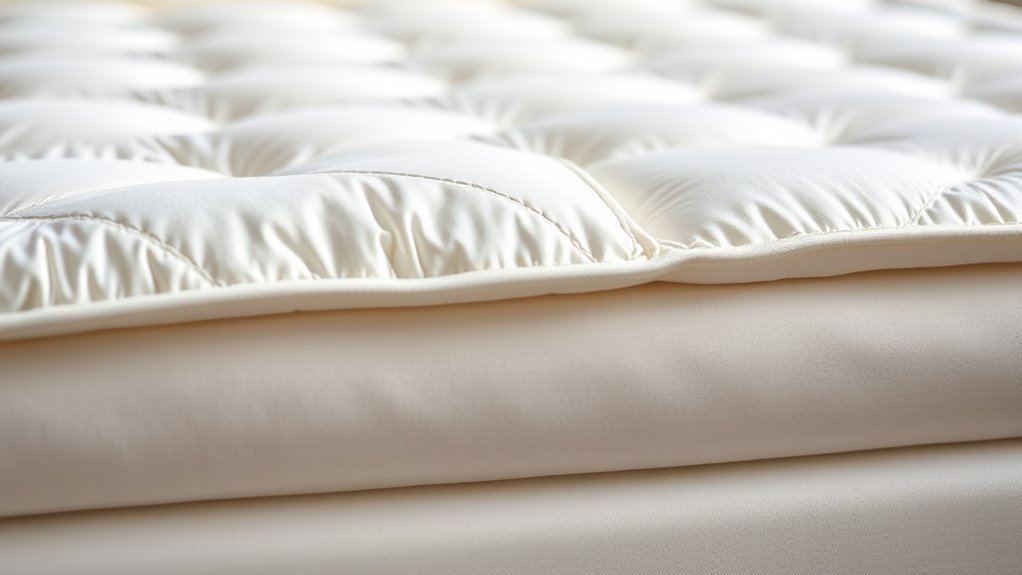
When it comes to improving your sleep experience, understanding the difference between mattress pads and mattress toppers is essential. While both are designed to enhance comfort and protect your mattress, they serve different purposes and offer distinct benefits. Mattress pads are usually thin, soft layers that sit directly on top of your mattress, providing a slight cushioning effect. They often feature gel infused materials, which help regulate temperature by dissipating heat and keeping you cooler throughout the night. These gel infused elements are especially useful if you tend to sleep hot, as they promote better airflow and moisture management. Mattress pads are generally easy to remove and clean, making them a practical choice for protecting your mattress from spills, stains, and allergens without considerably altering the mattress’s firmness or feel.
On the other hand, mattress toppers are thicker and more substantial, often ranging from two to four inches in thickness. Their primary goal is to alter the comfort level of your mattress, making it feel softer or firmer depending on your preference. Many toppers incorporate memory foam layers, which contour to your body’s shape, providing targeted support and pressure relief. Memory foam layers are especially popular because they absorb movement and reduce motion transfer, making them ideal for couples. Some high-end toppers also feature gel infused memory foam, which enhances cooling properties by drawing heat away from your body. This combination creates a plush, supportive surface that can dramatically improve sleep quality, particularly if your mattress has become too firm or saggy over time.
Additionally, the integration of advanced automation technologies in manufacturing processes has led to more innovative and effective mattress topper designs, further improving sleep comfort. The key difference lies in their purpose: mattress pads are primarily protective and minor comfort enhancers, while mattress toppers are restorative and transformative. If you’re looking to add a slight layer of comfort or protect your investment, a mattress pad with gel infused materials is a smart choice. If your mattress needs a significant upgrade in comfort or support, a topper with memory foam layers will give you a more noticeable change. Both options can extend the lifespan of your mattress and improve sleep quality, but choosing the right one depends on your specific needs—whether it’s temperature regulation, added softness, or pressure relief. Ultimately, understanding these distinctions helps you make an informed decision to create the most comfortable sleep environment tailored to your preferences.
Frequently Asked Questions
Can Mattress Pads Help With Allergy Relief?
Yes, mattress pads can help with allergy relief, especially if you choose hypoallergenic materials. They create a barrier that prevents dust mites, pet dander, and allergens from settling into your mattress. By using a hypoallergenic mattress pad, you reduce exposure to common allergens, helping you breathe easier and sleep better. Regularly washing the pad also keeps allergens at bay, making it a simple, effective way to improve your sleep environment.
Are Mattress Toppers Suitable for Adjustable Beds?
Did you know that 42% of adjustable bed owners choose toppers for added comfort? Mattress toppers are generally suitable for adjustable beds, but you should check for compatibility. Opt for toppers with flexible materials like memory foam or latex, which allow for easy movement and customization. Confirm the topper’s thickness and design won’t hinder bed adjustments, so you get both comfort and full functionality.
How Often Should I Replace My Mattress Pad?
You should replace your mattress pad every 6 to 12 months. Follow the care instructions to keep it clean and in good condition. Material durability varies; some may last longer than others. Regularly inspect for wear, tears, or stains, and replace when it no longer provides comfort or protection. Proper maintenance helps extend its lifespan, ensuring you get the best sleep and value from your investment.
Do Both Options Affect Mattress Warranty?
Both mattress pads and toppers can impact your mattress warranty if they cause damage or void specific coverage, so you should check your warranty terms. They serve as bedding accessories that protect your mattress and enhance comfort. Using them correctly, like ensuring proper fit and cleaning, helps maintain warranty validity. Always review your mattress warranty details to see if certain bedding accessories are restricted or require specific use.
Can Mattress Pads and Toppers Be Used Together?
Did you know that using both mattress pads and toppers can enhance comfort by up to 40%? Yes, you can definitely layer them together! Just ensure layer compatibility—place the mattress pad first for protection, then add the topper for extra cushioning. Material variations matter, so choose options that complement each other. Combining them offers personalized support and longevity, making your sleep experience markedly better.
Conclusion
Choosing between a mattress pad and a topper depends on your comfort needs. Did you know that 65% of people report better sleep quality after adding a mattress pad or topper? A pad offers protection and a slight cushion, while a topper provides plushness and extra support. Consider what matters most—protection or luxury—and you’ll find the perfect upgrade for restful nights and waking up refreshed. Sleep smarter, and enjoy the benefits of your choice!