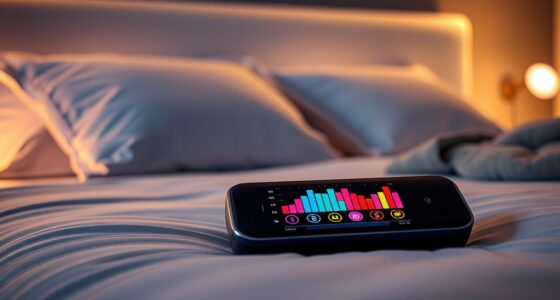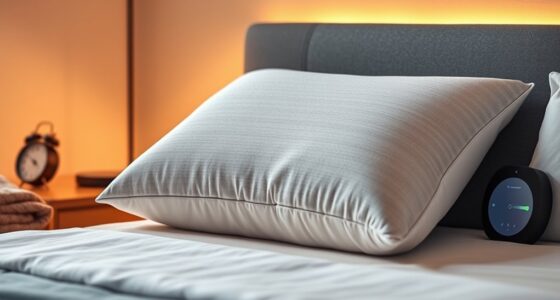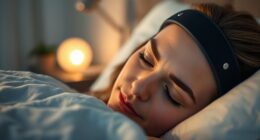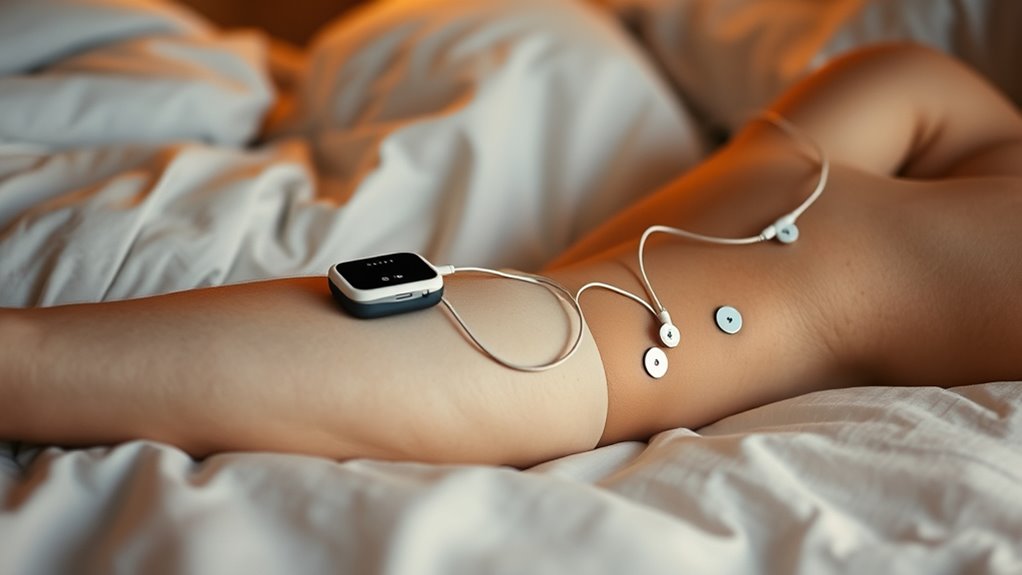

Home sleep tests let you monitor your sleep patterns right from your bed, offering a comfortable and less invasive way to identify common issues like sleep apnea. You wear small devices overnight that collect data on breathing, oxygen levels, heart rate, and movements. This information helps your healthcare provider diagnose sleep disorders accurately without needing a clinic visit. If you want to understand how these tests work and what to expect, there’s more to discover below.
Key Takeaways
- Home sleep tests use portable devices to monitor sleep patterns, breathing, oxygen, and heart rate in a familiar environment.
- They are a convenient, less invasive alternative to traditional in-lab polysomnography.
- Proper device usage is essential for accurate data collection and diagnosis.
- Home sleep monitoring helps identify sleep disorders like sleep apnea, narcolepsy, and restless leg syndrome.
- Results enable healthcare providers to recommend tailored treatments, promoting early diagnosis and intervention.

Have you ever wondered if you might have a sleep disorder but hesitate to visit a clinic? You’re not alone. Many people feel uncomfortable or overwhelmed by the idea of spending the night in a sleep lab. Thankfully, advancements in technology now make it possible to conduct sleep study procedures right from your home. Home sleep tests have become an accessible, convenient alternative to traditional polysomnography, allowing you to get the answers you need without disrupting your daily routine. These tests typically involve wearing small, portable monitoring devices that track your sleep patterns, breathing, heart rate, oxygen levels, and movements. The setup is straightforward, and most devices are easy to use, giving you the comfort of sleeping in your own bed while collecting essential data.
When you opt for a home sleep test, you’re taking an active role in your health. After wearing the device overnight, you’ll send the data back to your healthcare provider, who will analyze the results. This process helps identify common sleep disorders, such as sleep apnea, restless leg syndrome, or narcolepsy. Once a diagnosis is made, your doctor can recommend appropriate sleep disorder treatments tailored to your condition. These treatments might include lifestyle changes, continuous positive airway pressure (CPAP) therapy, oral appliances, or other interventions. The key benefit is that home sleep tests make diagnosing sleep problems more accessible and less intimidating, encouraging more people to seek help early.
Compared to traditional sleep studies, home sleep tests are less invasive and more cost-effective. You don’t need to worry about unfamiliar hospital settings, wires, or uncomfortable equipment. Instead, the sleep study procedures are integrated into your normal environment, which often results in more natural sleep patterns and more accurate data. It’s essential, however, to follow your healthcare provider’s instructions carefully when using the monitoring device, ensuring that the data collected is reliable. In addition, these tests are typically recommended for suspected cases of obstructive sleep apnea, but they can also be useful for detecting other sleep-related issues. Moreover, understanding the quality of your sleep environment can influence the accuracy of the test results and your comfort during testing.
Frequently Asked Questions
Can Home Sleep Tests Detect All Types of Sleep Disorders?
Home sleep tests can’t detect all types of sleep disorders due to limitations in monitoring capabilities. They primarily identify issues like sleep apnea but may miss conditions such as restless leg syndrome or narcolepsy. You might find these tests convenient, but for complete diagnosis, a sleep specialist could recommend in-lab studies. Understanding these limitations helps you decide whether an at-home test suits your specific sleep disorder concerns.
How Accurate Are Home Sleep Tests Compared to In-Lab Studies?
Home sleep tests are surprisingly accurate, often close to in-lab studies! Their device calibration guarantees reliable data, and they can accurately determine sleep stages for most users. While they might miss some nuanced details, modern technology makes them a game-changer for convenience and speed. You can trust that, for many sleep concerns, these tests give a clear, accurate picture, making your journey to better sleep easier than ever.
What Should I Do if My Home Sleep Test Results Are Inconclusive?
If your home sleep test results are inconclusive, you should follow up with additional diagnostics, such as an in-lab sleep study, to get clearer insights. Consider discussing alternative assessments like sleep questionnaires or actigraphy with your healthcare provider. These options can help pinpoint your sleep issues more accurately, ensuring you receive the right treatment. Don’t delay seeking further evaluation to address potential sleep disorders effectively.
Are There Any Risks or Side Effects Associated With Home Sleep Monitoring?
Like a delicate dance, home sleep monitoring involves minimal risks. You might experience skin irritation from device calibration or feel slightly uncomfortable wearing the equipment. However, serious side effects are rare. Data privacy is essential, so verify your device encrypts your information securely. Always follow manufacturer guidelines to reduce risks, and discuss any concerns with your healthcare provider to keep your sleep study safe and effective.
How Long Does It Take to Get Results After Completing a Home Sleep Test?
Typically, you’ll receive your test results within a week after completing your home sleep test. The test result turnaround time depends on the provider and whether they need to review the data thoroughly. Once your results are available, your healthcare provider will follow up with you to discuss findings and next steps. Make sure to stay in contact with your provider to guarantee timely patient follow-up and proper care.
Conclusion
Home sleep tests are your personal gateway to understanding your nightly rest, like having a friendly guide journeying through your sleep landscape. They turn your bedroom into a sleep lab, capturing your dreams and breathing patterns with gentle precision. With these tests, you’re the captain of your sleep voyage, steering towards healthier nights and brighter mornings. Embrace this simple tool, and let your sleep story unfold smoothly, like a peaceful river flowing into restful horizons.