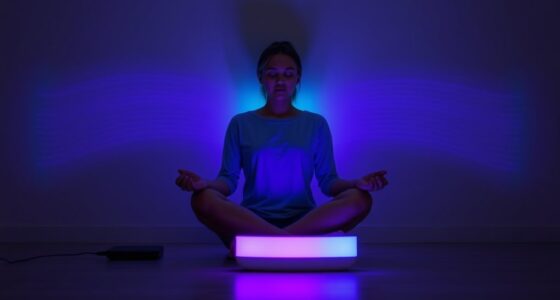

Using a light therapy lamp can considerably help manage seasonal affective disorder and improve your sleep patterns. By simulating natural sunlight, it boosts your mood, energy, and serotonin levels while resetting your internal clock. Just be sure to follow proper safety tips—use it correctly and avoid staring directly into the light. If you want to learn more about choosing the right lamp and ideal usage, you’ll find helpful tips below.
Key Takeaways
- Light therapy lamps simulate natural sunlight to boost mood and energy, alleviating seasonal affective disorder symptoms.
- Morning use of lamps helps regulate circadian rhythms, improving sleep patterns and reducing insomnia.
- Select lamps with at least 10,000 lux brightness and maintain proper distance to ensure safety and effectiveness.
- Follow recommended usage of 20-30 minutes daily to enhance sleep quality and mood during winter months.
- Proper eye safety precautions, such as avoiding direct gaze and consulting professionals if needed, prevent discomfort or eye strain.

If you’re struggling with seasonal affective disorder or feel low during darker months, light therapy lamps can offer a natural way to boost your mood and energy. These lamps simulate natural sunlight, which can help regulate your circadian rhythms and improve overall well-being. During winter, when daylight hours are limited, many people experience symptoms like fatigue, depression, or difficulty sleeping. Using a light therapy lamp can provide noticeable benefits during winter by increasing serotonin production, lifting your spirits, and enhancing your motivation. It’s an effective, drug-free approach that many find beneficial for managing seasonal changes without the side effects associated with medication.
One of the key advantages of light therapy lamps is their ability to improve your sleep patterns. Exposure to bright light in the morning can help reset your internal clock, making it easier to fall asleep at night and wake up feeling refreshed. This is particularly helpful if you experience disrupted sleep during darker months or suffer from seasonal depression. By establishing a consistent morning routine with your lamp, you may notice a reduction in symptoms like tiredness or insomnia, leading to better overall sleep quality.
However, while these lamps are generally safe when used correctly, eye safety considerations are important. Because they emit intense light, there’s a potential risk of eye strain or discomfort if you don’t follow safety guidelines. It’s recommended to use the lamp at the proper distance—usually about 16 to 24 inches away—and avoid staring directly into the light for prolonged periods. If you have pre-existing eye conditions, such as glaucoma or retinal issues, consult your eye care professional before starting light therapy. Most people tolerate light therapy well, but taking precautions ensures you avoid any unnecessary eye strain or discomfort.
In addition, choosing the right lamp is essential. Ensure it provides at least 10,000 lux of brightness, which mimics natural sunlight effectively. Remember to use the lamp in the morning for about 20 to 30 minutes, or as directed by your healthcare provider. Properly using the lamp not only maximizes benefits during winter but also minimizes potential eye safety risks. Additionally, understanding the importance of home lighting practices can further enhance your overall well-being during darker months. By following these guidelines, you can safely harness the power of light therapy to elevate your mood, improve sleep, and navigate the darker months with greater ease.
Frequently Asked Questions
Are Light Therapy Lamps Safe for Children?
You should be cautious with light therapy lamps for children, as safety is a priority. Child safety concerns include ensuring the lamp isn’t too bright or placed too close, which could harm their eyes or skin. Always follow the manufacturer’s guidelines for lamp placement, keeping it at a safe distance and avoiding direct eye exposure. Consult a healthcare professional before using a light therapy lamp on a child to make certain it’s appropriate and safe.
Can Light Therapy Replace Medication for SAD?
You might think light therapy is a magic cure, but it’s not a direct replacement for medication when it comes to managing sadness. While some find alternative treatments helpful, they often work best alongside medication rather than replacing it. Think of light therapy as a supportive tool, like a compass guiding you—effective for some, but not a substitute for the all-encompassing approach medication provides. Always consult your doctor for personalized advice.
How Long Does It Take for Light Therapy to Work?
You’ll usually notice the timing effectiveness of light therapy within a few days to two weeks. To see the best results, you need to be consistent with your daily routine, ideally using the lamp every morning. Keep in mind that individual responses vary, so sticking to a regular schedule is key. If you don’t see improvements after a few weeks, consider consulting a healthcare professional.
Are There Any Side Effects From Using Light Therapy Lamps?
You might experience some side effects from using light therapy lamps, like light sensitivity or skin irritation. These issues are usually mild and temporary, but it’s important to follow the recommended duration and distance from the lamp. If you notice increased light sensitivity or skin discomfort, decrease exposure or consult a healthcare professional. Most people tolerate light therapy well, but staying alert to any side effects helps guarantee safe use.
What Should I Do if I Experience Eye Discomfort?
If you experience eye discomfort, stop using the light therapy lamp immediately and prioritize eye safety. You can try adjusting the distance or angle of the lamp to reduce discomfort. Use artificial tears or cold compresses for discomfort relief, and if symptoms persist, consult your eye doctor. Always follow manufacturer instructions to minimize risks and guarantee safe, effective treatment. Your eye health is vital, so don’t ignore ongoing discomfort.
Conclusion
As you embrace the glow of a light therapy lamp, remember it’s more than just illumination—it’s a beacon guiding you through darker days. Let this gentle light symbolize hope and renewal, awakening your spirit just as dawn chases away night. With each sunrise, you’re reminded that even in the bleakest moments, there’s a promise of brighter days ahead. Embrace this luminous symbol of renewal and step into the warmth of a new beginning.