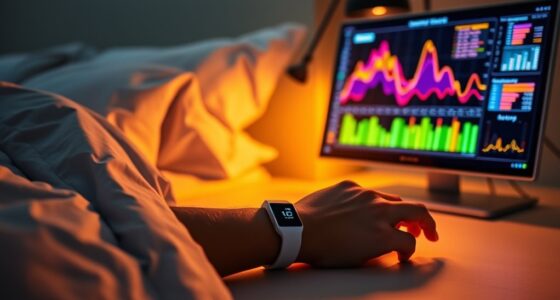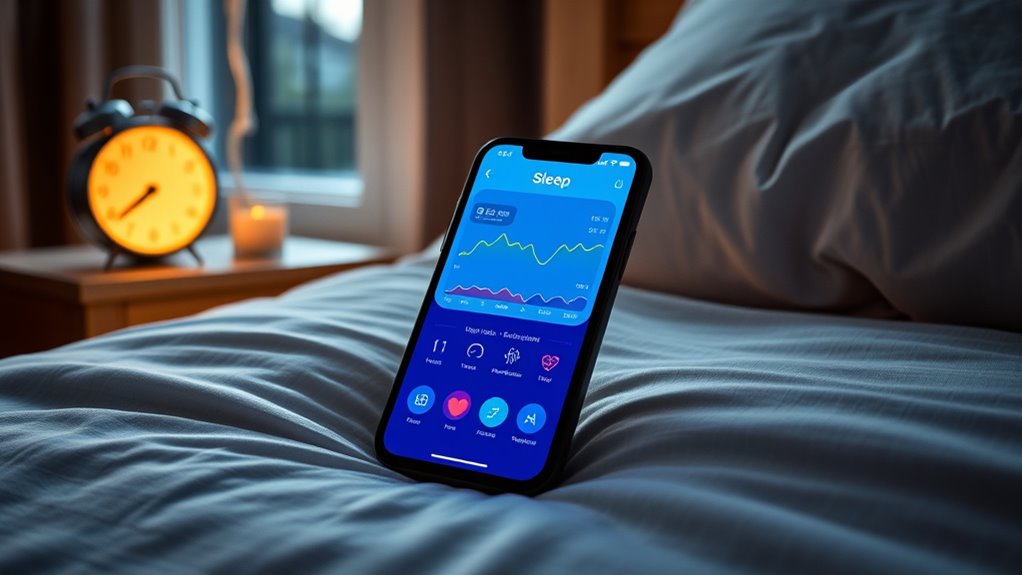

Top sleep tracking apps offer features like monitoring sleep stages—light, deep, and REM—analyzing movements and sounds to provide detailed patterns. They help you set gentle reminders for bedtime, wake you during light sleep for more refreshed mornings, and track habits affecting sleep quality. With options for journaling and insights for better routines, these apps empower you to improve your sleep health. Keep exploring to discover how these tools can transform your rest.
Key Takeaways
- Comprehensive sleep stage monitoring with detailed graphs and trend analysis.
- Personalized bedtime reminders and routines to promote consistent sleep patterns.
- Smart alarms that wake you during light sleep for improved mornings.
- Sleep diaries and habit tracking to identify and improve factors affecting sleep quality.
- Advanced insights and energy-efficient technology for tailored sleep strategies and better overall rest.

Sleep tracking apps have become increasingly popular as more people seek to improve their sleep quality. You might find these apps helpful because they offer insights into your sleep habits, making it easier to identify patterns and areas for improvement. One key feature to look for is the sleep cycle tracking. These apps monitor your sleep stages—light, deep, and REM sleep—by analyzing movements and sounds throughout the night. Understanding your sleep cycle can help you optimize your sleep schedule, ensuring you wake up feeling refreshed rather than groggy. Some apps even provide detailed graphs and summaries, so you can see how your sleep fluctuates over time and make adjustments accordingly.
Sleep apps track your sleep stages with graphs to help optimize your rest and wake up refreshed.
Another valuable feature is bedtime reminders, which help you establish a consistent sleep routine. If you often find yourself staying up late or waking up at irregular times, these reminders can prompt you to start winding down at a reasonable hour. They act as gentle nudges, encouraging you to stick to a schedule that aligns with your body’s natural rhythms. When you consistently go to bed and wake up at the same times, you support better sleep cycles, leading to more restorative rest. Plus, with notifications, you can plan your evening activities better, avoiding last-minute stress or caffeine intake that might disrupt your sleep.
Many sleep apps also integrate alarm features that wake you during a light sleep phase, so you start your day feeling more energized. By syncing with your sleep cycle data, these alarms avoid jarring wake-ups during deep sleep, which can leave you feeling groggy and disoriented. This seamless approach helps you feel more alert and ready to face the day. Additionally, some apps allow you to set personalized alarms or reminders for bedtime, giving you a clear cue to start winding down, which can be especially helpful if you tend to delay your sleep time.
Most apps also include features like sleep diaries or journaling options, where you can record factors affecting your sleep, such as stress, diet, or screen time. These insights, combined with your sleep cycle data, enable you to identify habits that might be interfering with your rest. Over time, this information can guide you to make healthier choices and develop better sleep hygiene. Recognizing the importance of energy-efficient technology in these apps can further enhance your sleep experience by reducing device power consumption and supporting sustainable practices. Overall, sleep tracking apps provide a thorough toolkit—covering sleep cycles, reminders, alarms, and logs—that empowers you to take control of your sleep health and wake up feeling more rested each day.

Withings Sleep – Sleep Tracking Pad Under The Mattress With Sleep Cycle Analysis
EXPLORE THE DEPTHS OF YOUR SLEEP PATTERN – Sleep is the ultra-powerful sleep monitor that allows you to…
As an affiliate, we earn on qualifying purchases.
As an affiliate, we earn on qualifying purchases.
Frequently Asked Questions
How Accurate Are Sleep Tracking Apps Compared to Medical Devices?
Sleep tracking apps offer decent insights into your sleep cycle, but their data accuracy isn’t as reliable as medical devices. You might get useful trends and patterns, but for precise measurements like sleep stages or disorders, medical devices are more accurate. These apps are great for general awareness, but if you need detailed, dependable data, especially for health concerns, consulting a healthcare professional and using medical-grade equipment is the smarter choice.
Can Sleep Apps Detect Sleep Disorders or Just Monitor Sleep Quality?
You might think sleep apps can detect every sleep disorder, but they mainly excel at sleep quality monitoring. While some apps offer basic sleep disorder detection, they can’t replace medical evaluations for serious issues like sleep apnea or insomnia. Think of them more as helpful guides that track your sleep patterns rather than definitive diagnostic tools. To truly identify sleep disorders, consult a healthcare professional for thorough assessments beyond what apps can provide.
Are Sleep Tracking Apps Suitable for Children or Only Adults?
Sleep tracking apps are generally designed for adults, but some can be suitable for children if they include child safety features and parental controls. You should look for apps that prioritize child safety, allowing you to monitor your child’s sleep without exposing them to unnecessary risks. Always choose apps with strong parental controls, ensuring you can manage data sharing and limit access, making them a safer choice for your child’s sleep health.
Do Sleep Apps Drain Phone Battery Significantly?
Did you know some sleep apps can drain your phone’s battery by up to 20% overnight? While battery consumption varies, most sleep tracking apps are designed with app optimization features to minimize power use. If you’re concerned about battery life, look for apps that prioritize efficiency or disable background features. Proper app optimization helps you track sleep without considerably impacting your phone’s battery, ensuring you get insights without sacrificing device performance.
How Secure Is My Sleep Data Stored in These Apps?
Your sleep data’s security depends on the app’s privacy practices. Reputable apps use data encryption to protect your information from unauthorized access, easing privacy concerns. However, some apps might share data with third parties or lack strong security measures. Always check the app’s privacy policy, and opt for those that prioritize data encryption and transparency to guarantee your sleep data remains private and secure.

Risop Wake Up Light Sunrise Alarm Clock for Heavy Sleepers, All-in-One Smart Bedside Device with Bluetooth Speaker, FM Radio, Dual Alarm & Sleep Aid Night Light, Best Gift for Adults & Kids
1.Natural Sunrise Wake Up Light & Gentle Sleep Aid: Say goodbye to jarring alarms! Our clock simulates a…
As an affiliate, we earn on qualifying purchases.
As an affiliate, we earn on qualifying purchases.
Conclusion
Choosing the right sleep tracking app can gently guide you toward better rest, like a trusted companion whispering helpful hints. While no app can replace good sleep habits, they subtly highlight areas for improvement, helping you tune into your body’s needs. With a little patience and the right tools, you’ll find yourself drifting into more restful nights. Remember, perfect sleep is a journey, not a destination—embrace the process and enjoy the gentle progress.

Habit Nest Sleep & Evening Routine Sidekick Journal A journal that coaches you through maximizing sleep quality & building a nightly routine that improves your quality of life.
📚🌙The Sleep & Evening Routine Sidekick Journal is about establishing two equally important habits: 1. Establishing a consistent,…
As an affiliate, we earn on qualifying purchases.
As an affiliate, we earn on qualifying purchases.
DeepSleep Master – Sounds & Reminder Pro
sleep tracker
As an affiliate, we earn on qualifying purchases.
As an affiliate, we earn on qualifying purchases.