TL;DR
Sleep tracking devices estimate sleep from signals such as movement and heart rate, so they can help you notice patterns across multiple nights but cannot diagnose a sleep disorder. Choose a tracker you can wear or use comfortably, treat its sleep-stage labels and score cautiously, and talk with a healthcare professional about persistent symptoms.
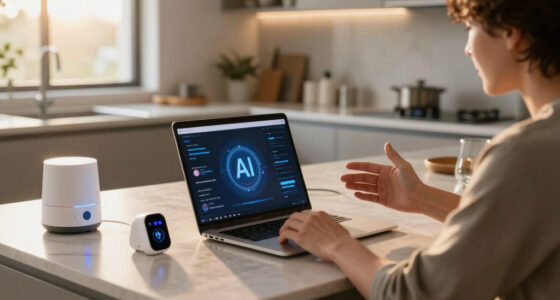
Your tracker says you slept poorly, but you woke feeling fine. Which should you trust? Sleep tracking devices can turn a night into a tidy chart, yet that chart is an estimate built from signals such as movement and pulse—not a direct reading of everything your brain did while you slept.

Get wellness gear delivered free with Prime
- Fast, free delivery on millions of items
- Prime Video, Amazon Music and more included
- Member-only deals all year
Used thoughtfully, a tracker can help you spot a late bedtime creeping later through the week, or see whether a noisy room seems to leave you restless. This guide explains how sleep tracking works, what the common numbers mean, and how to choose a device that fits your habits. You’ll also learn when to set the data aside and seek professional guidance instead.
Sleep trackers estimate sleep from indirect signals; their stage labels are not clinical sleep-study measurements.
Compare several nights of sleep duration and schedule, not one score or an isolated restless night.
Sleep scores differ between brands, so use one device’s score as its own trend rather than comparing it with another company’s.
Choose a device that suits your comfort, charging habits, budget, and privacy preferences.
Discuss persistent sleep problems or concerning symptoms with a healthcare professional; a tracker cannot diagnose them.
What Sleep Tracking Devices Can Tell You About Your Night
Sleep tracking devices estimate when you fall asleep and wake up, how long you sleep, and how often you move. Many also estimate sleep stages or record overnight signals such as heart rate and breathing. They can help you see broad patterns across nights, but a chart is an estimate—not a minute-by-minute account of your experience.
For instance, imagine you spend eight hours in bed but your tracker estimates just six and a half hours asleep. That difference can prompt you to ask whether you went to bed early enough, woke often, or simply lay still while awake. Each explanation suggests a different next step: an earlier bedtime may help if your sleep opportunity was short, while a diary can reveal disruptions the device cannot identify. The estimate is a starting point for questions, not proof of the cause.
People use trackers to understand routines, compare nights, and notice habits that may affect rest. A record of bedtime and wake time can show that your weekday schedule shifts by an hour or more on weekends. That pattern matters because it can make your sleep timing less consistent and leave you feeling out of step when the workweek begins. You might try moving your schedule gradually, then check whether your daytime energy changes; a tracker cannot tell you whether the adjustment is worthwhile by itself.
Think of the device as a weather report for your sleep: useful for noticing a run of stormy nights, less useful for declaring what caused one gust. Trends are more informative than a single night because estimates can be off and sleep naturally varies. Your daytime energy adds context: feeling well despite a low score may mean the score is not useful for that night, while persistent fatigue deserves attention even if the chart looks reassuring.
Products Worth Considering

Oral-B iO Series 3 Rechargeable Electric Toothbrush for Adults, Black, 3 Modes, 2 Brush Heads and Travel Case

Fitbit Sense 2 Health and Fitness Smartwatch, Shadow Grey/Graphite

Garmin Venu 4 GPS Fitness Smartwatch, 45 mm, Black Silicone
As an affiliate, we earn on qualifying purchases.
How Watches, Rings, Bedside Sensors, and Apps Compare
The best sleep tracker is usually the one you can use comfortably and consistently. Watches and bands track signals on your wrist; rings offer a smaller wearable; bedside sensors work without anything on your body; phone apps infer sleep from the phone’s position, movement, or sound. Their features, accuracy, costs, and data practices vary by product, so the right choice depends on which tradeoffs fit your routine.
For instance, if a bulky watch keeps catching on your sheets, a ring may feel easier overnight, though the fit has to be comfortable and the available features may differ. If any wearable irritates your skin, an under-mattress sensor avoids wearing something on your body, but its placement and mattress compatibility can affect whether it works well. A phone app may be a low-cost way to explore basic estimates, but its readings can depend on whether the phone sits on a steady nightstand or gets buried under a pillow. Convenience and consistency matter because an intermittently used device gives you less useful context over time.
| Type | What may suit you | What to check |
|---|---|---|
| Wrist wearable | Ongoing tracking and health or fitness features | Comfort, battery life, and features included |
| Ring | A smaller form for overnight wear | Fit, available metrics, and subscription costs |
| Bedside or under-mattress sensor | Tracking without wearing a device | Placement, compatibility, and signal type |
| Phone app | A simple starting point using a phone | Permissions, phone placement, and method |
Before buying, check whether the product needs a subscription, a phone nearby, or frequent charging. Those details affect the real cost and whether the device will be ready each night. A longer feature list can provide more things to explore, but it can also add complexity; clear reports and comfortable nightly use often matter more when your goal is to spot a few meaningful patterns.
How Sleep Trackers Turn Movement and Pulse Into Estimates
Most consumer trackers infer sleep from indirect signals such as movement, pulse, and sometimes skin temperature. A device’s sensors and algorithm use those signals to estimate whether you are asleep and, on some models, which sleep stage you might be in. These signals are convenient to collect over many nights, but they do not directly measure brain activity. A clinical sleep study records brain activity and other signals, which is why it can answer different questions than a consumer tracker.
Here’s a familiar example: you are awake in bed, reading a paperback without moving much. A tracker may interpret the quiet period as sleep because stillness resembles one of the signals it associates with sleep. On another night, a vivid dream has you shifting your legs, and the app may mark some movement as wakefulness. The same indirect method can therefore overestimate sleep in one situation and underestimate it in another. Neither result proves exactly what you felt or what was happening in your brain.
Modern products may include additional estimates, such as heart-rate variability, blood oxygen, or skin temperature. These may help you observe changes relative to your own usual readings, but interpretation is limited: a change can have several explanations, and products measure and process signals differently. More sensors do not automatically mean clinical accuracy. Features and algorithms differ, and companies may update them, so check current product details before treating a new metric as meaningful.
Sleep-stage labels—often light, deep, and REM—deserve particular caution. These stages are identified in a sleep lab using measurements that consumer wearables generally do not collect, so an app’s labels are inferred from indirect patterns. They can be interesting to view across time, but a watch’s estimate is not equivalent to a sleep lab’s measurement. A calm-looking night on your screen is not a guarantee that you feel rested, just as one unusual stage chart does not prove something is wrong.
Which Sleep Metrics Are Worth Watching Over Time
Sleep duration and schedule are often easier to use than a single sleep score. Time asleep estimates how long you slept, while time in bed counts the whole period you spent lying down. The gap between them can prompt useful questions, though it cannot tell you on its own whether you were awake, restless, or inaccurately scored. Bedtime, wake time, and estimated awakenings can help you see whether your routine is steady or changing; consistency may be more actionable than trying to optimize every number.
For instance, say your tracker shows similar sleep duration on work nights, but bedtime slips from 10:45 p.m. to midnight by Friday. That trend might help explain why Saturday morning feels like wading through wet sand: the later bedtime may leave less opportunity for sleep before your usual wake time. You could try keeping bedtime closer to its weekday range for a week and note how you feel, without treating the app as the judge of whether the experiment “worked.” Your experience helps interpret the estimate and whether the change fits your life.
Heart rate and breathing estimates may help you notice a change from your own usual pattern, but they are not diagnoses. A sleep score is company-defined: one brand may reward consistency, while another may weigh duration or interruptions differently. This means a score can summarize a product’s chosen priorities rather than capture how restored you feel. Scores from separate brands are poor apples-to-apples comparisons, and even within one app it helps to look at what contributed to a change before drawing conclusions.
Use a small set of understandable measures. If your app shows ten graphs, choose the ones that answer a real question—perhaps whether a regular wake time coincides with better daytime energy. This keeps attention on a pattern you can act on and reduces the chance that normal nightly variation will feel like a problem. A simple note like “late meal, woke twice, groggy at 9” can explain a number more clearly than a screen full of colored bars.
Use Your Tracker Without Letting It Run Your Bedtime
Use a tracker to test one practical habit at a time, then judge the result by both the data and how you feel. A device can help you notice patterns, but it cannot guarantee better sleep. Changing one habit makes it easier to see whether that change may matter; changing several at once makes the result harder to interpret. If checking your score leaves you tense before bed or worried in the morning, taking a break may be a sensible choice.
- Pick one question. For example, does a consistent wake time line up with steadier sleep duration? A focused question helps keep the app’s many metrics from distracting you.
- Track a short stretch. Use the same device for a couple of weeks and make a brief note of bedtime, wake time, and how you felt. A few nights can be unusual, so a longer stretch gives you more context without needing to treat each reading as exact.
- Look for a pattern. Compare several nights rather than treating one restless Tuesday as a verdict. Ask whether the change appears repeatedly and whether your daytime experience points in the same direction.
- Try one small change. If late scrolling often precedes a delayed bedtime, put the phone on its charger across the room. Choose a change you can maintain, since an impractical experiment tells you little about what works for you.
- Review the result. Keep the change if it fits your life and seems helpful; adjust it if the data and your experience disagree. The purpose is to learn what supports your routine, not to force every number into a preferred range.
Suppose your sleep score falls after a busy day, even though you feel alert. You don’t need to spend the morning trying to “fix” the number. A score can be one clue, but reacting to every dip can turn ordinary variation into a source of stress and make bedtime feel like another task.
Some people become preoccupied with getting a perfect tracker result, a pattern sometimes called orthosomnia. Your tracker should support healthy habits, not turn bedtime into another performance. If the numbers increase worry, limit notifications or pause tracking; the tradeoff is losing some data, but you may gain a calmer relationship with sleep.
Protect Your Privacy and Know When to Ask for Help
Sleep data can be sensitive, so check what a device collects and how the company handles it. Before choosing a product, review where information is stored, whether it is shared, how long it is retained, and whether you can delete or export it. These choices affect who may have access to details about your routines. Check microphone permissions too, especially if an app uses sound to estimate sleep, because recording audio may reveal more than a simple sleep estimate.
Imagine you leave your phone beside the bed while using a snore-detection app. Read what the app records and whether it saves audio, then decide whether you are comfortable with those permissions. You may prefer an app that processes sound without retaining recordings, if its policy and settings support that. Also check battery life, charging needs, compatibility, fit, and any subscription cost; a tracker that stops recording because it needs a nightly charge may not suit your routine and can leave gaps that make trends harder to interpret.
A consumer device can describe patterns, but it cannot diagnose insomnia or sleep apnea. Persistent difficulty sleeping, severe daytime sleepiness, loud snoring, or pauses in breathing are reasons to speak with a healthcare professional because symptoms and clinical evaluation matter more than an app’s label. A tracker report may give you dates and rough patterns to discuss, but it cannot replace that conversation or a sleep study when one is recommended.
Comfort matters as well as data. Follow the manufacturer’s fit and charging guidance, and stop wearing a device that causes discomfort or skin irritation; an uncomfortable tracker can disrupt sleep and undermine the very information it collects. If you have a pre-existing condition or a worrying symptom, ask a qualified professional how to interpret it rather than relying on an app’s label.
Frequently Asked Questions
How accurate are sleep tracking devices?
They can be useful for broad patterns, but accuracy varies by product, person, and night. A quiet stretch while you are awake may count as sleep, and sleep-stage estimates deserve extra caution.
Can a sleep tracker tell if I have sleep apnea or insomnia?
No. A consumer tracker cannot diagnose either condition. If you have persistent sleep difficulties, severe daytime sleepiness, loud snoring, or pauses in breathing, speak with a healthcare professional.
Which is better: a watch, ring, bedside sensor, or phone app?
It depends on comfort, cost, features, and how the product gathers its signals. A watch may suit you if you already wear one, while a bedside sensor may work better if you dislike wearables; choose a method you can use comfortably.
Are sleep scores comparable between brands?
Usually not. Companies use different sensors, algorithms, and scoring scales, so a score of 80 from one brand does not necessarily mean the same thing as an 80 from another.
Should I wear my tracker every night?
No. Regular use can help reveal patterns, but tracking is optional. If nightly results make you anxious or overly focused on small changes, pause tracking or limit score notifications.
What should I do if my tracker shows a concerning result?
Look for a persistent pattern instead of reacting to one night, and note how you feel during the day. If symptoms continue or worry you, share your observations with a healthcare professional rather than treating the tracker as a diagnosis.
Conclusion
Let your tracker help you notice a pattern, then check that pattern against your own experience. A few weeks of simple notes about bedtime, wake time, and daytime energy may tell you more than a single score or a colorful sleep-stage chart.
Keep the device if it makes your routine clearer. If it turns the pillow into a scoreboard, put it aside—and let sleep be sleep.