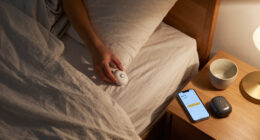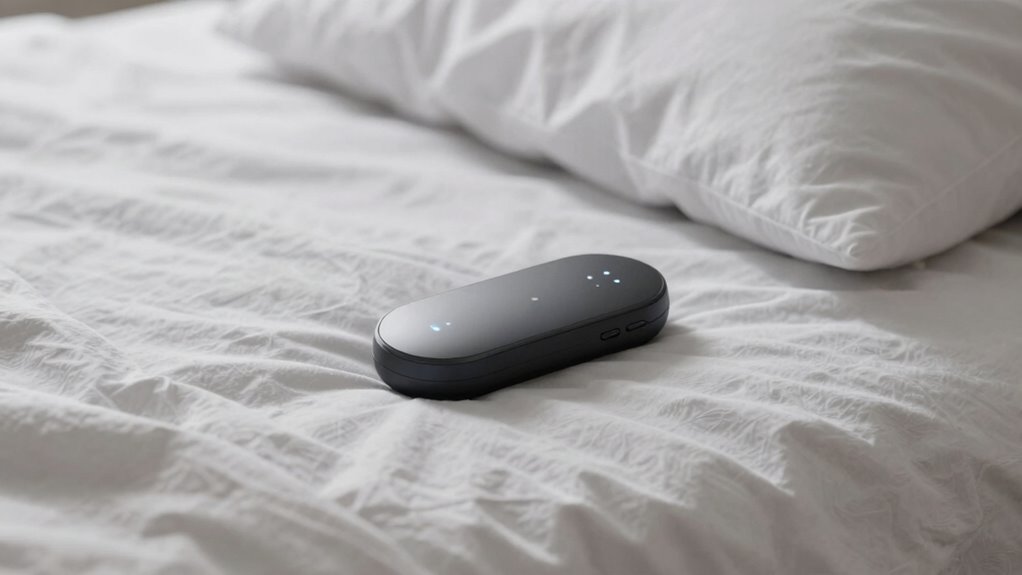

Under-mattress sleep trackers use embedded sensors to monitor movements and heart rate, but their accuracy depends on correct placement and environmental factors. Make sure the sensor is flat, centered, and on a supportive mattress free of debris or thick layers. Consistent placement and routine calibration help improve reliability. Avoid electronic interference and disturbances like noise or light. If you want to discover how to maximize your sleep data and avoid common pitfalls, keep exploring this helpful guide.

Get wellness gear delivered free with Prime
- Fast, free delivery on millions of items
- Prime Video, Amazon Music and more included
- Member-only deals all year
Key Takeaways
- Proper sensor placement flat and centered under the mattress ensures accurate detection of movements and heart rate.
- Consistent placement and routine calibration improve data reliability over time.
- Thick, uneven, or dense mattresses can distort sensor readings and reduce accuracy.
- External factors like electromagnetic interference and environmental noise can negatively impact data quality.
- Understanding device limitations and cross-referencing data with personal feelings enhances sleep analysis.
Products Worth Considering

Withings Sleep Tracking Pad

Blueair Blue Pure 311i Max Smart Air Purifier

Oura Ring 4 Smart Ring, Silver, Size 8
As an affiliate, we earn on qualifying purchases.
How Do Under-Mattress Sleep Trackers Work?
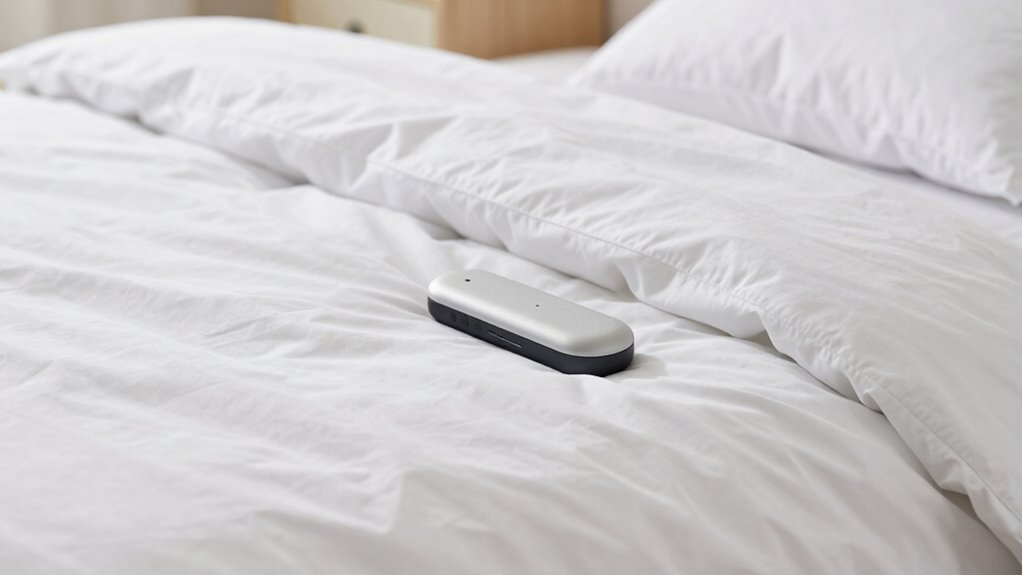
Have you ever wondered how under-mattress sleep trackers monitor your sleep? These devices use sensors embedded in the mattress to detect your movements and heart rate. Proper sensor calibration is essential for accurate readings; manufacturers fine-tune sensors to distinguish between different types of motion and physiological signals. As you sleep, the tracker collects data on your sleep cycle analysis, identifying when you’re in light, deep, or REM sleep. It then processes this information to provide insights into your sleep quality. The sensors are designed to be sensitive enough to pick up subtle changes without being intrusive. By continuously calibrating themselves based on your patterns, these trackers aim to deliver precise and reliable sleep data, helping you understand your sleep habits better. Additionally, digital concepts are crucial in enhancing the performance and accuracy of these devices.
Why Proper Placement Is Crucial for Accurate Sleep Data
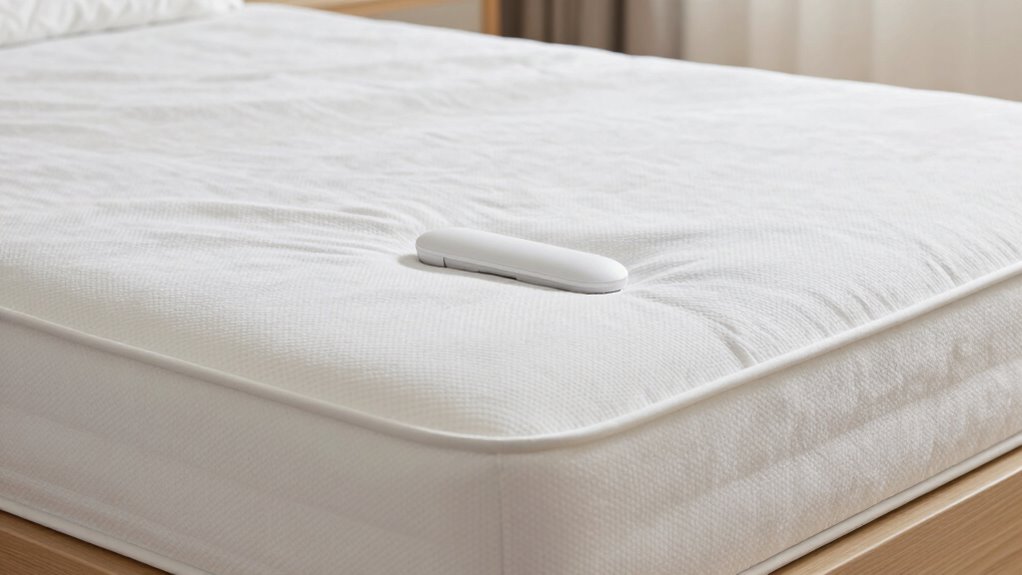
To get accurate sleep data, you need to position the sensor properly on your mattress. Keeping a consistent placement routine helps guarantee reliable results over time. Additionally, discovering trusted businesses that provide quality sleep products can enhance your overall experience. Also, avoid interference factors like moving electronics or thick bedding that can skew the data. Regularly checking for essential DIY tools can help you create a more conducive sleeping environment. Additionally, maintaining a clean and organized sleeping environment can enhance your overall cycling confidence and improve your sleep quality. Implementing an outdoor space with fire pits for warmth can also promote relaxation, contributing to a better sleep atmosphere. Furthermore, understanding the importance of contrast ratios can lead to better sleep tracking outcomes by ensuring the device’s accuracy in monitoring movements.
Optimal Sensor Positioning
Proper sensor placement is crucial because even slight misalignments can considerably compromise the accuracy of your sleep data. To guarantee reliable readings, start with proper sensor calibration, which adjusts the device to your specific mattress and sleeping patterns. Compatibility is also key; not all mattresses work well with every tracker, so verify that your mattress type supports the sensor’s design. Position the tracker centrally under the mattress, avoiding edges or areas with excessive movement, to minimize data distortion. Additionally, investing in quality tech gear can enhance your overall setup and ensure you have the best tools for accurate readings. Keep the sensor flat and stable, ensuring it maintains good contact with the mattress surface. Correct placement helps the sensor accurately detect subtle movements and essential signs, providing meaningful insights into your sleep quality. Furthermore, understanding the nuances of animated movies that touch hearts can enrich your emotional well-being, indirectly supporting better sleep. Moreover, understanding the impact of mind-body healing can further enhance your overall wellness, including sleep quality. Additionally, establishing a work-life harmony can lead to improved rest and rejuvenation. Proper positioning ultimately maximizes the device’s effectiveness and trustworthiness, as accurate data collection can inform better financial planning strategies for managing health-related expenses.
Consistent Placement Routine
Consistent Placement Routine (Why Proper Placement Is Crucial for Accurate Sleep Data)
Establishing a consistent placement routine guarantees that your sleep data remains accurate over time. When you place your under-mattress sleep tracker in the same spot each night, it reduces variability caused by changes in your sleep environment or mattress compatibility. Consistency helps the sensor calibrate correctly, ensuring your data reflects true sleep patterns. Be mindful of your mattress type, as different surfaces may affect sensor contact and readings. Aligning the tracker in the same position every night minimizes interference from shifting bedding or bedding materials. This routine improves reliability, making your sleep insights more precise and actionable. Developing a habit of uniform placement also simplifies troubleshooting if your data ever appears inconsistent, allowing you to focus on improving your sleep quality. Additionally, maintaining a clean sleep environment can enhance overall indoor air quality, which positively influences your rest and recovery.
Avoiding Interference Factors
Even minor interference can skew your sleep data, making proper placement crucial for accuracy. Electromagnetic interference from nearby electronics or Wi-Fi signals can disrupt the tracker’s sensors. Additionally, the mattress material itself can affect readings; dense or memory foam mattresses may dampen signals, reducing accuracy. To avoid interference:
- Keep electronic devices away from the tracker to minimize electromagnetic disruptions.
- Place the tracker on a section of the mattress with a smooth, firm surface, avoiding thick or uneven materials.
- Make certain the mattress is clean and free of debris that could interfere with sensor contact. Regular filter maintenance can enhance the performance of similar devices by ensuring optimal function.
Common Accuracy Challenges and How to Improve Your Results
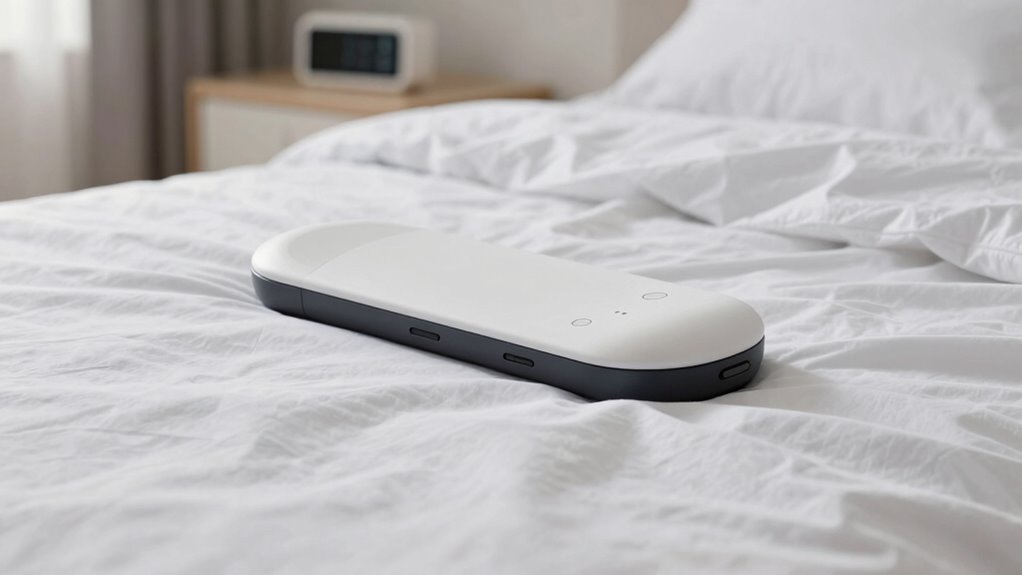
Under-mattress sleep trackers often face accuracy challenges because they rely on sensors that can be affected by factors like mattress type, movement, and placement. These devices monitor your sleep cycle by detecting subtle vibrations and environmental factors, but inconsistent sensor contact or mattress firmness can distort readings. Movement during the night, such as tossing and turning, can also make it harder to accurately track sleep stages. To improve results, guarantee the tracker is properly aligned and placed on a firm, supportive mattress. Minimizing environmental disturbances, like noise or light, helps stabilize sensor signals. Regularly calibrating your device and understanding its limitations can also enhance accuracy, giving you a clearer picture of your sleep quality. Additionally, maintaining humidity levels in your bedroom can improve overall sleep conditions and enhance tracker performance. Proper rug care can also contribute to a healthier sleep environment by ensuring that allergens and dust mites are minimized. The interplay between abstract art and perception can similarly influence how we interpret data, emphasizing the subjective nature of both sleep tracking and artistic interpretation. Moreover, ensuring that your sleep environment is emotionally supportive fosters relaxation and can positively impact sleep quality. Regularly checking the mattress type can also help you find the best fit for your sleep tracker, as different materials can affect sensor effectiveness.
Pitfalls to Avoid When Using Under-Mattress Sleep Trackers
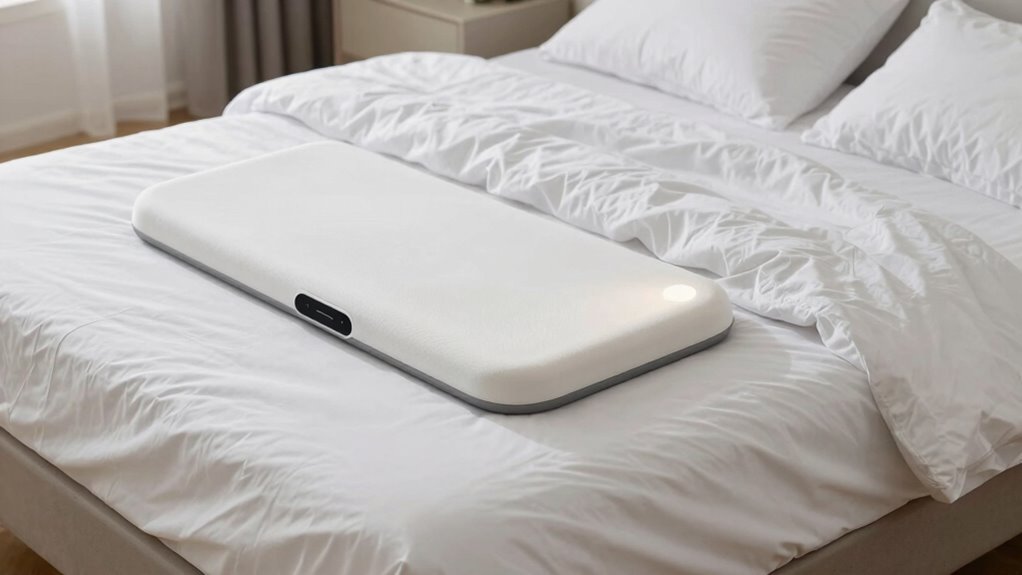
You need to make sure the sensor is placed correctly under your mattress; improper placement can lead to inaccurate readings. Don’t interpret sleep data without considering factors like movement or environmental noise, which can skew results. Being mindful of these pitfalls helps you get the most reliable information from your sleep tracker. Additionally, ensure that the mattress material is compatible with airless paint spraying to avoid any interference with the sensor’s performance.
Incorrect Sensor Placement
Have you ever considered how placement impacts the accuracy of your sleep data? Incorrect sensor placement can lead to unreliable results. To get accurate readings, guarantee proper sensor calibration and check mattress compatibility before setup. Misplaced sensors may not capture essential movements or heart rate accurately.
Consider these points:
- Place the sensor flat and centered under your mattress for consistent contact.
- Avoid areas with thick or uneven mattress layers that hinder calibration.
- Verify compatibility with your mattress type to prevent data distortions. Proper placement ensures the sensor maintains good contact, which is crucial for accurate data collection. Additionally, herbal baths can promote relaxation, enhancing your overall sleep quality. Remember, even the best sensor can underperform if not correctly positioned, so take time to find the right spot. Including a comfortable beach towel can also improve your relaxation experience before bedtime.
Misinterpreting Sleep Data
While under-mattress sleep trackers can provide valuable insights, it’s easy to misinterpret the data they generate. Your sleep pattern might seem inconsistent or irregular, but this doesn’t always mean your sleep quality is poor. Data interpretation can be tricky, especially if you rely solely on the tracker’s numbers without considering context. For example, increased movement might be mistaken for restlessness, but it could simply be tossing or turning. Similarly, sleep duration may appear shorter than it actually is, if the device doesn’t accurately detect periods of light or deep sleep. To avoid false conclusions, cross-check the data with how you feel during the day and consider other factors like stress or environment. Remember, these trackers are tools, not definitive diagnoses. Additionally, understanding self-care for caregivers can help you assess your overall well-being alongside sleep data.
Comparing Top Under-Mattress Sleep Trackers: Features and Reliability

When choosing an under-mattress sleep tracker, it’s vital to compare their features and reliability to find the best fit for your needs. Look for options with advanced sleep technology that accurately detect sleep stages and movements. Confirm mattress compatibility, as some devices work better with certain mattress types or thicknesses. To help you decide, consider these factors:
- Accuracy of data – Reliable trackers provide consistent and precise sleep insights.
- Ease of setup – User-friendly installation saves time and frustration.
- Connectivity and app features – Robust apps enhance data analysis and integration with health platforms. Additionally, consider how sound masking capabilities can further improve your overall sleep quality.
Tips to Maximize Your Sleep Insights and Avoid Misinformation

After comparing the features and reliability of different under-mattress sleep trackers, it’s important to focus on how you interpret and maximize the data they provide. To get accurate insights, consider your sleep environment—minimize noise, light, and temperature disruptions. Recognize that user habits, like bedtime routines or caffeine intake, influence your sleep quality and may skew tracker data. Use the device’s insights as a guide, not gospel; look for patterns over time rather than fixating on single nights. Be cautious of misinformation by cross-referencing your tracker’s reports with how you actually feel. Additionally, understanding user consent management can help you control the data your tracker collects and uses. Adjust your sleep environment and habits based on trends, and stay patient as you refine your routine to improve overall sleep health. Engaging in friendly competition with a sleep partner can also motivate better sleep habits and enhance your overall experience.
Frequently Asked Questions
How Long Does It Take to See Meaningful Sleep Pattern Data?
You’ll start seeing meaningful sleep pattern data within a few nights, but it depends on device calibration and your sleep cycle variability. Usually, after about a week, the tracker begins to identify consistent patterns and trends. Keep in mind, the more you use the device regularly, the more accurate your data becomes, helping you understand your sleep habits and improve your overall sleep quality over time.
Can Under-Mattress Trackers Detect Sleep Stages Accurately?
Like a knight’s armor, under-mattress trackers rely on sensor placement for sleep stage accuracy. While they can detect overall sleep patterns, their ability to precisely distinguish between REM, light, or deep sleep isn’t as reliable as dedicated wearables. Movement and body position influence readings, so don’t expect perfect sleep stage detection. Use them as a general guide, but for detailed insights, consider more specialized devices.
Are Under-Mattress Sleep Trackers Suitable for All Mattress Types?
Under-mattress sleep trackers aren’t suitable for all mattress types; your mattress’s compatibility can affect their performance. Memory foam, latex, or pillow-top mattresses might interfere with sensor readings, reducing accuracy. Additionally, consider user comfort—some users find these devices intrusive or noisy. Before choosing one, check the product’s compatibility with your mattress and how it might impact your sleep experience to make certain it’s the right fit for you.
Do These Devices Interfere With Sleep or Mattress Comfort?
Like a silent sentinel, under-mattress sleep trackers usually don’t interfere with your mattress comfort or cause sleep disturbance. They’re designed to be discreet, so you hardly notice their presence. However, if the device is poorly placed or causes pressure points, it might slightly disrupt your sleep. Typically, though, these trackers blend into your sleep environment, allowing you to rest undisturbed while gaining valuable sleep insights.
How Secure Is My Sleep Data With These Devices?
Your sleep data is generally secure thanks to data encryption, which protects your information from unauthorized access. However, privacy concerns remain because some manufacturers collect and share data with third parties. To safeguard your sleep data, choose devices with strong encryption and clear privacy policies. Always review the privacy settings and be cautious about the information you share, ensuring your personal sleep patterns stay private and protected.
Conclusion
Imagine waking up refreshed, knowing your sleep is perfectly tuned like a finely crafted instrument. By understanding how under-mattress trackers work, placing them correctly, and avoiding common pitfalls, you can access deeper insights into your nightly rest. With the right choices, you’ll navigate your sleep journey confidently—like sailing smooth waters under a starry night. Embrace these tips, and let your sleep improve, guiding you to mornings filled with energy and clarity.