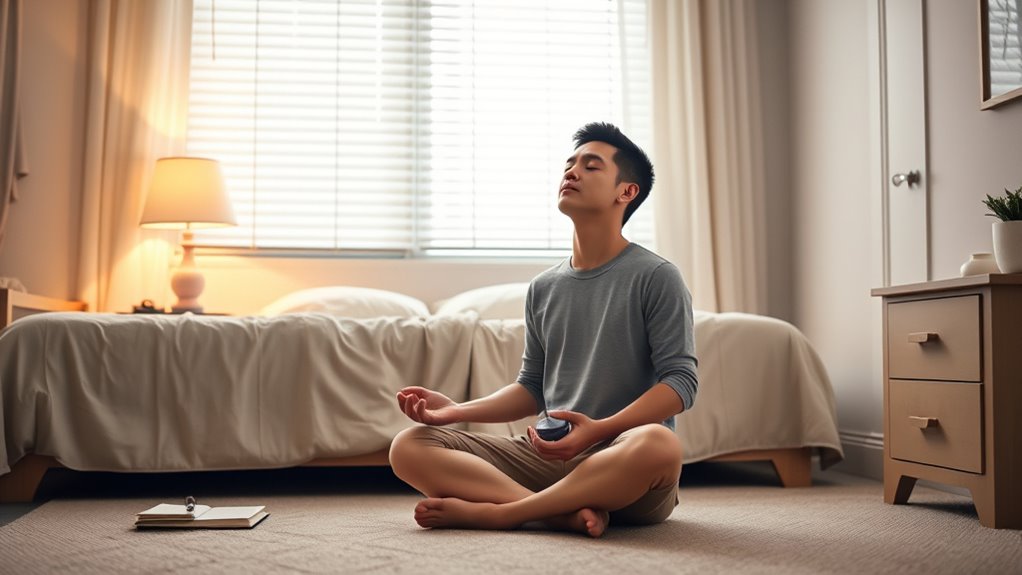

To reduce nightmares and night terrors, use cognitive behavioral strategies like maintaining good sleep hygiene by sticking to a consistent schedule and creating a calming bedtime routine. Practice imagery rehearsal therapy by rewriting upsetting dreams with positive endings and visualize these changes. Incorporate relaxation techniques such as deep breathing and mindfulness to lower anxiety. Combining these methods can help reframe distressing dreams and improve sleep quality—continue exploring for more effective techniques to sleep peacefully.

Get wellness gear delivered free with Prime
- Fast, free delivery on millions of items
- Prime Video, Amazon Music and more included
- Member-only deals all year
Key Takeaways
- Implement Imagery Rehearsal Therapy to rewrite and visualize positive dream endings, reducing nightmare frequency and distress.
- Maintain a consistent sleep schedule and calming pre-sleep routines to strengthen sleep quality and decrease nightmares.
- Keep a dream journal to identify triggers and reinforce mindfulness, aiding emotional detachment from frightening dreams.
- Practice relaxation techniques like deep breathing and progressive muscle relaxation to lower anxiety and promote restful sleep.
- Modify the sleep environment with tranquil elements and good air quality to support relaxation and improve overall sleep patterns.

Nightmares and night terrors can markedly disrupt your sleep and overall well-being, but cognitive behavioral strategies offer effective ways to reduce their frequency and intensity. One key approach involves improving your sleep hygiene, which creates a healthier sleep environment and routine that can lessen the likelihood of disturbing dreams. Establishing a consistent sleep schedule helps regulate your internal clock, making it easier to fall asleep and stay asleep through the night. Avoid caffeine, alcohol, and heavy meals close to bedtime, as these can interfere with quality sleep. Creating a calming pre-sleep routine—such as reading, gentle stretching, or listening to soothing music—signals to your brain that it’s time to wind down. Keep your bedroom cool, dark, and quiet, and reserve your bed for sleep and intimacy only, to strengthen the mental association between these cues and restful sleep.
Another aspect to focus on is dream recall. Keeping a dream journal can be surprisingly effective in managing nightmares. As you wake up, jot down any details you remember about your dreams, even if they’re frightening or confusing. This practice increases your awareness of recurring themes or triggers, providing valuable insight into what might be provoking your nightmares. Over time, recording your dreams can help you detach emotionally from the content, reducing its power to disturb your sleep. It also encourages a more mindful attitude towards your dreams, making it easier to challenge or reframe frightening imagery during waking hours.
Cognitive behavioral strategies often include techniques like imagery rehearsal therapy (IRT), which involves intentionally rewriting the narrative of your recurring nightmares while awake. By visualizing a different, more positive ending to your dreams, you train your brain to alter the content it produces during REM sleep. This process can diminish the frequency and severity of nightmares over time. Additionally, practicing relaxation exercises such as deep breathing, progressive muscle relaxation, or mindfulness meditation before bed can lower anxiety levels and create a more peaceful mental state. When your mind is calmer, your chances of experiencing distressing dreams decrease. Incorporating smart indoor gardens into your environment can also promote relaxation by providing a tranquil space and improving overall sleep quality through better air quality and calming aesthetics.
Combining good sleep hygiene with active dream management can substantially improve your sleep quality. These strategies empower you to take control of your sleep environment and your subconscious mind, ultimately reducing nightmares and night terrors. Consistency is essential—by sticking to a routine and practicing these techniques regularly, you’ll develop healthier sleep patterns that support both physical and mental well-being. Over time, you’ll likely notice more restful nights and a greater sense of calm when you drift off to sleep.
imagery rehearsal therapy for nightmares
As an affiliate, we earn on qualifying purchases.
As an affiliate, we earn on qualifying purchases.
Frequently Asked Questions
Can Sleep Position Influence Nightmare Frequency?
Yes, your sleep posture can influence nightmare frequency. Certain sleep positions, like lying on your back, might increase the likelihood of nightmares or night terrors. Positional therapy involves adjusting your sleep posture to reduce these episodes, such as sleeping on your side or stomach. By consciously changing your sleep posture, you may experience fewer nightmares, as this strategy helps create a calming sleep environment and minimizes stressors that trigger distressing dreams.
Are There Specific Dietary Tips to Prevent Night Terrors?
You might wonder if dietary tips can prevent night terrors. Research suggests dietary modifications, like avoiding heavy or spicy meals before bed, can help. Incorporate sleep-inducing foods such as bananas, almonds, or warm milk, which contain calming nutrients. These choices may promote relaxation and better sleep quality, reducing night terrors. Experiment with your diet to see if these changes make a difference in your sleep patterns and overall restfulness.
How Do Medication Interactions Affect CBT Outcomes?
Medication interactions can impact your CBT outcomes by causing side effects that interfere with your ability to engage fully. Drug interactions may increase side effects like drowsiness or anxiety, making it harder to practice coping strategies. It’s essential to inform your healthcare provider about all medications you’re taking so they can adjust treatment plans accordingly. Managing these interactions helps make certain you get the most benefit from your CBT efforts.
Is There a Link Between Nightmares and Post-Traumatic Stress?
Nightmares often go hand-in-hand with post-traumatic stress, as trauma triggers can cause vivid, distressing dreams that disrupt sleep. You might find that sleep disturbance worsens, creating a vicious cycle. Addressing trauma triggers and incorporating relaxation techniques can help break the pattern. Remember, it’s not just a bad dream; it’s your mind trying to process trauma, so seeking support can make all the difference.
Can Exercise Timing Impact Nightmare Occurrence?
Yes, exercise timing can impact nightmare occurrence by influencing your sleep cycle and physical activity levels. Exercising too close to bedtime may increase alertness, making it harder to fall asleep peacefully and potentially triggering nightmares. Conversely, engaging in physical activity earlier in the day can promote better sleep quality, helping regulate your sleep cycle and reduce the chances of nightmares. Adjust your exercise schedule to optimize restful sleep.
As an affiliate, we earn on qualifying purchases.
Conclusion
Did you know that up to 70% of adults experience nightmares at least once a year? By applying cognitive behavioral strategies, you can profoundly reduce the frequency and intensity of nightmares and night terrors. These techniques empower you to reframe negative thoughts and establish calming routines. Remember, consistent effort makes a difference. With patience and practice, you can regain restful nights and improve your overall well-being. Take control today and start your journey toward peaceful sleep.
sleep environment improvement tools
As an affiliate, we earn on qualifying purchases.
As an affiliate, we earn on qualifying purchases.
As an affiliate, we earn on qualifying purchases.
Cold & flu season Picks
humidifiers
As an affiliate, we earn on qualifying purchases.