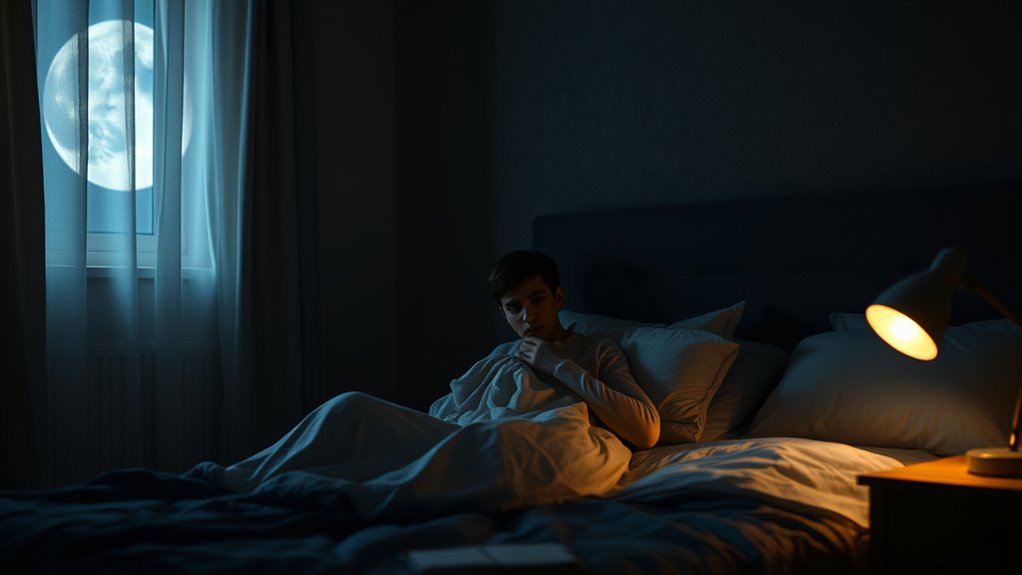

To understand and manage nightmares, it’s helpful to recognize the symbolism in your dreams, like falling or being chased, which reflect underlying fears or stress. Improving your sleep hygiene—by sticking to consistent routines, creating a calm sleep environment, and limiting screen time—can reduce their frequency and intensity. Combining these approaches allows your mind to process emotions better and promotes restful sleep. Keep exploring these strategies to gain more control over your dreams and emotional well-being.
Key Takeaways
- Recognize common nightmare symbols like falling or being chased to identify underlying fears or unresolved issues.
- Improve sleep hygiene by maintaining consistent routines and creating a calming sleep environment to reduce nightmare frequency.
- Decoding dream symbolism offers insights into subconscious emotional states and helps address stressors.
- Managing nightmares involves both understanding their meanings and adopting healthy sleep habits for better emotional processing.
- Combining dream analysis with sleep hygiene enhances overall sleep quality and promotes emotional well-being.

Have you ever woken up suddenly from a frightening dream, feeling anxious and unsettled? That jarring awakening can leave you drenched in sweat, heart pounding, and unsure of what just transpired. Nightmares often carry vivid imagery and intense emotions, and understanding their meaning can help you cope better. Dream symbolism plays a significant role in these unsettling dreams; your subconscious might be trying to tell you something through the symbols and themes that appear in your nightmares. For example, dreaming of falling could symbolize a loss of control or fear of failure, while images of being chased may represent avoidance or anxiety about a situation you’re trying to escape. Recognizing these symbols can give you insight into unresolved issues or stressors in your waking life. But understanding the messages behind your nightmares is only part of the solution. Improving your sleep hygiene is equally vital. Sleep hygiene involves habits and environmental factors that influence the quality of your sleep. Poor sleep hygiene, such as irregular sleep schedules, excessive screen time before bed, or consuming caffeine late in the day, can increase the likelihood of nightmares. When your sleep environment is disruptive or your bedtime routines are inconsistent, your brain doesn’t get the restful, uninterrupted sleep it needs to process emotions healthily, which can lead to more vivid and disturbing dreams. To improve your sleep hygiene, aim to establish a consistent sleep schedule, going to bed and waking up at the same time each day. Create a calming bedtime routine, like reading or practicing relaxation techniques, to signal to your body that it’s time to wind down. Keep your bedroom cool, dark, and quiet to foster a peaceful sleep environment. Limiting exposure to screens before bed is also essential, as the blue light emitted can interfere with melatonin production and disrupt your circadian rhythm. High-quality sleep can also help your brain consolidate memories and emotions more effectively, reducing the frequency of nightmares. When you prioritize good sleep hygiene, you reduce the chances of your subconscious manifesting stress and fear through nightmares. Remember, understanding the symbolism in your dreams can help you decode your emotional landscape, while improving sleep hygiene ensures your brain has the best chance to process these emotions healthily without the interference of poor habits or environment. Combining these approaches offers an all-encompassing way to manage nightmares more effectively, helping you wake up feeling more refreshed and less anxious about what lurks in your subconscious.

Sleep Aid Device Handheld Low Frequency Pulse of microcurrent Sleep Machine Insomnia Relief Anxiety Help Sleep
Efficacy: This sleep aid device can relieve anxiety, improve insomnia, and help you sleep.The perception of the product's...
As an affiliate, we earn on qualifying purchases.
Frequently Asked Questions
Can Nightmares Be a Sign of a Serious Mental Health Disorder?
Nightmares can sometimes indicate a serious mental health disorder, especially if they occur frequently or disrupt your sleep. There’s a mental health correlation, as conditions like PTSD, anxiety, or depression often involve distressing dreams. If nightmares persist, it might lead to a sleep disorder diagnosis, so it’s important to consult a healthcare professional. Addressing underlying issues can help improve your sleep quality and overall well-being.
Are There Specific Foods or Drinks That Trigger Nightmares?
Nightmares can be unsettling, much like the unexpected food triggers that disrupt your sleep hygiene. Certain foods and drinks, such as spicy meals, caffeine, and alcohol, can interfere with restful sleep and increase nightmare frequency. To promote better sleep, avoid heavy or spicy foods before bed and limit caffeine intake. Maintaining good sleep hygiene by establishing a calming bedtime routine helps reduce nightmare risks and guarantees a more peaceful night.
How Do Children’S Nightmares Differ From Adults’?
You notice that children’s nightmares often stem from childhood fears and vivid imaginations, making their dreams more fantastical or frightening. In contrast, adults’ nightmares usually relate to adult stress, anxiety, or unresolved issues. As you observe, children tend to wake up easily and forget their dreams quickly, while adults might experience more intense and lingering nightmares. Your awareness helps you understand the different ways these nightmares affect each age group.
Do Certain Medications Increase Nightmare Frequency?
Did you know that some medications can increase nightmare frequency by up to 30%? Certain medication side effects, like vivid dreams or altered sleep patterns, are common. You should be aware that drug interactions may also trigger more intense nightmares. If you notice a change in your sleep, talk to your doctor about adjusting your treatment, as managing these effects can help improve your overall sleep quality and well-being.
Can Nightmares Be Completely Eliminated?
Nightmares can’t always be completely eliminated, but you can work toward nightmare prevention through techniques like dream therapy. This approach helps you reframe distressing thoughts and reduce nightmare frequency. While some factors, such as medications or stress, might make nightmares more likely, consistent efforts with therapy and good sleep habits can considerably lessen their impact. Remember, controlling nightmares is a gradual process, but with persistence, you can improve your sleep quality.

Helight Red Light Therapy Sleep Device – 630nm Pure Red Light Lamp Sleep Aid to Support Deep Relaxation – Rest Lamp Backed by Science for Adults & Kids Bedrooms
Natural Red Light to Improve Sleep – Helight makes getting great sleep simple. Close your eyes, relax and...
As an affiliate, we earn on qualifying purchases.
Conclusion
Nightmares can feel like shadows lurking in your mind, but remember, you hold the power to face them. By understanding their causes and practicing calming techniques, you can take control and turn your nights into peaceful retreats. Just like a lighthouse guides ships through stormy seas, your awareness and strategies can lead you toward restful sleep. Don’t let nightmares control your nights—take charge and reclaim your peaceful dreams.

Glowco CalmCarry Sleep Aid Device – Handheld Microcurrent Relaxation Tool, Supports Calm, Focus & Gentle Relief, USB Rechargeable, Portable Wellness Device for Adults & Kids | Teal Calm Carry
【Original Glowco CalmCarry – Natural Calm & Gentle Relief】Experience the original the Glowco/ the Glow company calm carry—crafted...
As an affiliate, we earn on qualifying purchases.
Amazon Product B0DYJ7L5KX
As an affiliate, we earn on qualifying purchases.