Sleep aid devices for students fall into two broad camps: sound machines that mask noisy dorms and roommates, and active relaxation tools like breathing trainers and microcurrent wristbands that calm a racing mind before an exam. The Dreamegg Portable White Noise Machine earns my best overall pick for combining strong sound masking with a rechargeable battery and a price students can actually afford. For overthinkers who can’t fall asleep even in a quiet room, the YeeBeny Breathing Lamp offers a guided visual approach that works without sound at all, while the Dodow Plus adds app support for tracking progress. The main tradeoff in this category is between passive background solutions and active wind-down tools — the first helps you stay asleep through hallway noise, the second helps you fall asleep when your brain won’t shut off. Battery life, dorm-shares compatibility, and whether a device needs an app also separate the contenders. Keep reading for the full ranked breakdown and who each device suits best.
Key Takeaways
- Sound machines dominated the value end of the lineup: the Dreamegg, Easysleep, and Sound Machine Night Light deliver the most functionality per dollar, making them the default choice for shared dorm rooms.
- The handheld category showed heavy redundancy — four near-identical microcurrent devices (Gen2, Glowco CalmCarry, and two generic units) landed mid-to-low in the rankings because evidence for microcurrent relaxation is thinner than for sound or breathing-based approaches.
- Breathing-guided devices (YeeBeny Breathing Lamp and Mindsight Breathing Buddha) proved the best fit for anxiety-driven insomnia, but they do nothing for environmental noise — a real limitation for students with loud roommates.
- The Dodow Plus was the only pick with app support, which adds progress tracking but also means your sleep aid depends on your phone being nearby — a distraction risk many students underestimate.
- Non-looping sound libraries and memory functions were the biggest differentiators between cheap and mid-range sound machines; looping audio with an audible seam woke light sleepers in shared rooms.
| Dreamegg Portable White Noise Machine, 1000mAh Battery, Travel Sleep, Cream |  | Best Overall for Dorm and Travel | Battery Capacity: 1000mAh rechargeable | Size: 1.8 x 1.8 x 1.9 inches | Weight: 1.6 ounces | VIEW LATEST PRICE | See Our Full Breakdown |
| Gen2 Relaxation Device – Handheld Portable Sleep and Wellness Tool with Dual Mode Gentle Pulse, USB-C Rechargeable |  | Best for Anxious Minds Before Bed | Modes: Dual relaxation modes | Technology: Gentle pulse stimulation | Charging: USB-C rechargeable | VIEW LATEST PRICE | See Our Full Breakdown |
| YeeBeny Breathing Lamp Guided 3 Color Meditation for Stress Relief |  | Best Budget Breathing Trainer | Material: Soft silicone | Colors: White, Green, Blue, Yellow | Breathing Cycle: 4 seconds inhale, 7 seconds hold, 8 seconds exhale | VIEW LATEST PRICE | See Our Full Breakdown |
| Sleep Aid Device Handheld Sleep Relaxation Wristband for Insomnia Relief and Anxiety |  | Best Hands-Free Option | Design: Wristband with built-in display | Settings: Adjustable relaxation settings | Power: USB rechargeable | VIEW LATEST PRICE | See Our Full Breakdown |
| Dodow Plus Sleep Aid with App Support |  | Best Premium Light-Based Trainer | Cycle Options: 8 or 20 minutes | App Support: Yes, companion app with guided sleep content | Design: Portable, cordless | VIEW LATEST PRICE | See Our Full Breakdown |
| Sound Machine Night Light with White Noise and Brown Noise – 30 Non-Looping Sounds, 12 Lights, 5 Timers | 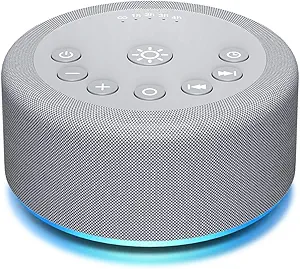 | Best Feature-Rich Sound Machine | Number of Sounds: 30 | Night Lights: 12 colors | Timers: 5 (1h, 2h, 3h, 4h, continuous) | VIEW LATEST PRICE | See Our Full Breakdown |
| Glowco CalmCarry Sleep Aid Device – Handheld Microcurrent Relaxation Tool |  | Best for Exam-Week Anxiety | Technology: Microcurrent pulses | Rechargeable: Yes, USB | Battery Life: Up to 30 sessions per charge | VIEW LATEST PRICE | See Our Full Breakdown |
| Handheld Sleep Companion for Relaxation and Well-Being |  | Best Beginner Microcurrent Pick | Modes: 2 adjustable modes | Intensity Levels: 15 | Auto Shut-off: 30 minutes | VIEW LATEST PRICE | See Our Full Breakdown |
| Easysleep White Noise Machine with 25 Sounds, Night Lights, and Memory Function |  | Best Value Sound Machine | Number of Sounds: 25 | Night Light Levels: 4 | Volume Levels: 32 | VIEW LATEST PRICE | See Our Full Breakdown |
| Handheld Sleep Aid Device – Microcurrent Relaxation Tool |  | Best Battery Life in a Pocket Device | Battery Life: 5 days of 20-minute sessions per charge | Recharge Time: 1 hour | Auto Shut-off: 15 minutes | VIEW LATEST PRICE | See Our Full Breakdown |
| Mindsight Breathing Buddha Guided Visual Meditation with 3 Modes |  | Best Screen-Free Breathing Trainer | Dimensions: 3.5 x 4 x 6 inches | Battery Life: Up to 2 months at 10 minutes/day | Charging: USB rechargeable | VIEW LATEST PRICE | See Our Full Breakdown |
More Details on Our Top Picks
Dreamegg Portable White Noise Machine, 1000mAh Battery, Travel Sleep, Cream
This pick makes the most sense for students who lose sleep to roommate noise and hallway chatter. At 1.6 ounces, it slips into a backpack pocket the way a phone does, and the 1000mAh battery covers naps in the library or a weekend away without hunting for an outlet. Compared with the Easysleep White Noise Machine, the Dreamegg trades raw sound variety — 16 sounds versus 25 — for genuine portability, which matters more when you move between dorm, home, and study trips. The one-button layout works even with lights off. The tradeoff is real: if you sleep in one place every night and want deeper sound customization, a plug-in model serves you better.
Pros:- Genuinely pocketable at 1.6 ounces — the most travel-ready option here
- Battery-powered operation works during power cuts and off-campus trips
- USB-C charging matches modern student gear
- Single-button control is usable in the dark without fumbling
Cons:- Only 16 sounds, half what larger plug-in machines offer
- No night light, timers, or memory functions found on bedside rivals
- Tiny controls can be confusing until you memorize the button logic
Best for: Students in shared dorms or apartments who need to mask noise in multiple locations
Not ideal for: Light-and-sound seekers who want a bedside hub with night lights and timers — this is a sound-only travel unit
- Battery Capacity:1000mAh rechargeable
- Size:1.8 x 1.8 x 1.9 inches
- Weight:1.6 ounces
- Sound Options:16 sounds
- Charging Port:USB-C
- Controls:One-button operation
- Primary Use:Portable white noise for travel and dorms
Our verdict“The strongest all-around choice for students whose sleep problem is noise and whose life happens in more than one room.”
Gen2 Relaxation Device – Handheld Portable Sleep and Wellness Tool with Dual Mode Gentle Pulse, USB-C Rechargeable
Where the Dreamegg masks external noise, the Gen2 takes the opposite approach: it addresses the racing mind that keeps many students awake after a late study session. Its dual gentle-pulse modes give your hands and attention something to focus on, and the smooth silicone build feels pleasant rather than clinical. Compared with the Glowco CalmCarry, the Gen2’s two modes are simpler — an advantage if you don’t want to experiment with settings at 1 a.m. The honest tradeoff is patience: this is a wellness tool, not a medical device, and benefits build over consistent daily use rather than delivering instant sleepiness. Students expecting a switch that turns off insomnia will be disappointed.
Pros:- Dual pulse modes offer a choice between calming intensity levels
- Soft silicone body is comfortable to hold while falling asleep
- Fits in a pocket, so it works during exams week and travel alike
- USB-C rechargeable with long battery life between charges
Cons:- Wellness-only claims — no clinical backing for serious insomnia
- Requires daily consistent use before benefits appear
- No sound or light features, so it can’t mask a noisy environment
Best for: Students whose sleeplessness comes from anxiety and restlessness rather than noise
Not ideal for: Anyone wanting immediate, measurable results or noise masking — this does neither
- Modes:Dual relaxation modes
- Technology:Gentle pulse stimulation
- Charging:USB-C rechargeable
- Battery Life:Long-lasting
- Material:Premium smooth silicone
- Controls:One-button operation
- Age Suitability:3+ with supervision
Our verdict“A solid pick for the anxious pre-sleep routine, provided you commit to using it nightly.”
YeeBeny Breathing Lamp Guided 3 Color Meditation for Stress Relief
This option stands out for teaching the 4-7-8 breathing cycle without an app or subscription — you follow the pulsing light instead of counting in your head. That makes it a smarter budget buy than it first appears, since guided-breathing apps often push paid upgrades. Compared with the Mindsight Breathing Buddha, the YeeBeny offers similar guided pacing in a softer silicone shell that doubles as dorm decor, which the Buddha’s monastic look doesn’t quite pull off. The drawbacks are worth weighing: there’s no stated battery life or charging details, and turning it on requires a manual long press — annoying mid-wind-down. It also won’t touch environmental noise the way a white noise machine does, so loud roommates remain your problem.
Pros:- Teaches proven 4-7-8 breathing pacing without an app or fees
- Color-shifting light gives eyes a focus point instead of a phone
- Soft silicone design works as calming bedside decor
- Affordable entry into guided breathing practice
Cons:- No published battery life or power source details — a real buying gamble
- Manual long-press operation interrupts the relaxation flow
- Does nothing to mask environmental noise
Best for: Budget-conscious students who want a screen-free way to slow their breathing at bedtime
Not ideal for: Noise-sensitive sleepers or anyone who needs documented specs before buying
- Material:Soft silicone
- Colors:White, Green, Blue, Yellow
- Breathing Cycle:4 seconds inhale, 7 seconds hold, 8 seconds exhale
- Operation:Long press switch to turn on/off
- Adjustability:Adjustable breathing frequencies
- Primary Use:Guided breathing, stress relief, sleep
Our verdict“An inexpensive, low-tech way to practice bedtime breathing — if you can live with the vague power specs.”
Sleep Aid Device Handheld Sleep Relaxation Wristband for Insomnia Relief and Anxiety
The wristband format is this product’s whole argument, and it’s a good one: unlike the Gen2 Relaxation Device or the Glowco CalmCarry, both of which you must hold, this stays on your wrist so you can drift off without gripping anything. For students who fall asleep mid-relaxation, that’s a genuine comfort advantage. The built-in display and adjustable settings let you tune intensity without guesswork. The honest problem is transparency — specifications are thin and user feedback is scarce, so you’re buying on format rather than track record. Compared with every other device in this lineup, it’s the least documented, and that uncertainty is the price you pay for hands-free convenience. If verified effectiveness matters more than the wristband form, the Gen2 is the safer handheld bet.
Pros:- Wrist-worn design frees your hands entirely — unique in this lineup
- Onboard display makes settings visible without a phone
- Small and light enough to wear through the night
- USB rechargeable for dorm convenience
Cons:- Very limited published specs and few user reviews to verify claims
- Effectiveness for actual insomnia relief is unsubstantiated
- Wearing a device all night may bother sensitive sleepers
Best for: Students who fall asleep while relaxing and don’t want to hold a device
Not ideal for: Research-driven buyers who need specs and reviews before purchasing
- Design:Wristband with built-in display
- Settings:Adjustable relaxation settings
- Power:USB rechargeable
- Portability:Small and lightweight
- Use Locations:Home, work, travel
- Intended Benefit:Relaxation and insomnia relief
Our verdict“Choose it for the hands-free format, not for proven results — the documentation just isn’t there yet.”
Dodow Plus Sleep Aid with App Support
The Dodow Plus is the most finished package here: a metronome light that paces your breathing onto a ceiling, plus a companion app with guided sleep content the YeeBeny lamp can’t match. Its 8- or 20-minute cycles auto-end, so you’re not switching anything off as you drift asleep — a real edge over the YeeBeny’s manual long-press. Compared with the Mindsight Breathing Buddha, the Dodow’s projected halo format works with your eyes already closed, which suits side sleepers. The tradeoffs: it does nothing about noise (pair it with the Dreamegg if roommates are loud), it costs more than every breathing lamp here, and results demand consistent nightly use. For severe sleep disorders, this is not a substitute for professional help.
Pros:- Light projects onto the ceiling, usable with eyes closed
- 8- and 20-minute cycles shut off automatically after use
- Companion app adds guided content beyond the device itself
- Cordless and portable for travel home during breaks
Cons:- Pricier than comparable breathing lamps like the YeeBeny
- Results require consistent nightly use over weeks
- Single-purpose — no sound masking or night light functions
Best for: Students willing to invest in a polished, app-supported wind-down routine
Not ideal for: Noise-plagued dorm dwellers or anyone with clinical insomnia needing real treatment
- Cycle Options:8 or 20 minutes
- App Support:Yes, companion app with guided sleep content
- Design:Portable, cordless
- Method:Light-paced breathing exercises
- Display:Projected light halo
- Recommended Use:Reduce anxiety, improve sleep naturally
- Power:Battery-operated, cordless
Our verdict“The most refined breathing trainer in this roundup for students ready to build a real bedtime habit.”
Sound Machine Night Light with White Noise and Brown Noise – 30 Non-Looping Sounds, 12 Lights, 5 Timers
For students dealing with noisy dorms and roommates, this option stands out for sheer breadth: 30 non-looping sounds means you can shift between brown noise for blocking hallway chatter and softer nature tracks for winding down after late-night study sessions. Compared with the Easysleep White Noise Machine, this model doubles the night light options (12 vs. 4) and adds a continuous-play timer, which matters if you want sound running all night rather than shutting off after four hours. The memory function is a genuine time-saver — your preferred combo reloads every time you power on. The tradeoff is complexity: with 36 volume steps and dozens of sound-light pairings, the interface takes longer to learn than simpler machines, and the USB-only power means it’s tethered to an outlet or power bank.
Pros:- 30 non-looping sounds including white, pink, and brown noise for different masking needs
- 12 night light options let you match lighting to study, wind-down, or sleep
- Memory function reloads your exact settings every night
- Continuous play option covers full nights, unlike shorter-timer machines
Cons:- USB-only power with no battery limits true portability
- Interface with 36 volume levels and many options can feel overwhelming at first
Best for: Dorm residents who want maximum sound variety and an all-night masking option for loud roommates and hall noise
Not ideal for: Students who want a grab-and-go device — there’s no battery, so it needs USB or wall power at all times
- Number of Sounds:30
- Night Lights:12 colors
- Timers:5 (1h, 2h, 3h, 4h, continuous)
- Volume Levels:36
- Power Source:USB
- Memory Function:Yes
Our verdict“This pick makes the most sense for students who want the most customizable all-night noise machine in the lineup and don’t mind a short learning curve.”
Glowco CalmCarry Sleep Aid Device – Handheld Microcurrent Relaxation Tool
Where sound machines mask external noise, the Glowco CalmCarry targets the internal restlessness that keeps students awake before big exams. Its gentle microcurrent pulses offer a screen-free way to calm down — a real advantage over doom-scrolling in bed. Compared with the Handheld Sleep Companion (product 8), the CalmCarry’s biggest edge is battery endurance: up to 30 sessions per charge, so a single charge can carry you through an entire finals period. It’s also rated for children 3+, making it one of the more family-flexible picks here. The honest tradeoff: unlike the Sleep Companion, there’s no automatic shut-off, so you control session length yourself, and the pulse sensation varies from person to person — some find it soothing, others barely notice it.
Pros:- Extremely portable and lightweight for use in the library, dorm, or while traveling home
- Up to 30 sessions per charge outlasts most handheld rivals
- Adjustable intensity lets you tune the sensation to your comfort
- Screen-free alternative to phone-based relaxation apps
Cons:- No automatic shut-off, so sessions can run longer than intended
- Effectiveness varies widely based on individual sensitivity to microcurrent
Best for: Anxious students who need a portable, screen-free wind-down tool during high-stress weeks like finals
Not ideal for: Anyone expecting guaranteed sleep results — microcurrent relaxation is subtle and highly individual, with no clinical claims
- Technology:Microcurrent pulses
- Rechargeable:Yes, USB
- Battery Life:Up to 30 sessions per charge
- Age Suitability:Adults and children 3+
- Control:Adjustable intensity, manual session length
- Portability:Compact, handheld, lightweight
Our verdict“This model is better suited to stress-driven students who want a discreet calming gadget with long battery life than to those who need environmental noise blocked.”
Handheld Sleep Companion for Relaxation and Well-Being
Among the three handheld microcurrent devices in this roundup, the Handheld Sleep Companion earns its spot as the easiest entry point. Two modes and 15 intensity levels give enough adjustment to find a comfortable setting without the decision fatigue of more complex gadgets, and the 30-minute auto shut-off means you can fall asleep holding it without draining the battery — a safety feature the Glowco CalmCarry lacks entirely. Compared with product 10’s handheld microcurrent tool, this one skips the requirement for conductive gel or moisturizer, which removes a small but real nightly hassle for a student just testing whether microcurrent relaxation works for them. The drawback is that it won’t operate while charging, so a dead battery means a wait, and it makes no medical claims — think of it as a relaxation aid, not an insomnia treatment.
Pros:- Simple two-mode design ideal for first-time users
- 30-minute auto shut-off lets you drift off without managing the device
- Compact and wireless for use anywhere on campus
- USB rechargeable with no gel or accessories required
Cons:- Cannot be used while charging, forcing downtime when the battery dies
- Relaxation aid only — not a medical device and won’t address serious insomnia
Best for: Students new to microcurrent relaxation who want simple controls and a safe auto shut-off for falling asleep
Not ideal for: Heavy nightly users — the can’t-use-while-charging limitation frustrates anyone who forgets to recharge
- Modes:2 adjustable modes
- Intensity Levels:15
- Auto Shut-off:30 minutes
- Charging:USB
- Design:Compact, wireless, handheld
- Color:Green
Our verdict“This option stands out as the low-commitment way to try microcurrent relaxation before spending more on feature-heavy rivals.”
Easysleep White Noise Machine with 25 Sounds, Night Lights, and Memory Function
The Easysleep delivers the core dorm-sleep package — noise masking, a soft night light, and set-and-forget timers — at a friendlier price than the feature-loaded 30-sound machine from product 6. For most students, 25 sounds is plenty; the difference between 25 and 30 tracks matters far less than the money saved. Its dual AC or USB power adds flexibility the USB-only rivals lack, and the compact 3.9-inch footprint fits a crowded nightstand or a suitcase for trips home. The 18-month warranty is unusually generous in this category and speaks to build confidence. Be aware of the tradeoffs: only 4 night light levels versus 12 on the pricier machine, a maximum 4-hour timer with no continuous-play option, and no battery — so it’s less suited to all-night masking than its bigger competitor.
Pros:- 25 sounds cover white noise, fan, and nature options for most masking needs
- AC or USB power gives more placement flexibility than USB-only rivals
- Compact 3.9-inch size travels easily for breaks and trips
- 18-month warranty is generous for the price bracket
Cons:- Only 4 night light levels limits mood customization
- No continuous-play timer and no battery option
Best for: Budget-minded students who want reliable noise masking and a simple night light without paying for extras
Not ideal for: All-night sound users — the 4-hour maximum timer and lack of continuous play cut sound off mid-sleep
- Number of Sounds:25
- Night Light Levels:4
- Volume Levels:32
- Sleep Timer Options:60, 120, 180, 240 minutes
- Dimensions:3.9 x 3.9 x 2.3 inches
- Power Source:AC or USB
- Warranty:18 months
Our verdict“This pick makes the most sense for students who want 90% of a premium sound machine’s benefit at a lower price and don’t need all-night playback.”
Handheld Sleep Aid Device – Microcurrent Relaxation Tool
This handheld microcurrent tool differentiates itself on raw endurance and lightness: at 0.06 lbs with five days of 20-minute sessions per charge, it outclasses the Handheld Sleep Companion for students who hate charging cables. The 15-minute auto shut-off is the shortest in this roundup — arguably ideal for a pre-sleep wind-down that ends before you doze off, versus the Sleep Companion’s 30-minute window. However, it carries a unique hassle the other handhelds avoid: it requires moisturizer or gel for good skin contact, which means keeping a small bottle at your bedside. It’s also the least transparent pick here — there’s no clinical validation or detailed efficacy information, so buyers are relying on the relaxation category’s general reputation rather than documented results.
Pros:- Five days of sessions per charge beats every handheld rival here
- Ultra-light 0.06 lb body disappears into a pocket or backpack
- 15-minute auto shut-off fits a short pre-sleep routine
- Fast 1-hour recharge minimizes downtime
Cons:- Requires moisturizer or gel for proper skin contact, adding a recurring step and cost
- No clinical validation or efficacy data available
Best for: Students who want a featherweight device that runs all week on one charge and don’t mind a gel routine
Not ideal for: Buyers who want evidence-backed results — the lack of clinical validation makes this a gamble for skeptics
- Battery Life:5 days of 20-minute sessions per charge
- Recharge Time:1 hour
- Auto Shut-off:15 minutes
- Weight:0.06 lbs
- Charging:USB rechargeable
- Color:Green
Our verdict“This model is better suited to minimalists who prioritize battery life and portability over documentation and fuss-free operation.”
Mindsight Breathing Buddha Guided Visual Meditation with 3 Modes
Most sleep aids in this roundup work on sound or sensation — the Dreamegg white noise machine masks noise, while the Gen2 Relaxation Device and CalmCarry use microcurrent pulses. The Breathing Buddha takes a completely different route: it slows your breathing visually, using an expanding and contracting glow that you follow with your eyes. For students who lie awake with a racing mind, this addresses the anxiety side of insomnia rather than just the environment. Compared with the YeeBeny Breathing Lamp, the Buddha adds three distinct guided modes and an exceptional two-month battery life at ten minutes a day, with no app, subscriptions, or phone pairing to fuss with at midnight. The tradeoff is passivity of a different kind: you have to actually follow the light for it to work, and adjusting brightness means tapping the device manually. It also does nothing for noisy roommates — pair it with a sound machine if that’s your problem.
Pros:- Guided light prompts slow breathing naturally, targeting anxiety-driven insomnia rather than just masking it
- Two-month battery life on a single USB charge means no nightly charging cable clutter
- Fully app-free and screen-free — nothing to download, pair, or update at bedtime
- Safe and simple enough for all ages, working equally well at a desk for study-break focus
Cons:- Brightness must be adjusted by manual tapping, which is awkward mid-session
- No timer or app control, so sessions rely on the 3-hour auto shutoff rather than precise scheduling
- Does nothing to mask environmental noise, a common dorm problem that sound machines handle
Best for: Students whose sleeplessness is driven by racing thoughts, exam anxiety, or doom-scrolling before bed, and who want a screen-free wind-down ritual with zero app dependency
Not ideal for: Students in loud dorms or shared apartments trying to block noise — this does nothing for sound, so a white noise machine like the Easysleep serves that need better
- Dimensions:3.5 x 4 x 6 inches
- Battery Life:Up to 2 months at 10 minutes/day
- Charging:USB rechargeable
- Brightness Levels:2
- Modes:3 guided breathing modes
- Auto Shut-Off:After 3 hours
- App Required:No — fully app-free
- Moving Parts:None
Our verdict“Buy this if your problem is a wired, anxious mind rather than a noisy room — it’s the calmest, lowest-maintenance path to slower breathing in the lineup.”
How We Picked
I evaluated each device through a student-specific lens rather than a generic sleep-aid one. The criteria that mattered most: dorm compatibility (does it work in a shared room without annoying a roommate?), portability (battery power versus wall-only), budget realism (students rarely have $100+ to spend on wellness gadgets), and evidence-backed approach — sound masking and paced breathing have far stronger support than novelty microcurrent claims. I also weighed usability at 1 a.m., because a device that requires fiddling with menus defeats its own purpose.
Ranking followed a simple logic: devices that solve the most common student sleep problems (noise and pre-exam anxiety) for the least money and complexity ranked highest. The Dreamegg took the top spot for balancing all three. Single-purpose devices with a strong track record, like the Dodow and the breathing lamps, filled the middle of the list. The generic handheld microcurrent units landed at the bottom not because they’re bad products, but because they overlap almost entirely with better-built alternatives like the Gen2 while offering less transparency about their technology.
Factors to Consider When Choosing Sleep Aid Devices For Students
Before picking a specific device, it helps to understand what kind of sleep problem you’re actually solving. Students lose sleep for two very different reasons — environmental noise and mental overstimulation — and the wrong device for your problem is wasted money no matter how good its reviews are.Identify Your Sleep Problem First
The single most common buying mistake in this category is treating all sleep aids as interchangeable. If a roommate’s gaming sessions or hallway traffic keep you awake, a white noise machine is the evidence-backed answer, and no amount of breathing training will fix a noise problem. If instead your room is quiet but your mind replays tomorrow’s exam, a guided breathing or light-based device targets the actual issue. Some students genuinely need both, and in that case a cheap sound machine plus a low-cost breathing tool often beats one expensive hybrid. Be honest about which scenario describes your typical 2 a.m. — buying for the problem you wish you had, rather than the one you have, is why so many sleep gadgets end up in a drawer by midterm season.
Battery Life and Portability
Dorm rooms are short on outlets, and library all-nighters mean your sleep device may need to travel. A rechargeable battery like the Dreamegg’s 1000mAh cell gives you placement freedom — you can put the machine near your pillow without a cable crossing the floor. Wall-only units like the Easysleep cost less but lock you to a specific spot, which matters in lofted-bed dorm layouts where outlets are scarce and awkwardly placed. For handheld relaxation tools, USB-C charging is now the standard to demand; anything still using micro-USB or replaceable coin cells will be a long-term annoyance. As a rule, prioritize battery only if you’ll actually move the device — stationary bedside use makes this factor nearly irrelevant, and paying extra for it is a waste.
Roommate Etiquette and Shared Spaces
This factor barely exists in general sleep-aid buying guides, but it defines the student experience. A white noise machine with a headphone jack or very low minimum volume keeps the peace in a shared room, while some models can’t go quiet enough for a light-sleeping roommate. Light-based devices like the YeeBeny and Mindsight Breathing Buddha have a hidden advantage here: they’re silent, so a sleeping roommate never knows you’re using one. Conversely, some sound machines project bright night lights that can disturb the other bed — check whether the light can be fully disabled. If your roommate situation is volatile, the safest starting point is a silent, personal device rather than one that changes the whole room’s environment.
Sound Quality and Looping Behavior
Not all white noise machines are equal where it matters most: whether the sound library loops audibly. Cheap machines cycle a short audio clip, and the repeating seam — often just a few seconds long — becomes the very distraction you bought the device to eliminate. Look for models advertising non-looping or long-sample sounds, like the 30-sound unit in this lineup. Also consider the difference between white and brown noise: white noise is brighter and masks speech better, while brown noise is deeper and many find it less fatiguing over a full night. Volume floor matters too — the best machines can run quietly enough for a small dorm room without sounding like static blasting from a speaker.
Budget Tiers and When to Pay More
This category has a strange price structure: excellent sound machines cost $20–$40, while premium handheld relaxation tools can run two to three times that without clearly better results. My advice is to start at the cheap, proven end — a basic sound machine solves the most common student sleep problem for the price of a pizza night. Paying more makes sense only for specific features: app-based progress tracking (the Dodow Plus), premium build quality in a handheld you’ll carry daily, or larger non-looping sound libraries. Avoid the middle trap of generic $40–$60 microcurrent devices that offer no clear advantage over budget alternatives — that’s where redundancy was highest in this comparison. A student’s first sleep aid should rarely cost more than $50.
Apps, Distractions, and Tech Discipline
App-connected sleep devices sound appealing until you remember the phone problem: bringing your phone into bed to control the device is exactly the screen exposure that sabotages sleep in the first place. Devices like the Dodow Plus mitigate this with standalone operation and optional app use, but budget handhelds requiring an app for core functions deserve extra skepticism. Ask yourself honestly whether you’ll open the app and close it, or drift into twenty minutes of scrolling. The safest designs are fully standalone devices with physical buttons that work identically with or without your phone anywhere nearby. If you know your phone discipline is weak — and most students do — that’s a strong argument for app-free options.
Frequently Asked Questions
Are microcurrent sleep devices like the Gen2 and Glowco CalmCarry actually effective?
The honest answer is that microcurrent relaxation (CES-style stimulation) has some research behind it, but far less than sound masking or paced breathing, and the category is full of nearly identical devices making similar claims. In this lineup, four products use essentially the same approach, which tells you the barrier to entry is low and branding does most of the differentiation. If you’re drawn to this style of device, the Gen2 or Glowco CalmCarry are the better-built choices with clearer specifications, USB-C charging, and adjustable intensity. Set realistic expectations: gentle tingling sensations and a calming routine may help you wind down, but these shouldn’t be your first purchase if noise is your main sleep disruptor. Students with anxiety who’ve already tried breathing techniques and want a passive alternative are the most sensible buyers here.
Should a student buy a white noise machine or a breathing device if they can only afford one?
It depends entirely on your 2 a.m. problem, and this is the decision that matters most. If you’re kept awake or woken up by roommates, hallway noise, or street sounds, a white noise machine is the clear choice because breathing exercises can’t mask environmental noise — a $30 sound machine solves something no meditation tool can. If your room is quiet and your issue is a racing mind before exams, the breathing lamp or Breathing Buddha directly targets that, and a noise machine would just add an irrelevant sound to an already silent room. A useful test: on a night you can’t sleep, notice whether sounds are bothering you or whether silence lets your thoughts spiral. One practical note — sound machines tend to help you stay asleep, while breathing tools mainly help you fall asleep, so match the device to where your sleep breaks down.
Can these devices be used in a shared dorm room without bothering a roommate?
Most can, but the details vary a lot and this is worth checking before buying. Light-based devices like the YeeBeny Breathing Lamp and Mindsight Breathing Buddha are the roommate-safest options because they’re completely silent and the light can be angled toward your own bed. White noise machines are shared-room workable if they have a genuinely low minimum volume — some budget models can’t go quiet enough for a small dorm, and the Sound Machine Night Light in this lineup lets you disable its lighting entirely, which helps. Handheld microcurrent devices are also silent and personal, making them roommate-neutral. The worst case is a device that projects light you can’t turn off or plays sound only at volumes tuned for a bedroom twice the size of a dorm. If your roommate is a light sleeper, prioritize silent devices or confirm the machine has a headphone output.
Is the Dodow Plus worth the premium over cheaper alternatives?
The Dodow Plus commands a premium for its guided light-pacing system and app support, and whether that’s worth it comes down to how you use the tracking features. The core experience — a projected light rhythm that slows your breathing from 11 to 6 breaths per minute — is proven and effective for people whose minds race at bedtime, and the device works fully standalone without the app. Compared with the YeeBeny Breathing Lamp, the Dodow’s metronome light is more prescriptive, which some people find helpful and others find bossy. The app adds session tracking and program variety, but remember that it pulls your phone into your bedtime routine, which carries its own sleep cost. If you want a polished, app-capable breathing aid and your budget stretches past $50, it earns its price; if you just want the breathing guidance, the cheaper lamps deliver most of the benefit.
Do cheap white noise machines under $30 actually work, or do I need to spend more?
Sub-$30 machines like the Dreamegg and Easysleep genuinely work for most student situations, and this is one category where spending more doesn’t reliably buy better sleep. What separates price tiers isn’t loudness or sound quality so much as the sound library size and looping behavior — cheap machines sometimes cycle short clips with an audible seam, while mid-range units use longer, non-looping samples. A memory function that remembers your last sound and volume setting is another genuinely useful mid-range feature, since nobody wants to reprogram settings every night. Where premium machines earn their price is in larger rooms, richer speaker sound, or smart-home integration — none of which matters in a dorm. My guidance: buy the $25–$35 machine first, and only upgrade if you notice the loop seam or outgrow the sound selection.
Conclusion
After comparing all eleven devices, the right choice comes down to what’s keeping you up. Best overall goes to the Dreamegg Portable White Noise Machine — it handles the most common student sleep problem (noise), runs on a rechargeable battery, and costs less than a textbook. Best value is the Easysleep White Noise Machine, which covers the basics almost as well for students counting every dollar. Best premium pick is the Dodow Plus, whose guided light pacing and optional app tracking justify the higher price for students who take their sleep routine seriously. Best for beginners is the Mindsight Breathing Buddha — it requires zero setup, no app, and no habit-building beyond following a light, making it the gentlest entry point into sleep aids. Best for anxiety-driven insomnia is the YeeBeny Breathing Lamp, and best for students who prefer a handheld relaxation tool is the Gen2, which outclasses its nearly identical generic competitors on build and charging. Whatever you choose, match the device to your actual problem — noise or nerves — and you’ll get results; mismatch it, and you’ll join the pile of students with a sleep gadget gathering dust in a desk drawer.