Smart wake-up light clocks pair a gradual sunrise with alarms and, in many cases, sleep sounds or app controls. Among these 15 options, I rank the Philips SmartSleep Wake-Up Light as the best overall for buyers who want a focused sunrise-and-sunset routine, while the Hatch Restore 3 stands out for a broader sleep-audio and lighting setup and the JALL Full Screen Dimmer for an accessible mix of alarm and bedside features. The main tradeoff is between dedicated, straightforward wake lighting and extra functions such as Bluetooth, radio, or app control, which can add complexity. Brightness adjustment, nighttime display glow, and how controls work without a phone also vary. Read on for the full breakdown and help matching a clock to your bedroom and morning routine.

Get wellness gear delivered free with Prime
- Fast, free delivery on millions of items
- Prime Video, Amazon Music and more included
- Member-only deals all year
Key Takeaways
- Dedicated light routines lead the comparison: Philips SmartSleep models center on sunrise and sunset simulation, while many JALL and sound-machine options add more bedside functions.
- More features do not automatically mean a better wake-up: Bluetooth, FM radio, and multiple sounds are useful only if you will use them; otherwise, simpler controls may suit a regular alarm routine better.
- App control creates a real usability tradeoff: The app-enabled Smart Sunrise and JUXLamp options offer remote adjustment, but buyers who prefer buttons should favor a model with clear on-device controls.
- Sound is a major point of difference: Hatch Restore 3 emphasizes sleep audio, while several JALL, Vivilumens, REACHER, and Odokee choices combine sound machines with a sunrise alarm.
- The lineup includes different kinds of smart: Amazon Echo Spot adds Alexa and general smart-assistant functions, but it is less focused on a dedicated wake-light experience than the sunrise-first picks.
| Smart Sunrise Alarm Clock with App Control, Wake-Up Light, Sound Machine, FM Radio, and Wireless Speaker |  | Best for App-Based Scheduling | Power: Corded electric | Alarm capacity: Up to 4 via app; 2 on device | Sunrise simulation: 10–60 minutes | VIEW LATEST PRICE | See Our Full Breakdown |
| JALL Full Screen Dimmer Sunrise Alarm Clock with FM Radio, White Noise, Bluetooth Speaker, Dual Alarms |  | Best for a Large, Feature-Rich Display | Display: 7-inch LED screen | Power: Corded electric | Backup battery: 1 CR2032 | VIEW LATEST PRICE | See Our Full Breakdown |
| Vivilumens Sunrise Alarm Clock with Sound Machine |  | Best for a Straightforward Dual-Alarm Routine | Power: Corded electric | Alarms: 2 | Sunrise simulation: Fixed 10 minutes before alarm | VIEW LATEST PRICE | See Our Full Breakdown |
| REACHER Wood-Grain Sunrise Alarm Clock with Sound Machine and Nightlight |  | Best for Customizable Bedtime and Sunrise Timers | Model: R7W | Power: Corded electric | Sunrise duration: 5–60 minutes | VIEW LATEST PRICE | See Our Full Breakdown |
| Philips SmartSleep Wake-Up Light with Sunrise and Sunset Simulation |  | Best for a Reading-Lamp Bedside Routine | Model: HF3520/60 | Power: Corded electric | Wake-up sounds: 5 natural sounds | VIEW LATEST PRICE | See Our Full Breakdown |
| JALL Sunrise Alarm Clock and White Noise Machine with Bluetooth Speaker |  | Best for Sleep-Sound Variety | Model: K6 | Sleep sounds: 25: 10 noise-masking options and 15 nature tracks | Volume levels: 16 | VIEW LATEST PRICE | See Our Full Breakdown |
| JUXLamp Sunrise Wake-Up Light Therapy Lamp with App Control |  | Best for Bright Light Therapy | Model: SAD-DP-21 | Light intensity: Up to 12,000 lux | Brightness levels: 1–40 | VIEW LATEST PRICE | See Our Full Breakdown |
| Sunrise Alarm Clock with Sound Machine, Bluetooth Speaker, Remote, Putty |  | Best for Couples and Different Schedules | Sunrise simulation: 10–60 minutes | Sound library: 36 sounds | Sleep timer: 5–90 minutes | VIEW LATEST PRICE | See Our Full Breakdown |
| JALL Sunrise Alarm Clock with White Noise and FM Radio |  | Best for Radio Listeners | Model: K8 | Sunrise simulation: 10–60 minutes | Sounds: 25 nature sounds and white noise | VIEW LATEST PRICE | See Our Full Breakdown |
| Odokee Sunrise Alarm Clock and White Noise Machine |  | Best for Straightforward Controls | Sunrise simulation: Customizable 5–60 minutes | Sound options: 25 | Speaker: 5W stereo | VIEW LATEST PRICE | See Our Full Breakdown |
| Hatch Restore 3 | Science-Backed Sleep Audio, Circadian Lighting (Putty) |  | Best for a Full Bedtime Routine | Model: Restore 3 | Light function: Sunrise alarm and customizable lighting | Audio: 80+ sleep sounds and app-based content | VIEW LATEST PRICE | See Our Full Breakdown |
| Philips SmartSleep Wake-Up Light with Sunrise and Sunset Simulation (HF3650/60) |  | Best for Guided Wind-Down Features | Model: HF3650/60 | Light features: Sunrise and sunset simulation; midnight light | Guided routine: Guided breathing | VIEW LATEST PRICE | See Our Full Breakdown |
| Sunrise Alarm Clock with Sound Machine |  | Best Straightforward Sound-Machine Value | Sunrise simulation: 10–60 minutes | Brightness levels: 13 | Volume levels: 32 | VIEW LATEST PRICE | See Our Full Breakdown |
| Smart Sunrise Alarm Clock with App Control, Wake-Up Light, FM Radio, and Wireless Speaker |  | Best for App-Controlled Bedside Variety | Model: JN01-Wood Grain | Connectivity: Bluetooth; no Wi-Fi | Power: Corded electric, 5 V | VIEW LATEST PRICE | See Our Full Breakdown |
| Amazon Echo Spot Smart Alarm Clock with Alexa (Glacier White) | 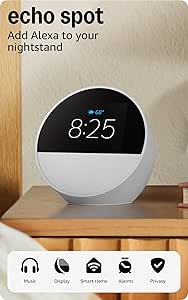 | Best Smart-Home Alarm Clock | Display: 2.83-inch touchscreen, 240 × 320 pixels | Dimensions: 4.5 in W × 4.1 in D × 4.4 in H | Weight: 14.3 oz (405 g) | VIEW LATEST PRICE | See Our Full Breakdown |
| smart wake-up light clock | Sunrise simulation | Power | Model |
|---|---|---|---|
| Smart Sunrise Alarm Clock with | 10–60 minutes | Corded electric | — |
| JALL Full Screen Dimmer Sunris | 10–60 minutes | Corded electric | — |
| Vivilumens Sunrise Alarm Clock | Fixed 10 minutes before alarm | Corded electric | — |
| REACHER Wood-Grain Sunrise Ala | — | Corded electric | R7W |
| Philips SmartSleep Wake-Up Lig | — | Corded electric | HF3520/60 |
| JALL Sunrise Alarm Clock and W | 10–60 minutes, gradually brightening from 10% to 100% | Corded electric; 5V 1A USB charging port | K6 |
| JUXLamp Sunrise Wake-Up Light | — | — | SAD-DP-21 |
| Sunrise Alarm Clock with Sound | 10–60 minutes | — | — |
| JALL Sunrise Alarm Clock with | 10–60 minutes | — | K8 |
| Odokee Sunrise Alarm Clock and | Customizable 5–60 minutes | — | — |
| Hatch Restore 3 | Science-Back | — | Corded electric | Restore 3 |
| Philips SmartSleep Wake-Up Lig | — | — | HF3650/60 |
| Sunrise Alarm Clock with Sound | 10–60 minutes | — | — |
| Smart Sunrise Alarm Clock with | 10–60 minutes | Corded electric, 5 V | JN01-Wood Grain |
| Amazon Echo Spot Smart Alarm C | — | — | — |
More Details on Our Top Picks
Smart Sunrise Alarm Clock with App Control, Wake-Up Light, Sound Machine, FM Radio, and Wireless Speaker
I’d choose this BIB_WJ model when managing several wake times from a phone matters more than having an elaborate display. Its app supports up to four alarms, while the clock itself allows two, making it more flexible for changing household schedules than the Vivilumens Sunrise Alarm Clock, which offers two alarms without app control. The 10–60-minute sunrise and longer sunset countdown give it a useful bedtime-and-morning range, and FM radio, natural sounds, Bluetooth playback, and 11 light colors cover more than the wake-up routine alone.
The tradeoff is that app control is the main smart feature: there’s no stated Wi-Fi or smart-home integration. You’ll also need the corded adapter, and setting more than two alarms requires the app. I’d skip it if you want a completely button-operated clock or a battery-powered option.
Pros:- App control supports up to four alarms, more than the two available directly on the clock.
- Sunrise duration adjusts from 10 to 60 minutes, with a separate sunset countdown.
- Combines seven natural sounds, FM radio, and Bluetooth music playback.
- Offers 11 night-light colors with adjustable brightness.
Cons:- Only two alarms can be configured directly on the device.
- Requires a power adapter and corded placement.
- App control does not provide stated Wi-Fi or smart-home integration.
Best for: People who want to manage several alarms and lighting settings from an app, especially households with changing schedules.
Not ideal for: Buyers who want all alarm settings available on the clock itself, wireless operation, or broad smart-home integration.
- Power:Corded electric
- Alarm capacity:Up to 4 via app; 2 on device
- Sunrise simulation:10–60 minutes
- Sunset countdown:5–180 minutes
- Natural sounds:7 modes
- Night-light colors:11
- Radio:FM, 76–108 MHz
- Dimensions:2.5 in W × 6.5 in H
Our verdict“Choose this BIB_WJ if app-managed alarms and varied light and audio options matter more than cord-free use or smart-home connectivity.”
JALL Full Screen Dimmer Sunrise Alarm Clock with FM Radio, White Noise, Bluetooth Speaker, Dual Alarms
The JALL’s 7-inch full-screen LED is the clearest reason to pick it: the display itself brightens over 10–60 minutes, giving the sunrise effect a broad, easy-to-see presence. It also pairs that lighting with 25 white-noise options, a 5W Bluetooth speaker, FM radio, and dual alarms. Compared with the smaller BIB_WJ app-controlled clock, JALL puts more emphasis on a large display and sound selection, while giving up app-based alarm management.
Its 17 ambient colors and 20 brightness levels allow more fine-tuning than the Vivilumens model’s three display brightness settings. The compromises are a corded setup and no Wi-Fi or app integration, so it’s less suited to remote control or smart-home routines. A CR2032 backup battery also needs periodic replacement; it isn’t a substitute for normal powered operation.
Pros:- Full-screen sunrise display brightens over an adjustable 10–60-minute period.
- Includes 25 white-noise options and a 5W Bluetooth speaker.
- Dual alarms, customizable snooze, and a sleep timer support different routines.
- Offers 17 ambient colors with 20 brightness levels.
Cons:- No app or Wi-Fi integration for remote scheduling or smart-home control.
- Corded operation limits placement flexibility.
- Backup memory relies on a separately replaceable CR2032 battery.
Best for: Bedside users who want a large, dimmable sunrise display, many sound choices, and Bluetooth audio in one corded clock.
Not ideal for: People who want app control, Wi-Fi features, compact bedside equipment, or freedom to place the clock away from an outlet.
- Display:7-inch LED screen
- Power:Corded electric
- Backup battery:1 CR2032
- Alarms:Dual alarms
- Sunrise simulation:10–60 minutes
- White-noise options:25
- Bluetooth speaker:5W Hi-Fi
- Ambient lighting:17 colors; 20 brightness levels
- Dimensions:7.3 × 7.3 inches
Our verdict“Pick the JALL if a large sunrise display and plentiful sound choices matter more than app control or compact size.”
Vivilumens Sunrise Alarm Clock with Sound Machine
Vivilumens keeps the wake-up setup straightforward: two alarms, a snooze function, adjustable volume, and a sunrise that starts just 10 minutes before the alarm. That fixed, short brightening window is less customizable than the REACHER R7W’s 5–60-minute sunrise range, but it suits buyers who want a simple cue rather than a gradual schedule they need to tune. For bedtime, its 10 soothing sounds can run for 30, 60, or 90 minutes.
The dimmable display has three levels and the alarm volume has 12, giving more control over sound than the REACHER’s listed specs provide. In return, Vivilumens has fewer sleep sounds and no stated multicolor night light. Its relatively large 8.9-inch-square footprint and corded power also make it less appealing for a crowded nightstand or a cable-sensitive placement.
Pros:- Two alarms support separate wake schedules.
- Ten-minute gradual light brightening provides a simple sunrise cue.
- Ten sounds include 30-, 60-, and 90-minute timer options.
- Three display brightness levels and 12 alarm-volume levels allow basic personalization.
Cons:- Sunrise duration is fixed at 10 minutes rather than adjustable like the REACHER R7W.
- The 8.9-inch-square footprint can take up substantial nightstand space.
- Corded power is required, and nearby cables may interfere with touch controls.
Best for: Couples or roommates who need two alarms, a short fixed sunrise, and timed sleep sounds without app setup.
Not ideal for: Buyers who want a long, adjustable sunrise period, extensive color lighting, or a compact clock for a small bedside table.
- Power:Corded electric
- Alarms:2
- Sunrise simulation:Fixed 10 minutes before alarm
- Sound options:10
- Sound timers:30, 60, or 90 minutes
- Display brightness:3 levels
- Alarm volume:12 levels
- Dimensions:8.9 × 8.9 inches
Our verdict“Choose Vivilumens for a simple dual-alarm clock with timed sleep sounds, but look to the REACHER R7W for a more adjustable sunrise and more sound choices.”
REACHER Wood-Grain Sunrise Alarm Clock with Sound Machine and Nightlight
The REACHER R7W is the strongest fit here for someone who wants to shape both the wake-up light and the bedtime sound routine. Its sunrise can run from 5 to 60 minutes, and the sound and night-light timer spans 5–180 minutes. That range offers more timing control than the Vivilumens clock’s fixed 10-minute sunrise and limited sound-timer choices. A fully dimmable display and eight night-light colors also make it easier to keep the bedside setup subdued after lights-out.
With 26 sleep sounds, it has a broader listed sound selection than Vivilumens, and backup memory retains settings during power interruptions. The tradeoff is that it remains a corded clock, with no app or Bluetooth control listed. I’d choose it for routine flexibility and skip it if wireless management or music streaming is a priority.
Pros:- Adjustable 5–60-minute sunrise period provides a wider range than Vivilumens’ fixed 10-minute setting.
- Twenty-six sleep sounds and a 5–180-minute timer support varied bedtime routines.
- Display dims from 0–100%, with eight night-light colors.
- Backup battery retains settings during power outages.
Cons:- Requires corded electric power for operation.
- No app control or Bluetooth audio is listed.
- Offers eight night-light colors, fewer than the 17 ambient colors on the JALL.
Best for: People building a repeatable bedtime routine who want flexible sunrise timing, long sound timers, and a dimmable night light.
Not ideal for: Buyers seeking Bluetooth music, app control, or a battery-operated clock that can work away from an outlet.
- Model:R7W
- Power:Corded electric
- Sunrise duration:5–60 minutes
- Sleep sounds:26
- Sound and night-light timer:5–180 minutes
- Display brightness:0–100% dimmable
- Night-light colors:8
- Dimensions:6.7 × 2.7 × 6 inches
- Warranty:1 year
Our verdict“The REACHER R7W suits buyers who value adjustable sunrise and bedtime timers over app control or Bluetooth playback.”
Philips SmartSleep Wake-Up Light with Sunrise and Sunset Simulation
The Philips SmartSleep stands apart from the sound-machine-heavy picks by treating the wake-up light as a bedside lamp first. Alongside sunrise and sunset simulation, it offers five natural wake-up sounds, FM radio, tap snooze, and a reading lamp with 20 brightness settings. Compared with the JALL, it has fewer listed sound options and no Bluetooth speaker, but its reading-light function is a more direct fit for people who read before sleep and want one lamp-clock on the nightstand.
The automatically dimming display and tap snooze keep the core clock experience simple, though the supplied details don’t specify a sunrise duration or app-based controls. It also requires corded power, so it’s not a portable choice. I’d favor it over the BIB_WJ if reading light and a familiar radio matter more than app-managed alarms and multicolor lighting.
Pros:- Combines sunrise and sunset simulation for morning and evening routines.
- Reading lamp has 20 brightness settings for adjusting bedside light.
- Five natural wake-up sounds and FM radio offer simple audio options.
- Tap snooze and an automatically dimming display support easy bedside operation.
Cons:- Requires corded electric power and is intended for indoor use.
- Does not list app control or Bluetooth speaker functionality like the BIB_WJ.
- Provides five wake-up sounds, fewer than the JALL’s 25 white-noise options.
Best for: Readers who want a wake-up light with a dedicated, finely adjustable bedside reading lamp, FM radio, and straightforward snooze control.
Not ideal for: Buyers who want app-managed alarms, Bluetooth music, many ambient-light colors, or a portable clock.
- Model:HF3520/60
- Power:Corded electric
- Wake-up sounds:5 natural sounds
- Brightness settings:20
- Light features:Sunrise and sunset simulation
- Other features:FM radio, tap snooze, automatically dimming display
- Mounting:Tabletop
- Weight:1113 g
Our verdict“Choose the Philips SmartSleep if a flexible reading lamp is as important as sunrise lighting, but pick another option for app control or Bluetooth audio.”
JALL Sunrise Alarm Clock and White Noise Machine with Bluetooth Speaker
The JALL K6 makes the most sense for buyers who want a broad sound library alongside a gradual wake-up light. Its 25 sleep sounds include both noise-masking options and nature tracks, while 16 volume levels give more room to tune playback for a shared bedroom. The sunrise builds from 10% to full brightness over a selectable 10–60 minutes, and the fully dimmable display can go dark without disabling the clock’s core features.
Compared with the Odokee, the K6 offers more volume steps, but Odokee lists a wider range of wake-up modes and simpler dial-based controls. The JALL also keeps time and sound settings through power outages, a useful advantage for a corded bedside device. Its tradeoff is straightforward: no app or Wi-Fi control, so adjustments happen on the clock, and it needs an outlet.
Pros:- 25 sounds cover noise masking and nature audio
- 16 volume levels allow more precise sound adjustment
- Display can be fully dimmed for a darker bedroom
- Retains time and sound settings during power outages
Cons:- Requires corded power at the bedside
- No app or Wi-Fi controls for remote changes
Best for: Sleepers who want many sound choices, fine volume adjustment, and a dark bedroom display without relying on an app
Not ideal for: Buyers who want app-based routines, wireless operation, or smart-home control
- Model:K6
- Sleep sounds:25: 10 noise-masking options and 15 nature tracks
- Volume levels:16
- Sunrise simulation:10–60 minutes, gradually brightening from 10% to 100%
- Light modes:17: 8 solid colors and 9 RGB gradients
- Connectivity:Bluetooth
- Power:Corded electric; 5V 1A USB charging port
- Dimensions and weight:7.2 × 7.2 inches; 10.24 ounces
Our verdict“Choose the JALL K6 if sleep-audio variety and a fully dark display matter more to you than app control.”
JUXLamp Sunrise Wake-Up Light Therapy Lamp with App Control
The JUXLamp is the lineup’s strongest fit for buyers who want a bright therapy-style lamp as well as a sunrise alarm. Its output reaches 12,000 lux and offers 40 brightness levels, so it can serve more than a gentle bedside glow; three color temperatures let you choose warmer or cooler light for different routines. App and remote controls also give it more adjustment flexibility than the button-controlled JALL K6 and Odokee.
That extra light output changes the tradeoff: the JUXLamp is less of a compact all-in-one clock and more of a corded light-and-alarm station. It includes 10 nature sounds and sunrise and sunset simulation, but its sound selection is narrower than the JALL K6’s 25 options. The plastic body is not waterproof, and buyers should check whether the app-based features suit their preferences before choosing it over simpler bedside controls.
Pros:- Up to 12,000 lux of UV-free full-spectrum light
- 40 brightness levels and three color temperatures
- App and remote control offer flexible adjustments
- Sunrise, sunset, timer, alarm, and nature-sound functions
Cons:- Requires corded power
- Only 10 nature sounds, fewer than the JALL K6’s 25
- Not waterproof
Best for: People seeking a bright, adjustable light-therapy lamp with app or remote control and added sunrise and sunset routines
Not ideal for: Shoppers who mainly want a small, simple alarm clock with a large sleep-sound library or cordless placement
- Model:SAD-DP-21
- Light intensity:Up to 12,000 lux
- Brightness levels:1–40
- Color temperatures:Warm, cool, and natural
- Nature sounds:10
- Controls:App and remote
- Power and wattage:Corded electric; 12 watts
- Dimensions and weight:6.3 × 6.3 × 7.87 inches; 1.5 pounds
Our verdict“Pick the JUXLamp if bright adjustable light and app control matter more than a broad sound library or a clock-first design.”
Sunrise Alarm Clock with Sound Machine, Bluetooth Speaker, Remote, Putty
This VURENIVA clock stands apart for its dual independent alarms, giving couples, shift workers, or families a way to keep separate wake times on one bedside device. The sunrise can build over 10–60 minutes, and 40 alarm tones include a silent option for a light-only wake-up. A tap on top starts a 10-minute snooze, which is easier than hunting for a small button in the morning.
Its 36 sounds exceed the JALL K6’s 25, while Bluetooth audio and a remote add convenience without requiring an app. The tradeoff is a more control-heavy setup: separate sound, light, and alarm zones offer flexibility, but some buyers may prefer the simpler physical controls on the Odokee. It is also corded, and the listing gives no complete technical detail for every advertised function, so I would choose it for its dual alarms and sound range rather than assume every setting is fully specified.
Pros:- Two independent alarms support different schedules
- 36 sounds and a 5–90 minute sleep timer
- Silent alarm tone supports light-only waking
- Remote, Bluetooth audio, and tap snooze add bedside convenience
Cons:- Requires corded electric power
- Multiple control zones may feel busier than the Odokee’s button-and-dial layout
- Product information does not provide a complete set of technical specifications
Best for: Couples, families, and shift workers who need two alarm schedules, snooze access from bed, and a large sound selection
Not ideal for: Buyers who want app-based automation, cordless placement, or a minimal clock with few controls
- Sunrise simulation:10–60 minutes
- Sound library:36 sounds
- Sleep timer:5–90 minutes
- Alarm schedules:2 independent alarms
- Alarm tones:40, including a silent setting
- Light modes:10 fixed colors and 5 dynamic effects
- Connectivity and controls:Bluetooth; remote and on-device buttons
- Dimensions and weight:3.5 inches wide × 6.3 inches high; 1.5 pounds
Our verdict“Choose this VURENIVA model if two people need separate alarms and you want more sound options than the JALL K6 provides.”
JALL Sunrise Alarm Clock with White Noise and FM Radio
The JALL K8 is the better match for sleepers who want FM radio alongside sunrise waking, sound-machine playback, and Bluetooth streaming. It combines 25 nature and white-noise sounds with 17 lighting modes, dual alarms, and a screen-blackout option. That mix gives it more traditional radio functionality than the K6, which focuses on sleep sounds and mood lighting rather than an FM tuner.
The sunrise range is adjustable from 10 to 60 minutes, so buyers can set a slower light ramp without committing to a fixed schedule. Still, this model has a notable documentation drawback: the listing gives two conflicting dimension sets, making bedside fit harder to judge. Bluetooth time synchronization also requires a phone, while the K6’s supplied description highlights power-outage setting retention. I would pick the K8 for its radio, not for the clearest specification record.
Pros:- FM radio adds a listening option absent from the JALL K6
- 25 nature and white-noise sounds
- Dual alarms and adjustable 10–60 minute sunrise
- Screen blackout mode and 17 lighting modes
Cons:- Listing gives conflicting product dimensions
- Bluetooth time synchronization requires a phone
- Uses corded USB power
Best for: Bedroom radio listeners who also want dual alarms, sleep sounds, Bluetooth audio, and a gradual light wake-up
Not ideal for: Buyers who need dependable, clearly listed dimensions or want to avoid phone-dependent time synchronization
- Model:K8
- Sunrise simulation:10–60 minutes
- Sounds:25 nature sounds and white noise
- Lighting modes:17
- FM radio:76–108 MHz
- Speaker:5W Bluetooth speaker
- Power and battery:USB corded electric; requires 1 AA battery
- Dimensions and weight:Dimensions listed as both 7.2 × 7.2 inches and 12.4 × 10.2 × 3.2 inches; 1.2 pounds
Our verdict“Choose the JALL K8 if FM radio is a priority, but favor the K6 if you want clearer product sizing and outage-setting details.”
Odokee Sunrise Alarm Clock and White Noise Machine
The Odokee suits buyers who want a flexible sunrise alarm without adding an app to their morning routine. Its physical buttons and dials handle the clock’s settings, while the sunrise can be set for 5–60 minutes and the display dims from fully dark to full brightness. That gives it a useful range for people sensitive to nighttime display light, plus 12 night-light colors and three wake-up modes for a more tailored bedside setup.
Compared with the JALL K6, Odokee starts its sunrise sooner at five minutes and offers a stated 5W stereo speaker; the JALL provides more volume levels and documents settings retention after an outage. Odokee’s 25 sound options and Bluetooth cover the main sleep-audio needs, but there is no app control, and the speaker’s output is modest compared with a dedicated audio system. Its strength is practical control, not smart-home integration.
Pros:- Sunrise timing adjusts from 5 to 60 minutes
- Display dims across a 0–100% range
- Physical buttons and dials avoid app dependence
- Bluetooth, 25 sounds, and a 5W stereo speaker
Cons:- No app control
- 5W speaker output is limited for room-filling audio
- No power-outage setting retention is specified
Best for: Sleepers who want a customizable sunrise, dim-to-dark display, and easy physical controls without app setup
Not ideal for: Buyers who want app or Wi-Fi routines, power-outage retention details, or a higher-powered speaker
- Sunrise simulation:Customizable 5–60 minutes
- Sound options:25
- Speaker:5W stereo
- Display brightness:0–100% dimmable
- Night-light colors:12
- Alarm sounds:7
- Wake-up modes:3
- Connectivity and controls:Bluetooth; physical buttons and dials; no app
Our verdict“Pick the Odokee for tactile controls and a flexible light ramp, but choose the JALL K6 if sound-volume adjustment and outage retention matter more.”
Hatch Restore 3 | Science-Backed Sleep Audio, Circadian Lighting (Putty)
The Hatch Restore 3 is the strongest fit here for someone who wants a connected evening-to-morning routine, not just a brighter alarm. Its sunrise light pairs with customizable audio and bedtime content in the Hatch Sleep app, while the dimmable clock design is intended to keep the room dark overnight. Compared with the Philips SmartSleep HF3650/60, which adds guided breathing, FM radio, and a phone dock, Hatch puts more emphasis on app-based sleep content and routines. That approach has a tradeoff: some content and features sit behind a Hatch+ subscription after the included trial, and setup depends on a 2.4GHz Wi-Fi network and a phone. It makes less sense for buyers who want a standalone clock with no account or ongoing content costs.
Pros:- Combines sunrise lighting with customizable bedtime audio and routines.
- Offers more than 80 sleep sounds, according to the product description.
- Dimmable clock design helps limit light from the display overnight.
- Screen-free bedside design keeps routine controls centered on the app and device.
Cons:- Some premium content and features require a Hatch+ subscription after the trial.
- Setup and content control depend on the Hatch Sleep app and 2.4GHz Wi-Fi.
- The listed product details do not specify sunrise duration or light brightness levels.
Best for: People who want app-guided bedtime audio and a customizable sunrise routine in one bedside device.
Not ideal for: Buyers who prefer a fully standalone clock, do not want to use an app, or want to avoid subscription-based content.
- Model:Restore 3
- Light function:Sunrise alarm and customizable lighting
- Audio:80+ sleep sounds and app-based content
- Connectivity:2.4GHz Wi-Fi and Bluetooth
- Power:Corded electric
- Display:Dimmable digital clock
- Dimensions:2.43 in W × 5.31 in H
- Warranty:1-year limited manufacturer warranty
Our verdict“Choose the Restore 3 if app-based sleep content matters as much as a gradual sunrise, and skip it if you want a subscription-free standalone alarm.”
Philips SmartSleep Wake-Up Light with Sunrise and Sunset Simulation (HF3650/60)
The Philips SmartSleep HF3650/60 earns its place for buyers who want a light-centered sleep and wake routine with useful bedside extras. Sunrise and sunset simulations cover both ends of the day, while guided breathing gives the routine more structure than the simpler Sunrise Alarm Clock with Sound Machine, which focuses on adjustable wake light, sounds, and timers. Philips also includes FM radio, a phone charging dock, backup power, and an auto-dimming display, making it a more complete bedside station. The tradeoff is that the supplied details do not state the sunrise duration, brightness steps, or the specific backup-power behavior, so buyers have less to compare on those points. Its extra features may also be unnecessary for someone who only wants a gradual light alarm.
Pros:- Sunrise and sunset simulations support both waking and winding down.
- Guided breathing adds a structured, non-audio bedtime option.
- FM radio, phone charging dock, and speaker add bedside functionality.
- Auto-dimming display and backup power address overnight usability.
Cons:- The provided specifications do not list sunrise duration or brightness levels.
- Its extra bedside functions may be excessive for buyers seeking only a wake-up light.
- The product details do not explain the extent or operation of backup power.
Best for: Sleep routine-focused buyers who want guided breathing, sunset lighting, radio, and phone charging alongside a sunrise alarm.
Not ideal for: Minimalists who want a simple sunrise clock, or buyers who need published details on light duration and brightness controls before choosing.
- Model:HF3650/60
- Light features:Sunrise and sunset simulation; midnight light
- Guided routine:Guided breathing
- Sound:Multiple sounds and FM radio
- Charging:Phone charging dock
- Display:Auto-dimming display
- Other features:Speaker, backup power, and smart snooze
Our verdict“Pick the Philips HF3650/60 if guided breathing and sunset lighting are priorities, rather than just a customizable sunrise alarm.”
Sunrise Alarm Clock with Sound Machine
This Sunrise Alarm Clock with Sound Machine is a practical pick for buyers who want control over a gradual wake-up without adding app setup or radio features. The sunrise can run from 10 to 60 minutes, and 13 brightness levels let sleepers tune the light to their room. Its 30 sound options—10 white-noise choices and 20 nature sounds—make it more focused on masking nighttime noise than the Hatch Restore 3, whose appeal is its app-based bedtime content and broader routine. The tradeoff is a more basic feature set: the supplied description does not mention app control, sunset lighting, or smart-home integration. A dimmable display, sleep timer, snooze, and memory function cover everyday clock needs, but this is a simpler alarm rather than a connected sleep system.
Pros:- Sunrise duration adjusts from 10 to 60 minutes.
- Thirty sound options include both white noise and nature sounds.
- Thirteen brightness levels and 32 volume levels allow fine adjustment.
- Sleep timer, snooze, memory function, and dimmable display cover core bedside needs.
Cons:- No app control, sunset simulation, or connected features are listed.
- The supplied details do not specify backup power or radio playback.
- Its feature set is more basic than the routine-focused Hatch Restore 3 and Philips SmartSleep.
Best for: People who want adjustable sunrise timing and a broad selection of built-in white noise and nature sounds without app-based setup.
Not ideal for: Buyers seeking app control, sunset routines, guided content, or smart-home features.
- Sunrise simulation:10–60 minutes
- Brightness levels:13
- Volume levels:32
- Sound options:30 total: 10 white noise and 20 nature sounds
- Sleep timer:30–480 minutes
- Display dimmer:5 levels
- Additional features:Continuous play, memory function, snooze, and backlit buttons
Our verdict“Choose this clock for flexible sunrise timing and built-in noise options, but look elsewhere for app control or a broader sleep routine.”
Smart Sunrise Alarm Clock with App Control, Wake-Up Light, FM Radio, and Wireless Speaker
This BIB_WJ clock is a good match for buyers who want to manage several alarms from a phone while keeping radio and Bluetooth playback close at hand. Its app supports up to four alarms, compared with two through the clock buttons, and sunrise and sunset settings give it more day-cycle flexibility than the Sunrise Alarm Clock with Sound Machine. The 11-color night light also makes it useful beyond wake-up time. There are limits: it needs a power adapter, uses Bluetooth rather than Wi-Fi, and its seven built-in sounds do not include pure white noise. Buyers who want the deeper sleep-audio library of the Hatch Restore 3 should look there instead. This model makes more sense for people prioritizing everyday playback and app scheduling over a large catalog of sleep sounds.
Pros:- App control supports up to four alarms without registration, according to the product details.
- Sunrise and sunset lighting add both wake-up and wind-down functions.
- Bluetooth speaker playback and FM radio offer multiple listening options.
- Eleven night-light colors provide flexible bedside lighting.
Cons:- Requires a power adapter and does not support Wi-Fi.
- Only two alarms can be set using the device buttons.
- The seven built-in sounds do not include pure white noise.
Best for: Phone-oriented users who need several scheduled alarms, colored bedside lighting, and Bluetooth or FM audio in one tabletop clock.
Not ideal for: People who want pure white noise, Wi-Fi-connected controls, or full alarm control directly on the device.
- Model:JN01-Wood Grain
- Connectivity:Bluetooth; no Wi-Fi
- Power:Corded electric, 5 V
- Alarms:Up to 4 via app; 2 via device buttons
- Sunrise simulation:10–60 minutes
- Sunset countdown:5–180 minutes
- Audio:7 natural sounds, FM radio, and Bluetooth playback
- Dimensions and weight:6.5 × 6.5 in; 11.2 oz
Our verdict“Pick the BIB_WJ if app-set alarms, colored lighting, and everyday audio matter more than Wi-Fi or a dedicated white-noise library.”
Amazon Echo Spot Smart Alarm Clock with Alexa (Glacier White)
The Echo Spot is the most connected option in this group, but it is not a traditional sunrise clock: the supplied details describe an Alexa-enabled alarm, a small touchscreen, and a speaker, not a gradual wake-up light. That makes it a better fit for buyers who want voice-controlled alarms and smart-home routines than for those choosing primarily by sunrise simulation. Compared with the BIB_WJ Smart Sunrise Alarm Clock, it offers Alexa integration and dual-band Wi-Fi rather than dedicated sunrise and sunset lighting. Alexa can handle music, weather, and compatible smart-home devices, while the built-in eero extender may add network coverage if paired with a compatible router. The tradeoff is the missing wake-up-light function, plus a small display and speaker that serve compact bedside use rather than expansive visuals or room-filling sound.
Pros:- Alexa supports voice control for alarms, music, weather, and compatible smart-home devices.
- Dual-band Wi-Fi and Bluetooth provide flexible connectivity.
- Compact footprint suits crowded nightstands.
- Physical microphone-off button offers direct privacy control.
Cons:- The supplied product details do not list sunrise or sunset simulation.
- The 2.83-inch screen is limited for buyers who want a larger visual display.
- The eero extender feature requires a compatible eero router.
Best for: Alexa households that want a compact bedside voice assistant for alarms, music, weather, and compatible smart-home controls.
Not ideal for: Buyers specifically seeking a sunrise simulation, sunset lighting, or a display-free bedside sleep routine.
- Display:2.83-inch touchscreen, 240 × 320 pixels
- Dimensions:4.5 in W × 4.1 in D × 4.4 in H
- Weight:14.3 oz (405 g)
- Connectivity:Dual-band Wi-Fi (2.4/5 GHz) and Bluetooth
- Speaker:1.73-inch full-range built-in speaker
- Voice assistant:Alexa
- Additional feature:eero Wi-Fi extender, requiring a compatible eero router
- Materials:Made from 36% recycled materials
Our verdict“Choose the Echo Spot for Alexa and smart-home convenience, not if a gradual sunrise light is the main reason for buying a wake-up clock.”
How We Picked
I compared these smart wake-up light clocks by how directly they support a gentler alarm routine: sunrise and sunset controls, alarm flexibility, and the ability to pair light with sound. I also weighed day-to-day usability, including whether key settings appear accessible on the device or depend on an app, and whether added functions such as radio, Bluetooth, or voice assistance serve a clear bedside purpose. Build and bedside fit matter too: a clock should be easy to read and operate without its display becoming an unwanted light source at night.
The ranking favors products with a clear wake-light purpose and a useful balance of controls over models whose extra features may distract from that job. Philips SmartSleep ranks ahead for its focused sunrise-and-sunset approach; Hatch Restore 3 serves buyers prioritizing sleep audio and connected lighting, while the JALL models offer different combinations of display dimming, radio, white noise, and Bluetooth. App-based, sound-machine, and Alexa options rank for narrower needs rather than being treated as interchangeable. Product names and feature lists do not establish identical performance across versions, so I call out the differences buyers should verify before choosing.
| smart wake-up light clock | Power |
|---|---|
| Smart Sunrise Alarm Clock with | Corded electric |
| JALL Full Screen Dimmer Sunris | Corded electric |
| Vivilumens Sunrise Alarm Clock | Corded electric |
| REACHER Wood-Grain Sunrise Ala | Corded electric |
| Philips SmartSleep Wake-Up Lig | Corded electric |
| JALL Sunrise Alarm Clock and W | Corded electric; 5V 1A USB charging port |
| JUXLamp Sunrise Wake-Up Light | — |
| Sunrise Alarm Clock with Sound | — |
| JALL Sunrise Alarm Clock with | — |
| Odokee Sunrise Alarm Clock and | — |
| Hatch Restore 3 | Science-Back | Corded electric |
| Philips SmartSleep Wake-Up Lig | — |
| Sunrise Alarm Clock with Sound | — |
| Smart Sunrise Alarm Clock with | Corded electric, 5 V |
| Amazon Echo Spot Smart Alarm C | — |
Factors to Consider When Choosing Smart Wake-up Light Clocks
Choosing a wake-up light is less about collecting the most functions and more about matching the clock to your actual sleep routine. I would decide how you want to wake, how much control you need in the dark, and whether added audio or smart-home features will get regular use.
Choose the sunrise routine before the extras
Start by asking whether you want light alone, light paired with an audible alarm, or a sequence that also helps you wind down at night. A sunset feature can matter if you want the same device to support both ends of your day, but it is less useful if your bedtime routine is already set. Check whether the sunrise duration and brightness can be adjusted; a gradual light that starts too late or feels too bright may not suit your schedule. Do not assume every product described as a sunrise clock offers the same range of settings. If light is your main reason for buying, give that control more weight than a speaker or radio. Extra functions make sense only when they support a habit you already plan to keep.
Decide whether you need an app or physical controls
App control can make it easier to change schedules or settings without reaching across a bedside table, but it adds a phone to a routine that some people want to keep screen-free. Before buying, check which everyday actions—setting an alarm, snoozing, changing brightness, or starting sounds—can be done directly on the clock. Consider what happens if your phone is charging elsewhere or the app is unavailable; a bedside device should still fit your basic morning routine. Physical buttons can be easier to find in the dark, while app interfaces may expose more settings. A useful rule is to pay for app access when you will adjust routines often, not simply because the feature sounds modern. Voice control is a different option and may depend on your home network and account setup.
Treat display darkness as part of sleep comfort
A clock can offer a soothing sunrise and still disrupt sleep if its time display stays bright overnight. Look for a dimmer, a display-off mode, or a setting that lets you tailor brightness independently from the wake light. Full-screen dimming is especially relevant in a dark bedroom, but confirm that the clock remains easy to read when you do want to check the time. Place the unit where its light reaches you without shining directly into your eyes or toward a bed partner. A small change in placement can matter as much as another sound option. If you are sensitive to light, make nighttime display control a deciding factor rather than an afterthought.
Match sound features to your room and routine
White noise and nature sounds may help mask intermittent household or street noise, while FM radio or Bluetooth serves a different purpose. Think about whether you want audio to play all night, only during the wake-up period, or as part of a bedtime routine. A built-in speaker can reduce bedside clutter, but it may not replace a separate speaker if sound quality or volume range matters to you. Check whether alarms can use light and sound together, and whether you can set different wake routines for separate days. Multiple sound options are less valuable if the controls make changing them cumbersome. Buyers who already use a phone or dedicated speaker for audio may prefer to prioritize the light itself.
Pay for connected features only when they solve a real problem
Connected products can combine lighting, audio, routines, and voice assistance, but those features may add setup steps and reliance on software. An Alexa clock is appealing if you already use voice commands at home; it is not automatically a better sunrise clock if gradual light is your main goal. Similarly, app scheduling is most helpful when you maintain changing wake times or want remote adjustments. Check whether the key features work without an internet connection and what permissions or accounts setup requires. A simpler device can be the better value for a fixed weekday alarm, even when it lacks a long feature list. Choose the connected option when its added functions replace tools you already use, not just because it offers more.
Plan for the people and space sharing the bedside
For couples, compare dual alarms and independent schedule controls before focusing on sound libraries or speaker functions. A second alarm can prevent one person’s weekday schedule from dictating the other’s, but only if the interface makes each alarm easy to identify. Consider the clock’s footprint, power-cord route, and whether the controls are reachable from your side of the bed. In a compact bedroom, a device combining several functions may save space, while a larger light may be easier to see and operate. If you share a room, think about the direction and spread of the sunrise as well as the audible alarm. Buyers in small spaces should prioritize practical placement over a feature that will be blocked by furniture.
Frequently Asked Questions
Can a wake-up light replace my regular alarm?
That depends on whether the clock lets you pair the sunrise with an audible alarm and whether light alone is likely to wake you. If you are a heavy sleeper or keep blackout curtains, retain a sound alarm while you learn how the light works for your routine. Check that the sound alarm can be set independently, so you can use light and sound together rather than relying on one. A gradual light is best treated as part of a wake-up routine, not a guaranteed replacement for every alarm. If you share a room, consider how the audible alarm affects the other person.
Should I choose a clock with app control or one with buttons?
Choose app control if you regularly adjust wake times, lighting, or sound settings and prefer making changes from your phone. Buttons are often a better fit if you want to set alarms quickly at the bedside or avoid using a screen before sleep. Before deciding, check whether core tasks such as snoozing and turning off an alarm work on the device itself. App features can depend on setup and connectivity, so they should not be the only path to your basic alarm. For a fixed schedule, a clear physical interface may be more useful than extensive app settings.
Is sunset simulation worth prioritizing?
Sunset simulation is most useful if you want one bedside device to support both a calmer evening routine and a gradual morning wake-up. It may be less valuable if you already have a consistent wind-down practice or only want help getting up. Check whether the sunset can be scheduled and dimmed independently from the morning alarm, since flexibility affects how well it fits real routines. A sunset feature does not replace other sleep habits, and its usefulness depends on whether you will use it consistently. If choosing between it and a feature you need every day, prioritize the more regular use.
What should I check before buying a wake-up light for a shared bedroom?
Look for separate alarms if you and your partner keep different schedules, and check how easily each alarm can be distinguished in the controls. Display dimming matters because a bright clock face can bother someone even when the sunrise is aimed at only one side of the bed. Consider whether the light spreads across the room or can be positioned toward one sleeper. If you use sound, think about whether the alarm volume and sound choice suit both people. A compact unit may fit a shared nightstand better, but accessible controls should still be easy for the person using it.
Is an Alexa clock a good choice if I mainly want a gradual sunrise?
An Alexa clock is a stronger fit if voice commands and general smart-assistant functions matter alongside the alarm. If gradual light is your main goal, compare its sunrise controls and bedside operation with dedicated wake-light models before choosing based on voice features. Connected functions can add flexibility, but they may also bring setup and network dependencies that a simpler clock avoids. Check whether the wake routine works the way you want without having to issue a voice command each night. Buyers who already use Alexa at home may value the combination more than someone seeking only a light-based alarm.
Conclusion
For the strongest all-around focus on a sunrise-and-sunset routine, I recommend the Philips SmartSleep Wake-Up Light as the best overall choice. The JALL Full Screen Dimmer Sunrise Alarm Clock is my best value-style pick for shoppers who want a broader bedside feature mix, while the Hatch Restore 3 is the best premium fit for those who prioritize connected lighting and sleep audio. For beginners, I would start with a clock whose alarm and light controls are clear on the device, such as a straightforward Vivilumens or REACHER sound-machine option, rather than paying for app features they may not use. Choose an app-controlled JUXLamp or Smart Sunrise model if remote adjustments are a specific need, and the Amazon Echo Spot if Alexa matters more than a dedicated sunrise-first design. The right choice is the one whose light routine, controls, and sound fit your actual bedroom habits.