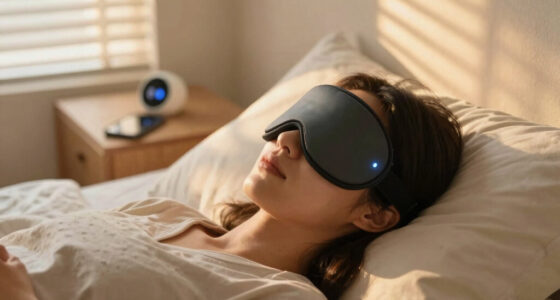
Choosing the right at-home sleep monitoring device depends heavily on your specific needs—whether you want detailed oxygen data, non-wearable convenience, or real-time alerts. Among the top options, the EMAY Sleep Oxygen Monitor stands out for its offline data recording, ideal for those tracking oxygen levels without needing real-time feedback. The Beautyrest Sleeptracker makes sense for couples or anyone seeking a non-intrusive, smart sleep coach integrated with Alexa. Meanwhile, the 60GHz Radar Sleep Monitor offers real-time vital signs monitoring perfect for elderly care or remote health alerts. Each of these devices balances different tradeoffs like ease of use, data depth, and compatibility, making your choice highly dependent on your primary sleep health goals.
Key Takeaways
- The EMAY Sleep Oxygen Monitor excels at offline, detailed oxygen and pulse data, but isn’t designed for real-time alerts or medical diagnosis.
- The Beautyrest Sleeptracker offers a no-wearable, highly accurate sleep analysis with smart home compatibility, though it’s limited to US users.
- Radar-based monitors provide real-time vital signs, making them suitable for elderly care but require WiFi and have a limited range.
- Sleep airflow monitors focus on respiratory health and snoring, but don’t track oxygen saturation or pulse rate, limiting their scope.
- Wrist pulse oximeters combine convenience and detailed data, but require removal for data syncing and have a shorter battery life.
| EMAY Sleep Oxygen Monitor with Built-in Recording Capability |  | Best for Offline Oxygen and Pulse Data Collection | Data Memory: 40 hours | Display: Large rotating digital LCD | Connectivity: Syncs later via app | VIEW LATEST PRICE | See Our Full Breakdown |
| Beautyrest Sleeptracker Monitor – Wearable-Free Sleep Tracker with App and Alexa Compatibility |  | Best for Non-Wearable Smart Sleep Analysis | Compatibility: Alexa enabled | Type: Non-wearable sleep tracker | Sensors: Respiration, heart rate, movement | VIEW LATEST PRICE | See Our Full Breakdown |
| 60GHz mmWave Radar Sleep Monitor, Heart Rate and Breathing Sensor, WiFi Smart Presence Detector for Elderly Care |  | Best for Real-Time Vital Signs Monitoring and Elderly Care | Maximum Range: 2 meters | Frequency: 60 GHz | Color: White | VIEW LATEST PRICE | See Our Full Breakdown |
| EMAY Sleep Breathing Monitor for Airflow Tracking |  | Best for Respiratory and Snoring Analysis | Sensors: Three sensors in a probe | Material: Food-grade silicone | Weight: 10g | VIEW LATEST PRICE | See Our Full Breakdown |
| EMAY SleepO2 Wrist Pulse Oximeter with Recording Capability |  | Best for Convenient, Continuous Oxygen and Pulse Monitoring | Compatible Devices: iOS & Android | Battery Life: 12 hours | Sensor Type: Oximeter | VIEW LATEST PRICE | See Our Full Breakdown |
| at-home sleep monitoring device | Compatibility |
|---|---|
| EMAY Sleep Oxygen Monitor with | iOS and Android |
| Beautyrest Sleeptracker Monito | Alexa enabled |
| 60GHz mmWave Radar Sleep Monit | — |
| EMAY Sleep Breathing Monitor f | Nasal breathing only |
| EMAY SleepO2 Wrist Pulse Oxime | — |
More Details on Our Top Picks
EMAY Sleep Oxygen Monitor with Built-in Recording Capability
This device stands out for its continuous blood oxygen and pulse recording over 40 hours, making it ideal for users who want detailed oxygen data without constant monitoring. Its large LCD display simplifies review, and data can be synced later via a mobile app. Compared with real-time monitors, it lacks immediate alerts but excels in offline, comprehensive data logging. It’s perfect for those who prioritize detailed oxygen tracking over instant health alerts, though it isn’t intended for medical diagnosis.
Pros:- Records oxygen and pulse continuously for up to 40 hours
- Large LCD display makes data easy to read
- Offline data storage allows review without an internet connection
Cons:- Designed for sports and aviation, not medical diagnosis
- Requires syncing via app after recording, no real-time monitoring
Best for: Users seeking detailed oxygen and pulse data for sleep quality analysis without real-time alerts
Not ideal for: People needing immediate notifications or medical-grade monitoring
- Data Memory:40 hours
- Display:Large rotating digital LCD
- Connectivity:Syncs later via app
- Compatibility:iOS and Android
Our verdict“A highly capable offline oxygen monitor ideal for detailed sleep data collection, but not suited for urgent alerts.”
Beautyrest Sleeptracker Monitor – Wearable-Free Sleep Tracker with App and Alexa Compatibility
This device shines by combining advanced sensors with a user-friendly app, providing detailed insights into respiration, heart rate, and sleep behaviors. Its non-wearable design offers maximum convenience, and smart home integration through Alexa adds an extra layer of customization. Compared to simple sleep mats, it provides personalized coaching for two sleepers, making it a top choice for couples or shared spaces. However, it is limited to US users and requires a compatible smart setup, which might be a barrier in some homes.
Pros:- Non-wearable design for maximum comfort
- Accurate sensors analyze respiration and heart rate
- Supports Alexa and smart home integration
Cons:- Limited to US market
- Requires a compatible smart home setup
Best for: Couples or individuals who prefer a non-intrusive, smart sleep analysis and coaching system
Not ideal for: Users outside the US or those without a compatible smart home system
- Compatibility:Alexa enabled
- Type:Non-wearable sleep tracker
- Sensors:Respiration, heart rate, movement
- App:Yes, intuitive app
- Sleep coaching:Yes, individualized for two sleepers
Our verdict“Ideal for those who want detailed sleep insights without wearing a device, especially in a smart home environment.”
60GHz mmWave Radar Sleep Monitor, Heart Rate and Breathing Sensor, WiFi Smart Presence Detector for Elderly Care
This radar-based sensor uses 60GHz technology to track heart rate and breathing in real time, offering instant alerts for abnormal vitals. Its non-contact design is perfect for monitoring elderly loved ones or children remotely, even through blankets. Compared with wearable monitors, it provides continuous, contactless data, but its limited range of 2 meters and reliance on WiFi might restrict placement options. Privacy considerations are also important with radar tech, but its real-time feedback is unmatched for immediate health alerts.
Pros:- Real-time, contactless vital signs monitoring
- Compatible with Alexa and Google Home
- Ideal for elderly or children at home
Cons:- Limited to 2-meter range
- Requires WiFi connection
- Potential privacy concerns with radar technology
Best for: Elderly care, remote monitoring, or immediate vital signs alerts
Not ideal for: Rooms where placement is limited or for users seeking long-range coverage
- Maximum Range:2 meters
- Frequency:60 GHz
- Color:White
- Warranty & Support:30-Day Return Guarantee
Our verdict“A highly effective real-time vital signs sensor best suited for elderly or remote health monitoring within a close range.”
EMAY Sleep Breathing Monitor for Airflow Tracking
This airflow-focused device measures respiratory flow, AHI, and snoring with three sensors in a lightweight silicone probe. It provides real-time analysis and detailed reports, making it suitable for users aiming to improve respiratory health and sleep quality. Its comfort and portability make it a practical choice for travel or home use. However, it doesn’t record oxygen saturation or pulse rate, limiting its scope for comprehensive sleep health.
Pros:- Accurate airflow measurement with sensors
- Real-time analysis with professional sleep reports
- Comfortable, lightweight design
Cons:- Not suitable for mouth breathers
- Does not record SpO2 or pulse rate
- Cannot be used with C-P-A-P masks simultaneously
Best for: Individuals concerned with breathing quality, airflow, or snoring issues
Not ideal for: Mouth breathers or those seeking oxygen saturation data
- Sensors:Three sensors in a probe
- Material:Food-grade silicone
- Weight:10g
- Compatibility:Nasal breathing only
- Monitoring Focus:Flow, AHI, snoring
Our verdict“A targeted airflow monitor ideal for respiratory-focused sleep tracking but not for comprehensive oxygen or pulse data.”
EMAY SleepO2 Wrist Pulse Oximeter with Recording Capability
This wrist pulse oximeter records blood oxygen saturation and pulse rate overnight, all without needing a smartphone during use. Its built-in storage and rechargeable battery make it simple to review data later via the app. Compared with other devices, it offers the convenience of continuous recording without wearing a bulky device, though it requires removal for data download and has limited battery life for intensive use. It’s ideal for those who want a straightforward, non-intrusive oxygen monitor for sleep.
Pros:- Records blood oxygen and pulse continuously overnight
- Lightweight and comfortable for sleep
- User-friendly app for reviewing and sharing data
Cons:- Requires removal from finger to sync data
- Limited to sleep monitoring only
- Battery life may vary with usage
Best for: Users wanting an easy, wrist-based oxygen and pulse monitor without wearing a device all night
Not ideal for: Those seeking real-time alerts or longer battery life
- Compatible Devices:iOS & Android
- Battery Life:12 hours
- Sensor Type:Oximeter
- Battery:Lithium-Ion Polymer
- Item Weight:20 g
- Size:Small
- Material:Silicone
- Color:Black
Our verdict“A practical and comfortable wrist oximeter perfect for passive oxygen and pulse tracking during sleep, with some limitations on data transfer.”
How We Picked
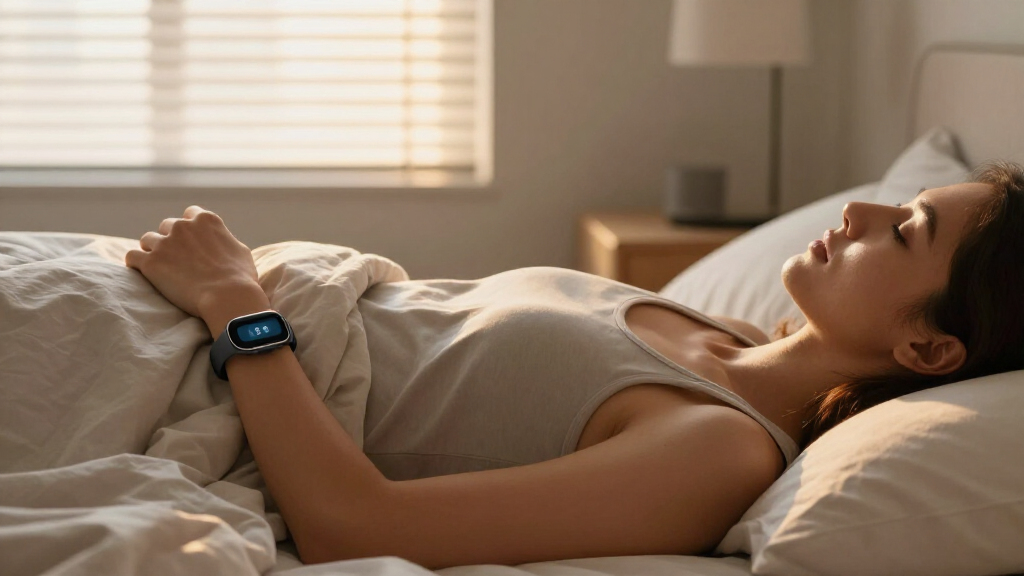
Our selection process centered on devices that deliver reliable sleep data at home, prioritizing accuracy, ease of use, and versatility. We compared products based on data depth—whether they record oxygen, pulse, or real-time vitals—along with their compatibility with smart home systems. Ease of setup, comfort, and offline versus real-time monitoring were key factors, along with user feedback and feature innovation. We aimed to include a range of device types—from wearable-free to radar-based sensors—to serve different user priorities, balancing tradeoffs like convenience versus detailed health insights.
| at-home sleep monitoring device | Compatibility |
|---|---|
| EMAY Sleep Oxygen Monitor with | iOS and Android |
| Beautyrest Sleeptracker Monito | Alexa enabled |
| 60GHz mmWave Radar Sleep Monit | — |
| EMAY Sleep Breathing Monitor f | Nasal breathing only |
| EMAY SleepO2 Wrist Pulse Oxime | — |
Factors to Consider When Choosing At-home Sleep Monitoring Devices
Choosing the right at-home sleep monitoring device involves understanding what specific data you need, how you prefer to wear or place the device, and whether real-time feedback is essential. From non-wearable sensors to detailed oxygen monitors, each device serves different priorities. Consider your comfort, technical compatibility, and whether you want ongoing health insights or simple sleep pattern tracking. This guide breaks down the key features to help you make an informed decision.Types of Sleep Monitoring Devices
Sleep monitors come in various forms, including wearable devices, non-wearable sensors, radar-based monitors, and airflow trackers. Wearables like wrist pulse oximeters are portable and easy to use but may be intrusive or uncomfortable for some. Non-wearable options, such as sleep mats or smart sensors, offer convenience and can provide detailed data without physical contact. Radar and airflow monitors target specific health aspects like breathing and vital signs, often suited for elderly care or respiratory health. Your choice depends on the level of detail needed, comfort preferences, and whether real-time alerts matter most.
Key Features to Consider
Focus on what data matters most to you—oxygen levels, pulse, breathing flow, or comprehensive sleep cycles. Battery life, device comfort, and ease of use are also crucial, especially if you plan to monitor regularly. Compatibility with your smartphone or smart home system can enhance usability, especially for detailed reports or alerts. Lastly, consider whether offline data storage suffices or if real-time feedback and alerts are necessary, as this impacts device choice and cost.
Tradeoffs and Limitations
Devices that offer detailed oxygen and pulse data might require more effort to review and may not provide immediate alerts, like the EMAY Oxygen Monitor. Conversely, radar and airflow sensors excel at real-time monitoring but may have range limitations or privacy considerations. Non-wearables tend to be more comfortable but often lack the comprehensive health metrics found in wearables. Balancing convenience, data accuracy, and alert capabilities will help you find the best fit for your sleep health goals.
Frequently Asked Questions
How accurate are at-home sleep monitoring devices?
The accuracy of these devices varies based on their technology and purpose. Wearable devices like pulse oximeters tend to provide reliable oxygen and pulse data, while non-wearable sensors may offer good estimates for sleep stages and behaviors. Radar-based monitors provide real-time vital signs but may have limited accuracy compared to clinical equipment. Always consider device reviews and validation studies when assessing accuracy for health-critical data.
Can these devices replace professional sleep studies?
While at-home sleep monitors provide valuable insights, they typically do not replace comprehensive sleep studies conducted in clinical settings. They are excellent for tracking patterns, oxygen levels, or breathing issues over time but lack the diagnostic depth of polysomnography. If you suspect serious sleep disorders, consulting a healthcare professional remains essential.
Are non-wearable sleep trackers suitable for children or the elderly?
Yes, non-wearable devices like radar or smart sensors are often ideal for children and elderly users because they do not require physical contact and minimize discomfort. These sensors can monitor vital signs remotely, providing peace of mind for caregivers. However, range limitations and privacy considerations should be evaluated, especially in sensitive environments.
What should I consider when choosing a sleep monitor for respiratory health?
Focus on devices that measure airflow, breathing rate, and oxygen saturation. The EMAY Sleep Breathing Monitor and radar-based sensors are well-suited for this purpose. Ensure the device is comfortable for overnight use, offers detailed reports, and is compatible with your existing health monitoring setup. Remember, the scope of data should align with your specific respiratory concerns.
How important is smart home integration in sleep monitoring devices?
Smart home integration can enhance the usability of sleep monitors by enabling personalized alerts, sleep coaching, and automation, such as adjusting room temperature or lighting. Devices like the Beautyrest Sleeptracker and radar sensors with Alexa or Google Home compatibility can make daily routines more seamless. However, if you prefer simple data collection without smart tech, non-integrated devices may suffice and offer straightforward operation.
Conclusion
For those primarily interested in detailed oxygen and pulse data, especially without the need for real-time alerts, the EMAY Sleep Oxygen Monitor offers a solid offline solution. Couples or smart home enthusiasts will find the Beautyrest Sleeptracker a compelling choice for non-intrusive, personalized sleep coaching. Elderly caregivers or those monitoring health remotely should consider radar-based sensors for real-time vital signs. Meanwhile, airflow-focused monitors are best suited for respiratory issues like snoring. Your specific sleep health goals and comfort preferences should guide your final choice.