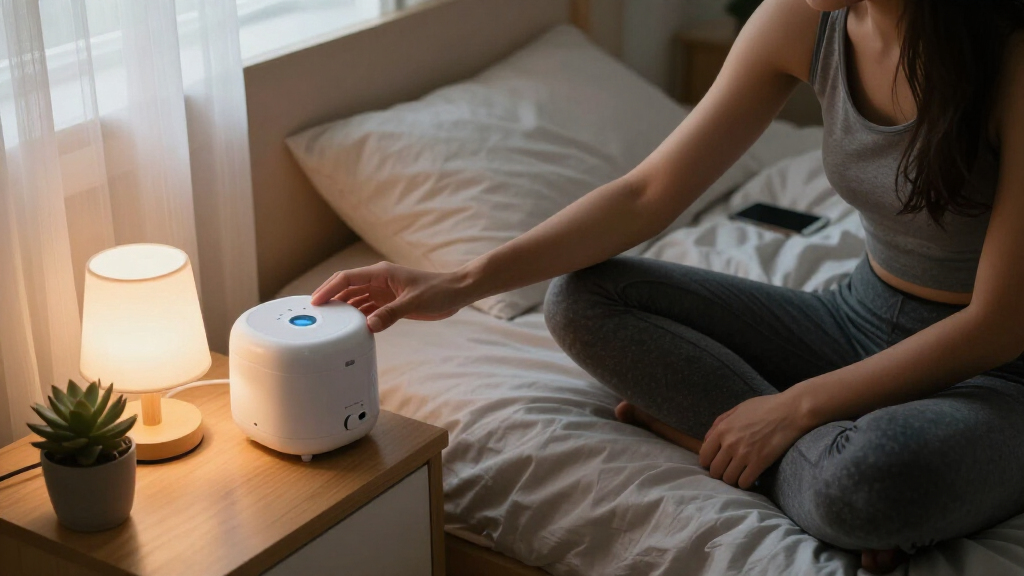
Sleep is usually the first thing a student sacrifices during exam season, and one of the last things anyone plans to fix. If you’re staring at the ceiling at 2 a.m. the night before a final, the right device can make the difference between restless frustration and actual rest. In this roundup, I compare five sleep aid devices that fit a student budget and a student lifestyle, and I rank them by how well they solve the specific problems students face: racing thoughts, noisy dorms, irregular schedules, and zero patience for complicated gadgets.

Get wellness gear delivered free with Prime
- Fast, free delivery on millions of items
- Prime Video, Amazon Music and more included
- Member-only deals all year
My top pick is the Sleep Sound Machine with 670nm Red Light, because it tackles the two biggest dorm-room sleep killers at once — ambient noise and harsh lighting — for a price that works on a student budget. For students whose problem is a busy mind rather than a noisy room, the Dodow Plus Sleep Aid is the smarter choice: its guided light-based breathing exercise is designed exactly for people who can’t stop thinking about tomorrow’s deadline. And for the data-driven student who wants to understand their sleep before trying to fix it, the Withings Sleep tracking pad offers insight that none of the other devices here can match — though it doesn’t actively help you fall asleep.
The main tradeoff running through this entire comparison is passive environment control versus active relaxation technique. Sound machines and lights change your surroundings; wristbands and pulse devices try to calm your body directly; trackers only measure. Which one is right for you depends entirely on why you’re not sleeping, so I’ve structured each review around that question.
Key Takeaways
- The Sleep Sound Machine with Red Light is my best overall pick for students because it blocks dorm noise and provides melatonin-friendly lighting in one affordable bedside unit.
- The Dodow Plus is the best choice for students whose sleep problem is a racing mind rather than a noisy environment, thanks to its guided breathing light cycles.
- The Withings Sleep pad is the only option here that measures what’s actually happening to your sleep, but it fixes nothing on its own.
- The handheld pulse devices (the wristband and Gen2) are the most portable picks, but their wellness claims are the least documented of the group.
- No device in this list requires a prescription or medical supervision, which keeps the barrier to entry low for cash- and time-strapped students.
| Sleep Sound Machine with 670nm Red Light, Warm Light, 20 Sounds, 4 Timers |  | Best Overall — The Dorm Room Problem Solver | Light Modes: 670nm red light, warm light | Sounds: 20 including nature, white noise, lullabies | Timers: 1, 2, and 3 hour auto-off | VIEW LATEST PRICE | See Our Full Breakdown |
| Dodow Plus Sleep Aid with App Support |  | Best for Racing Thoughts — The Active Relaxation Trainer | Cycle Options: 8 or 20 minute sessions | App Support: Yes, with guided sleep content | Power: Battery powered, cordless | VIEW LATEST PRICE | See Our Full Breakdown |
| Withings Sleep – Under Mattress Sleep Tracking Pad with Sleep Cycle Analysis |  | Best for Data-Driven Students — The Sleep Diagnostician | Type: Under-mattress sensor pad | Metrics: Sleep phases, heart rate, snoring detection | Compatibility: Works under most standard mattresses | VIEW LATEST PRICE | See Our Full Breakdown |
| Gen2 Relaxation Device – Handheld Portable Sleep and Wellness Tool with Dual Mode Gentle Pulse |  | Best Portable Pick — The Anywhere Calm-Down Tool | Modes: Dual relaxation modes | Power: USB-C rechargeable | Battery Life: Multiple sessions per charge | VIEW LATEST PRICE | See Our Full Breakdown |
| Sleep Aid Device Handheld Sleep Relaxation Wristband for Insomnia Relief and Anxiety |  | Best Hands-Free Option — The Wear-It-and-Forget-It Pick | Design: Wristband with built-in display | Settings: Adjustable intensity levels | Power: USB rechargeable | VIEW LATEST PRICE | See Our Full Breakdown |
| sleep aid devices for student | Power | Best Use Case |
|---|---|---|
| Sleep Sound Machine with 670nm | Power adapter and Type-C cable included | Dorm rooms and shared bedrooms |
| Dodow Plus Sleep Aid with App | Battery powered, cordless | Stress-related insomnia, travel, jet lag |
| Withings Sleep | — | Diagnosing unexplained fatigue and poor sleep quality |
| Gen2 Relaxation Device | USB-C rechargeable | Portable pre-sleep relaxation anywhere |
| Sleep Aid Device Handheld Slee | USB rechargeable | — |
More Details on Our Top Picks
Sleep Sound Machine with 670nm Red Light, Warm Light, 20 Sounds, 4 Timers
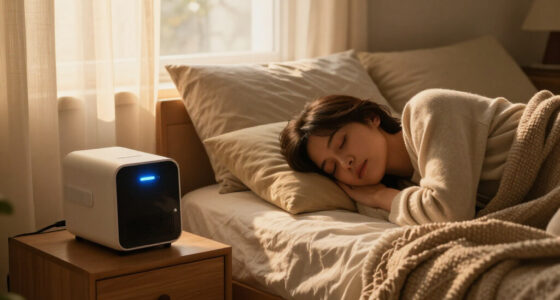
This sound machine earns my top spot because it attacks the two most common reasons students sleep badly: noise and light pollution. Twenty built-in sounds, from white noise to nature loops, mask the roommate who games until 3 a.m. or the hallway traffic that starts at 7 a.m. Masking noise doesn’t silence a room — it buries disruptive sounds under a steady, predictable layer, which is far more effective than earplugs for many people.
The 670nm red light is what separates this model from ordinary white noise machines. Warm, red-spectrum light in the evening supports natural melatonin production, while blue-heavy overhead lighting suppresses it. For a student who studies in the same room they sleep in, switching to this warm light for the last hour before bed is a genuinely useful habit change built into the hardware. The smart memory function means you set your preferred sound and brightness once and never think about it again — a small detail that matters at 1 a.m.
Compared with the Dodow Plus, this machine takes a passive approach: you set it up and let your environment do the work, whereas the Dodow requires eight to twenty minutes of active participation. Students who fall asleep fine but wake up constantly will get more from this machine. Compared with the Withings Sleep pad, the difference is even starker — this device changes your night; the Withings only reports on it.
The tradeoffs are real, though. It needs a wall outlet, so it’s not a travel solution the way the handheld devices are, and twenty sounds, while generous, may not include the specific tone that works for you. There’s also no documented volume range, which could matter if you’re a light sleeper sharing a small room. Still, for the typical student situation — a fixed bed, a noisy building, and a small nightstand — this is the most complete solution on this list.
Pros:- Combines noise masking and melatonin-friendly red light in one bedside unit
- Memory function restores your exact settings every night
- Four auto-off timers prevent the device from running all night
- Compact footprint fits cramped dorm nightstands
Cons:- Requires a power outlet, so it’s poor for travel
- Only 20 sounds, which may not suit every preference
- No published volume range for light sleepers
Best for: Students in dorms or shared housing whose sleep is disrupted by noise and harsh lighting
Not ideal for: Frequent travelers or students who need a device that works without a wall outlet
- Light Modes:670nm red light, warm light
- Sounds:20 including nature, white noise, lullabies
- Timers:1, 2, and 3 hour auto-off
- Dimensions:4 x 3.5 x 3 inches
- Power:Power adapter and Type-C cable included
- Memory Function:Yes, saves sound and light preferences
- Best Use Case:Dorm rooms and shared bedrooms
Our verdict“If you buy only one device from this list, buy this one — it addresses the most common student sleep problems for the lowest effort.”
Dodow Plus Sleep Aid with App Support
The Dodow Plus fills a niche none of the other four devices touch: mentally winding down. Its premise is simple. A light pulses on your ceiling at a gradually slowing rhythm, and you sync your breathing to it. Following a slowing breath pattern activates the body’s natural relaxation response and shifts you out of the alert, deadline-obsessed state that keeps most students awake. It’s essentially a meditation technique with training wheels — no app navigation, no counting, just follow the light.
The Plus version adds a companion app with guided sleep content, which extends the device beyond its two built-in 8- and 20-minute cycles. The cordless, battery-powered design is a genuine advantage over the sound machine: it works during a road trip, in a library nap room, or on a red-eye flight home. Students dealing with jet lag after breaks or irregular sleep schedules from night classes will find this portability more valuable than the sound machine’s richer feature set.
Where it falls short of my top pick is in what it doesn’t address. The Dodow does nothing about a noisy roommate or a bright hallway — it assumes your environment is workable and your mind is the problem. Compared with the Gen2 Relaxation Device, the Dodow has a clearer, better-documented mechanism: paced breathing is a well-studied relaxation technique, while the Gen2’s gentle pulse relies on more generalized wellness claims. That difference in evidence is why I rank the Dodow above both handheld pulse devices.
The honest caveat: results build over time. This isn’t a knockout pill, and the first few nights may feel like nothing is happening. Students who stick with it for a couple of weeks tend to see the benefit; students expecting instant sedation will be disappointed. It also does no tracking whatsoever — pair it with the Withings pad if you want proof of improvement.
Pros:- Guided breathing light is a well-established relaxation technique
- Cordless and pocket-sized, ideal for travel and jet lag
- Companion app adds guided content beyond the two built-in cycles
- One-touch operation with no learning curve
Cons:- Benefits build gradually rather than working on night one
- No noise masking or light blocking whatsoever
- Doesn’t track sleep, so progress is hard to measure
Best for: Students whose sleeplessness comes from stress, overthinking, and pre-exam anxiety
Not ideal for: Students whose main problem is external noise or light disruption
- Cycle Options:8 or 20 minute sessions
- App Support:Yes, with guided sleep content
- Power:Battery powered, cordless
- Portability:Palm-sized, travel friendly
- Mechanism:Light-guided paced breathing
- Best Use Case:Stress-related insomnia, travel, jet lag
Our verdict“The best non-drug option for the student whose brain won’t shut off, provided the bedroom itself is reasonably quiet.”
Withings Sleep – Under Mattress Sleep Tracking Pad with Sleep Cycle Analysis
The Withings Sleep takes the opposite approach to every other device here: instead of helping you fall asleep, it tells you what’s actually going wrong. The slim pad slides under your mattress and passively records sleep phases, heart rate, and snoring through the night. In the morning, the app presents a full breakdown — how long you slept, how many times you woke, how much deep sleep you got. For a student pulling variable schedules, that data can reveal patterns no intuition catches, like discovering that your 11 p.m. study sessions cost you an hour of deep sleep.
Its zero-effort design is the standout feature. Unlike a smartwatch, there’s nothing to wear, charge nightly, or remember to put on. Once it’s under the mattress, it just works — which matters for students who abandon anything requiring daily maintenance. The snoring detection is a bonus for anyone sharing a room, turning an awkward conversation into a data-backed one.
Here’s the limitation I have to be blunt about: this device fixes nothing by itself. It’s the diagnostic tool, not the treatment. If you discover you’re sleeping six fragmented hours, you still need one of the other products in this roundup to do something about it. That’s why I rank it third despite its excellent engineering — it’s a second purchase, not a first one. Compared with the Dodow Plus, which actively trains relaxation but measures nothing, the Withings is the mirror image.
Practical concerns for students: it needs to sit under a mattress properly, which can be awkward on a lofted dorm bed or a thin futon, and some users report occasional app connectivity hiccups. If you rent your bed or switch rooms every semester, the setup friction adds up. But for the student who genuinely doesn’t know why they’re tired all the time, this is the fastest route to an answer.
Pros:- Full sleep cycle, heart rate, and snoring analysis with no wearable
- Completely passive once installed — nothing to charge or wear
- Data reveals patterns invisible to self-reporting
- Works with any mattress setup that allows under-mattress placement
Cons:- Provides insight only — it does not improve sleep on its own
- Under-mattress placement is awkward on lofted beds and futons
- App connectivity can be unreliable for some users
Best for: Analytically minded students who want objective data on their sleep before choosing a fix
Not ideal for: Students who already know their problem and need an active solution now
- Type:Under-mattress sensor pad
- Metrics:Sleep phases, heart rate, snoring detection
- Compatibility:Works under most standard mattresses
- Wearable Required:No
- App:Companion app with nightly sleep reports
- Setup:One-time under-mattress installation
- Best Use Case:Diagnosing unexplained fatigue and poor sleep quality
Our verdict“The right first purchase for students who want to understand their sleep before spending money fixing it.”
Gen2 Relaxation Device – Handheld Portable Sleep and Wellness Tool with Dual Mode Gentle Pulse
The Gen2 Relaxation Device is the most grab-and-go option in this lineup. It’s a small, smooth silicone handheld unit that delivers a gentle pulse through your palm in two selectable modes, with a single button controlling everything. The idea is that the rhythmic tactile stimulation gives your nervous system something steady to focus on, working on the same principle as fidget tools — occupying the restless part of your brain so the rest of it can settle. For a student who feels physically anxious before bed rather than mentally chatty, that tactile channel is a different route to the same goal.
Where this device beats the sound machine is logistics: it charges over USB-C, runs for multiple sessions on a charge, and works absolutely anywhere — a couch in the library lounge, a bus seat heading home for the holidays, a friend’s spare bed. It also beats the Sleep Relaxation Wristband on clarity: the Gen2 at least specifies dual modes, USB-C charging, and battery behavior, while the wristband leaves its relaxation mechanism and battery life largely undocumented. When two products make similar claims, I rank the more transparent one higher.
Now the honest part: this is a wellness device, not a medical one, and the evidence behind gentle pulse stimulation is thinner than the science behind white noise masking or paced breathing. Some users will feel a real calming effect; others will feel nothing. It’s also rated for ages 3 and up only with supervision, which limits its usefulness for younger siblings in a family household. And unlike the Dodow, it doesn’t teach you a technique you can eventually use without the device — you’re dependent on the hardware.
For the price point and portability, though, it’s a reasonable experiment. Students who want a discreet way to decompress between a late class and bedtime, without headphones or a nightstand gadget, will get the most out of it.
Pros:- Genuinely pocketable with a one-button interface
- USB-C charging with battery life spanning multiple sessions
- Dual modes let you adjust intensity to preference
- Soft silicone build is comfortable to hold in bed
Cons:- Wellness claims rest on thinner evidence than sound or breathing approaches
- Effects vary noticeably between individual users
- Not usable independently by very young users
Best for: On-the-move students who want a discreet, pocketable way to physically unwind before sleep
Not ideal for: Students who want strongly evidenced sleep science or a whole-room solution
- Modes:Dual relaxation modes
- Power:USB-C rechargeable
- Battery Life:Multiple sessions per charge
- Material:Premium smooth silicone
- Controls:Single button operation
- Age Suitability:3+ with supervision
- Best Use Case:Portable pre-sleep relaxation anywhere
Our verdict“A fair low-commitment experiment for anxious students, as long as expectations stay modest.”
Sleep Aid Device Handheld Sleep Relaxation Wristband for Insomnia Relief and Anxiety
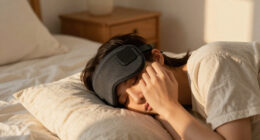
The Sleep Relaxation Wristband rounds out my list as the only true wearable of the group. Instead of holding something or watching a ceiling light, you strap this to your wrist, set your preferred intensity on its built-in display, and go to sleep. That hands-free design is its one real advantage: students who roll over, shift positions, or hate holding objects in bed will find a wristband far less intrusive than the Gen2 handheld. It also travels well — it’s light enough to forget you packed it, and the same device works at home, in a dorm, or on a train.
The adjustable settings matter more here than they might sound. Wearable stimulation devices live or die on comfort; a pulse that feels soothing at 10 p.m. can feel irritating at 2 a.m., so being able to dial intensity down without getting up is a practical benefit. The USB rechargeability keeps long-term costs at zero compared with battery-based competitors.
So why does this rank last? Transparency. The listing provides almost no detail on how the relaxation mechanism actually works, how long a charge lasts, or what a typical session involves. Every other device in this roundup gives me something concrete to evaluate — 20 documented sounds, 670nm light, sleep phase sensors, paced breathing cycles. This one gives me a form factor. For a student spending limited money, I can’t rank a vague product above devices whose mechanisms are clearly explained, even when the form factor is genuinely appealing. The wristband also has to survive being worn all night, every night, which is a durability question the specs don’t answer.
Compared directly with the Gen2, the wristband trades documented features for convenience. If hands-free comfort is your absolute priority and you’re comfortable with a lightly documented product, it may still suit you — but if you want to know what you’re paying for, the Gen2, the Dodow, or the sound machine are all stronger purchases.
Pros:- Truly hands-free — nothing to hold or watch while falling asleep
- Adjustable settings on a built-in display
- Lightweight and easy to pack for travel
- USB rechargeable with no ongoing battery costs
Cons:- Very limited documentation on how the relaxation feature works
- No published battery life or session duration details
- Wearing a device all night may bother side sleepers
Best for: Students who specifically want a hands-free wearable they can sleep in without thinking about
Not ideal for: Buyers who want documented mechanisms, battery specs, and clear usage guidelines before purchasing
- Design:Wristband with built-in display
- Settings:Adjustable intensity levels
- Power:USB rechargeable
- Portability:Small and lightweight
- Use Environments:Home, work, and travel
- Wear Style:Secures to wrist during sleep
Our verdict“The most convenient form factor in the lineup, but the least documented product — buy it only if hands-free wear is your priority.”

How We Picked
Since students have limited money, shared living spaces, and unpredictable schedules, I judged every device against student-specific criteria rather than generic sleep-aid marketing. Price-to-function ratio came first: a device needs to justify its cost against what it actually changes about a student’s night. A $100 gadget that only tracks sleep loses to a $40 machine that actively helps you fall asleep in a loud dorm.
Second, I weighed portability and space. Dorm rooms and shared apartments have tiny nightstands, and students move between home, campus, and travel constantly. Devices that need a dedicated wall outlet and a stable surface face a real disadvantage compared with cordless options that slip into a backpack.
Third, I considered mechanism transparency. I favored devices where the sleep science is well understood — white noise masking, red light and melatonin production, paced breathing slowing the nervous system — over devices with vague wellness claims. That doesn’t mean the vaguer options are useless, but students deserve to know how strong the evidence is behind what they’re buying.
Finally, I evaluated ease of use at 1 a.m.. A sleep aid that requires fiddling with settings when you’re exhausted is a sleep aid you’ll stop using within two weeks. One-button operation and simple timers scored higher than feature-rich interfaces. I did not personally test these devices; my rankings come from comparing specifications, documented features, user feedback patterns, and how each product’s design aligns with established sleep science.
| sleep aid devices for student | Power | Best Use Case |
|---|---|---|
| Sleep Sound Machine with 670nm | Power adapter and Type-C cable included | Dorm rooms and shared bedrooms |
| Dodow Plus Sleep Aid with App | Battery powered, cordless | Stress-related insomnia, travel, jet lag |
| Withings Sleep | — | Diagnosing unexplained fatigue and poor sleep quality |
| Gen2 Relaxation Device | USB-C rechargeable | Portable pre-sleep relaxation anywhere |
| Sleep Aid Device Handheld Slee | USB rechargeable | — |
Factors to Consider When Choosing Sleep Aid Devices For Students
Choosing between these five devices comes down to one diagnostic question: why aren’t you sleeping? Each product answers a different cause, and buying the wrong one wastes both money and patience.Identify Your Sleep Blocker First
No device does everything. If noise wakes you up, you need masking — that points to the sound machine. If your mind races, you need an active technique — that points to the Dodow Plus. If you don’t actually know what’s wrong, start with the Withings Sleep pad and let two weeks of data tell you. Students who skip this step often buy a relaxation device when their real problem was a roommate’s alarm at 6 a.m.
Passive Versus Active Devices
Passive devices (the sound machine, the tracking pad) work in the background while you do nothing. Active devices (the Dodow, the pulse tools) require your participation for minutes at a time. Passive devices suit exhausted students who want zero additional effort; active devices suit students who want a skill or technique they’re building over time. The Dodow, for example, teaches a breathing pattern you’ll eventually be able to use without the device — a long-term benefit no sound machine offers.
Dorm and Shared-Space Realities
Students rarely control their environment. A device needing a wall outlet and nightstand space assumes you have both. Cordless options like the Dodow and the handheld pulse devices work anywhere, but they don’t change the room around you. If your room is loud, prioritize environment-changing tools over body-focused ones — a calm nervous system in a chaotic room still can’t sleep.
Budget and Evidence Considerations
Wellness devices range from well-studied mechanisms to vague claims. Sound masking, red light, and paced breathing all have substantial research behind them; gentle pulse stimulation has less. As a rule, spend more when the mechanism is documented, less when you’re experimenting. And if insomnia persists beyond exam season or seriously affects daytime function, a $40 gadget is not a substitute for seeing a doctor.
Frequently Asked Questions
Do sleep aid devices actually work, or are they just gadgets?
The honest answer depends entirely on the mechanism. Devices built on well-researched principles — white noise masking environmental disruptions, red-spectrum light supporting melatonin production, or slow paced breathing activating the body’s relaxation response — have genuine scientific support and tend to help the specific problem they target. The sound machine and the Dodow both fall into this category. Devices with vaguer claims, like the two handheld pulse tools in this roundup, may help some users through tactile distraction, but the evidence base is thinner and results vary much more between individuals. What no consumer device does is treat clinical insomnia, sleep apnea, or anxiety disorders. If you’ve had serious sleep problems for months, these devices complement but never replace professional help.
Which device is best for a loud dorm or shared apartment?
The Sleep Sound Machine with Red Light is the clear winner for noisy environments, and it’s not close. Sound masking works by covering unpredictable, jarring noises — a door slam, a roommate’s laughter, hallway footsteps — with a steady sound your brain learns to ignore. The other four devices in this roundup do nothing about external noise: the Dodow assumes a quiet room, the Withings pad merely records how badly the noise affects you, and the handheld devices focus on internal relaxation. If noise is your primary problem, no amount of breathing technique will fully compensate, so fix the environment first. Pairing the sound machine with earplugs for extreme situations covers almost every dorm scenario.
Are these devices safe to use every night?
Yes, all five are non-invasive consumer wellness products with no medication involved, which makes nightly use low risk. The sound machine simply plays audio and projects light, both of which are safe for continuous exposure at reasonable volumes. The Dodow’s breathing exercise is safe by nature — you’re only slowing your breath. The two pulse-based devices deliver gentle tactile stimulation, which is also benign, though the Gen2 lists supervision requirements for young children. The Withings pad is completely passive sensing with no output at all. The main caution with any device is psychological dependence: if you find you cannot sleep at all without your gadget, that’s worth examining, but physically, nightly use of any of these poses no documented harm.
Can a sleep tracker actually improve my sleep, or does it just collect data?
A tracker improves sleep only indirectly, through the behavioral changes its data prompts. The Withings Sleep pad can’t make you fall asleep faster — it has no sound, light, or stimulation features at all. What it does is show you patterns you’d never notice on your own: that you lose an hour of deep sleep after late-night screens, that your sleep fragments on nights you drink coffee after 4 p.m., that weekends wreck your rhythm. For students, that feedback loop can be genuinely powerful, because student sleep problems are often schedule problems in disguise. The smart approach is to use the tracker as a diagnostic tool for a few weeks, identify your specific issue, then buy the active device that addresses it. As a standalone purchase for someone who already knows their problem, a tracker is an expensive mirror.
Which option gives the best value for a tight student budget?
The sound machine offers the strongest value because it combines two functions — noise masking and sleep-friendly lighting — that would otherwise require separate purchases, and it covers the most common student sleep complaints in a single unit. The Dodow Plus is the next best value if noise isn’t your issue, since it addresses stress-related sleeplessness, travels anywhere, and teaches a breathing technique that keeps working even when the device isn’t with you. The handheld pulse devices are cheaper experiments, but with weaker evidence behind them, so the value-per-dollar is less predictable. The Withings pad is the hardest to justify on a tight budget as a first purchase, simply because it solves nothing on its own — it’s an investment in information rather than in better nights.
Conclusion
After comparing all five devices, my recommendations break down cleanly by what kind of sleeper you are. If you’re the typical dorm-dwelling student fighting noise and bad lighting, go with the Sleep Sound Machine with Red Light — it solves the most common problems for the least effort and earns its Best Overall spot on that basis alone. If you’re the pre-exam overthinker whose brain replays tomorrow’s to-do list at midnight, the Dodow Plus is built for exactly you, and its portability makes it useful during travel and semester breaks too.
If you’re the analytical type who genuinely doesn’t know why you’re tired, start with the Withings Sleep pad, gather two weeks of data, and then invest in the active device your results point toward. If you’re an anxious, always-moving student who wants something pocketable, the Gen2 Relaxation Device is the more transparent of the two handheld options. And if hands-free comfort is your non-negotiable requirement, the Sleep Relaxation Wristband delivers that form factor — just accept the thinner documentation that comes with it.
One final thought: the best device is the one that matches your actual problem, not the one with the longest feature list. Diagnose first, buy second, and if sleeplessness persists well beyond exam season, a conversation with a doctor will do more than any gadget on this list.
Cold & flu season Picks
humidifiers
As an affiliate, we earn on qualifying purchases.