
Sleep oxygen monitors provide vital insights into your blood oxygen levels during sleep, helping identify issues like sleep apnea or breathing irregularities. The Healthtree JKS50B Pulse Oximeter stands out as the best overall choice for its quick readings and large display, making it easy to track your oxygen levels at a glance. The Wellue O2Ring offers continuous, wearable monitoring with vibration alerts, ideal for those who want ongoing data without interruptions. However, these devices vary widely in features, usability, and cost, so it’s important to understand what suits your sleep habits and health goals. Continue reading for a detailed breakdown of each option and what to prioritize in your search.

Get wellness gear delivered free — and shop member deals
- Fast, free delivery on millions of items
- Access to Prime Big Deal Days deals on October 6–7
- Prime Video, Amazon Music and more included
Key Takeaways
- Devices with continuous monitoring and wearable form factors provide the most comprehensive sleep data.
- Bluetooth and app integrations enable easy tracking and long-term trend analysis, which benefits chronic condition management.
- Higher-priced options tend to offer more features like vibration alerts, detailed software, and longer memory capacity.
- Simplicity and ease of use are key for beginners, but more advanced users may need detailed analytics and customization.
- Battery life and comfort significantly impact the usability of sleep oxygen monitors, especially for overnight wear.




More Details on Our Top Picks
Healthtree JKS50B Pulse Oximeter Fingertip with Large OLED Display, Perfusion Index, and Fast Readings
This pulse oximeter stands out for delivering rapid and reliable readings within 5-8 seconds, making it ideal for quick checks at home or on the go. Its large OLED display ensures easy reading, especially for users with visual impairments, and its portability makes it convenient for travel and sports. Compared with the Wellue O2Ring options, which focus on continuous monitoring, this device excels in providing instant spot checks with minimal setup. The main tradeoff is the lack of detailed data storage or long-term tracking, which limits its utility for chronic condition management. If your priority is quick, straightforward readings without extensive data analysis, this model is a solid choice.
Pros:- Fast and accurate readings within seconds
- Large, easy-to-read OLED display
- Compact and lightweight for portability
- Includes batteries and lanyard for immediate use
Cons:- Specific SpO2 and pulse rate ranges are not provided
- Requires AAA batteries, which are not rechargeable
- Limited information on measurement accuracy beyond ±2%
Best for: Users who need fast, easy O2 saturation checks during daily activities or travel
Not ideal for: Individuals requiring long-term oxygen level tracking or detailed reports for medical purposes
- Measurement Time:5-8 seconds
- Display:Large OLED
- SpO2 Range:Not specified
- Pulse Rate Range:Not specified
- Power:2x AAA batteries
- Features:Perfusion Index, pulse waveform, auto power-off
Our verdict“This device is best suited for users who need quick, reliable spot checks without complex data tracking.”
Wellue O2Ring Oxygen Monitor with Vibration Reminder, Bluetooth Pulse Oximeter, Rechargeable, Continuous SpO2 & PR Tracking
The Wellue O2Ring is designed for users who need ongoing oxygen and pulse rate tracking, especially during sleep or extended activities. Its wearable ring form allows continuous monitoring for up to 16 hours, providing detailed data through its app and PC software—more comprehensive than the quick-check models like the Healthtree. Unlike the smartwatch option, which offers multiple health metrics but lacks dedicated oxygen tracking, the O2Ring focuses solely on SPO2 and heart rate, with vibration alerts for low readings. The tradeoff is that it isn’t a medical device and isn’t intended for diagnosis, so users needing precise medical validation should look elsewhere. This makes it ideal for sport enthusiasts or people with mild concerns monitoring oxygen levels over time.
Pros:- Continuous monitoring up to 16 hours
- Vibration alerts for abnormal oxygen or heart rate
- Long battery life and detailed report generation
- Comfortable, lightweight, and portable
Cons:- Not classified as a medical device, limiting diagnostic use
- Requires Bluetooth connection for data access
- Limited to sports and aviation rather than clinical settings
Best for: Athletes, travelers, or individuals monitoring oxygen saturation during sleep or extended activities
Not ideal for: Patients requiring medical-grade accuracy or official diagnosis, since it’s not a certified medical device
- Monitoring Duration:Up to 16 hours
- Sensor:Silicon sensor ring
- Compatibility:iOS 9.0+ and Android 5.0+ with Bluetooth 4.0 BLE
- Battery Life:12-16 hours
- Memory:Stores four groups of 10-hour data
- Finger Size Range:2.17-3.15 inches
Our verdict“This pick is ideal for active users who want continuous oxygen tracking and alerts outside clinical environments.”
Smart Watch Fitness Tracker with Heart Rate, Blood Oxygen, Blood Pressure, Sleep Monitoring, 120 Sports Modes, Waterproof for Android and iPhone
This fitness tracker offers a comprehensive suite of health metrics, including blood oxygen, heart rate, blood pressure, and sleep tracking, all accessible via its vibrant 1.58-inch touch screen. Compared to dedicated oximeters like the EMAY Sleep Oxygen Monitor, it provides broader activity and health monitoring, supporting over 120 sports modes and smart notifications. However, the tradeoff is that its oxygen measurements may not match the accuracy and detail of specialized devices, making it more suitable for general wellness rather than precise medical tracking. Its large feature set might also require a learning curve, and battery life could vary based on usage. If you want an all-in-one health device, this is a compelling option, but for focused oxygen monitoring, it might be overkill.
Pros:- High-resolution, colorful display with customizable watch faces
- Supports detailed health metrics and activity modes
- Smart notifications and mobile life features
- Waterproof design for versatile use
Cons:- Oxygen saturation readings may lack clinical accuracy
- Battery life not specified, potentially variable
- Complex feature set may be confusing for some users
Best for: Active users seeking an all-in-one health and activity tracker with sleep monitoring
Not ideal for: Users needing medically accurate oxygen saturation data, as this device prioritizes multi-functionality over precision
- Display:1.58” high-resolution touch screen
- Health Monitoring:Heart rate, blood pressure, blood oxygen, sleep stages
- Exercise Modes:120+
- Waterproof Rating:IP68
- Compatibility:Android 4.4+/iOS 8.4+
- Features:Notifications, weather, camera, music, reminders
Our verdict“This device suits those wanting a comprehensive health tracker with sleep and activity features, but less so for precise oxygen monitoring.</p>”
Wellue O2Ring-S Oxygen Monitor with Vibration Reminder, Bluetooth Pulse Oximeter, 24-Hour Battery, 4×10 Hour Memory, Rechargeable
The Wellue O2Ring-S offers a significant upgrade in monitoring duration over smaller devices like the Healthtree, with a full 24 hours of continuous tracking, making it suitable for overnight sleep or extended daytime use. Its lightweight ring design provides comfort and portability, with vibration alerts that notify users of abnormal SPO2 or heart rate levels, similar to the O2Ring but with longer battery life. Unlike the EMAY SleepO2, which is more focused on overnight spot checks, the O2Ring-S emphasizes uninterrupted, all-day data collection. The main limitation is that it’s not a medical device, so users seeking clinical-grade data should look for more regulated options. It’s perfect for users who want ongoing oxygen monitoring without interruption.
Pros:- Long-lasting 24-hour battery life
- Vibration alerts for abnormal readings
- Lightweight, comfortable, and portable
- Easy data synchronization via app and PC software
Cons:- Not intended for medical diagnosis or treatment
- Requires smartphone or PC for full data access
- Limited to sports and aviation use
Best for: Individuals requiring 24-hour oxygen level tracking during sleep or daily activities
Not ideal for: Patients needing medically certified data or treatment decisions based on oxygen levels
- Battery Life:24 hours
- Memory:4 sets of 10 hours
- Sensor Type:Ring sensor
- Compatibility:iOS, Android, PC
- Perimeter Fit:55-80mm
Our verdict“This model is well-suited for users who need continuous oxygen monitoring without frequent recharging or interruption.”
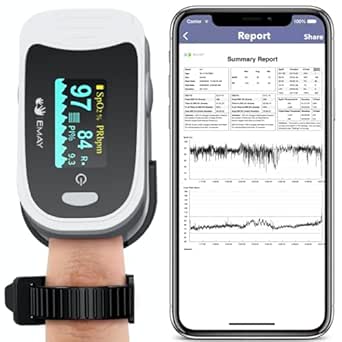
EMAY Sleep Oxygen Monitor with PC Software & App, Bluetooth Pulse Oximeter, Rechargeable, for Overnight & Continuous SpO2 Tracking with 72 Hours Memory
The EMAY Sleep Oxygen Monitor stands out for offering both spot checks and continuous overnight tracking, with a substantial 72-hour memory that supports detailed sleep analysis. Its rechargeable design eliminates disposable batteries, and data management through PC software and mobile app offers comprehensive reports. Compared to wearable options like the Wellue O2Ring, its wired connectivity and software integration appeal to users who prefer detailed data analysis and longer-term tracking. However, the device lacks a built-in display, meaning users must connect to a device to view real-time data, which could be inconvenient. It’s ideal for those who want in-depth sleep oxygen data and are comfortable with software-based review rather than instant readouts.
Pros:- Supports both spot check and continuous tracking
- 72-hour memory for comprehensive data collection
- Rechargeable and device-only design simplifies setup
- Detailed reports via PC and app
Cons:- Requires software or app review—no real-time display on device
- Setup can be complex for some users
- Battery life duration is not explicitly specified
Best for: Sleep researchers, night-time oxygen monitoring enthusiasts, and users wanting detailed overnight data
Not ideal for: People seeking portable, real-time oxygen checks without connecting to software or devices
- Support Modes:Spot check, continuous
- Memory:72 hours
- Connectivity:Bluetooth
- Battery:Rechargeable
- Compatibility:PC, iOS, Android
- Included Components:Device
Our verdict“This monitor is best for users who prioritize detailed overnight oxygen data and are comfortable with software-based analysis over instant readings.”
EMAY SleepO2 Wrist Pulse Oximeter with Recording Capability
This wrist pulse oximeter excels at providing continuous overnight blood oxygen and pulse rate data without relying on a smartphone, making it ideal for users who want a straightforward, stand-alone device. Compared to the EMAY Sleep Oxygen Monitor, it offers similar recording capabilities but with the added convenience of built-in storage and a rechargeable battery. The need to remove the finger to transfer data via Bluetooth is a minor inconvenience, but the device’s lightweight design and real-time app viewing make it a strong choice for non-intrusive sleep tracking. The reliance on an app for detailed review might deter those seeking instant data without extra steps.
Pros:- Continuous overnight data recording without a phone connection
- Lightweight and comfortable for prolonged wear
- Rechargeable with up to 10 hours battery life
Cons:- Requires app for detailed data review, adding complexity
- Must remove finger to download Bluetooth data, which can interrupt sleep monitoring
Best for: Individuals seeking a reliable, standalone sleep oxygen monitor with minimal disruption to their sleep routine
Not ideal for: Users who prefer real-time data viewing during sleep without removing the device or who dislike app-dependent data review
- Battery Life:10 hours
- Weight:20g
- Adapter Output Voltage:DC 5V
- Adapter Output Current:1000 mA
Our verdict“This pick suits those who prioritize simple, reliable sleep oxygen tracking without needing real-time data during sleep.”
Vibeat OxyU Wrist Pulse Oximeter – Bluetooth Blood Oxygen Monitor with Finger Sensor
The Vibeat OxyU stands out for its long-lasting battery and detailed reporting, making it suitable for extended monitoring sessions up to 16 hours. Unlike the EMAY SleepO2, it’s designed for active users who need Bluetooth connectivity and comprehensive data export, whether for sports, aviation, or health tracking. Its silicone ring sensor ensures comfort during long wear, but it’s not intended for medical use, which limits its accuracy compared to clinical devices. The device’s limited storage and need for stillness or warmth for accurate readings are tradeoffs that users should consider.
Pros:- Up to 16 hours of continuous operation
- Detailed app and PC reporting options
- Comfortable silicone sensor for all-day wear
Cons:- Not suitable for medical or diagnostic purposes
- Requires stillness and warmth for accurate readings
Best for: Active individuals needing long-duration, detailed oxygen and heart rate data for sports or aviation purposes
Not ideal for: Those seeking medical-grade accuracy or real-time sleep monitoring without movement restrictions
- Dimensions:5cm x 3cm
- Adjustable perimeter:16-23cm
- Probe cable length:≈22cm
- Battery life:12-16 hours
Our verdict“Ideal for athletes or travelers who want long-term oxygen data without medical-grade precision.”
EMAY Sleep Oxygen Monitor with Built-in Recording Capability
This device provides detailed sleep oxygen data for up to 40 hours with a large LCD display, making it accessible for those who prefer visual, easy-to-read information without needing a smartphone. Unlike the Vibeat OxyU, it doesn’t require app connectivity during recording but is primarily designed for sports and aviation rather than medical use. Its longer recording capacity is advantageous for comprehensive sleep analysis, though it doesn’t offer real-time monitoring, which might be a drawback for users wanting instant feedback. The device’s non-medical focus and limited interpretation tools mean it’s best for casual or recreational monitoring.
Pros:- Records up to 40 hours continuously
- Large, readable LCD display
- Free app for detailed review and data export
Cons:- Designed for sports/aviation, not medical diagnostics
- No real-time data during recording
Best for: Sleep enthusiasts or athletes wanting long-duration, visual sleep data logs without needing real-time feedback
Not ideal for: Users seeking clinical accuracy or real-time sleep tracking with immediate alerts
- Weight:0.01 kg
- Memory:40 hours
- Display:Digital LCD
- Connectivity:App sync later
Our verdict“This monitor suits users who want long-term sleep data with a clear visual display without real-time monitoring needs.”
Wellue O2 Pulse Oximeter with Smart Reminder
The Wellue O2 is tailored for users who want long-lasting, Bluetooth-enabled oxygen tracking with reminders, making it appealing for sports or aviation. Compared to EMAY’s models, it offers an impressive 72 hours of battery life and smart reminders, but it’s not intended for health diagnostics. Its moderate customer rating suggests some variability in user experience, and the device’s accuracy isn’t suitable for medical purposes. The soft silicone ring sensor provides comfort, but the lack of medical-grade accuracy limits its use for health-related decisions.
Pros:- Bluetooth connectivity with free app and PC software
- Long battery life up to 72 hours
- Comfortable silicone ring sensor
Cons:- Not for medical diagnostics, only sports/aviation
- Moderate customer rating indicates inconsistent performance
Best for: Active users who need extended monitoring with alerts for non-medical purposes
Not ideal for: Individuals requiring medical-grade accuracy or real-time sleep tracking
- Battery life:Up to 72 hours
- Connectivity:Bluetooth
- Sensor type:Silicone ring
- Intended use:Sports & aviation
Our verdict“This device is best for active users wanting long-term, alert-based oxygen tracking outside a clinical setting.”
EMAY Sleep Breathing Monitor for Airflow Tracking
This airflow-focused device offers a different perspective from the other monitors by emphasizing breathing quality and respiratory events, making it suitable for users concerned with snoring or sleep apnea symptoms. Unlike the oxygen saturation monitors, it doesn’t record SpO2 or pulse rate but excels at tracking airflow and detecting breathing disturbances during sleep. Its lightweight, silicone mask improves comfort and mobility but limits use to nasal breathing, excluding mouth breathers. For those seeking comprehensive oxygen data, this isn’t the right choice, but for respiratory airflow analysis, it provides valuable insights.
Pros:- Accurate airflow measurement with multiple sensors
- Real-time sleep analysis via app
- Lightweight, comfortable silicone mask
Cons:- Cannot record SpO2 or pulse rate
- Limited to nasal breathing, unsuitable for mouth breathers
Best for: Sleepers concerned with airflow, snoring, or mild sleep-disordered breathing who want detailed airflow data
Not ideal for: Users needing oxygen saturation or pulse rate data for health concerns or diagnostic purposes
- Weight:10g
- Sensor type:Three sensors
- Material:Food-grade silicone
- Compatibility:Nasal breathing only
Our verdict“This monitor is ideal for those focused on breathing airflow and snoring, not for oxygen saturation tracking.”
Wellue O2Ring Pulse Oximeter, Bluetooth SPO2 Blood Oxygen Saturation Monitor – Wearable O2 Ring Sensor with Vibration Reminder, Free App & PC Report, Rechargeable
The Wellue O2Ring stands out for those seeking a comfortable, wearable device that provides continuous blood oxygen and heart rate data without the bulk of a traditional monitor. Unlike the fingertip-based Wellue Bluetooth Pulse Oximeter, the O2Ring offers a hands-free, discreet experience suitable for overnight wear, making it ideal for tracking trends over time. However, since it’s not intended for medical diagnosis, it lacks the clinical accuracy required for health-critical decisions, which might be a concern for some users. The detailed app and PC reports facilitate trend analysis, but the device’s limited finger size range and Bluetooth dependency could be restrictive for some. Compared with the fingertip model, this wearable excels in comfort and prolonged wear, but trades off some ease of access and medical-grade precision.
Pros:- Lightweight, comfortable ring sensor suitable for all-night wear
- Provides detailed trend reports and graphical data analysis
- Automatic data upload with rechargeable battery lasting up to 16 hours
Cons:- Not designed for medical diagnosis or treatment decisions
- Requires Bluetooth connection to access full features
- Limited to finger sizes between 2 and 3.2 inches, restricting some users
Best for: Individuals who want continuous, unobtrusive overnight oxygen and heart rate monitoring, especially athletes or frequent flyers
Not ideal for: Users needing medical-grade accuracy or those with very small or large finger sizes outside the supported range
- Brand Name:Wellue
- Model Name:O2Ring
- Unit Count:1 Count
- Item Weight:15 g
Our verdict“This pick suits those seeking continuous, comfortable overnight monitoring for personal trend tracking rather than clinical use.”
Wellue Bluetooth Pulse Oximeter Fingertip Blood Oxygen Saturation Monitor with APP, Batteries, Carry Bag & Lanyard
The Wellue Fingertip Pulse Oximeter offers rapid readings within 8 seconds, making it ideal for quick spot checks during sports or travel. Unlike the Wearable O2Ring, which emphasizes continuous overnight monitoring, this fingertip device prioritizes speed and portability. It’s equipped with Bluetooth and a free app for real-time data, but since it’s not intended for medical use, it shouldn’t replace clinical devices. The inclusion of accessories like a carry pouch and lanyard enhances portability, although it requires batteries and should not be used in the same spot for more than two hours, limiting its continuous tracking potential. Compared to the O2Ring, this device is less suitable for long-term trends but excels in quick, accurate readings on demand.
Pros:- Fast, accurate readings within 8 seconds
- Bluetooth connectivity for real-time data and storage
- Includes practical accessories like a carry pouch and lanyard
Cons:- Not intended for medical diagnosis or ongoing health monitoring
- Limited to sports and aviation use, not for continuous tracking
- Should not be applied to the same finger for more than 2 hours
Best for: Active users needing fast, reliable oxygen saturation checks during sports or travel
Not ideal for: Those seeking continuous overnight monitoring or medical-grade accuracy
- Measurement Time:8 seconds
- Connectivity:Bluetooth
- Memory Capacity:12 data groups
- Included Batteries:2 x AAA
- Accessories:Carry pouch, lanyard
- FSA/HSA Eligible:Yes
Our verdict“This fingertip monitor is best for quick, reliable spot checks rather than continuous or clinical use.”

How We Picked
These sleep oxygen monitors were evaluated based on performance accuracy, ease of use, build quality, and the ability to track data continuously overnight. Devices with reliable Bluetooth connectivity, comprehensive app support, and long battery life scored higher, as these factors influence long-term usability. We also considered versatility—whether the monitor is wearable or fingertip-based—and the value offered at different price points. Our ranking reflects a balance between functionality, user experience, and affordability, aiming to serve both casual sleepers and those with specific health concerns.Factors to Consider When Choosing Sleep Oxygen Monitors
Choosing the right sleep oxygen monitor requires understanding what features will best support your sleep health goals. Beyond initial costs, consider how the device integrates with your daily routine and whether it provides actionable insights. The following factors will help clarify what to prioritize when selecting a monitor, avoiding common pitfalls like overpaying for unnecessary features or choosing models that are too complex for your needs.Monitoring Type and Wearability
Deciding between a fingertip clip-on model and a wearable device like a wristband or ring is critical. Fingertip monitors are straightforward but only provide spot checks, which may miss fluctuations during sleep. Wearables, especially those with continuous tracking, give a more complete picture of your oxygen levels throughout the night. Consider your comfort and whether you prefer a device that stays on all night or one that you put on before bed. The right choice depends on your comfort preferences and the level of detail you need.
Data Connectivity and App Integration
Many sleep oxygen monitors now come equipped with Bluetooth and companion apps, allowing you to analyze trends over time. Reliable connectivity and user-friendly apps make it easier to interpret your data and share results with healthcare providers. However, some cheaper models may lack robust software, limiting insights or making data export difficult. Think about your tech comfort level and whether you want detailed reports or simple readouts when choosing a device.
Battery Life and Power Options
Overnight monitoring requires a device with sufficient battery life to last through sleep without interruptions. Some models feature rechargeable batteries, while others use replaceable batteries. Rechargeable options often cost more upfront but eliminate ongoing battery replacement expenses. Devices with longer battery life offer more convenience, especially for frequent travelers or those monitoring multiple nights. Be aware that frequent charging can be a hassle if the device’s battery life is limited.
Ease of Use and Maintenance
Devices should be intuitive, with clear displays and straightforward operation. Complicated setups or confusing interfaces can discourage consistent use. Additionally, consider how easy it is to clean and maintain the device, especially if it’s worn or in contact with skin overnight. Devices with minimal setup and simple controls tend to deliver more consistent data, making them better suited for everyday use.
Cost and Value
Prices for sleep oxygen monitors vary widely, from budget-friendly fingertip models to high-end wearables. Evaluate whether a more expensive device offers features that truly benefit your sleep health, such as continuous tracking or advanced software. Cheaper options might suffice if your goal is occasional monitoring or basic awareness. Always weigh the feature set against the price to find a balance that suits your needs and budget.
Frequently Asked Questions
Can sleep oxygen monitors diagnose sleep apnea?
Sleep oxygen monitors can indicate potential sleep apnea by highlighting significant drops in blood oxygen levels during sleep. However, they do not provide a formal diagnosis, which requires a sleep study conducted by healthcare professionals. If your monitor shows frequent or severe oxygen dips, it’s advisable to consult a sleep specialist for comprehensive testing. These devices are useful screening tools but should not replace clinical assessments for diagnosis.
How accurate are consumer sleep oxygen monitors compared to medical devices?
While many consumer-grade monitors provide reasonably accurate readings for personal use, they typically are less precise than medical-grade pulse oximeters used in clinical settings. Factors like movement, skin perfusion, and device quality can influence readings. For everyday tracking and trend analysis, these monitors are helpful, but they shouldn’t replace professional medical devices for critical health decisions. Always interpret the data as part of a broader health assessment.
What should I consider if I want to track my sleep oxygen levels long-term?
For long-term tracking, look for devices with reliable Bluetooth connectivity, compatible apps, and sufficient battery life. Comfort and ease of use are essential to ensure consistent nightly use. Additionally, consider whether the device offers data export features or integration with health apps, which can help you monitor trends over weeks or months. Investing in a device with comprehensive software support can provide deeper insights into your sleep patterns.
Are wearable sleep oxygen monitors safer or better than fingertip models?
Wearable devices offer continuous monitoring, which provides a more complete picture of your oxygen levels throughout sleep, making them more effective for detecting irregularities. Fingertip models are simpler and generally easier to use but only provide snapshot readings. The choice depends on your need for ongoing data versus simplicity. Wearables may be more comfortable for some, but they can also be more expensive and require charging, which might be inconvenient for some users.
When should I consider upgrading my current sleep oxygen monitor?
If your current device lacks features like app integration, continuous tracking, or long battery life, it may be time to upgrade. Also, if your health concerns have increased or you need more detailed trend analysis, newer models with advanced software and wearable options can offer significant benefits. Consider whether the device’s accuracy and comfort meet your evolving needs—upgrading can lead to better sleep insights and improved health management.
Conclusion
For general users seeking reliable, easy-to-use monitoring, the Healthtree JKS50B offers a solid balance of accuracy and convenience. Those focused on long-term tracking and detailed data analysis will benefit from the Wellue O2Ring, especially if comfort and continuous monitoring are priorities. Budget-conscious buyers can find suitable options among fingertip models, but for anyone with sleep concerns like apnea, investing in a wearable with comprehensive software makes sense. Overall, choose based on your comfort, health goals, and budget to get the most from your sleep oxygen monitor.
Fall Picks
fall essentials
As an affiliate, we earn on qualifying purchases.