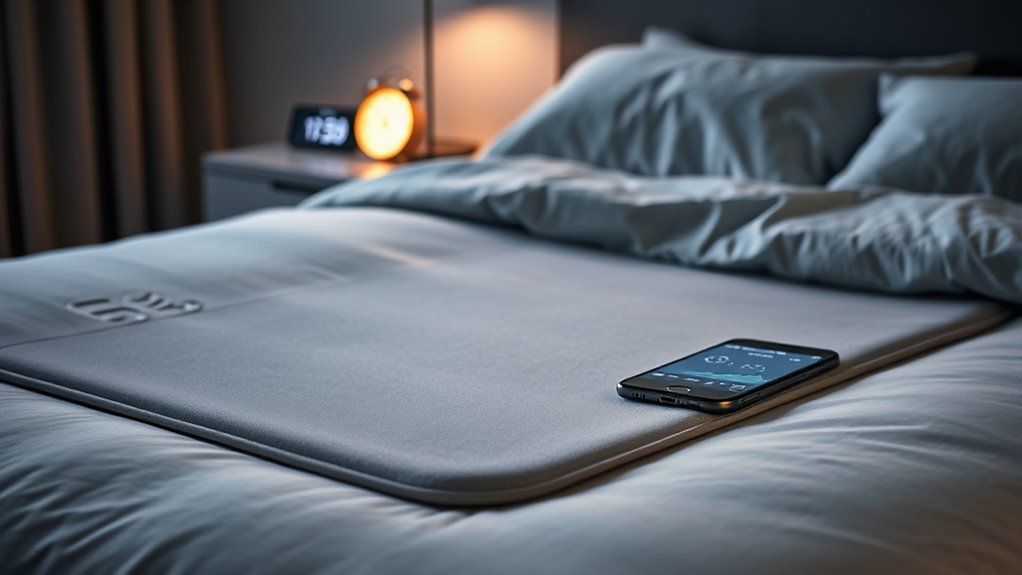

If you’re searching for a sleep tracking pad, you’re likely looking for a device that can monitor your sleep without disrupting your routine. The Garmin Index Sleep Monitor stands out as the best overall choice, offering comprehensive data and user-friendly features. The Withings Sleep is a strong contender for those seeking a non-intrusive, under-mattress solution, while the Beautyrest Sleeptracker provides a wearable-free experience with smart home integrations. Each option balances performance, convenience, and price differently, which can make choosing the right one challenging. Keep reading to see how these options compare and find the perfect sleep tracker for your needs.

Get wellness gear delivered free with Prime
- Fast, free delivery on millions of items
- Prime Video, Amazon Music and more included
- Member-only deals all year
Key Takeaways
- The most accurate sleep data often comes from under-mattress sensors, but they may lack detailed movement tracking.
- Wearable-free options tend to be easier to set up and less intrusive, ideal for those who dislike wearing devices.
- Price varies widely, with premium models offering more detailed insights and basic models focusing on simplicity and affordability.
- Compatibility with smart home devices or apps can enhance usability but may add complexity or cost.
- Battery life and ease of maintenance are often overlooked but crucial for consistent, long-term use.
| Garmin Index Sleep Monitor |  | Best Overall Sleep Tracking Pad for Comprehensive Data | Physical size: 17.8″ x 2.5″ x 0.02″ | Battery life: Up to 7 nights | Features: Sleep tracking, HRV, sleep stages, breathing variations, women’s health tracking, smart wake alarm | VIEW ON AMAZON | See Our Full Breakdown |
| Withings Sleep – Under Mattress Sleep Tracking Pad with Sleep Cycle Analysis |  | Best Value Under-Mattress Sleep Monitor for Detailed Cycle Analysis | Type: Sleep Tracking Pad | Sensor Technology: Pneumatic sensor | Features: Snoring detection, sleep cycle analysis, heart rate monitoring | VIEW ON AMAZON | See Our Full Breakdown |
| OZI Smart Sleep Tracker, Non-Wearable Contactless Under-Sheet Sleep Monitor |  | Best Contactless Sleep Monitor for All Ages and Easy Setup | Sensor Type: Under-sheet contactless sensor | Monitoring Features: Sleep stages, heart rate, breathing rate, movement, sleep duration, sleep score | Compatibility: OZI app | VIEW ON AMAZON | See Our Full Breakdown |
| Beautyrest Sleeptracker Monitor – Wearable-Free Sleep Tracker with App and Alexa Compatibility |  | Best Smart Home-Integrated Sleep Tracker with Personal Coaching | Compatibility: Alexa enabled | Type: Non-wearable sleep tracker | Sensors: Respiration, heart rate, movement | VIEW ON AMAZON | See Our Full Breakdown |
| Sleep Detection Pad – Real-Time Vital Sign Monitoring for Sleep Quality and Remote Care |  | Best for Medical-Grade, Remote Vital Sign Monitoring | Response Time: Real-time | Detection Method: Non-contact | Application: Sleep monitoring, vital signs, remote care | VIEW ON AMAZON | See Our Full Breakdown |
| Garmin Index Sleep Monitor |  | Best for Detailed Sleep Metrics and Long Battery Life | Physical size: 12.8″ x 2.5″ x 0.02″ | Battery life: Up to 7 nights | Features: Sleep tracking, breathing variations, skin temperature, women’s health, smart wake alarm | VIEW ON AMAZON | See Our Full Breakdown |
| sleep tracking pad | Features | Compatibility |
|---|---|---|
| Garmin Index Sleep Monitor | Sleep tracking, HRV, sleep stages, breathing variations, women’s health tracking, smart wake alarm | — |
| Withings Sleep | Snoring detection, sleep cycle analysis, heart rate monitoring | — |
| OZI Smart Sleep Tracker | — | OZI app |
| Beautyrest Sleeptracker Monito | — | Alexa enabled |
| Sleep Detection Pad | — | — |
| Garmin Index Sleep Monitor | Sleep tracking, breathing variations, skin temperature, women’s health, smart wake alarm | Syncs with Garmin Connect app, compatible with Garmin smartwatches |
More Details on Our Top Picks
Garmin Index Sleep Monitor
The Garmin Index Sleep Monitor stands out for its ability to deliver detailed sleep and health insights, including sleep stages, HRV, and women’s health tracking, all within a lightweight, comfortable band. Its long battery life of up to 7 nights reduces the hassle of frequent charging, making it ideal for ongoing tracking. Compared to the OZI Smart Sleep Tracker, Garmin’s device offers more advanced metrics and seamless integration with the Garmin Connect app, though it remains a non-medical estimation rather than a diagnostic tool. The tradeoff is that it requires wearing a band, which might be less comfortable for some users. Overall, this pick is best suited for those seeking a comprehensive health overview with a reliable, long-lasting device.
Pros:- Accurate sleep and health tracking metrics
- Long battery life of up to 7 nights
- Seamless data sync with Garmin Connect app
Cons:- Not a medical device, data is an estimation
- Breathing variations feature requires Pulse Ox, not available everywhere
- Advanced women’s health features are not for medical diagnosis
Best for: Health-conscious individuals who want detailed sleep and wellness metrics in a wearable form
Not ideal for: Sleepers who prefer non-wearable solutions or have sensitive skin that reacts to bands
- Physical size:17.8″ x 2.5″ x 0.02″
- Battery life:Up to 7 nights
- Features:Sleep tracking, HRV, sleep stages, breathing variations, women’s health tracking, smart wake alarm
Our verdict“This device is perfect for users who want detailed, long-term sleep insights combined with fitness tracking and are comfortable wearing a band.”
Withings Sleep – Under Mattress Sleep Tracking Pad with Sleep Cycle Analysis
The Withings Sleep pad offers a compelling balance of detailed sleep cycle analysis, snoring detection, and heart rate monitoring, all without requiring wearables. Its under-mattress design makes it less intrusive, especially for users who dislike wearing devices, though it may not fit all bed types perfectly. While similar to the Garmin Index in providing comprehensive sleep insights, it focuses solely on sleep metrics and lacks additional health tracking features like HRV or women’s health data. This makes it a solid choice for those prioritizing sleep cycle detail and affordability, but less suitable for users seeking broad health metrics or real-time alerts.
Pros:- Provides detailed sleep analysis and insights
- Detects snoring and sleep interruptions
- Monitors heart rate and cardiovascular health
Cons:- Requires placement under mattress, may not suit all bed types
- Limited to sleep tracking, no other health metrics
Best for: Sleepers who want detailed sleep cycle analysis without wearing a device, especially in homes with standard beds
Not ideal for: People with unconventional mattress sizes or those looking for broader health tracking beyond sleep
- Type:Sleep Tracking Pad
- Sensor Technology:Pneumatic sensor
- Features:Snoring detection, sleep cycle analysis, heart rate monitoring
Our verdict“Ideal for users seeking in-depth sleep cycle data without wearing a device, though it lacks broader health metrics.”
OZI Smart Sleep Tracker, Non-Wearable Contactless Under-Sheet Sleep Monitor
The OZI Smart Sleep Tracker offers a truly contactless experience, making it stand out among sleep pads by eliminating the need to wear or attach any device. Its ability to monitor sleep stages, heart rate, breathing, and movement provides a detailed picture of sleep quality, with real-time alerts for bed exits and unusual activity. Compared to the Wearable-Free Sleep Tracker from Beautyrest, OZI’s setup is simpler and more adaptable across different household members, including kids and seniors. However, its accuracy depends heavily on proper placement under the sheet, and it may not match the precision of high-end wearables for some metrics. This makes it ideal for households prioritizing comfort and ease of use.
Pros:- Contactless and non-wearable, ensuring comfortable sleep
- Detailed analysis including stages, vital signs, and movement
- Real-time alerts for safety and activity
Cons:- Requires proper placement for accuracy
- Limited to sleep monitoring, no daytime activity data
Best for: Families or seniors who prefer non-intrusive sleep tracking with real-time alerts
Not ideal for: Users seeking highly precise data or detailed health metrics beyond sleep stages and vital signs
- Sensor Type:Under-sheet contactless sensor
- Monitoring Features:Sleep stages, heart rate, breathing rate, movement, sleep duration, sleep score
- Compatibility:OZI app
Our verdict“Perfect for those wanting a comfortable, contactless sleep monitor with detailed insights, especially for multi-user households.”
Beautyrest Sleeptracker Monitor – Wearable-Free Sleep Tracker with App and Alexa Compatibility
The Beautyrest Sleeptracker combines advanced sensors with smart home integration, including Alexa, to deliver accurate sleep data and personalized coaching. Its ability to monitor respiration, heart rate, and movement without wearing anything is a significant advantage for those who dislike wearables. The app provides easy-to-understand insights and wake-up alarms tailored to your sleep patterns, making it suitable for couples who want synchronized data. Compared to the Garmin monitor, it emphasizes smart home compatibility and coaching features but is limited to U.S. residents due to availability. Its focus on sleep behavior and environment makes it ideal for tech-savvy users seeking a holistic sleep improvement tool.
Pros:- Highly accurate sensors and sleep analysis
- Integrates seamlessly with Alexa and smart home devices
- Personalized sleep coaching and wake-up alarms
Cons:- Limited availability outside the U.S.
- Requires compatible smart home setup
- Focuses solely on sleep, no other health data
Best for: Users interested in smart home integration and personalized sleep coaching, especially in the U.S.
Not ideal for: International users or those needing detailed health metrics like HRV or women’s health tracking
- Compatibility:Alexa enabled
- Type:Non-wearable sleep tracker
- Sensors:Respiration, heart rate, movement
- App:Sleep analysis and coaching
Our verdict“Ideal for users who want a non-wearable sleep tracker with smart home features and tailored coaching in the U.S.”
Sleep Detection Pad – Real-Time Vital Sign Monitoring for Sleep Quality and Remote Care
This sleep detection pad offers a versatile solution for real-time, non-contact vital sign monitoring, making it suitable for hospitals or remote care settings. Its lightweight, rollable design enables easy setup in various environments, and it provides accurate sleep and health data that can support medical or care needs. Compared with the other options, like the Withings or Garmin devices, this pad emphasizes real-time vital sign collection over sleep stages or detailed wellness metrics. The main tradeoff is that it may require proper positioning and lacks detailed information about device compatibility or data connectivity, which could limit its use for casual consumers. It’s best suited for professional or health-critical environments where accuracy and real-time data are paramount.
Pros:- Real-time, accurate sleep and vital sign monitoring
- Non-contact detection minimizes disturbance
- Portable and easy to install
Cons:- Requires proper setup for best accuracy
- Limited info on device compatibility and connectivity
Best for: Healthcare providers or caregivers requiring real-time vital sign monitoring in clinical or home settings
Not ideal for: Casual sleepers or those seeking comprehensive sleep insights for personal wellness
- Response Time:Real-time
- Detection Method:Non-contact
- Application:Sleep monitoring, vital signs, remote care
- Material:Thin, lightweight, rollable
Our verdict“Perfect for professional environments needing continuous vital sign data with minimal disturbance, less suitable for casual or wellness-focused users.”
Garmin Index Sleep Monitor
The Garmin Index Sleep Monitor stands out for its comprehensive tracking capabilities, including sleep stages, HRV, breathing variations, and skin temperature, providing a detailed picture of sleep quality. Compared with simpler contactless pads like the OZI Smart Sleep Tracker, it offers more metrics but requires wearing a band, which might be less comfortable for some users. Its long battery life of up to 7 nights reduces charging hassle, and seamless syncing with the Garmin Connect app makes data analysis straightforward. However, since it’s not a medical device, the data remains an estimation, and features like breathing variations depend on Pulse Ox availability, which isn’t universal. The advanced women’s health tracking is useful but not intended for medical diagnosis, making it a solid choice for fitness-focused users who want depth without clinical accuracy.
Pros:- Tracks a wide range of sleep metrics including stages, HRV, and skin temperature
- Up to 7 nights battery life reduces frequent charging
- Seamless data sync with Garmin Connect app for easy analysis
Cons:- Data is an estimate, not a medical diagnosis
- Breathing variations feature requires Pulse Ox, which isn’t available in all regions
- Wearing a band may be less comfortable for some users
Best for: Fitness enthusiasts and data-driven sleepers seeking detailed insights and long-lasting wearability.
Not ideal for: Individuals looking for a contactless or non-wearable solution, or those needing medical-grade sleep analysis.
- Physical size:12.8″ x 2.5″ x 0.02″
- Battery life:Up to 7 nights
- Features:Sleep tracking, breathing variations, skin temperature, women’s health, smart wake alarm
- Compatibility:Syncs with Garmin Connect app, compatible with Garmin smartwatches
Our verdict“This pick is best for users who want detailed sleep insights with long battery life and are comfortable wearing a band daily.”

How We Picked
Our evaluation focused on how well each sleep tracking pad measures sleep quality, accuracy of data, and ease of use. We also considered build quality, installation complexity, and integration with other health apps or smart home systems. Cost was a key factor, but we prioritized devices that offer the best balance of features and value. Devices were ordered based on overall performance, user experience, and how effectively they serve different types of sleepers, from casual users to tech enthusiasts.| sleep tracking pad | Features | Compatibility |
|---|---|---|
| Garmin Index Sleep Monitor | Sleep tracking, HRV, sleep stages, breathing variations, women’s health tracking, smart wake alarm | — |
| Withings Sleep | Snoring detection, sleep cycle analysis, heart rate monitoring | — |
| OZI Smart Sleep Tracker | — | OZI app |
| Beautyrest Sleeptracker Monito | — | Alexa enabled |
| Sleep Detection Pad | — | — |
| Garmin Index Sleep Monitor | Sleep tracking, breathing variations, skin temperature, women’s health, smart wake alarm | Syncs with Garmin Connect app, compatible with Garmin smartwatches |
Factors to Consider When Choosing Sleep Tracking Pad
Choosing the right sleep tracking pad involves considering several key factors. Beyond basic functionality, you should evaluate accuracy, ease of setup, compatibility, and how the device fits into your lifestyle. Understanding these aspects will help you avoid common mistakes, such as prioritizing features you don’t need or overspending on overly complex models. The right device should provide reliable insights without adding unnecessary hassle or cost.Accuracy of Sleep Monitoring
Accurate sleep data is essential for making meaningful improvements to your sleep habits. Under-mattress sensors generally offer better accuracy for sleep duration and movement tracking, but may lack detailed heart rate or breathing data. Wearable devices can provide deeper insights but might be less comfortable for some users. Consider what specific metrics matter most to you—such as sleep stages, heart rate, or breathing—and choose accordingly.Ease of Setup and Maintenance
A device that’s simple to install and requires minimal upkeep will encourage consistent use. Non-wearable options typically need placement under your mattress or on your bed frame, which may be quick to set up but less flexible. Wearables often need charging and regular maintenance, which can be a deterrent for some. Weigh the convenience of installation against ongoing maintenance to find a device that fits your routine.Compatibility and Integration
Many sleep trackers now sync with health apps, smart home systems, or voice assistants. This integration can enhance your experience by providing a holistic view of your health and automating routines, like adjusting lighting or temperature based on sleep quality. However, compatibility can vary, and some integrations may require additional setup or subscriptions. Decide if seamless connectivity is a priority for your overall smart home ecosystem.Price and Value
Budget-friendly models focus on basic sleep tracking, while premium options add features like detailed health metrics, long-term trend analysis, and smart integrations. Be wary of paying for features you won’t use and consider how much value you place on detailed insights versus simplicity. Sometimes, investing a bit more upfront can offer better accuracy and durability, saving money in the long run.Comfort and Design
Your comfort is key to consistent use. Under-mattress pads should be unobtrusive and compatible with your bed setup, while wearables need to feel comfortable enough to wear all night. Poorly designed devices or those that interfere with sleep can skew data or discourage regular use. Prioritize ergonomic design and compatibility with your sleeping environment to ensure accurate tracking and sustained use.Frequently Asked Questions
Can sleep tracking pads replace a sleep study?
Sleep tracking pads, especially those with advanced sensors, can provide valuable insights into your sleep patterns and disturbances. However, they are not a substitute for professional sleep studies, which diagnose complex conditions like sleep apnea or restless leg syndrome. If you suspect a serious sleep disorder, consulting a healthcare provider for a formal assessment is essential. These devices are best used for ongoing monitoring and improving sleep hygiene, not clinical diagnosis.
Are under-mattress sleep trackers accurate?
Under-mattress sleep trackers can be quite accurate for measuring sleep duration and movement, especially models with multiple sensors. However, their accuracy for detailed metrics like sleep stages or heart rate can vary. They may struggle with detecting subtle sleep disruptions or differentiating between light and deep sleep compared to clinical tools. For everyday use and general sleep quality insights, they are effective, but for medical-grade data, consult a specialist.
Do I need to wear anything to get good sleep data?
Not necessarily. Many users find non-wearable options like under-mattress pads or contactless sensors sufficient for their needs. Wearables can offer more detailed insights, such as heart rate variability and sleep stages, but require regular charging and may feel intrusive. If comfort and minimal disruption are priorities, a contactless device could be the better choice, though it might sacrifice some depth of data. Consider your comfort preferences and data needs when choosing.
How important is app compatibility for sleep tracking devices?
App compatibility enhances the usability of your sleep tracking device by allowing you to view data conveniently and integrate it with other health metrics. It can also enable features like sleep coaching or smart home automation. However, poor app design or limited compatibility can frustrate users. It’s worth choosing a device with a well-reviewed app that syncs seamlessly with your existing health ecosystem to maximize benefits and ensure easy access to your sleep insights.
Should I prioritize features over price when choosing a sleep tracking pad?
Prioritizing features depends on your specific needs and budget. If you want detailed, accurate sleep data and smart home integration, investing in a higher-end model may be worthwhile. Conversely, if you just want a general overview of your sleep duration and patterns, a more affordable option could suffice. Remember that paying more doesn’t always guarantee better accuracy; focus on selecting a device that offers the features that truly matter for your sleep improvement goals.
Conclusion
For casual sleepers or those new to sleep tracking, the Withings Sleep offers a simple, non-intrusive start. The Garmin Index Sleep Monitor remains the best all-around choice for detailed insights and reliable performance, making it ideal for health-focused users. If you’re willing to invest in premium features and smart home compatibility, the Sleeptracker Monitor delivers an advanced experience. Budget-conscious buyers should consider more affordable models that still provide essential sleep metrics. Ultimately, your choice should reflect your comfort level, budget, and specific sleep goals.