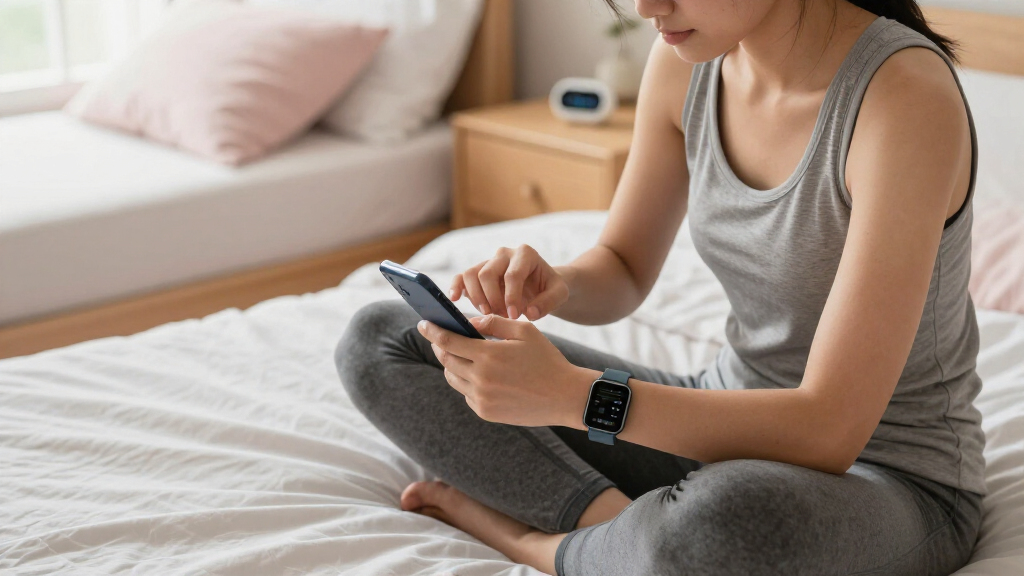

Sleep tracking devices for students need to work around unpredictable schedules, shared dorm rooms, and tight budgets — and that combination rules out many mainstream trackers. My top pick is the Garmin Index Sleep Monitor, which delivers advanced recovery metrics, HRV, and sleep staging without demanding perfect nightly routines. Students who want zero wearables at the lowest hassle should look at the Withings Sleep under-mattress pad, while budget-conscious buyers get surprisingly solid contactless tracking from the OZI Smart Sleep Tracker. The main tradeoff in this category is accuracy versus convenience: wearable bands and rings capture more biometric detail, but contactless pads never need charging and can’t be forgotten in a laundry pile. Keep reading for the full breakdown of all eight options.

Get wellness gear delivered free with Prime
- Fast, free delivery on millions of items
- Prime Video, Amazon Music and more included
- Member-only deals all year
Key Takeaways
- Contactless options (Withings Sleep, OZI, Non-Wearable Smart Tracker) dominated the value rankings because students routinely forget to charge or wear devices — a tracker left in a backpack tracks nothing.
- The Garmin Index Sleep Monitor and its L/XL sibling ranked highest for data depth, but the standard band’s sizing makes fit the deciding factor between the two versions — a poorly fitting sleep band skews HRV readings.
- The Beautyrest Sleeptracker and EMAY monitor serve narrow needs: Alexa integration for tech-heavy dorm setups, and airflow/breathing analysis for students worried about snoring or sleep apnea symptoms — neither is a general-purpose first pick.
- The generic Smart Ring scored well on discretion and all-day wear, but its unbranded app ecosystem is the weakest here; students who care about long-term sleep trends should weigh that risk before buying.
- Across all eight products, subscription-free data access separated the top picks from the rest — trackers that gate historical trends behind monthly fees quietly cost more over a four-year degree.
| Beautyrest Sleeptracker Monitor |  | Best for Dorm Sleepers Who Hate Wearables | Type: Non-wearable under-mattress sleep monitor | Connectivity: Wi-Fi, Alexa enabled | Compatibility: Works with any mattress and bedding | VIEW LATEST PRICE | See Our Full Breakdown |
| EMAY Sleep Breathing Monitor |  | Best for Snoring and Breathing Concerns | Weight: 10 grams | Sensor Type: Three built-in sensors in probe | Mask Material: Food-grade silicone, multiple sizes | VIEW LATEST PRICE | See Our Full Breakdown |
| Withings Sleep Tracking Pad |  | Best Overall Ecosystem Pick | Type: Under-mattress sleep sensor pad | Connectivity: Wi-Fi | App: Health Mate | VIEW LATEST PRICE | See Our Full Breakdown |
| Smart Ring Fitness Tracker |  | Best Value Wearable | Type: Smart ring wearable | Battery Life: Approximately 3 days | Water Resistance: IP68, up to 30 meters | VIEW LATEST PRICE | See Our Full Breakdown |
| Garmin Index Sleep Monitor |  | Best for Serious Sleep Analytics | Type: Upper-arm sleep band | Physical Size: Sleep Band S-M: 12.8″ x 2.5″ x 0.02″ | Battery Life: Up to 7 nights | VIEW LATEST PRICE | See Our Full Breakdown |
| OZI Smart Sleep Tracker, Contactless Under-Sheet Sleep Monitor |  | Best Value in Contactless Tracking | Type: Contactless under-sheet sensor | Metrics: Sleep stages, heart rate, breathing, movement | Wearable: No — nothing to wear or charge | VIEW LATEST PRICE | See Our Full Breakdown |
| Garmin Index Sleep Monitor (L/XL) – Smart Sleep Band with Advanced Sleep Tracking & Recovery Metrics |  | Best Premium Pick | Size: L/XL | Battery Life: Up to 7 nights | Battery: 300 mAh Lithium Ion | VIEW LATEST PRICE | See Our Full Breakdown |
| Non-Wearable Smart Sleep Tracker Contactless Sleep Monitor Device (SOMNDEEP BQP1) |  | Best All-in-One Sleep Environment Upgrade | Brand: SOMNDEEP | Model: BQP1 | Tracking Technology: Contactless radar | VIEW LATEST PRICE | See Our Full Breakdown |
| sleep tracking devices for student | Type | Connectivity | Compatibility |
|---|---|---|---|
| Beautyrest Sleeptracker Monito | Non-wearable under-mattress sleep monitor | Wi-Fi, Alexa enabled | Works with any mattress and bedding |
| EMAY Sleep Breathing Monitor | — | — | Smartphones via app |
| Withings Sleep Tracking Pad | Under-mattress sleep sensor pad | Wi-Fi | — |
| Smart Ring Fitness Tracker | Smart ring wearable | Bluetooth | — |
| Garmin Index Sleep Monitor | Upper-arm sleep band | — | Garmin Connect app, Garmin smartwatches |
| OZI Smart Sleep Tracker | Contactless under-sheet sensor | — | — |
| Garmin Index Sleep Monitor | — | Bluetooth | iOS and Android via Garmin Connect |
| Non-Wearable Smart Sleep Track | — | 2.4GHz Wi-Fi | — |
More Details on Our Top Picks
Beautyrest Sleeptracker Monitor
Most sleep trackers demand something on your body — a ring, a band, a mask. The Beautyrest Sleeptracker takes the opposite approach: sensors sit under your mattress and disappear from your nightly routine entirely. For a student who already juggles a phone, laptop, and backpack, having zero devices to charge or remember is the whole point. Compared with the Withings Sleep, it adds personalized sleep coaching that learns your rhythms over time, which matters when irregular class schedules wreck your sleep consistency. It also supports dual-sleeper monitoring, something the EMAY airflow monitor can’t touch. The tradeoff is dependence on Wi-Fi and an Alexa-centric app ecosystem — if your dorm network is locked down or shared, setup gets frustrating. It’s also US-only for purchase.
Pros:- Nothing to wear or charge overnight
- Sleep coaching that adapts to your patterns over time
- Works for one or two sleepers in the same bed
- Alexa integration for hands-free morning routines
Cons:- Requires stable Wi-Fi and app setup that campus networks may block
- Purchase restricted to the United States
Best for: Students in dorms or shared apartments who want set-and-forget tracking with coaching, without wearing anything to bed
Not ideal for: Students outside the US, or those on restrictive campus Wi-Fi without smart home access
- Type:Non-wearable under-mattress sleep monitor
- Connectivity:Wi-Fi, Alexa enabled
- Compatibility:Works with any mattress and bedding
- Sleeper Support:Individual and dual monitoring
- Health Metrics:Heart rate, respiration analysis
- Coaching:Personalized AI sleep coaching
Our verdict“If you want invisible, zero-effort sleep tracking plus coaching in a dorm bed, this is the pick — as long as your Wi-Fi cooperates.”
EMAY Sleep Breathing Monitor
This isn’t a general wellness tracker — it’s a focused diagnostic-style tool. The EMAY monitor uses a lightweight silicone nasal mask to record airflow and respiratory events all night, which is data no ring or mattress pad can capture. Where the Garmin Index Sleep Monitor estimates breathing variations indirectly, EMAY measures the actual airflow, making it the better choice if you suspect snoring, apnea-like pauses, or chronic nasal issues are tanking your sleep before exams. At 10 grams, the mask is barely noticeable, and the professional-grade sleep reports are the kind you could bring to a doctor’s appointment. The tradeoffs are real, though: it’s nasal-only, so mouth breathers get nothing useful, and there’s no SpO2 or pulse data — you’ll need a separate device like the smart ring for that.
Pros:- Direct airflow measurement, not estimation
- Featherlight 10g mask in multiple sizes
- Detailed professional reports suitable for doctor visits
- Compact enough to pack for travel home or trips
Cons:- Nasal-only design fails for mouth breathers
- No SpO2 or pulse rate recording
- Incompatible with CPAP masks
Best for: Students who suspect breathing problems or snoring are destroying their sleep and want clinical-grade airflow data
Not ideal for: Mouth breathers or students wanting all-in-one wellness tracking with heart rate and activity data
- Weight:10 grams
- Sensor Type:Three built-in sensors in probe
- Mask Material:Food-grade silicone, multiple sizes
- Compatibility:Smartphones via app
- Monitoring:Airflow and respiratory event tracking
- Reports:Professional sleep report generation
Our verdict“Buy this only if breathing issues are your primary concern — for general sleep tracking, the Withings or Garmin covers more ground.”
Withings Sleep Tracking Pad
This option stands out for balancing effortless hardware with genuinely useful software. Like the Beautyrest Sleeptracker, it slips under the mattress, but Withings pairs it with the polished Health Mate app and IFTTT automation — imagine your lights dimming and phone silencing automatically at your target bedtime. That kind of passive habit-building is exactly what sleep-deprived students need. Compared with the Garmin Index band, there’s nothing to strap on, charge weekly, or forget in a gym bag, and the data quality for sleep cycles, snoring, and heart rate holds up well. The constraints: your mattress must be between 4 and 15 inches thick, and there’s no display or on-device feedback — everything lives in the app. Dorm beds with odd toppers or very thick mattresses may fall outside that range, so measure first.
Pros:- Automatic tracking — just sleep, no buttons to press
- Snoring and breathing disturbance detection alongside cycles
- IFTTT integration for automated bedtime routines
- Reliable Wi-Fi sync to the Health Mate app
Cons:- Mattress thickness must be 4–15 inches
- Under-mattress placement is awkward if you move beds often
- No display or direct feedback device
Best for: Students who want accurate, passive tracking with smart home automation and a mature app ecosystem
Not ideal for: Anyone with a mattress or topper stack outside the 4–15 inch range, or who wants on-device feedback
- Type:Under-mattress sleep sensor pad
- Connectivity:Wi-Fi
- App:Health Mate
- Smart Home:IFTTT automation support
- Mattress Compatibility:4 to 15 inches thick
- Metrics:Sleep cycles, snoring, breathing disturbances, heart rate
Our verdict“The most well-rounded choice for students who want set-and-forget accuracy without wearing anything to bed.”
Smart Ring Fitness Tracker
For students, the appeal here is simple: sleep tracking plus daily health data in one discreet ring with no subscription fees. Compared with the Garmin Index Sleep Monitor, this ring adds daytime usefulness — 180+ sport modes, step counting, stress, and SpO2 — which matters if you’re walking across campus all day and only partly care about sleep. Unlike premium rings costing three or four times more, this one keeps wellness features free, including menstrual cycle tracking. The compromises are typical of budget wearables: sizing is genuinely tricky, and a wrong fit ruins both comfort and sensor accuracy, so use the sizing guide carefully. Battery life of roughly three days also means a mid-week charging habit, versus the Garmin band’s full week. And with GPS details left vague, serious runners should temper expectations.
Pros:- Sleep, heart rate, SpO2, and stress tracking in one ring
- 180+ sport modes for versatile activity logging
- IP68 waterproof to 30 meters — pool and shower safe
- No subscription for wellness and cycle tracking features
Cons:- Sizing must be exact or accuracy suffers
- About 3 days of battery requires frequent charging
- Sparse documentation on GPS and advanced features
Best for: Budget-conscious students who want 24/7 sleep and activity tracking in one device without monthly fees
Not ideal for: Students who only care about sleep — a dedicated tracker like the Garmin band does that better for similar effort
- Type:Smart ring wearable
- Battery Life:Approximately 3 days
- Water Resistance:IP68, up to 30 meters
- Materials:Stainless steel band and case
- Connectivity:Bluetooth
- Health Metrics:Sleep, heart rate, SpO2, stress, calories
- Sports Modes:180+
- Extra Features:Menstrual cycle tracking (female profile)
Our verdict“The best pick if you want all-day health tracking that happens to cover sleep — just get the sizing right.”
Garmin Index Sleep Monitor
Where most options here cast a wide net, the Garmin Index goes deep on sleep alone. The upper-arm band delivers sleep score, stage breakdowns, HRV, skin temperature, and breathing variations — metrics that help a student athlete or anyone training through a semester understand recovery, not just hours slept. Compared with the smart ring, the 7-night battery removes the mid-week charging chore, and its HRV data is more consistent than budget wearables deliver. Against the Withings Sleep pad, it travels better — no mattress requirements — but you do have to wear it. Two honest caveats: it’s not a medical device, so readings are estimations, and full functionality leans on owning a Garmin smartwatch. If you’re not already in the Garmin ecosystem, half the value stays locked.
Pros:- Advanced metrics: HRV, skin temperature, breathing variations, sleep score
- Up to 7 nights of battery per charge
- Comfortable, breathable upper-arm band
- Seamless sync with Garmin Connect and Garmin watches
Cons:- Requires a Garmin smartwatch for full functionality
- Metrics are estimations, not medical-grade data
- Pulse Ox feature unavailable in some countries
Best for: Student athletes and recovery-focused users already using Garmin watches who want deep sleep analytics
Not ideal for: Students without a Garmin smartwatch, since full functionality depends on the Garmin Connect ecosystem
- Type:Upper-arm sleep band
- Physical Size:Sleep Band S-M: 12.8″ x 2.5″ x 0.02″
- Battery Life:Up to 7 nights
- Metrics:Sleep score, stages, HRV, breathing variations, skin temperature
- Extra Features:Women’s health tracking, smart wake alarm
- Compatibility:Garmin Connect app, Garmin smartwatches
Our verdict“The deepest sleep analytics here — but only worth it if you already live in the Garmin ecosystem.”
OZI Smart Sleep Tracker, Contactless Under-Sheet Sleep Monitor
For students who hate sleeping with anything strapped to their body, the OZI Sleep Tracker delivers the core promise of the Withings Sleep pad — full-stage tracking with heart rate and breathing data — at a friendlier price and with no subscription fees. Slipping it under the sheet takes minutes, and unlike a ring or the Garmin Index Sleep Monitor, there is nothing to charge every week. The bed-exit and unusual-activity alerts are a genuine differentiator if you share a dorm or want peace of mind about a roommate or sibling. The tradeoffs are real, though: it does nothing outside of sleep, placement under the sheet can shift during sheet changes, and some buyers report spotty connectivity with the companion app.
Pros:- Completely non-wearable design with nothing to charge or remember to put on
- Tracks sleep stages, heart rate, breathing, and movement with no monthly fees
- Real-time bed exit and unusual activity alerts add a safety layer
- Works for multiple users in a household, including kids and caregivers
Cons:- Some users report recurring connectivity issues with the mobile app
- Sensor must sit under the sheet and can be disturbed by bedding changes
- No health metrics beyond sleep, unlike rings or the Garmin band
Best for: Budget-conscious students who want set-and-forget sleep stage data without wearing or charging a device
Not ideal for: Anyone who wants daytime health tracking too — this is a sleep-only device with no activity or fitness metrics
- Type:Contactless under-sheet sensor
- Metrics:Sleep stages, heart rate, breathing, movement
- Wearable:No — nothing to wear or charge
- Subscription:None required
- Alerts:Real-time bed exit and unusual activity notifications
- Warranty:1 year
- Unit Count:1
Our verdict“The smart pick for students who want reliable-looking sleep data with zero wearable commitment, as long as they don’t expect fitness features.”
Garmin Index Sleep Monitor (L/XL) – Smart Sleep Band with Advanced Sleep Tracking & Recovery Metrics
The Garmin Index Sleep Monitor is the most analytically ambitious option here, aimed at the student athlete or pre-med type who actually reads their HRV, skin temperature, and recovery scores before deciding whether to hit the gym. Worn on the upper arm rather than a finger like the Smart Ring Fitness Tracker, it captures more physiological signal and pairs that with Garmin’s mature Connect ecosystem and a Smart Wake alarm timed to light sleep — a genuine grade-saver for 8 a.m. lectures. The 7-night battery beats nightly-charging wearables. But it’s the priciest route to sleep data in this roundup, breathing variation needs a separate Pulse Ox sensor in some regions, and it’s not water resistant, so shower habits matter.
Pros:- Advanced metrics including HRV status, skin temperature, and women’s health insights
- Up to 7 nights of battery life means minimal charging hassle
- Smart Wake alarm rouses you during light sleep for easier mornings
- Seamless sync with the polished Garmin Connect app and ecosystem
Cons:- Highest-cost option in this roundup for sleep-only functionality
- Not water resistant, requiring careful handling around showers and rain
- Breathing variation insights require a Pulse Ox sensor not available in all regions
Best for: Data-driven student athletes and health-science students who want deep recovery metrics and already live in the Garmin ecosystem
Not ideal for: Casual trackers on a student budget — a contactless pad like the OZI covers the basics for far less money
- Size:L/XL
- Battery Life:Up to 7 nights
- Battery:300 mAh Lithium Ion
- Water Resistance:Not water resistant
- Compatibility:iOS and Android via Garmin Connect
- Key Features:HRV status, skin temperature, sleep score, sleep stages, women’s health tracking, Smart Wake alarm
- Connectivity:Bluetooth
- Color:Black
Our verdict“If you treat sleep data as training data and budget isn’t the constraint, this is the most capable tracker in the lineup.”
Non-Wearable Smart Sleep Tracker Contactless Sleep Monitor Device (SOMNDEEP BQP1)
The SOMNDEEP contactless monitor stands apart from the OZI and Withings Sleep pads by doing two jobs at once: it tracks sleep stages, heart rate, and breathing via radar, while also actively improving sleep with built-in ambient lighting and white noise. For a student in a noisy dorm or shared apartment, that combination is arguably more useful than a pure data play — the lifestyle suggestions in its reports nudge behavior rather than just logging it. The magnetic mounting hardware and 3M pads make placement flexible too. The catch: it demands a stable 2.4GHz Wi-Fi network, which campus dorm networks sometimes block or throttle, and radar sensitivity means a vibrating mini-fridge or foot traffic can muddy accuracy.
Pros:- Combines radar-based sleep, heart rate, and breathing tracking in one contactless device
- Built-in ambient lighting and white noise actively improve sleep, not just measure it
- Clear sleep reports with actionable lifestyle suggestions
- Flexible magnetic mounting with adhesive pads included
Cons:- Requires a stable 2.4GHz Wi-Fi connection that some dorm networks can’t provide
- Environmental vibrations can interfere with tracking accuracy
- Not intended for medical diagnosis, so it can’t flag conditions like apnea
Best for: Students in noisy dorms who want sleep tracking plus white noise and lighting to actually fall asleep faster
Not ideal for: Anyone on restrictive campus Wi-Fi — this monitor needs a stable 2.4GHz connection to function properly
- Brand:SOMNDEEP
- Model:BQP1
- Tracking Technology:Contactless radar
- Extra Features:Ambient lighting and white noise
- Connectivity:2.4GHz Wi-Fi
- Mounting:3M adhesive pads, magnetic base, magnetic and metal plates
- Warranty:2 years
- Included:Monitor, mounting hardware, user manual
Our verdict“The best choice if you want a device that helps you sleep better rather than just telling you how badly you slept.”

How We Picked
I evaluated every option against the realities of student life rather than idealized sleep-lab conditions. The core criteria: effort required per night (charging, wearing, remembering), data accuracy for sleep staging and recovery metrics, dorm-room practicality including noise, shared beds, and bed frame compatibility, and total cost of ownership including subscriptions and replacement bands. A tracker that costs $30 more upfront but needs nothing from you at 2 a.m. after a late study session beats a cheaper device you abandon in week three.
Ranking also reflected ecosystem fit. Students juggling classes, part-time work, and irregular sleep need apps that surface one clear takeaway — not raw graphs. Devices with weak or unbranded apps were penalized even when hardware specs looked competitive, and products with narrow use cases (like the EMAY’s breathing focus) were ranked for the specific buyer they serve rather than as general recommendations.
| sleep tracking devices for student | Type | Compatibility |
|---|---|---|
| Beautyrest Sleeptracker Monito | Non-wearable under-mattress sleep monitor | Works with any mattress and bedding |
| EMAY Sleep Breathing Monitor | — | Smartphones via app |
| Withings Sleep Tracking Pad | Under-mattress sleep sensor pad | — |
| Smart Ring Fitness Tracker | Smart ring wearable | — |
| Garmin Index Sleep Monitor | Upper-arm sleep band | Garmin Connect app, Garmin smartwatches |
| OZI Smart Sleep Tracker | Contactless under-sheet sensor | — |
| Garmin Index Sleep Monitor | — | iOS and Android via Garmin Connect |
| Non-Wearable Smart Sleep Track | — | — |
Factors to Consider When Choosing Sleep Tracking Devices For Students
Before picking a specific model, it helps to understand what actually separates a useful student sleep tracker from an expensive gadget that ends up in a drawer. These are the factors that shaped my rankings — and the mistakes I see buyers make most often.Wearable Versus Contactless: The Real Decision
This is the single biggest fork in the road, and most buyers underestimate it. Wearables — the Garmin band and the smart ring — capture richer data like HRV, skin temperature, and SpO2 because the sensor sits against your skin all night. Contactless pads and under-mattress strips like the Withings and OZI trade some of that resolution for zero daily effort. For students, that tradeoff matters more than for the average buyer: someone crashing at 3 a.m. after finals prep will not clip on a sleep band, and consistency beats precision every time in sleep tracking. A slightly less accurate tracker you use 200 nights a year produces better insights than a clinical-grade device used twice a week. Ask yourself honestly which habit you’ll actually keep.
Dorm-Room Practicality
Sleep trackers are designed for ordinary bedrooms, and dorms break those assumptions. Under-mattress pads need a specific bed structure — a thin dorm mattress on a rigid platform can compress the sensor zone or amplify a roommate’s movement in a bunk setup. Wearables sidestep bed issues entirely but introduce their own problems: shared rooms mean theft risk for a $300 ring left on a charger, and bands can get damaged in shared laundry. Check whether the device needs to be plugged in near the bed, since outlet access is rarely guaranteed in older dorms. If you’re in a bunk or lofted bed, contactless options lose much of their plug-and-play appeal and the wearable route becomes the safer bet.
Data Depth Versus Data Overload
There’s a temptation to buy the tracker with the most metrics, but more graphs don’t equal better sleep — especially for a student staring at a sleep score before an exam. Anxiety-driven sleep tracking is a documented problem: obsessing over a bad score the night before a test can make the next night worse. Garmin’s recovery metrics are genuinely useful for athletes and anyone tracking long-term trends, but a student who just needs to see ‘you averaged 5.5 hours this week’ is better served by a simpler device. Match the data depth to what you’ll actually change. If no number on the screen would alter your behavior, pay for accuracy, not analytics.
Total Cost Over Four Years
The sticker price is rarely the full cost. Some ecosystems push subscriptions for historical trends, coaching, or cloud backups — and $8 a month is nearly $400 across a degree. Replacement bands, proprietary chargers, and ring-sizing kits add more. Every pick in my top tier works fully without a subscription, which is why some cheaper-looking competitors didn’t rank as well as their price suggested. Budget-conscious buyers should also check whether the device works standalone or requires a phone from a specific era — a tracker tied to a five-year-old app with no updates is a dead end waiting to happen.
Alarm and Schedule Features
Students don’t just want data — they want to wake up for an 8 a.m. lecture without wrecking the roommate’s sleep. Smart alarms that wake you during light sleep only work if the tracker knows your sleep stages accurately, which favors devices with proven staging algorithms. Silent, vibrating alarms on wearables solve the roommate problem completely, while contactless pads typically rely on phone-based alarms and lose that advantage. If waking a shared room is your main concern, a wearable with a haptic alarm may matter more than any sleep metric. It’s a feature that rarely headline’s a spec sheet but shapes the daily experience more than anything else.
Health Red Flags: When a Tracker Isn’t Enough
Several devices here, especially the EMAY breathing monitor, tempt buyers who suspect something medical — chronic snoring, gasping, daytime exhaustion despite adequate hours. A consumer tracker can flag patterns worth discussing, but none of these devices diagnose sleep apnea or replace a campus health center visit, and most campuses offer sleep evaluations at low or no cost through student health services. The smart move is using a tracker for two to four weeks of data, then bringing that data to a professional if the patterns look alarming. Buying a $150 monitor to self-diagnose a medical condition is a common and expensive mistake. Treat every device in this roundup as an awareness tool, not a medical instrument.
Frequently Asked Questions
Can a contactless under-mattress tracker work on a dorm bunk bed?
It depends heavily on the bed structure. Sensors like the Withings Sleep and OZI pad work best on a standard mattress with a stable surface beneath it; a thin dorm mattress on a metal bunk frame can produce noisy or inconsistent readings, and movement from a roommate in the same frame may bleed into your data. If you’re in a lofted or bunk arrangement, positioning matters — placing the sensor across the mattress at chest level and testing it for a few nights before committing is wise. Students in rigid bunk setups often get better results from a wearable instead, since the band or ring ignores bed architecture entirely.
Is a smart ring or a sleep band better for a student budget?
On hardware price alone, the smart ring in this lineup undercuts the Garmin band, but the calculation changes over time. The ring’s unbranded app ecosystem means less reliable long-term support and no clear upgrade path, while Garmin’s platform is established and free of subscription fees for sleep data. A student planning to track sleep across multiple years benefits from that stability, even at a higher initial cost. If you only want a semester of basic insights, the ring’s lower price is defensible; for anything longer-term, the band’s ecosystem advantage usually justifies the premium.
Do any of these trackers require a monthly subscription?
All eight devices here deliver their core sleep data — staging, duration, and heart-rate trends — without mandatory subscriptions, which is part of why they made the list. That said, some ecosystems push optional premium tiers for coaching, longer history, or advanced analytics, and those add-ons can quietly accumulate cost over a four-year degree. Garmin Connect keeps sleep and recovery metrics in the free tier. Before buying any tracker, check the app’s current pricing page, since subscription policies change more often than hardware does. As a rule, the free tier should show at least 30 days of history or the device isn’t worth it for trend tracking.
Will a sleep tracker actually help me fix my sleep schedule, or is it just data?
A tracker alone changes nothing — the value comes from the behavior loop it creates. Seeing that a 1 a.m. bedtime consistently produces 5 hours of sleep is more persuasive than vague advice to sleep earlier, and that visible pattern is what drives most students to adjust. The devices that help most present one clear nightly takeaway rather than a wall of graphs, which is why I weighted app quality heavily in the rankings. There’s also a real failure mode: fixating on a bad sleep score can create anxiety that worsens sleep, sometimes called orthosomnia. If you notice yourself checking scores first thing every morning with dread, dial back to weekly reviews.
Should I be worried about a tracker detecting breathing problems?
Treat any breathing irregularity flags as a conversation starter with a doctor, not a diagnosis. The EMAY monitor in particular is designed around airflow tracking and can surface patterns — long pauses, heavy snoring, erratic breathing — that merit professional follow-up. Most universities include sleep consultations through student health services at little or no cost, and a sleep physician can order a proper study if the data warrants it. Consumer devices vary widely in breathing-detection accuracy, and false positives and false negatives both happen regularly. The responsible play is two to four weeks of tracking, then bringing the app’s export or screenshots to an appointment.
Conclusion
After comparing all eight, the right choice comes down to how you’ll actually use it. For the best overall pick, the Garmin Index Sleep Monitor wins on data depth, free ecosystem, and reliable sleep staging — or the L/XL version if the standard band doesn’t fit, since a proper fit is non-negotiable for accurate HRV readings. The best value is the OZI Smart Sleep Tracker, which delivers contactless tracking at a price students can absorb without touching textbook money. For best for beginners, the Withings Sleep pad is the easiest entry point: put it under the mattress once and never think about charging, wearing, or syncing a device again.
The best premium option for students serious about recovery science is the Garmin L/XL with its full metric suite including skin temperature and women’s health tracking. For specific needs: choose the Beautyrest Sleeptracker if your dorm runs on Alexa and you want voice-integrated routines, the generic Smart Ring if discretion and all-day wear matter most and you accept a weaker app, the EMAY monitor if breathing patterns are your primary concern, and the Non-Wearable Smart Tracker if you want a contactless backup option at the lowest commitment. Whatever you pick, the tracker you use every night for four years beats the perfect one you abandon by midterms.