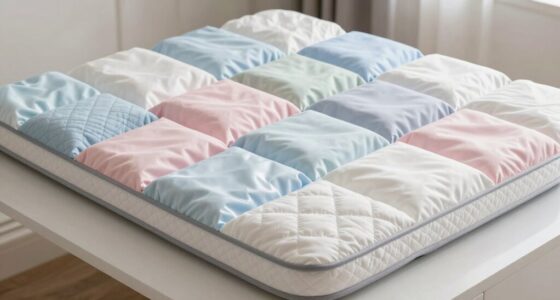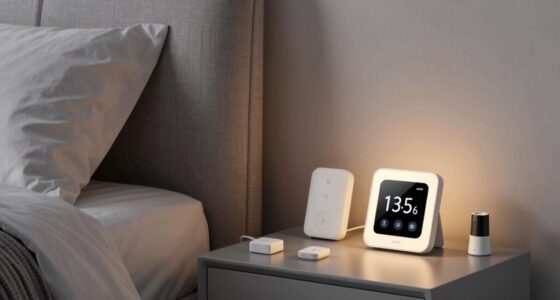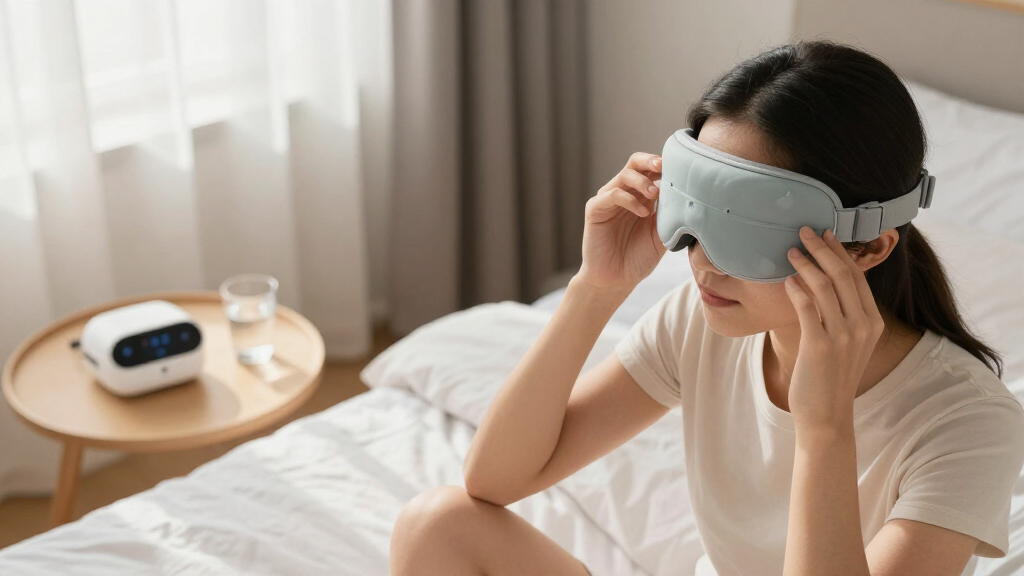
Sleep therapy devices split into two camps: red light therapy devices that support natural melatonin production, and white noise machines that mask disruptive sound. After comparing 13 popular options, the Helight Red Light Therapy Sleep Device stands out as my best overall pick for its focused 630nm output and simple bedside design. If sound is your bigger problem, the Adaptive Sound Technologies Sleep Machine is the strongest audio option, while the Red Light Therapy Sleep Device with 5 Wavelengths, White Noise, and App Control is the pick for anyone who wants both therapies in one unit. The main tradeoff you’ll face is simplicity versus versatility — app-controlled multi-function devices do more, but simpler dedicated devices are easier to use at 2 a.m. and often do their single job better. Keep reading for the full breakdown.

Get wellness gear delivered free with Prime
- Fast, free delivery on millions of items
- Prime Video, Amazon Music and more included
- Member-only deals all year
Key Takeaways
- Dedicated single-function devices beat multi-function ones at their core job: the Helight (red light only) and Adaptive Sound Technologies (noise only) both outperformed combo units in their respective therapies.
- App control divided the lineup sharply — useful for customizing light wavelengths and alarm schedules, but a genuine annoyance if you just want a device that works when you plug it in.
- The Gamma Revive line appears twice (bulb and portable), and the portable version is the better buy for travelers while the bulb is the cheaper entry point for whole-room use.
- White noise machines separated mainly by sound library depth and volume granularity — the Magicteam‘s 32 volume levels and memory function put it ahead of the HoMedics despite similar pricing.
- 630nm versus 670nm wavelength differences proved less important than light diffusion and dimming range; a well-diffused 670nm lamp outperformed a harsher 630nm one for falling asleep.
- Budget red light night lights under $30 delivered surprisingly usable results, making them the smart starter purchase before committing to a premium device.
| Revive 670nm Red Light Bulb by Gamma – Sleep Therapy – Melatonin Promoting Natural Sleep Aid | 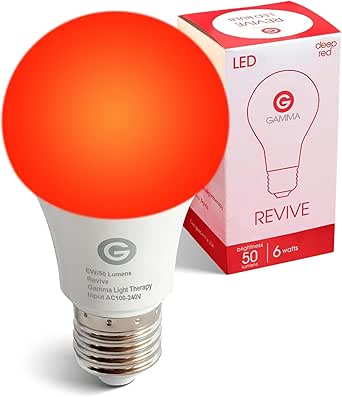 | Best Value Sleep Light | Light Type: LED | Wavelength: 670nm red | Wattage: 4 watts | VIEW LATEST PRICE | See Our Full Breakdown |
| White Noise Machine with 30 Soothing Sounds for Sleep and Relaxation |  | Best Sound Variety for Families | Sound Modes: 30 (white, brown, pink noise, nature sounds, music) | Timer Options: 1, 2, or 3 hours | Power: Plug-in, cord required | VIEW LATEST PRICE | See Our Full Breakdown |
| Helight Red Light Therapy Sleep Device – 630nm Pure Red Light Lamp for Better Sleep |  | Best Dedicated Red Light Therapy | Wavelength: 630nm pure red | Cycle Duration: 28 minutes | Power Source: USB-C rechargeable battery | VIEW LATEST PRICE | See Our Full Breakdown |
| Homedics SoundSleep White Noise Sound Machine, Silver |  | Best Simple Sound Machine | Sounds: 6 (White Noise, Thunder, Ocean, Rain, Summer Night, Brook) | Auto-Off Timer: 15, 30, or 60 minutes | Power: Wall outlet adapter | VIEW LATEST PRICE | See Our Full Breakdown |
| Red Light Therapy Sleep Device with 5 Wavelengths, White Noise, and App Control |  | Best All-in-One Sleep Station | Wavelengths: 620–690nm (5 wavelengths) | White Noise Tracks: 32 | Control: Smart app and touch buttons | VIEW LATEST PRICE | See Our Full Breakdown |
| Red Light for Sleep with White Noise, App Control, and 7 Alarms |  | Most Feature-Rich Combo | Light Wavelengths: 620-690nm | White Noise Sounds: 32 | Alarm Types: 7 customizable alarms | VIEW LATEST PRICE | See Our Full Breakdown |
| Red Light Therapy Lamp, Dimmable Red Night Light for Bedroom Sleep |  | Best Dual-Purpose Design | Light Source: LED (dual-mode red and warm white) | Switch Type: Touch | Power Source: Rechargeable battery | VIEW LATEST PRICE | See Our Full Breakdown |
| 630nm Red Light Therapy Sleep Device with White Noise, Portable Night Light |  | Best for Travel | Wavelength: 630nm | Sound Modes: 10 white noise sounds | Brightness Settings: 5 levels | VIEW LATEST PRICE | See Our Full Breakdown |
| Light Therapy Lamp for Anxiety Relief, Migraine, and Insomnia with Soothing Music |  | Best for Migraine and Anxiety Relief | Wavelength: 520nm green | Lighting Modes: Warm white and green light | Audio: Bluetooth audio | VIEW LATEST PRICE | See Our Full Breakdown |
| Adaptive Sound Technologies Sound + Therapy Sleep Machine |  | Best Targeted Sound Therapy | Frequency: 40 Hz | Sound Beats: 4 proprietary gamma sound beats | Volume Levels: 9 calibrated levels | VIEW LATEST PRICE | See Our Full Breakdown |
| Revive 670nm Red Portable Light by Gamma – Sleep Therapy and Natural Sleep Aid |  | Best for Travel | Light Wavelength: 670nm | Power Source: Rechargeable battery or USB power | Brightness Levels: 3 | VIEW LATEST PRICE | See Our Full Breakdown |
| Magicteam Sound White Noise Machine with 20 Natural Soothing Sounds, Memory Function, 32 Volume Levels, and Timer |  | Best Budget Sound Machine | Number of Sounds: 20 | Sound Types: White, brown, pink, blue noise, fan, brook, rain, ocean, bird, bonfire | Volume Levels: 32 | VIEW LATEST PRICE | See Our Full Breakdown |
| Red Light Therapy Sleep Night Light with 670nm Wavelength, Touch Control, and 3 Color Modes |  | Best Bedside Red Light | Light Wavelength: 670nm | Light Source: LED (single source) | Color Modes: 3 | VIEW LATEST PRICE | See Our Full Breakdown |
More Details on Our Top Picks
Revive 670nm Red Light Bulb by Gamma – Sleep Therapy – Melatonin Promoting Natural Sleep Aid
For the price of a specialty coffee or two, this bulb turns any standard lamp into a melatonin-friendly wind-down light, which makes it the easiest entry point into light-based sleep therapy on this list. Unlike the Helight device, which runs a timed 28-minute therapy cycle, the Revive works passively — screw it in, flip the switch, and your evening lighting stops suppressing melatonin production. The 670nm wavelength sits in the range most associated with sleep support, and the flicker-free, UV-free output means no hidden irritants. The tradeoff is simplicity: there’s no timer, no brightness adjustment, and no app. At 50 lumens, it’s strictly an ambiance tool, so anyone expecting a reading light or a therapy device with structured sessions should look at the pricier app-controlled options instead.
Pros:- Extremely affordable entry into red light sleep therapy
- Fits any standard E26 lamp, no setup required
- Flicker-free and UV-free output
- 50,000-hour rated lifespan
Cons:- No timer, dimming, or smart features of any kind
- 50 lumens is too dim for anything beyond ambiance
Best for: Budget-conscious buyers who want to try red light sleep therapy without committing to a dedicated device
Not ideal for: Anyone wanting timers, brightness control, or structured therapy cycles — this is a bare-bones bulb
- Light Type:LED
- Wavelength:670nm red
- Wattage:4 watts
- Bulb Shape / Base:A19 / E26
- Light Output:50 lumens
- Rated Lifespan:50,000 hours
- Use:Indoor only
Our verdict“The cheapest, lowest-commitment way to test whether red light helps your sleep — as long as you don’t expect features.”
White Noise Machine with 30 Soothing Sounds for Sleep and Relaxation
Sound-based sleep therapy lives or dies on variety, and 30 sound options — spanning white, brown, and pink noise plus nature tracks and lullabies — give this machine flexibility the Homedics SoundSleep simply can’t match with its six sounds. That breadth matters most in a household: the brown noise that masks a partner’s snoring won’t soothe a toddler, and this unit covers both. The memory function restores your last sound and volume on power-up, a small convenience that matters nightly, and the 1–3 hour timer handles bedtime routines of different lengths. Compared with the Homedics, though, you give up nothing on portability but still face the same limitation: corded-only power. There’s no battery, so it’s a bedside-and-outlet device rather than a true travel companion despite its compact size.
Pros:- 30 sounds covering noise colors, nature, and lullabies
- Memory function restores preferred settings automatically
- Genuinely compact for nightstand or nursery use
- Works for all age groups
Cons:- No battery option — must stay plugged in
- No Bluetooth or speaker functionality
Best for: Families with mixed sleep needs — babies, kids, and adults sharing a household
Not ideal for: Frequent travelers or campers who need battery-powered operation away from outlets
- Sound Modes:30 (white, brown, pink noise, nature sounds, music)
- Timer Options:1, 2, or 3 hours
- Power:Plug-in, cord required
- Portability:Lightweight and compact
- Memory Function:Restores last sound and volume
- Suitable Ages:Babies through adults
Our verdict“The most versatile sound-only option here, ideal when one machine needs to serve the whole family’s sleep habits.”
Helight Red Light Therapy Sleep Device – 630nm Pure Red Light Lamp for Better Sleep
Where the Revive bulb is passive ambient lighting, the Helight is a structured therapy device: a scientifically calibrated 28-minute session at 630nm, designed to be used consistently rather than left on all evening. That protocol-driven approach is what separates it from the cheaper red light options in this roundup, and the USB-C rechargeable battery makes it one of the few red light devices here that travels well — a real advantage for jet lag recovery. It also plays nicely with CPAP machines and anti-snoring devices, which the app-controlled multifunction units don’t emphasize. The honest tradeoffs: results typically require consistent use over roughly 21 days, so impatient buyers will be disappointed, and it shouldn’t be paired with a sleep mask, which rules it out for anyone who blocks light entirely at night.
Pros:- Calibrated 28-minute therapy cycle rather than random exposure
- Rechargeable USB-C battery for genuine portability
- Compatible with CPAP and anti-snoring setups
- 630nm wavelength targeted for relaxation and sleep
Cons:- Requires consistent use over ~21 days before judging results
- Cannot be used with a sleep mask
- Individual response varies considerably
Best for: Adults committed to a nightly red light routine, especially travelers dealing with jet lag
Not ideal for: Sleep mask users and anyone wanting instant results without a multi-week habit
- Wavelength:630nm pure red
- Cycle Duration:28 minutes
- Power Source:USB-C rechargeable battery
- Size:Compact and portable
- Compatible With:CPAP and anti-snoring devices
- Expected Results Window:~21 days of consistent use
Our verdict“The most disciplined, protocol-based red light pick here — worth it only if you’ll actually stick to the nightly routine.”
Homedics SoundSleep White Noise Sound Machine, Silver
Sometimes the right device is the one with the fewest buttons, and the Homedics SoundSleep wins on simplicity and reliability. Six well-recorded nature sounds — ocean, rain, brook, thunder, summer night, and plain white noise — cover the core needs without the menu-diving the 30-sound machine demands at 2 a.m. The 15/30/60-minute timers are shorter and more granular than most competitors’ 1–3 hour options, which suits people who fall asleep fast and don’t want sound running for hours. The tradeoffs are obvious next to the other sound machines in this lineup: no battery power means it’s tethered to an outlet, and if none of the six sounds works for you, there’s nothing else to try. It’s a set-and-forget bedside unit, not a customizable tool.
Pros:- Dead-simple operation with physical controls
- Six high-quality natural recordings
- Short 15/30/60-minute timer options
- Compact and lightweight for travel bags
Cons:- Only six sounds with no expansion
- Wall-outlet power only, no rechargeable battery
Best for: Buyers who want one good sound, a volume knob, and nothing to configure
Not ideal for: Sound pickers — if six options feel limiting, the 30-sound machine is the better spend
- Sounds:6 (White Noise, Thunder, Ocean, Rain, Summer Night, Brook)
- Auto-Off Timer:15, 30, or 60 minutes
- Power:Wall outlet adapter
- Volume:Adjustable
- Portability:Compact and lightweight
- Finish:Silver
Our verdict“The best pick if you already know white noise or rain works for you and just want a dependable, no-frills machine.”
Red Light Therapy Sleep Device with 5 Wavelengths, White Noise, and App Control
This is the Swiss-army option: red light therapy across five wavelengths (620–690nm), 32 white noise tracks, and a gentle wake-up alarm in one portable unit. Compared with the Helight, it trades a single calibrated protocol for flexibility — you tune brightness across five levels, set timers from 30 minutes to 4 hours, and switch between therapy modes depending on whether you’re winding down or napping. The app control is genuinely useful for adjusting settings without reaching over a sleeping partner, and the wake-up alarm means it can replace a separate bedside clock. But that versatility costs you twice: financially, it sits at the premium end of this roundup, and functionally, full customization depends on your phone. Buyers who just need light or just need noise will overpay; buyers who want a complete sleep routine in one device get the most complete package here.
Pros:- Combines red light, white noise, and sunrise-style alarm in one device
- Five wavelengths and five brightness levels for customization
- App control enables silent adjustments
- Timer range from 30 minutes to 4 hours
Cons:- Most expensive approach for people who only need one function
- Full customization requires the smartphone app
Best for: Sleep-optimization enthusiasts who want light, sound, and wake-up in a single controllable device
Not ideal for: Minimalists and phone-averse users — it costs more and leans on an app for its best features
- Wavelengths:620–690nm (5 wavelengths)
- White Noise Tracks:32
- Control:Smart app and touch buttons
- Brightness Levels:5
- Auto-Shutoff Timers:30, 60, 90, 120, 240 minutes
- Power:5 W
- Design:Portable, home and travel use
Our verdict“The strongest choice if you want your entire wind-down and wake-up routine handled by one device — just be willing to pay for the consolidation.”
Red Light for Sleep with White Noise, App Control, and 7 Alarms
This option stands out for stacking more functionality into one bedside device than anything else in this roundup. The 5-stage red light paired with 32 white noise sounds covers both halves of a wind-down routine, and the 7 customizable alarms mean it can carry your entire morning, too. Compared with the 630nm Red Light Therapy Sleep Device, it trades that model’s exceptional 100+ hour battery life for sheer breadth of features — the 2600mAh cell here needs more frequent charging if you run light and sound nightly. App control is the double-edged sword: timer presets from 30 minutes up to 24 hours and 16 volume levels are genuinely useful, but anyone who dislikes managing settings through a phone will find the dependency annoying. This pick makes the most sense for gadget-friendly users who want one device to replace an alarm clock, a sound machine, and a night light.
Pros:- Combines 5-stage red light therapy with 32 white noise sounds in one device
- App control unlocks flexible timers from 30 minutes to 24 hours
- 7 customizable alarms replace a separate alarm clock
- Portable built-in 2600mAh battery works away from an outlet
Cons:- Full functionality depends on the companion app
- Battery drains faster than competing models when used nightly
- No headphone jack for private listening, unlike the Sound + Therapy machine
Best for: Tech-comfortable users who want a single bedside hub for light therapy, sound masking, and wake-up alarms
Not ideal for: Anyone who avoids app-dependent gadgets or wants plug-and-play simplicity without a phone
- Light Wavelengths:620-690nm
- White Noise Sounds:32
- Alarm Types:7 customizable alarms
- Battery Capacity:2600mAh
- Control:App control
- Timer Presets:30-240 mins or up to 24h
- Volume Levels:16
Our verdict“Buy it if you want the most configurable all-in-one sleep station on this list, and skip it if app setup feels like a chore.”
Red Light Therapy Lamp, Dimmable Red Night Light for Bedroom Sleep
What separates this lamp from the red-light-only devices here — like the Helight 630nm device — is its dual-mode lighting: NASA-inspired therapeutic red light for sleep, plus warm white light for reading or getting up at night without wrecking your melatonin. The stepless dimming via touch control is smoother than the preset brightness levels on the 630nm Red Light Therapy Sleep Device, which only offers 5 fixed steps. At under 9 ounces and battery-powered, it doubles as a genuinely portable reading light for travel. The tradeoff is simplicity: no white noise, no alarms, no app — it’s purely a light. The mushroom shape is charming to some and visually busy to others, and there’s zero water resistance, so it belongs firmly indoors on a nightstand.
Pros:- Dual modes: therapeutic red light plus warm white task lighting
- Stepless dimming offers finer control than preset brightness levels
- Cordless rechargeable design works for travel
- Simple touch controls with auto-timer, no app required
Cons:- No sound therapy features at all
- Playful mushroom design won’t fit every bedroom aesthetic
- No waterproofing limits placement options
Best for: Readers who want one elegant lamp that handles both red-light sleep therapy and practical warm white task lighting
Not ideal for: Sound-sensitive sleepers who need white noise masking — this lamp produces no audio at all
- Light Source:LED (dual-mode red and warm white)
- Switch Type:Touch
- Power Source:Rechargeable battery
- Mounting Type:Tabletop
- Dimensions:5.9″D x 5.9″W x 5.98″H
- Weight:8.96 ounces
- Finish:Matte white
Our verdict“This is the pick for people who value design and want their sleep light to double as a functional nightstand lamp.”
630nm Red Light Therapy Sleep Device with White Noise, Portable Night Light
This model is better suited to life in a suitcase than anything else in this lineup. The standout spec is the 2000mAh battery rated for 100+ hours — a massive jump over the Red Light for Sleep with App Control, which needs far more frequent charging despite its larger cell, because this device runs leaner settings. It also ships with a travel pouch and Type-C cable, signaling exactly who it’s for. The 630nm wavelength targets melatonin production in the same band as the pricier Helight device, and 10 white noise sounds cover the basics, though that’s a third of the sound library on the app-controlled rival. The compromise is granularity: only 5 brightness levels, 5 volume levels, and three timer options versus the deep customization elsewhere here. For frequent travelers, that simplicity is arguably a feature — fewer settings to fumble with in a dark hotel room.
Pros:- 100+ hour battery life leads this roundup for endurance
- Includes travel pouch and Type-C charging for true portability
- 630nm red light wavelength supports natural melatonin production
- Dual mode combines light and 10 white noise sounds
Cons:- Only 5 brightness and volume levels with 3 timer presets
- Smaller sound library than competing combo devices
- Can bother users sensitive to any light or sound at bedtime
Best for: Frequent travelers and commuters who need red light plus white noise that survives long trips without a charger
Not ideal for: Tinkerers who want granular control over brightness, volume, and schedules — the fixed 5-level settings feel limited
- Wavelength:630nm
- Sound Modes:10 white noise sounds
- Brightness Settings:5 levels
- Volume Levels:5 levels
- Timer Options:30/60/120 minutes
- Battery:2000mAh, up to 100+ hours
- Included Accessories:Type-C cable, travel pouch
Our verdict“The clear choice if your sleep therapy device needs to live in a carry-on; pick something else if you want maximum customization.”
Light Therapy Lamp for Anxiety Relief, Migraine, and Insomnia with Soothing Music
This is the outlier in the roundup, and that’s exactly its value. Instead of the red wavelengths used by the Revive 670nm bulb and the other melatonin-focused devices here, it uses 520nm green light, which has a distinct clinical following for migraine and anxiety relief — a different problem than plain insomnia. The dual lighting modes let you switch between green therapy and warm white ambient light, and Bluetooth audio adds a personal music option the dedicated sound machines here can’t match. The catch is commitment: you need at least 30 minutes of exposure per session for meaningful relief, so this works as a deliberate evening ritual rather than a quick fix. And if your only goal is melatonin support, a red light device like the Helight is the more targeted tool.
Pros:- 520nm green light targets migraine and anxiety relief, a niche no other pick here covers
- Bluetooth audio lets you play your own calming content
- Dual modes switch between green therapy and warm white light
- Supports emotional regulation alongside sleep improvement
Cons:- Requires 30+ minute sessions before relief kicks in
- Single fixed wavelength won’t suit users who prefer tunable red light
- Green light therapy is less established for pure insomnia than red light
Best for: People whose sleep problems stem from migraines, anxiety, or racing thoughts rather than simple light-signal disruption
Not ideal for: Buyers focused purely on melatonin and circadian support — red wavelength devices address that more directly
- Wavelength:520nm green
- Lighting Modes:Warm white and green light
- Audio:Bluetooth audio
- Sound Features:White noise built in
- Recommended Session Length:30+ minutes
Our verdict“Choose this if tension or migraines are what keep you up; choose a red-light device if your issue is simply falling asleep.”
Adaptive Sound Technologies Sound + Therapy Sleep Machine
This model comes at sleep from a completely different angle than the red-light crowd: 40Hz gamma sound beats synchronized with matching light pulses, a protocol borrowed from neuroscience research rather than bedside-gadget tradition. Compared with the Homedics SoundSleep or the Magicteam White Noise Machine, which lean on broad sound libraries, this device bets on precision — 4 proprietary gamma beats, 9 calibrated volume levels, and self-calibration that tunes output to your room. The headphone jack is a genuine differentiator: none of the red-light combo devices offer private listening, which matters enormously if you share a bed. The tradeoff is narrowness — there’s no rainbow of ambient sounds, no app control, and no remote, so all adjustments happen on the unit. If generic white noise has failed you, this precision approach justifies itself; if you just want ocean sounds, cheaper options in this roundup do that better.
Pros:- 40Hz gamma sound therapy synchronized with light for a research-inspired approach
- Headphone jack enables fully private nighttime use
- Self-calibration adjusts output to your specific room
- Sleep timer and 9 calibrated volume levels for fine tuning
Cons:- Only 4 proprietary sound beats — no traditional nature sound library
- No app control or remote; all settings are on-device
- Less documented portability than battery-powered rivals here
Best for: Light sleepers and shared-bed partners who have already tried ordinary white noise machines without success
Not ideal for: Buyers who want variety — nature sounds, fan noise, or large sound libraries — rather than a single therapeutic protocol
- Frequency:40 Hz
- Sound Beats:4 proprietary gamma sound beats
- Volume Levels:9 calibrated levels
- Light Therapy:Gamma light therapy with synchronized lights
- Additional Features:Sleep timer, self-calibration, headphone jack
Our verdict“Worth it for sleepers who want a neuroscience-flavored alternative after white noise alone fell short; skip it if you prefer familiar ambient sounds.”
Revive 670nm Red Portable Light by Gamma – Sleep Therapy and Natural Sleep Aid
Among the red light options in this roundup, this one earns its place through sheer portability. Unlike the Revive 670nm Red Light Bulb, which locks you to a screw-in socket, this unit runs cordless on a rechargeable battery, so a hotel room or a relative’s guest bedroom becomes just as sleep-friendly as home. The 670nm wavelength targets the same melatonin-supporting biology as larger lamps like the Helight Red Light Therapy Sleep Device, but at a fraction of the bulk.
The tradeoff is simplicity bordering on sparseness: three brightness levels and nothing else. Compared with the Red Light Therapy Sleep Device with 5 Wavelengths, there’s no app, no sound therapy, no timers. Buyers wanting a multifunction hub should look elsewhere; buyers wanting one small light that always makes the carry-on will find this fits the niche well.
Pros:- Fully cordless operation with rechargeable battery for true portability
- Clinically aligned 670nm red wavelength for melatonin and circadian support
- Three brightness levels let you dial in comfort without harsh light
- Zero setup — useful immediately out of the box
Cons:- Single-function device with no sounds, timers, or smart features
- Battery requires USB recharging, which can be an inconvenience on longer trips
Best for: Frequent travelers who want red light sleep support that works in any hotel room without relying on unfamiliar bedside lamps
Not ideal for: Buyers who want an all-in-one sleep station — there’s no white noise, app control, or scheduling, so feature-seekers will outgrow it quickly
- Light Wavelength:670nm
- Power Source:Rechargeable battery or USB power
- Brightness Levels:3
- Usage:Portable, cordless or plugged-in
- Therapy Type:Red light only
- Setup:None required
Our verdict“This is the pick for anyone whose sleep routine needs to travel with them and who values a focused red light over feature bloat.”
Magicteam Sound White Noise Machine with 20 Natural Soothing Sounds, Memory Function, 32 Volume Levels, and Timer
Not every sleep therapy problem needs light — for noise-sensitive sleepers and parents of light-napping babies, sound masking does the heavy lifting, and this machine delivers it at a price that undercuts the HoMedics SoundSleep and the adaptive Sound + Therapy units while offering more sound variety than either. The 20 non-looping sounds span white, brown, pink, and blue noise plus nature options, which matters: non-looping audio avoids the audible seam that can jar light sleepers awake at 3 a.m.
The 32-step volume control is finer-grained than most competitors, a real benefit when the difference between masking a hallway and waking a spouse is one notch. The memory function means no nightly fiddling. What you give up is flexibility: unlike the Red Light for Sleep with White Noise combo units, this does one thing, and it must stay plugged in — no battery for power-outage nights or cordless repositioning.
Pros:- 20 non-looping sounds eliminate the audible repeat that cheaper machines have
- 32 volume levels allow unusually fine control for sensitive sleepers
- Memory function restores your exact settings after power cycles
- Works for the whole household — babies through adults
Cons:- No battery option, so it’s useless during outages and awkward to relocate
- Sound-only design offers nothing for buyers whose problem is light-related circadian disruption
Best for: Budget-conscious parents and apartment dwellers who need reliable, precise sound masking for babies or noisy neighbors
Not ideal for: Anyone wanting light therapy or a cordless option — this is sound-only and tethered to an outlet
- Number of Sounds:20
- Sound Types:White, brown, pink, blue noise, fan, brook, rain, ocean, bird, bonfire
- Volume Levels:32
- Timer Settings:1, 2, 3, 4 hours or continuous
- Power Source:AC or USB
- Dimensions:3.01 x 3.01 x 1.77 inches
- Certifications:FCC, CE, RoHS
Our verdict“The most sound-per-dollar in this roundup, ideal when noise — not light — is what’s keeping the household awake.”
Red Light Therapy Sleep Night Light with 670nm Wavelength, Touch Control, and 3 Color Modes
This lamp occupies the middle ground between the travel-focused Revive 670nm Portable Light and the clinically styled Helight device: it’s built to live permanently on a nightstand rather than move around. The touch controls are the standout for bedside use — adjusting brightness mid-evening without hunting for a physical switch is exactly what a wind-down routine needs, and the 3 color modes give it more flexibility than the single-mode Revive portable.
It still runs on a rechargeable USB design, so it can travel when needed, though at nearly 12 ounces and 5.1 inches tall it’s noticeably less pocketable than the Revive. Compared with the Red Light Therapy Lamp, Dimmable Red Night Light, this model trades plug-in simplicity for cordless convenience. The tabletop-only mounting and lack of any moisture resistance mean bathroom or covered-porch use is off the table.
Pros:- Touch controls make mid-evening brightness changes effortless from bed
- Three color modes offer more ambiance flexibility than single-mode red lights
- Rechargeable USB power doubles it as a travel backup
- 670nm wavelength aligns with circadian and melatonin support research
Cons:- Tabletop-only design with no wall-mount option limits placement
- Not waterproof, so it’s unsuitable anywhere near sinks or baths
- Brightness ceiling may disappoint buyers wanting a stronger reading-adjacent glow
Best for: Sleepers who want a permanent, always-ready bedside red light they can adjust one-handed during their nightly routine
Not ideal for: Anyone wanting wall mounting or use near water — this is strictly a dry-surface tabletop device
- Light Wavelength:670nm
- Light Source:LED (single source)
- Color Modes:3
- Switch Type:Touch control
- Power Source:Rechargeable via USB
- Mounting Type:Tabletop
- Dimensions:3.54″D x 3.54″W x 5.1″H
- Weight:11.68 ounces
Our verdict“The best fit for a fixed bedside setup where touch-friendly daily use matters more than raw portability.”

How We Picked
My evaluation started with therapeutic effectiveness: whether each device actually delivers its promised mechanism at meaningful intensity. For red light devices, that meant checking wavelength accuracy (630nm and 670nm are the clinically studied ranges for melatonin support), brightness control, and diffusion quality. For white noise machines, I compared sound library depth, volume precision, timer flexibility, and whether sounds loop audibly — a repeating seam can be more disruptive than no machine at all.
From there, I weighed bedside usability (can you operate it half-asleep, without an app or a manual?), build quality, setup effort, and value relative to price. The ranking rewards devices that do one therapy exceptionally well over jack-of-all-trades units, because sleep therapy is a nightly ritual and friction kills consistency. Combo devices earned their spots only when both functions held up on their own merits.
Factors to Consider When Choosing Sleep Therapy Devices
Before choosing a sleep therapy device, it helps to understand what you’re actually trying to fix. The wrong device for your sleep problem is money wasted, no matter how good its reviews are.Identify Your Sleep Disruptor First
The most common mistake buyers make is purchasing a device before diagnosing the problem. Light-based devices address circadian misalignment — the difficulty falling asleep because your brain hasn’t received the environmental cue to produce melatonin. Sound machines address environmental disruption: a snoring partner, street noise, or a household with shifting schedules. If you fall asleep fine but wake repeatedly, sound masking is usually the better investment. If you lie awake for an hour staring at the ceiling, red light therapy targets that specific failure mode. Buyers who misdiagnose often abandon a perfectly good device after a week, blaming the product when the mismatch was the real issue. Track your sleep patterns for a week before buying, and note whether the problem is falling asleep, staying asleep, or both.
Wavelength Claims and What They Mean
Nearly every red light sleep device advertises a wavelength in the 630–670nm range, and marketing often implies these numbers matter enormously. In practice, both wavelengths fall within the studied red spectrum for melatonin support, and diffusion quality and brightness control matter more than a 40nm difference. A device that projects a harsh, focused beam at fixed intensity will feel like a flashlight in your face, regardless of wavelength. Look for adjustable brightness, a wide diffusion angle, and ideally an automatic shutoff timed to a typical sleep onset window. Also be skeptical of devices stacking five or more wavelengths — more colors sound impressive, but most have no sleep research behind them and can dilute the effective red output. Wavelength accuracy matters, but it’s a starting filter, not a deciding factor.
App Control: Convenience or Complication?
Several devices in this category now require a smartphone app for full functionality, and this is where expectations often collide with reality. App control genuinely earns its keep when you want scheduled programs, multiple alarms, or custom light sequences that change night to night. It becomes a liability when basic functions — turning the device on, adjusting volume — are buried in menus. Consider who else uses the bedroom: a partner without the app installed may be unable to operate the device at all. App-dependent devices also carry long-term risk if the manufacturer stops updating the software, which happens regularly with budget electronics. If you value a device that works identically in five years, physical controls and touch buttons are the safer bet. My advice: treat app control as a bonus feature, never a requirement.
Sound Quality and the Loop Seam Problem
White noise machines vary more in sound quality than spec sheets suggest. The single biggest differentiator is whether recordings loop seamlessly or have an audible seam every 30–120 seconds — that tiny gap or tonal shift can pull light sleepers back to wakefulness. Machines with adaptive or synthesized sound (generating noise in real time rather than playing a recording) avoid this entirely. Volume granularity matters too: a machine with only 8 volume steps often forces a choice between too quiet and too loud, while 32-step control lets you find the exact masking threshold. Timer functions are underrated — running all night wastes the benefit of your brain gradually tuning out consistent sound, and a gentle fade-out preserves sleep architecture better than an abrupt stop.
When to Pay More (and When Not To)
The price spread in this category runs from under $25 to over $200, and the value curve is not linear. Under $30, you get functional but basic devices — fine for testing whether a therapy works for you at all. The $40–80 middle tier is where most buyers should land: this is where adjustable settings, quality sound libraries, and better build appear. Premium pricing above $150 is justified mainly by focused engineering — precise light output, medical-adjacent design, or genuinely adaptive sound technology — not by feature count. Be wary of devices that charge premium prices for long feature lists rather than proven performance; a $200 device with an app, seven alarm modes, and mediocre light output is worse than a $60 device that does one thing well. Pay more for engineering, not for menus.
Consistency Beats Intensity
Every therapy in this category shares one requirement: nightly consistency over weeks before results appear. Red light therapy works by reinforcing a circadian cue, which only builds with regular use at roughly the same time each evening. Sound conditioning similarly takes one to two weeks before your brain treats the masking noise as background rather than a novelty. This is why ease of use outranks raw capability in my rankings — the device you’ll actually turn on every night beats the theoretically superior one that lives in a drawer. Choose based on your tolerance for bedtime routines, not on maximum specs. If you know you won’t fiddle with settings at bedtime, buy the simplest device that covers your need.
Frequently Asked Questions
Can I use a red light sleep device and a white noise machine together?
How long does red light therapy take to improve sleep?
Are more wavelengths better for sleep therapy?
What’s the difference between the Gamma Revive bulb and the portable version?
Do cheap white noise machines under $30 actually work?
Conclusion
The right pick here depends less on budget and more on what’s actually keeping you awake. For best overall, the Helight Red Light Therapy Sleep Device delivers the most effective single therapy in the lineup with the least friction. For best value, the Revive 670nm bulb by Gamma converts a lamp you already own into a capable sleep therapy device for minimal cost. For best premium, the Red Light Therapy Sleep Device with 5 Wavelengths, White Noise, and App Control offers the most complete toolkit for buyers who want programmable, multi-modal therapy and don’t mind managing it through an app. For beginners, the dimmable red night light or the Revive bulb are low-risk ways to test whether light therapy works for you before spending more. For noise-focused buyers, the Adaptive Sound Technologies Sleep Machine is the premium audio pick, and the Magicteam with 32 volume levels and memory function is the smart budget alternative. Whatever you choose, commit to three or four weeks of consistent nightly use — that consistency, more than any device on this list, is what moves the needle.
Halloween Picks

Vexalify 11-Inch Halloween Pumpkin Fog Machine with 12-Color Lights

HOPOCO Halloween Pumpkin Fog Machine with 12 LED Colors & Remote Control

Halloween Pumpkin Fog Machine with 12-Color LEDs, Bluetooth Speaker, and Remote
As an affiliate, we earn on qualifying purchases.