
TL;DR

Get wellness gear delivered free with Prime
- Fast, free delivery on millions of items
- Prime Video, Amazon Music and more included
- Member-only deals all year
Fit&Well published a yoga therapist’s seven-part seated movement sequence for older adults and people who find floor-based exercise less accessible. The routine uses a sturdy chair and includes breathing, arm movements, twists, side bends and a forward fold; the therapist advises adapting each move to personal capacity.
Fit&Well has published a seven-part chair-based movement routine recommended by a yoga therapist who works with older adults, including people living with Parkinson’s, other movement disorders and chronic health conditions. The therapist says seated movements can offer a way to stretch and mobilize the body without getting onto the floor, while advising people to work within their own comfortable range.
The sequence begins with a one-minute settling exercise: sit toward the back of a sturdy chair, keep both feet flat on the floor, rest the hands on the lap and let breathing find a natural rhythm. The remaining movements are performed while seated, with the article calling for enough space to raise the arms comfortably.
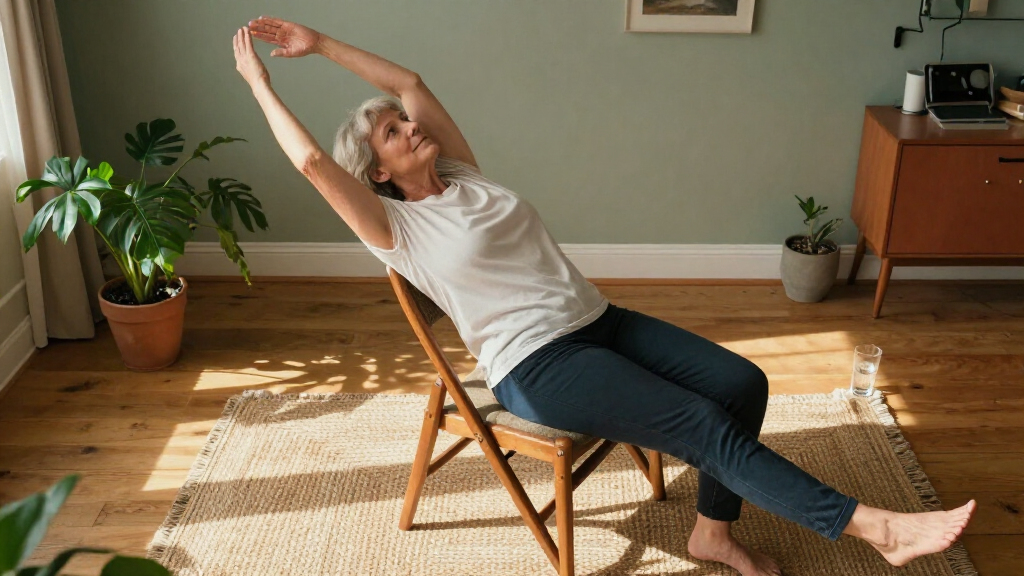
The routine continues with three to five arm arcs into prayer, bringing the arms overhead on an inhale and lowering joined palms toward the chest on an exhale. Next come seated torso twists, three on each side, followed by single-arm raises and a two-arm raise. The therapist’s instructions link breathing to the movements, but do not require a particular level of flexibility or a fixed pose.
The final movements are side bends, seated cat-cow and a forward fold. The article recommends three repetitions on each side for the side bends and three to five repetitions for cat-cow and the fold. It offers modifications: hold the chair for support during a side bend, or keep the hands on the knees when folding forward. The therapist says participants should explore movement that is accessible to them rather than try to achieve a specific shape.
Seated Movement Without Floor Transfers
The routine offers a chair-based option for people who find floor movement difficult or uncomfortable. That may be relevant to older adults and people managing movement disorders or chronic health conditions, groups the therapist says she works with. The sequence can be done seated and uses simple movements, rather than requiring exercise equipment beyond a sturdy chair.
The article also stresses adaptation over performance. Its suggested chair-holding and hands-on-knees modifications give readers ways to reduce the reach or balance demands of certain movements. The therapist describes the practice as potentially calming and energizing, but those are her observations about her classes, not evidence of a measured health effect. The report does not establish that the exercises treat a condition or are appropriate for every individual.
Products Worth Considering

Oral-B iO Series 5 Rechargeable Electric Toothbrush with Travel Case, White

Withings BPM Connect Wi-Fi and Bluetooth Blood Pressure Monitor

Levoit Vital 100S-P Air Purifier with Washable Pre-Filter
As an affiliate, we earn on qualifying purchases.
How the Therapist Uses Chair Yoga
The therapist says she uses chair-based yoga with people who lack the mobility for floor-based movement and with those who simply feel more comfortable exercising from a chair. Her groups include older adults living with Parkinson’s, other movement disorders and chronic health conditions, so she describes the postures she chooses as gentle.
In the report, the therapist presents seated practice as a way to explore movement through stretching and joint mobility while paying attention to breathing. The published sequence has seven parts, beginning with settling and ending with a forward fold. Fit&Well’s source material does not give a study, clinical assessment or outcome data for the routine; it is an exercise recommendation based on the therapist’s stated professional practice.
“I encourage everyone to move within the range and capacity of their body—there’s no particular shape or position to achieve.”
— The yoga therapist, as quoted in Fit&Well
Limits of the Exercise Guidance
The source report does not identify the therapist by name in the supplied material, give a publication date, or provide independent clinical evidence about the routine’s effects. It also does not say whether the sequence has been tested with people across different mobility levels or health conditions. Individual suitability may vary, and the article does not provide tailored medical advice, an assessment process or guidance for people who experience pain, dizziness or other symptoms during movement.
The therapist’s descriptions of participants feeling calmer, rested or uplifted are reported experience, not a guaranteed outcome. Readers with health concerns or significant mobility limitations may need advice from a qualified clinician or movement professional before trying a new routine.
Adapting the Routine Safely
The article presents the sequence as a routine readers can try with a sturdy chair and clear space, while adjusting movement to their ability. It suggests holding the chair during side bends for extra support and keeping hands on the knees during the forward fold. Readers should not force a range of motion or continue a movement that causes discomfort.
Fit&Well’s report does not announce a follow-up study or additional guidance, so no further development is specified. Anyone unsure whether the exercises suit their needs can seek individualized advice from a health professional or a qualified yoga therapist before starting.
Key Questions
What exercises are in the chair routine?
The seven parts are a seated settling exercise, arm arcs into prayer, torso twists, arm raises, side bends, cat-cow and a forward fold. Most movements are repeated three to five times, while side bends are done three times on each side.
What equipment does the routine require?
The therapist’s instructions call for a sturdy chair and enough clear space to raise the arms. The routine is performed seated; no other exercise equipment is listed.
Can the movements be modified?
Yes. The report suggests holding the chair during a side bend for added support and placing the hands on the knees during the forward fold. The therapist also advises moving within each person’s capacity instead of trying to match a particular pose.
Does the report show that the exercises treat health conditions?
No. Fit&Well describes the therapist’s recommendations and experience with older adults and people with health conditions, but the supplied report provides no clinical trial or evidence that the routine treats a condition. Its benefits should not be read as guaranteed medical outcomes.
Who should seek advice before trying the routine?
People with health concerns, substantial mobility limitations or uncertainty about whether a movement is suitable can ask a qualified health professional or yoga therapist for individualized guidance. Stop if a movement causes pain, dizziness or other concerning symptoms.
Source: fitandwell.com