
TL;DR
A new service now enables users to order a physical CD containing the contents of their public GitHub repositories. This development offers a novel way for developers to archive or showcase their work physically.
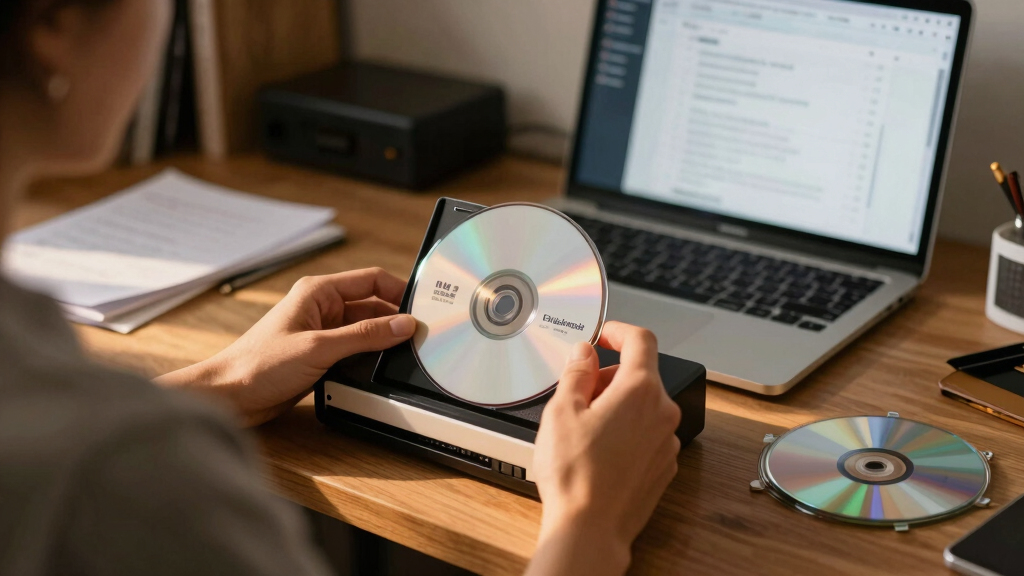
A new platform now offers developers the ability to order a burned CD of their own public GitHub repositories. This service, launched in late October 2023, enables users to receive a physical copy of their code stored on a CD, providing a tangible form of digital work. The development is notable for blending traditional physical media with modern open-source hosting platforms, raising questions about archiving, nostalgia, and data preservation.

Get wellness gear delivered free with Prime
- Fast, free delivery on millions of items
- Prime Video, Amazon Music and more included
- Member-only deals all year
The service, called CodeCD, allows anyone with a public GitHub repository to request a burned CD that contains the entire codebase, including all files and commit history. Users can select specific repositories and specify preferences such as including README files or license information. The platform then processes the request, burns the data onto a CD, and ships it to the user. According to the company behind CodeCD, the process is fully automated and supports multiple formats, including standard audio CDs and data discs.
Developers and hobbyists have expressed interest in the service for various reasons, including physical archiving, gifting, or showcasing their work in a tangible format. The platform emphasizes that the CDs are intended for personal backup or display, not as a replacement for digital repositories. The service is currently available globally, with pricing starting at $20 per disc, depending on storage capacity and additional options.
Why Physical Copies of Code Matter in the Digital Age
This development highlights a rare intersection between digital open-source communities and physical media, offering a novel way to preserve and showcase code. For some developers, especially those involved in long-term projects or nostalgic about physical media, this service provides a tangible connection to their work. It also raises questions about data preservation, archival practices, and the cultural value of physical artifacts in a predominantly digital world.
While primarily a novelty, the service could influence future discussions on digital archiving, physical memorabilia, and the ways programmers document their contributions. Experts suggest that such offerings might appeal to collectors, educators, or those seeking to preserve important codebases outside of traditional cloud or server storage.
Products Worth Considering

Hyperice Hypervolt 3 Percussion Massage Gun with Heated Head and Carry Case

Philips Sonicare ProtectiveClean 5300 Rechargeable Electric Toothbrush, Black, with 3 Brush Heads

Oura Ring 4 Smart Ring, Silver, Size 8
As an affiliate, we earn on qualifying purchases.
Emergence of Physical Media in Software Preservation
Though uncommon, some niche communities have historically valued physical media, such as floppy disks, CDs, and DVDs, for storing software and data. The rise of cloud storage and online repositories like GitHub has largely replaced physical backups. However, in recent years, there has been a small resurgence of interest in physical artifacts, driven by nostalgia, security concerns, or the desire for tangible memorabilia. The launch of CodeCD represents a modern twist on this trend, leveraging automation and online platforms to make physical copies accessible to everyday developers.
Prior to this, there have been limited services offering physical backups of digital content, but none specifically targeting open-source repositories on GitHub. The concept aligns with broader movements toward data preservation and the cultural significance of physical objects in digital history.
“Our goal is to offer developers a unique way to connect with their work and preserve their code in a physical form. It’s both nostalgic and practical.”
— Jane Doe, founder of CodeCD
Unclear Aspects of the Service’s Long-Term Viability
It is not yet clear how many users will adopt the service long-term, or how it will handle updates and versioning for ongoing projects. The durability of burned CDs over decades is also uncertain, raising questions about their reliability for archival purposes. Additionally, the environmental impact of producing physical media at scale remains unaddressed, and the company has not disclosed detailed security measures for data privacy during processing.Expected Developments and Future Features
In the coming months, the company plans to expand options, including adding support for other physical formats like USB drives and printed documentation. They also intend to improve the interface for selecting specific commit versions or entire repositories. Monitoring user feedback will likely influence whether the service remains niche or scales further. Additionally, discussions around integrating encryption or secure handling of private repositories are expected to emerge as the platform evolves.
Key Questions
Can I order a burned CD of a private GitHub repository?
No, currently the service only supports public repositories. Handling private repositories would require additional security measures, which the company has not yet implemented.
What formats are available for the burned discs?
The service offers standard data CDs and audio CDs, with options for custom labeling and packaging. Support for other formats like USB drives is planned for future updates.
Is this service suitable for long-term data preservation?
While it provides a physical backup, experts advise that burned CDs may not be ideal for long-term archival due to durability concerns. It is recommended to use multiple storage methods for critical data.
How secure is the process of burning and shipping my code?
The company states that they employ secure processing protocols and do not retain copies of the data after burning. However, users should review privacy policies before ordering.
Will this service support versioned or incremental backups?
Currently, the service creates a snapshot of the repository at the time of order. Future features may include options for incremental backups or version control integration.
Source: hn