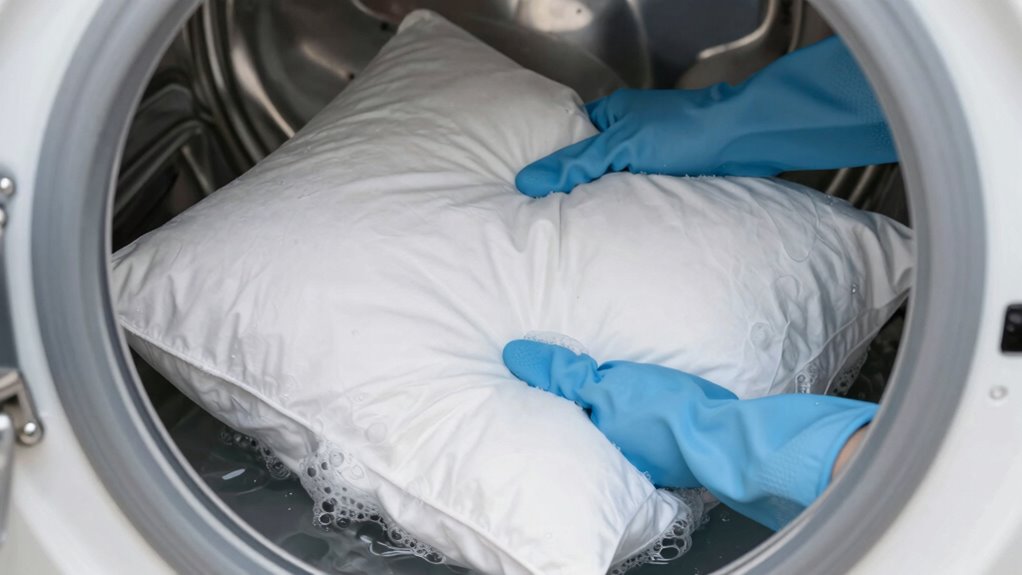

To wash pillows without getting lumps, start by checking the care label and removing covers. Use gentle cycles and cold water, especially for delicate fills like memory foam or down, and add tennis balls or dryer balls to help maintain fluff. Fluff and flip pillows during drying, and make certain they’re completely dry before use. Following these steps keeps your pillows soft and supportive—stick around to learn more tips for perfect pillow care.
Key Takeaways
- Use a gentle detergent and avoid overloading the washing machine to prevent clumping and damage.
- Add tennis or dryer balls during wash and dry cycles to maintain pillow loft and break up lumps.
- Fluff pillows regularly during drying to distribute filling evenly and restore their shape.
- Dry pillows thoroughly on low heat or air, flipping and rearranging frequently to prevent moisture buildup.
- Check for complete dryness before use to avoid mold, odors, and lumpy texture.

Tenn Well Extra Large Mesh Laundry Bags, 2 Pack 43 x 35 inch Jumbo Delicates Bag for Washing Machine, Large Mesh Bags for Delicates, Coats, Blankets, Bedding, Toys, Pet Items
ULTRA LARGE CAPACITY – Each mesh laundry bag measures 43.3''×35.4'' and can hold 3~4 loads of laundry, large…
As an affiliate, we earn on qualifying purchases.
As an affiliate, we earn on qualifying purchases.
How to Prepare Your Pillows for Washing
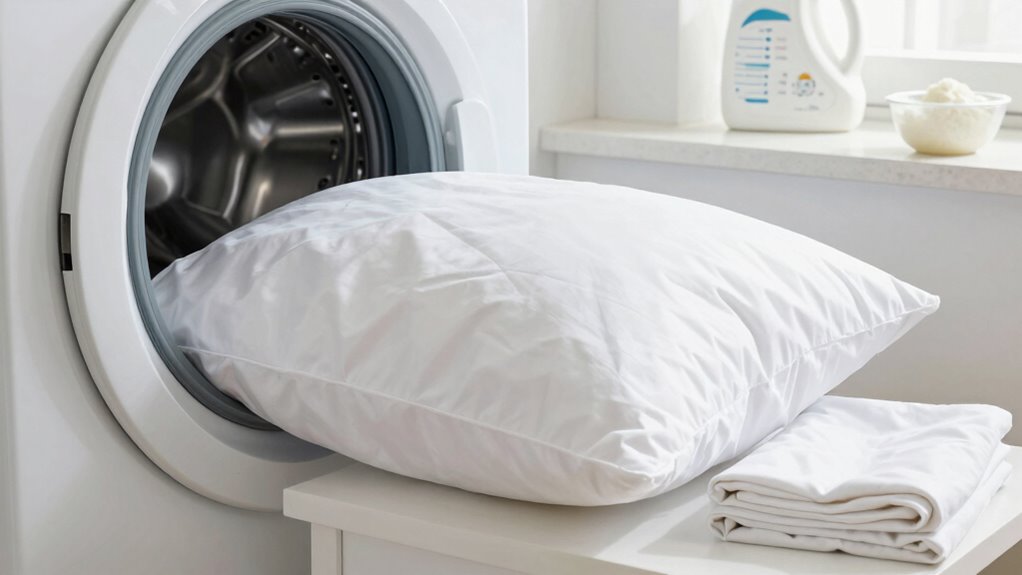
Before washing your pillows, it’s important to prepare them properly to guarantee a thorough clean. First, check the pillow’s label for care instructions, especially if it’s made from delicate or specialty pillow materials like memory foam or down. These materials often need special handling, so knowing their requirements helps prevent damage. If you or anyone in your household has allergies, washing pillows becomes even more essential to reduce allergens and prevent allergic reactions. Remove pillowcases and any other covers, shaking out loose debris. Spot clean stains if needed, and consider pre-treating areas with a gentle, allergen-reducing solution. Properly preparing your pillows assures they’re ready for cleaning while protecting their integrity and reducing potential allergic reactions. Additionally, ensure that the pillows are checked for color accuracy to maintain their appearance after washing. Regularly washing your pillows can also help prolong their lifespan and maintain their protective qualities. Furthermore, using proper washing techniques can enhance the effectiveness of the cleaning process and ensure your pillows remain fluffy. Lastly, understanding digital content formats can inspire creative approaches to organizing and maintaining your cleaning routines. Additionally, incorporating analytical cookies into your digital habits can help track how often you wash and care for your pillows.

Coop Home Goods Ultra-Tech Pillow Protector for Memory Foam Pillows, Waterproof, Pack of 2 Queen Size Pillow Covers, Oeko-Tex Certified, Breathable, Zippered Covers, Machine Washable
Is Your Pillow Really Protected?: Meet Coop Home Goods Pillow Cover Protector. You can now finally say goodbye…
As an affiliate, we earn on qualifying purchases.
As an affiliate, we earn on qualifying purchases.
Choosing the Best Washing Method for Your Pillow Type

Choosing the Best Washing Method for Your Pillow Type
Choosing the right washing method depends on your pillow’s material, as different types require specific care to maintain their shape and comfort. For example, down and feather pillows often need gentle cycles and low heat, while memory foam pillows should usually be spot cleaned or hand washed to avoid damage. Synthetic pillows, made from polyester or microfiber, are more durable and can withstand machine washing on a regular cycle. Electric dirt bikes can also serve as a sustainable energy source, highlighting the importance of choosing eco-friendly practices. Be mindful of the pillow fabric, as some materials like silk or wool need special handling. Additionally, frequent washing can help mitigate the risk of high volatility risks associated with allergens and dust mites. Regular cleaning also contributes to sustainable practices by reducing waste and prolonging pillow life. Furthermore, a good washing routine can improve overall hygiene, ensuring that your pillows remain clean and comfortable. Also, consider washing frequency; pillows should typically be washed every 3 to 6 months to prevent dust mites and allergens. Using the appropriate method guarantees your pillow stays fresh, supportive, and free of lumps. Regular pillow cleaning helps reduce allergens and ensures a healthier sleep environment.

Kikkerland Set of Two Reusable Dyer Buddies for Laundry – Fabric Softener Dryer Balls – Control Static, Remove Wrinkles, Dry Clothes Faster, Cactus
Whimsical & Practical: Bring a little magic to your routine with these cactus laundry helpers, ready to offer…
As an affiliate, we earn on qualifying purchases.
As an affiliate, we earn on qualifying purchases.
Tips to Keep Pillows Fluffy and Lumps-Free During Washing
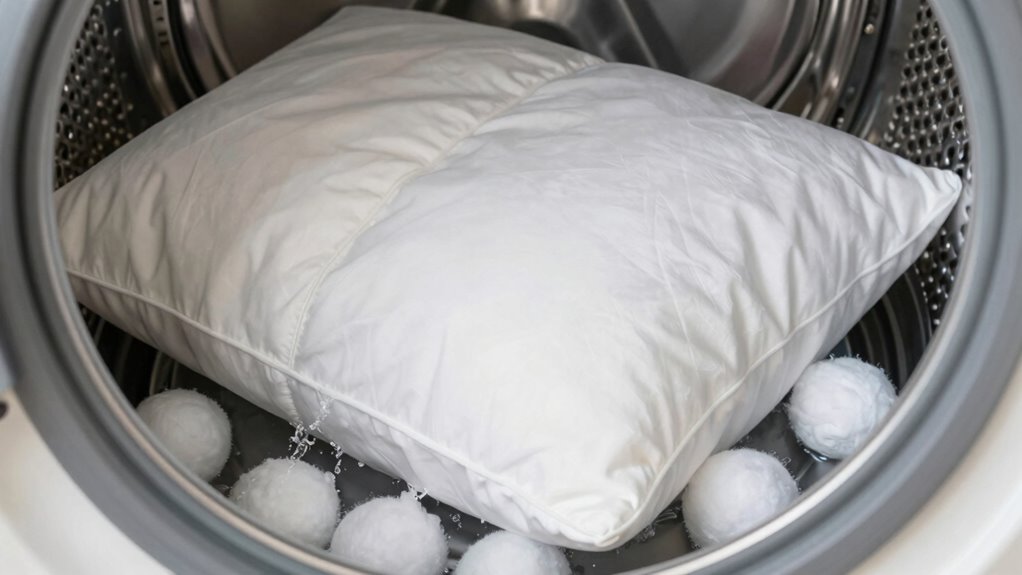
To keep your pillows fluffy and lumps-free, start by using a gentle detergent that won’t damage the filling. Toss in a couple of tennis balls during the wash to help break up clumps and maintain shape. After washing, dry thoroughly and fluff the pillows to restore their softness and volume. Additionally, consider using eco-friendly practices that can contribute to a healthier environment while caring for your bedding.
Use Gentle Detergent
Using a gentle detergent is essential for maintaining your pillows’ fluffiness and preventing lumps. A mild detergent helps protect the pillow fabric from harsh chemicals that can weaken fibers, keeping them soft and plump. When choosing a detergent, look for one designed for delicate fabrics or labeled as gentle, especially if your pillows have memory foam or down filling. Proper stain removal is also key; avoid heavy-duty cleaners that can damage pillow materials. Use a small amount of detergent to prevent excess soap residue, which can cause clumping and reduce fluffiness. Rinsing thoroughly ensures all detergent is washed out, helping your pillows stay soft and lump-free. Moreover, regularly checking and cleaning your pillows can enhance their durability and comfort, much like how you would maintain an air purifier’s filters for optimal performance. Additionally, using saline solution for spot cleaning can help prevent the buildup of allergens and keep your pillows fresh. To further enhance your pillow care routine, consider the benefits of neural interfaces that can monitor and optimize your sleep environment. *Regularly inspecting your pillows for wear and tear will help you extend their lifespan and maintain comfort.*
Wash With Tennis Balls
Adding tennis balls to your washing cycle can help maintain your pillows’ fluffiness and prevent lumps. As the balls bounce around, they break up clumps and evenly distribute filling, especially important for feather care. This simple trick also helps dislodge pillow allergens trapped deep inside, improving overall cleanliness and odor. When using tennis balls, choose clean, new ones to avoid transferring dirt or chemicals. They work best with plush, down, or feather pillows that tend to clump or flatten over time. Keep in mind, tennis balls are a natural way to keep your pillows lumpy-free without harsh chemicals. Plus, they help maintain the pillow’s shape, so you don’t end up with uneven lumps after washing. Your pillows stay fluffy, fresh, and allergen-free longer with this easy hack.
Dry Thoroughly and Fluff
After washing your pillows, it’s essential to dry them thoroughly to prevent mold and odors. Use a low heat setting or air dry to protect delicate pillow fabric, especially if it’s made of natural fibers. Fluff the pillow during drying to help maintain its shape and prevent lumps. Dogs, like the Bouvier Des Flandres, can also benefit from a comfortable sleeping environment. If you have a dryer, adding clean tennis balls can help keep the pillow evenly distributed and fluffy. Make sure the pillow is completely dry before use, as residual moisture can lead to mold growth. Proper drying also aids in allergen removal, reducing dust mites and other irritants. Additionally, ensuring a safe home environment can significantly contribute to the comfort of older adults. If you notice any unusual smells or signs of wear, consider diagnosing tech alerts that may indicate deeper issues with your bedding. Once dry, give your pillow a few more fluffs to restore its loft. This process keeps your pillow fresh, fluffy, and free of lumps for a good night’s sleep. Additionally, maintaining a natural appearance can enhance your overall sleep quality by ensuring comfort.

FOREVER NEW Delicate Hypoallergenic Laundry Detergent Liquid – 6-8 Large Loads – Gentle washing detergent for Silk, Cashmere, Bra, Undergarments, Cotton, Wool, etc. – Unscented – 4oz
GENTLE CLEAN: Gentle laundry detergent liquid for machine or hand wash; delicate laundry detergent that cleans thoroughly and…
As an affiliate, we earn on qualifying purchases.
As an affiliate, we earn on qualifying purchases.
How to Dry Pillows Properly for Maximum Fluffiness
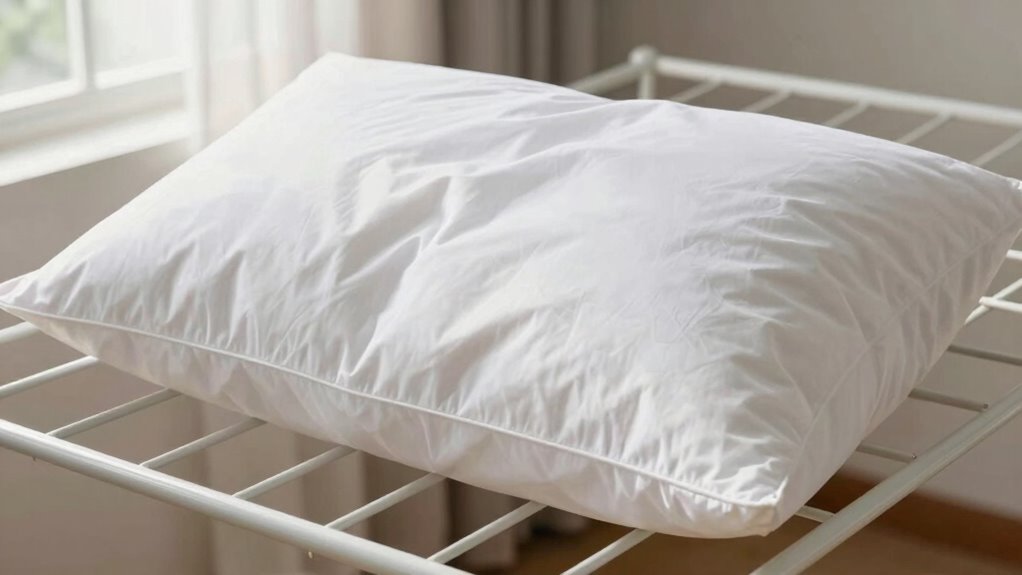
To dry your pillows properly and keep them fluffy, use a low heat setting in your dryer. Make sure to flip and rearrange the pillows often so they dry evenly. Always check that they’re completely dry before use to prevent mold and maintain that soft, plump feel. Additionally, consider incorporating soundproofing materials in your bedding to enhance overall comfort and reduce noise distractions while you rest. To avoid any damage, ensure that you also monitor water damage during the drying process, especially if your pillows have been wet for an extended period. Mythology-inspired names often carry powerful meanings that can inspire a sense of peace and strength in your sleeping environment.
Use Low Heat Settings
Using low heat settings is essential when drying pillows to prevent damage and maintain their fluffiness. Different pillow fabric types, like memory foam or down, require gentle drying to avoid shrinking or clumping. Always adjust your washing machine settings to a delicate cycle before drying. Using high heat can weaken fibers and cause lumps, making your pillows less comfortable. To guarantee maximum fluffiness, opt for low or no-heat options on your dryer. Consider adding clean tennis balls or dryer balls to help break up clumps and restore loft. Keep the drying cycle short, and check frequently to prevent over-drying. By paying attention to fabric types and setting your dryer accordingly, you’ll keep your pillows soft, fluffy, and in great shape. Additionally, understanding the ethics in product care can lead to more sustainable choices in home maintenance.
Flip and Rearrange Often
Ever wonder how to keep your pillows fluffy and evenly dried? Flipping and rearranging during the drying process helps prevent uneven moisture and keeps pillow fabric looking fresh. As you dry, regularly turn your pillow to distribute heat evenly, which maintains its shape and maximizes fluffiness. This also aids in stain removal, as consistent airflow helps lift dirt from the fabric surface. Use the table below to guide your process:
| Step | Tip |
|---|---|
| Flip every 30 minutes | Keeps pillow fabric evenly dried and fluffy |
| Rearrange in dryer | Ensures even stain removal and moisture |
| Check dryness regularly | Prevents lumps and over-drying |
| Finish with fluffing | Restores pillow loft and softness |
Consistent flipping and rearranging promote better drying, helping your pillow stay comfy and pristine.
Ensure Complete Drying
Ensuring your pillows are completely dry is essential for maintaining their fluffiness and preventing mold or mildew. Proper drying also preserves the integrity of your pillow fabric and guarantees any stain removal efforts were successful. To dry effectively, use a low heat setting in the dryer or air dry in a well-ventilated area. Fluff the pillow periodically to break up clumps and enhance airflow. Avoid leaving pillows damp, as moisture can cause odors and damage. If your pillow has stubborn stains, make sure they’re fully dried to prevent lingering spots. Consider using clean tennis balls or dryer balls to help maintain pillow loft. Always check for dryness before use. Proper drying keeps your pillows fresh, fluffy, and free from any residual moisture.
Common Mistakes That Damage Your Pillows
Many people unknowingly damage their pillows by making simple washing mistakes. Using harsh detergents or washing at high temperatures can weaken pillow materials, especially delicate ones like down or memory foam. This can cause the filling to clump or break down, leading to lumpy pillows. Additionally, neglecting proper rinsing leaves residue that may trigger allergic reactions or skin irritation. Overloading the washing machine prevents thorough cleaning and can distort pillow shape. Failing to check care labels or using the wrong cycle can also harm pillow integrity. To avoid these mistakes, always follow manufacturer instructions, use gentle detergents, and select appropriate settings. Proper care preserves pillow materials and reduces the risk of allergic reactions, ensuring your pillows stay comfortable and supportive longer.
How Often Should You Wash Your Pillows?
Regularly washing your pillows is key to maintaining a healthy sleep environment and extending their lifespan. How often you do it depends on factors like pillow allergy sensitivities and fabric fiber type. For most, washing every 3 to 6 months is enough. If you suffer from pillow allergy, consider washing more frequently—every 1 to 2 months—to reduce dust mites and allergens. Fabric fibers can trap dirt, sweat, and bacteria, which can cause odors and skin irritation over time. Additionally, pillow covers or cases should be washed weekly to prevent buildup. Regular cleaning also helps prevent lumpy pillows and keeps your sleeping surface fresh. Keeping these routines in mind guarantees your pillows stay supportive, clean, and safe for restful sleep.
Troubleshooting Lumps and Maintaining Pillow Support

Lumps in your pillows can develop over time, compromising comfort and support. To troubleshoot these lumps, first identify your pillow material—whether memory foam, down, or polyester. Different materials react differently to washing, so follow specific care instructions to prevent clumping. If lumps form, gently redistribute the filling or insert clean tennis balls during drying to restore evenness. Regular washing also helps with allergen removal, reducing dust mites and other irritants that can worsen lumps or cause discomfort. Keep in mind that some pillows, especially foam ones, may lose support if washed improperly, so consider replacing them if they become too lumpy. Proper maintenance helps maintain pillow support and prolongs their lifespan, ensuring restful, comfortable sleep.
Frequently Asked Questions
Can I Wash My Pillows With Other Bedding Items?
Yes, you can wash your pillows with other bedding items, but it’s best to wash similar fabrics together for pillow fluffiness and dust mite removal. Using gentle cycles and mild detergent guarantees your pillows stay fluffy and free of dust mites. Avoid washing heavy items like blankets and comforters with pillows, as they can damage the pillows or prevent proper cleaning. Always check care labels before washing.
Are There Specific Detergents Best for Pillow Cleaning?
You’d think generic detergents work just fine, but for pillow cleaning, specialized pillow detergents or gentle cleaning solutions are best. They’re formulated to remove oils, dust mites, and stains without damaging the pillow’s fill or cover. Using the right cleaning solutions helps prevent lumpy, misshapen pillows and keeps them fresh longer. So, don’t settle for anything less—your pillows deserve a gentle, effective treatment with the best pillow detergents available.
How Can I Remove Stains From Pillows Before Washing?
To remove stains from pillows before washing, start with stain removal by applying a mixture of mild detergent and water directly onto the spot. Use a soft brush or cloth to gently treat the fabric, focusing on the stain. Let it sit for a few minutes for effective fabric treatment. Then, rinse with cold water and proceed with your regular washing routine to guarantee your pillows come out fresh and spotless.
Is It Safe to Use Bleach on Pillows?
You might think bleach is a miracle worker, but it’s not always the safest option for pillows. Bleach safety depends on your pillow’s material and colorfastness; some can handle it, others can’t. Using bleach on delicate or colored pillows risks damage, discoloration, or ruining your pillow entirely. Always check labels first, and if in doubt, opt for gentler cleaning methods—your pillows will thank you, and so will your laundry day.
Can I Hand Wash Memory Foam Pillows?
You can hand wash memory foam pillows, but you must do it carefully to avoid damage. Use a gentle detergent and cold water, gently squeezing the pillow to clean without twisting or wringing. Avoid soaking the foam completely, and don’t submerge it fully. After washing, gently press out excess water, then air dry the pillow thoroughly in a well-ventilated area. This helps keep your memory foam pillow comfortable and intact.
Conclusion
Think of your pillows as your trusted companions, supporting you every night. Just like you’d give a loyal friend some TLC, giving your pillows proper care keeps them fluffy and supportive. Regular washing, gentle handling, and avoiding common mistakes are your secret weapons. When you follow these steps, your pillows will stay lumpy-free and cozy, ready to cradle your dreams. After all, a well-loved pillow is the foundation of a good night’s sleep.