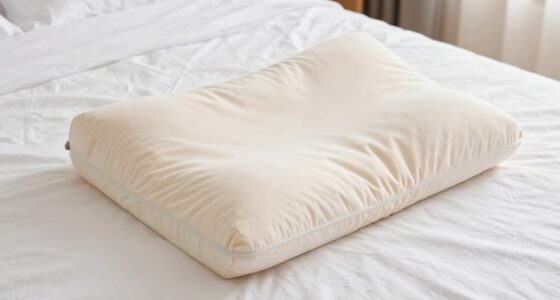
Your pillows typically last between 1 to 5 years, depending on the material and how well you care for them. Memory foam and latex pillows usually stay supportive for 3-5 years with proper maintenance, while down and synthetic pillows often need replacement every 1-2 years. Look for signs like lumps, odors, or loss of support to know when it’s time to replace. To discover how to extend their lifespan, keep exploring the tips below.

Get wellness gear delivered free with Prime
- Fast, free delivery on millions of items
- Prime Video, Amazon Music and more included
- Member-only deals all year
Key Takeaways
- Pillow materials like memory foam and latex typically last 3-5 years, while down and synthetic pillows need replacing every 1-2 years.
- Signs such as lumps, flattened areas, persistent odors, or loss of support indicate it’s time to replace your pillow.
- Regularly inspecting your pillow and maintaining good sleep hygiene can extend its lifespan.
- Proper care, including weekly washing of pillowcases, helps prevent allergen buildup and prolongs pillow usability.
- Replacing pillows within recommended timeframes ensures better sleep quality and reduces allergen-related health risks.

Ever wondered how long your pillow should last before it’s time to replace it? The answer depends largely on the pillow materials and how well you maintain your sleep hygiene. Pillow materials, such as memory foam, latex, down, or synthetic fills, each have different lifespans. Memory foam and latex tend to hold their shape longer and resist dust mites better, often lasting three to five years with proper care. Down and synthetic pillows, however, usually need replacing sooner, around one to two years, because their fills tend to break down faster and accumulate allergens. Knowing these differences helps you anticipate when your pillow might be losing its supportive qualities and start affecting your sleep quality. Additionally, considering the role of sleep hygiene can significantly impact how long your pillow remains in good condition. Sleep hygiene plays a significant role in extending your pillow’s lifespan. Good sleep hygiene includes not only maintaining a consistent sleep schedule and a comfortable sleep environment but also regularly replacing or cleaning your pillow. When you don’t replace your pillow on time, it can become a breeding ground for dust mites, bacteria, and mold, which can impair your sleep and even contribute to allergies or respiratory issues. To support your sleep hygiene, it’s recommended to wash pillowcases weekly and replace pillows every one to three years, depending on the pillow type and wear and tear. Regularly inspecting your pillow for signs of deterioration, such as lumpy textures, flattened areas, or persistent odors, can help you decide whether it’s time for a new one.
Products Worth Considering

Hyperice Hypervolt Go 3 Percussion Massage Gun with Carry Case

Bowflex SelectTech 840 Adjustable Kettlebell

Garmin Forerunner 165 GPS Running Smartwatch, 43 mm, Whitestone
As an affiliate, we earn on qualifying purchases.
Frequently Asked Questions
How Do Different Pillow Materials Affect Longevity?
Different pillow materials impact longevity based on their durability and fabric breathability. For example, memory foam offers excellent durability and retains shape longer, but may trap heat, reducing breathability. Down pillows are softer and breathable but tend to wear out faster. Synthetic fabrics often have lower durability but can be more breathable. Choosing a pillow with the right balance of durability and breathability depends on your comfort and care habits.
Can Pillow Protectors Extend Pillow Lifespan?
Yes, pillow protectors can extend your pillow’s durability. They act as a barrier against sweat, oils, dust mites, and stains, which can cause wear over time. Protector benefits include keeping your pillow cleaner and preventing material breakdown, ultimately helping your pillow last longer. Regularly using a protector is a simple way to maintain your pillow’s quality and prolong its lifespan, saving you money and ensuring better sleep.
What Are Signs of Mold or Bacteria in Pillows?
You should watch for signs of mold growth or bacteria buildup in your pillows. If you notice a musty odor, discoloration, or visible spots, it’s likely mold or bacteria. Additionally, if your pillow causes allergies, sneezing, or skin irritation, bacteria may be present. Regularly inspecting and washing your pillow helps prevent these issues. When mold or bacteria are present, it’s time to replace your pillow for health and comfort reasons.
How Does Climate Influence Pillow Deterioration?
Imagine your pillow’s journey through changing seasons. Climate impact and moisture effects play a big role in its aging. Humid environments accelerate deterioration, promoting mold and bacteria growth, while dry climates help preserve its freshness. High temperatures can cause materials to break down faster. You should monitor your pillow closely, especially if you live in a damp or hot area, and replace it when signs of wear or mold appear, ensuring a healthy sleep environment.
Are There Eco-Friendly Options for Replacing Pillows?
Yes, you can choose eco-friendly pillows made from organic fibers like cotton, bamboo, or hemp, which are biodegradable and safer for the environment. Look for options from brands focusing on sustainable manufacturing practices, ensuring minimal ecological impact. These pillows often use natural, non-toxic dyes and materials, helping you reduce your carbon footprint while enjoying comfortable, healthy sleep. Switching to such options supports a greener planet and promotes better indoor air quality.
Conclusion
Remember, your pillow isn’t just a soft cloud—it’s a sanctuary for your head and neck. Over time, it gathers dust, sweat, and allergens, losing its support and comfort. Think of it like a trusty car: if you ignore the signs, it might break down when you need it most. So, replace your pillow every 1-2 years to keep your sleep fresh, restful, and cozy. Your body will thank you for choosing comfort and health.