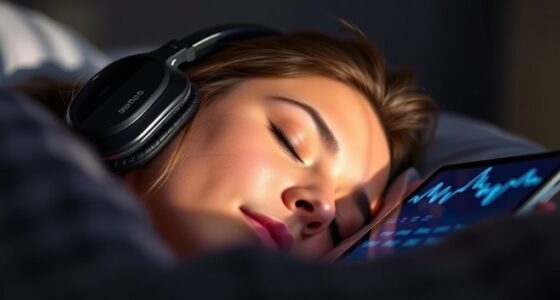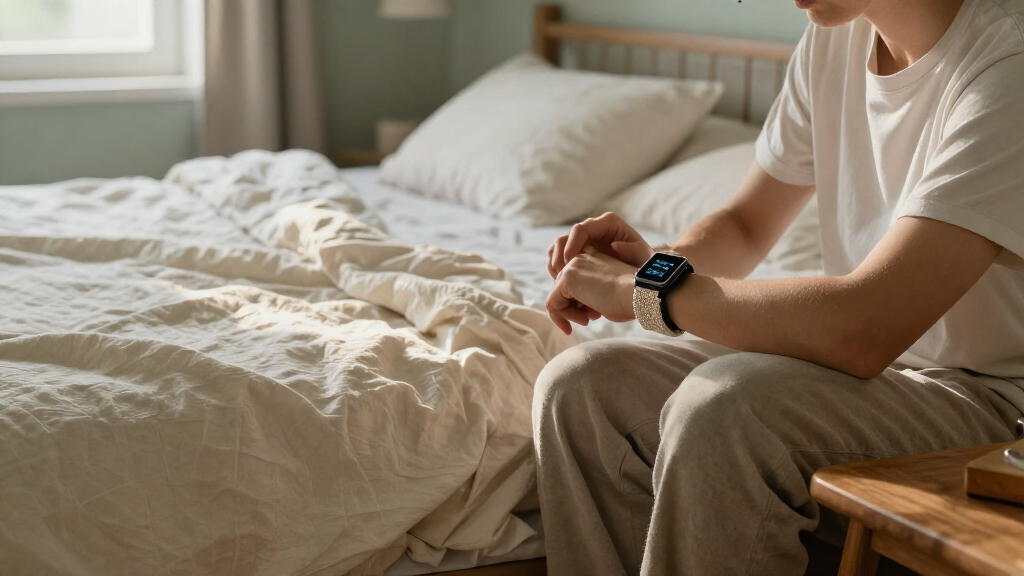

Smart sleep tracking devices usually mean one of two things: a ring designed to stay unobtrusive overnight, or a smartwatch that tracks sleep alongside activity and phone notifications. The decision is less about which can collect the most data and more about what you will comfortably wear night after night. Rings generally have the edge in overnight comfort and battery life; watches offer a richer daytime experience and can show sleep information on your wrist. Choose a ring if sleep tracking is the main goal and you dislike sleeping with a watch. Choose a smartwatch if you want one wearable for sleep, workouts, and daily phone interactions.

Get wellness gear delivered free with Prime
- Fast, free delivery on millions of items
- Prime Video, Amazon Music and more included
- Member-only deals all year

Google Fitbit Air – Screenless Activity Tracker, Obsidian
- ✔ Battery life: Up to 7 days
- ✔ Fast charging: 5 minutes for 1 day of use
- ✔ Sensors: Heart rate, SpO2, skin temperature, accelerometer, gyroscope

Screenless Fitness Tracker Smart Band – Sleep, HRV, Heart Rate, SpO2
- ✔ Battery life: 20–30 days
- ✔ Charging time: About 2 hours
- ✔ Weight: 25 g

BIEMHA Smart Ring Health Tracker – Rose Gold
- ✔ Battery life: 2–3 days; up to 5 days with charging case
- ✔ Sensors: Heart rate, sleep, and activity tracking
- ✔ Connectivity: Bluetooth
At a Glance
| Criteria | Smart sleep tracking rings | Smartwatches with sleep tracking | Winner |
|---|---|---|---|
| Overnight comfort | Usually compact and screen-free, though fit and finger comfort vary. | Can feel bulky or distracting in bed, particularly for side sleepers or those sensitive to wrist pressure. | A |
| Sleep metrics and insights | Often emphasizes sleep duration, stages, trends, and recovery indicators through an app. | Sleep tracking is one part of a broader health dashboard; features vary by brand and model. | Depends |
| Battery life | Often several days per charge, depending on model and features. | Commonly requires more frequent charging, sometimes daily or every few days. | A |
| Daytime features | Limited compared with a smartwatch; typically no screen or wrist notifications. | Strong advantage: screen, notifications, apps, workouts, and other health features. | B |
| Charging routine | Can be charged during a daytime break, but charging needs vary by model. | Charging around sleep may interrupt overnight tracking if there is no convenient charge window. | A |
| Cost and ongoing fees | Some rings cost less upfront than premium watches; certain brands charge for full app insights. | Wide range of prices; premium models can cost more, with some features or services tied to subscriptions. | Depends |
| Compatibility | Usually works with a companion phone app; features may depend on phone and subscription. | Phone compatibility and feature availability vary; some watches work best with their maker’s phone. | Depends |
Google Fitbit Air – Screenless Activity Tracker, Obsidian
The Fitbit Air is our most balanced choice for people who want sleep tracking to fit into an ordinary day as well as a night. Its screenless design avoids a bright wrist display, while the micro-adjustable performance loop is intended to make a closer, more comfortable fit possible. That matters for overnight wear: a tracker that feels intrusive can be hard to keep on consistently. Its listed sensors include heart rate, SpO2, skin temperature, and motion, giving it broader stated wellness coverage than the BIEMHA ring’s more limited sensor description.Battery life is listed at up to seven days, and a five-minute charge is said to provide a day of use. That gives it an edge over the ring for people who tend to forget charging, though the QwatchPro lasts considerably longer between charges. The Fitbit’s main tradeoff is its dependence on a phone for detailed data, since there is no display. It also requires a relatively recent phone operating system, and GPS is provided through the smartphone. For buyers who prioritize sleep comfort and a fuller sensor list, those limitations may be acceptable; anyone wanting to review metrics directly on their wrist should look elsewhere.
Pros:
- Micro-adjustable band is designed for a comfortable all-day and overnight fit.
- Heart rate, SpO2, skin temperature, and motion sensors provide broad stated wellness coverage.
- Up to seven days of listed battery life, with a quick top-up option.
- Screenless construction avoids wrist notifications and display light.
Cons:
- Detailed results require a connected smartphone and app.
- GPS depends on the phone rather than being built into the tracker.
- Compatibility starts at Android 11 or iOS 16.4, excluding older devices.
Best for: People who want one screenless wearable for overnight tracking and everyday wellness monitoring, and use a compatible Android or iPhone.
Not ideal for: Shoppers who need on-device data, built-in GPS, or compatibility with older phones.
Bottom line: We recommend the Fitbit Air as the most balanced sleep-tracking choice here if comfort and sensor breadth matter more than on-device viewing or long intervals between charges.
“We recommend the Fitbit Air as the most balanced sleep-tracking choice here if comfort and sensor breadth matter more than on-device viewing or long intervals between charges.”
Screenless Fitness Tracker Smart Band – Sleep, HRV, Heart Rate, SpO2
QwatchPro makes the strongest case for buyers who want to wear a tracker for days without building charging into their routine. Its stated 20–30 day battery life is far longer than the Fitbit Air’s week and the BIEMHA ring’s two to three days without its case. At 25 grams, it is also described as lightweight, and its nylon and silicone construction and IP68 rating point to a band intended for continuous daily wear. For people who already know they prefer a wrist band, that mix can make overnight tracking easier to maintain.The tradeoff is that breadth of features does not necessarily mean more confidence in sleep data. The band lists heart rate, HRV, SpO2, stress, and sleep monitoring, but the supplied details explicitly say its health readings are for reference, not certified medical measurements. Like the Fitbit and ring, it has no display, so we must check the phone app for results; outdoor GPS also depends on the phone. Its 170-plus sport modes may appeal to people who track workouts alongside sleep, but they matter less to a buyer focused chiefly on nights. Compared with the Fitbit, QwatchPro prioritizes fewer charging interruptions over the Fitbit’s more detailed stated sensor set and named phone compatibility thresholds.
Pros:
- Stated battery life of 20–30 days reduces charging frequency.
- Lightweight 25 g construction is suited to continuous wear.
- Tracks sleep alongside HRV, heart rate, SpO2, stress, and activity.
- IP68 water resistance and a large set of sport modes support varied routines.
Cons:
- The listed health readings are for reference and are not certified medical measurements.
- No screen means app checks are needed for results and live metrics.
- GPS requires a paired smartphone.
Best for: People who want a lightweight screenless band, track workouts as well as sleep, and value infrequent charging.
Not ideal for: Buyers who want independently established medical-grade readings, built-in GPS, or at-a-glance metrics on the device.
Bottom line: QwatchPro is the battery-life choice for buyers comfortable using app-based, reference-only wellness data and who value a band over a ring.
“QwatchPro is the battery-life choice for buyers comfortable using app-based, reference-only wellness data and who value a band over a ring.”
BIEMHA Smart Ring Health Tracker – Rose Gold
The BIEMHA ring is the most distinct form factor in this group. It shifts sleep and activity tracking from the wrist to a rose-gold smart ring, which may suit people who dislike wearing a band overnight or want a lower-profile accessory. Its description lists heart rate, sleep, and activity sensors, and the device works with iOS and Android. A further differentiator is that no app subscription is required for full functionality, unlike products whose ongoing app terms may be a deciding factor. The supplied details do not specify the full range of sleep metrics or establish the accuracy of its readings, so we should not assume that the ring provides more detailed sleep analysis than either band.Convenience depends heavily on choosing the correct size. A ring that fits poorly can be uncomfortable and may affect sensor contact, so sizing deserves more care than buying an adjustable band. Battery life is listed at two to three days without the charging case and up to five days with it, which means more regular charging than either wrist option. There is no GPS, making it a weaker fit for outdoor route tracking than a phone-connected band. Compared with Fitbit Air, BIEMHA trades the wrist band’s broader stated sensor coverage for a compact ring and subscription-free app access; compared with QwatchPro, it gives up long battery life for a different wearing experience.
Pros:
- Ring form factor offers an alternative to wearing a wrist band overnight.
- No app subscription is required for full app functionality.
- Works with both iOS and Android.
- Water resistance is listed as IP68, with suitability for swimming and workouts described.
Cons:
- Two to three days of battery life without the charging case means frequent charging.
- No GPS for outdoor route tracking.
- Incorrect ring sizing can reduce comfort and may affect sensor fit.
Best for: People who prefer a ring to a wrist band and want sleep and activity tracking without an app subscription.
Not ideal for: Shoppers who dislike precise sizing, want long standalone battery life, or need GPS for outdoor workouts.
Bottom line: Choose the BIEMHA ring when a compact, subscription-free wearable matters more than long battery life or GPS.
“Choose the BIEMHA ring when a compact, subscription-free wearable matters more than long battery life or GPS.”
As an Amazon Associate we earn from qualifying purchases.
Key Differences
The most meaningful difference is how each device fits into a full day. A ring keeps the wrist free and often stays out of the way at night, which can make consistent wear easier for people who find watches uncomfortable in bed. A smartwatch has more hardware competing for space on the wrist, but that same hardware makes it useful when you are awake: it can display alerts, guide workouts, and provide a quick view of health data. Comfort is personal, so a ring is not automatically better for every sleeper; some people find finger wear distracting or cannot get a suitable fit.
Neither category should be treated as a medical sleep study. Consumer devices estimate sleep and related signals, and exact metrics, coaching, and subscription requirements vary by model. A watch may offer more features overall, but that does not automatically make its sleep estimates more useful. The better choice is the one you will wear consistently and whose app presents information in a way you can act on. Before buying, check the specific model’s sleep features, phone compatibility, battery expectations, and whether detailed insights require a recurring fee.
Detailed Comparison
Overnight comfort (Smart sleep tracking rings wins — moderate)
A ring is usually smaller and has no screen lighting up on the wrist, so it is the stronger fit for people who notice a watch while sleeping. The advantage is moderate rather than universal: rings can feel tight, interfere with preferred finger jewelry, or be unsuitable for some activities. A smartwatch wins only for people who already sleep comfortably with one or prefer wrist wear to a ring.
Sleep metrics and insights (moderate difference)
Both categories can estimate sleep duration and stages, with details and coaching varying by device and app. Rings often center their experience on sleep and recovery trends, while watches place sleep beside broader health and activity data. There is no clear category-wide accuracy winner, so this is a model-level comparison; look for metrics and explanations you will actually use.
Battery life (Smart sleep tracking rings wins — moderate)
Rings commonly last several days between charges, while watches with bright displays and active features tend to need charging more often. This gives rings a moderate practical advantage for uninterrupted overnight tracking. Exact results depend on settings and device age, so compare the maker’s claims with the features you plan to keep enabled.
Daytime features (Smartwatches with sleep tracking wins — major)
Smartwatches clearly win if you want notifications, a visible screen, apps, workout tools, or quick access to other health information. That gap is major for anyone choosing one wearable to use throughout the day. A ring is a better match when those functions already live on your phone or another device and would add little value.
Charging routine (Smart sleep tracking rings wins — moderate)
Longer ring battery life can make it easier to avoid charging during sleep hours. A watch may need a deliberate charging window, which can leave a gap in overnight records if you cannot charge it during the day. The difference is moderate and depends on battery life, charging speed, and your routine; check real-world expectations for the specific model.
Cost and ongoing fees (moderate difference)
There is no category-wide price winner. Basic and premium models exist in both groups, and some ring makers charge a recurring fee for detailed app insights. A watch may cost more upfront when it includes high-end phone and fitness features, but those extras can make the purchase better value if you will use them daily. Compare the full cost over the period you expect to own it.
Compatibility (minor difference)
Both devices rely on phone apps, and compatibility varies by brand, phone operating system, and feature. Some watches are most useful when paired with a matching phone, while rings can also restrict features across platforms. Neither form factor wins reliably; verify that the exact model supports your phone before paying.
Smart sleep tracking rings: Pros and Cons
Pros:
- Compact, screen-free design can be more comfortable overnight.
- Often goes longer between charges than a smartwatch.
- Sleep and recovery trends are central to many ring companion apps.
Cons:
- Provides fewer daytime tools and no watch-style screen or wrist notifications.
- Finger fit and comfort are personal; sizing needs care.
- Some brands reserve detailed insights for a paid subscription.
Smartwatches with sleep tracking: Pros and Cons
Pros:
- Combines sleep records with notifications, workouts, and other daytime features.
- Displays health information on the wrist without opening a phone app.
- Offers choices across price levels and feature sets.
Cons:
- Can feel bulky or distracting during sleep.
- More frequent charging can interrupt overnight records.
- The richer feature set may add cost without improving sleep insights that matter to you.
Who Should Choose What
Choose Smart sleep tracking rings if:
- You mainly want sleep and recovery trends and prefer a small, screen-free device.
- You find wrist wear uncomfortable in bed and want longer intervals between charges.
- You already use your phone or another wearable for daytime notifications and workouts.
Choose Smartwatches with sleep tracking if:
- You want one device for sleep tracking, workouts, alerts, and other daily functions.
- You are comfortable wearing a watch overnight and can fit charging into your routine.
- You will use its screen and daytime features enough to justify the added cost.
Skip both if: You need clinical diagnosis or treatment for a sleep disorder; consumer rings and watches do not replace assessment by a qualified clinician or a sleep study.
Value for Money
Pay more for a smartwatch when its daytime features will replace tools or devices you already use; in that case, the extra cost buys broader utility, not necessarily better sleep data. Pay more for a ring only when its fit, battery life, app insights, and comfort solve a real problem for you, and include any subscription fees in the total. For sleep tracking alone, a lower-cost device with the metrics you need is usually the better value. Compare total ownership cost and phone compatibility before deciding.
Final Verdict
For people buying mainly to track sleep, a smart ring is the better starting point: it is usually less obtrusive overnight and needs charging less often. Choose a smartwatch if you also want a capable daytime wearable and know you will use its screen, alerts, and activity tools. The biggest deciding factor is consistent wear: a device with more features cannot help if it comes off every night. If neither form factor feels comfortable, skip both and look at other tracking approaches; seek clinical care for persistent sleep concerns.
Frequently Asked Questions
Are sleep tracking rings more accurate than smartwatches?
There is no dependable category-wide winner. Both estimate sleep using device sensors and software, and performance varies by model and metric. Compare independent evaluations of the specific devices and treat results as trends rather than a diagnosis.
Can I wear both a ring and a smartwatch to sleep?
You can, but wearing both may be redundant and can add cost and charging work. Unless you have a specific reason to compare their records, choose the device you find more comfortable and whose app is easier to use.
Is a smartwatch worth paying more for if I only care about sleep?
Usually not. Its extra cost makes more sense when you will also use features such as workouts, notifications, and apps. For sleep as the main priority, compare rings and watches on comfort, battery life, useful sleep features, and any subscription charges.
Do these devices diagnose sleep apnea or insomnia?
No. They may show patterns or signals that prompt questions, but consumer sleep trackers cannot replace a clinician’s evaluation or a sleep study. Discuss persistent symptoms or concerning results with a healthcare professional.