

To fall asleep faster naturally, maintain a consistent sleep schedule and wind down with calming routines like gentle stretching or deep breathing. Limit screen time at least an hour before bed, and create a cozy, dark, cool environment. Drink herbal teas like chamomile or use calming scents such as lavender. Avoid caffeine and heavy meals close to bedtime, and manage stress effectively. Keep exploring for more tips to improve your sleep quality.
Key Takeaways
- Establish a calming bedtime routine with gentle activities like deep breathing, stretching, or visualization to signal your body it’s time to sleep.
- Minimize screen time at least one hour before bed using blue light filters or by engaging in relaxing non-digital activities.
- Use natural sleep aids such as herbal teas (chamomile, valerian root) and calming aromatherapy like lavender to promote relaxation.
- Keep your bedroom cool, dark, and quiet with blackout curtains, sleep masks, and noise minimization tools to support melatonin production.
- Practice mindfulness techniques like progressive muscle relaxation and steady breathing to soothe your nervous system and facilitate faster sleep.

AI Smart Sleep Mask Aid Machine, Sleep Eye Mask with Sleep Monitoring, APP Control, White Noise & Meditation Music, 3D Breathable Light Blocking Eye Cover for Travel, Home, Office Naps (Black)
- AI Sleep Assistance: Adaptive system with personalized routines
- Multi-Function Relaxation: Binaural beats, infrared heating, vibration massage
- Adjustable Heat Compress: 8 temperature levels from 100°F to 113°F
As an affiliate, we earn on qualifying purchases.
Establish a Consistent Sleep Schedule

Having a consistent sleep schedule helps regulate your body’s internal clock, making it easier to fall asleep and wake up feeling refreshed. To stay on track, consider sleep tracking to monitor your sleep patterns and identify your ideal bedtime. This data helps you set a regular sleep routine, even on weekends. You might also try dream journaling, which encourages you to record your dreams each morning. This practice can increase your awareness of sleep quality and help you recognize patterns that affect your rest. Consistency is key; going to bed and waking up at the same time trains your body to anticipate sleep, improving overall sleep quality. Incorporating sleep hygiene practices, such as creating a relaxing bedtime environment and avoiding screens before bed, can further enhance your ability to fall asleep naturally. By staying committed and using tools like sleep tracking and dream journaling, you’ll find it easier to fall asleep naturally.

Dodow Sleep Aid Device — Fall Asleep Faster with Guided Breathing Light and Nightly Practice | Guides Included in Package | 8 & 20 Min Modes
- Guided Breathing Light: Projects calming blue halo for sleep
- Simple Operation: Tap for 8 or 20-minute sessions
- Sleep Improvement: Helps users fall asleep faster with practice
As an affiliate, we earn on qualifying purchases.
Create a Relaxing Bedtime Routine

Creating a relaxing bedtime routine can signal your body that it’s time to wind down. You should stick to a consistent schedule, include calming activities, and cut back on screen time before bed. These steps help your mind and body prepare for restful sleep. Incorporating gentle yoga poses or breathing exercises can further enhance relaxation and improve sleep quality mindfulness.
Establish a Consistent Schedule
Establishing a consistent schedule helps signal to your body when it’s time to wind down, making it easier to fall asleep faster. When you stick to a regular sleep schedule, your sleep cycle becomes more predictable, which improves overall sleep quality. Bedtime consistency trains your body to expect sleep at the same time each night, helping you fall asleep faster and wake up refreshed. Avoid irregular sleep times, even on weekends, to reinforce this pattern. Your body thrives on routine, so establishing a set bedtime ensures your internal clock stays aligned. Over time, this consistency can reduce sleep latency and improve your ability to drift off naturally. Incorporating sleep hygiene practices can further enhance your sleep quality and help establish a more reliable sleep routine. Prioritizing a regular sleep schedule enhances your chances of experiencing restorative sleep night after night.
Incorporate Calming Activities
Once you’ve set a consistent sleep schedule, winding down each night becomes more effective when you incorporate calming activities into your routine. You can try simple meditation techniques or listen to soothing music to relax your mind. These activities signal to your body that it’s time to unwind, making it easier to fall asleep. Imagine this scene:
| Calm Environment | Relaxing Activity |
|---|---|
| Dim, warm lighting | Gentle meditation or deep breathing |
| Soft, cozy bedding | Listening to calming melodies |
| Quiet, peaceful space | Reading a favorite book |
| Cool room temperature | Gentle stretching |
| Minimal noise | Aromatherapy like lavender |
These calming activities help create a peaceful atmosphere, making your bedtime routine more effective.
Minimize Screen Time
Reducing screen time before bed is essential for a relaxing nighttime routine. Excessive digital device use can interfere with melatonin production, making it harder to fall asleep. To create a peaceful environment, try a digital detox at least an hour before bed. Imagine this:
- Putting away your phone and tablet, turning off notifications.
- Replacing screen time with calming activities like reading a book or journaling.
- Dim lighting to signal your body it’s time to unwind.
- Incorporating sleep-friendly modifications such as blackout curtains or white noise machines can further enhance your sleep environment.
These small steps help your mind relax and prepare for sleep. Cutting back on screen time minimizes stimulation and promotes natural melatonin release, making it easier to drift off faster. Incorporate a digital detox into your routine, and you’ll find falling asleep becomes more effortless.

Sleep Headphones Sleep Mask with Bluetooth Headphones, LC-dolida Eye Mask for Sleeping Eye Pillow Sleeping Headphones for Side Sleepers Thin Speaker Cool Gadgets Gifts for Men&Women
- 2-in-1 Sleep Headphones and Mask: Combines Bluetooth headphones with sleep mask
- Bluetooth V5.2 with HD Stereo: Provides high-fidelity sound and long battery life
- Long-lasting Battery: 8-10 hours playback after 1-2 hours charge
As an affiliate, we earn on qualifying purchases.
Limit Screen Time Before Bed

Turning off screens an hour before bed can help your body prepare for sleep. Reducing blue light exposure signals to your brain that it’s time to wind down. Establishing screen-free time creates a calmer environment, making it easier to fall asleep naturally. Additionally, creating a consistent routine with self watering plant pots can promote relaxation and reduce stress before bedtime.
Reduce Blue Light Exposure
Since blue light from screens can interfere with your sleep hormone production, it’s important to limit your exposure before bed. Blue light reduction starts with managing your electronic devices. Imagine:
- Putting away your phone and tablet, turning off screens at least an hour before sleep.
- Using blue light filters or night mode settings on your devices to minimize exposure.
- Replacing screen time with relaxing activities like reading a paper book or listening to calming music.
- Incorporating automation in daily routines to remind yourself to switch off devices and unwind before bedtime.
These steps help your body produce melatonin naturally, making it easier to fall asleep. Effective electronic device management reduces blue light exposure and signals your brain it’s time to wind down. Incorporate these habits into your nightly routine for better sleep quality and faster bedtime.
Establish Screen-Free Time
Limiting screen time before bed helps your body recognize it’s time to wind down. Establishing screen-free evenings creates a natural shift from activity to rest, making it easier to fall asleep faster. A technology detox before bed reduces exposure to blue light and mental stimulation, calming your mind. During this time, replace screens with relaxing activities like reading or journaling. Incorporating simple crochet techniques can also serve as a soothing distraction that promotes relaxation.

Withings Sleep - Sleep Tracking Pad Under The Mattress With Sleep Cycle Analysis
- Sleep Pattern Analysis: Detects snoring and monitors sleep stages
- Innovative Under-Mattress Sensor: World's first under-mattress sleep sensor
- Improves Sleep Quality: Provides insights and advice for better sleep
As an affiliate, we earn on qualifying purchases.
Incorporate Natural Sleep Aids Like Herbal Teas

Incorporating herbal teas into your bedtime routine can be a simple yet effective way to promote relaxation and improve sleep quality. Herbal sleep aids like chamomile, valerian root, and lavender tea are popular natural relaxation techniques that calm your mind and soothe your body. Imagine settling into your evening with a warm cup that:
- Releases calming aromas that ease your worries
- Warmth that relaxes tense muscles
- The gentle ritual signaling your body it’s time to wind down
Using herbal sleep aids as part of your nightly routine can make a noticeable difference in your sleep quality without relying on medications. Incorporating home comfort strategies such as creating a cozy, clutter-free environment can further enhance your ability to fall asleep faster and enjoy deeper rest.
Optimize Your Sleep Environment

Your sleep environment plays a key role in falling asleep faster. Make sure your bedroom is quiet, dark, and cool to promote relaxation. Adjust lighting and noise levels to create a restful space that signals your body it’s time to sleep. Incorporating sustainable materials into your bedding can also enhance comfort and contribute to eco-friendly habits.
Sleep-Friendly Bedroom Setup
Creating a sleep-friendly bedroom setup is essential for falling asleep faster and enjoying restorative rest. To create a natural sleep environment, focus on these key elements:
- A comfortable, supportive mattress and pillows that suit your preferences.
- Soft, breathable bedding that keeps you cool and cozy all night.
- A tidy, clutter-free space that promotes relaxation and calmness.
- Incorporating sustainable materials in your bedding can improve comfort and align with eco-friendly practices.
These steps help you craft a sleep-friendly bedroom setup that minimizes disruptions and encourages deep, restorative sleep. Keep your room cool, dark, and quiet to enhance this natural sleep environment. When your space is optimized for comfort and tranquility, falling asleep becomes easier, and your overall sleep quality improves. This simple setup creates the ideal atmosphere for restful nights and energetic mornings.
Control Light and Noise
A well-designed sleep environment goes beyond comfort; managing light and noise levels can make a significant difference in how quickly you fall asleep. Effective light management involves dimming or blocking out bright lights and screens before bed. Noise reduction can be achieved with earplugs, white noise machines, or thick curtains. Consider the following options:
| Light Management | Noise Reduction | Tools & Tips |
|---|---|---|
| Use blackout curtains | Earplugs or white noise | Keep electronics away |
| Dim bedroom lights | Soundproof windows | Use a fan or soft music |
| Limit screen exposure | Close windows/doors | Maintain a consistent sleep schedule |
| Avoid bright screens before bed | Use rugs to absorb sound | Keep pets out of bedroom |
| Use sleep masks | Reduce household noise | Regularly check for noise sources |
Additionally, controlling ambient noise levels plays a crucial role in optimizing your sleep environment.
Practice Deep Breathing and Relaxation Techniques

Practicing deep breathing and relaxation techniques can considerably improve your ability to fall asleep faster. Start with mindful breathing: inhale slowly through your nose, feeling your lungs expand, then exhale gently through your mouth. Next, try progressive relaxation: tense each muscle group for a few seconds, then release, starting from your toes and working up to your shoulders. Visualize a calming scene as you breathe deeply, letting your mind unwind. Imagine:
- Your chest rising and falling smoothly with each breath
- Tense muscles relaxing completely as you exhale
- A peaceful landscape filling your mind as you breathe in serenity
These techniques help calm your nervous system, easing your shift into restful sleep.
Exercise Regularly, But Not Close to Bedtime

Exercising regularly can substantially improve your sleep quality, but timing matters. Engaging in morning stretching helps loosen your muscles and boosts circulation, setting a calm tone for the day. However, vigorous workouts too close to bedtime can interfere with falling asleep because they increase adrenaline and raise your core body temperature. To support restful sleep, aim to finish intense exercise at least a few hours before bed. Post workout recovery is essential, so prioritize gentle stretching or light activity earlier in the day, allowing your body to wind down naturally. Incorporating exercise routines that focus on low-impact activities can help promote relaxation and better sleep quality. By timing your exercise wisely, you’ll enhance sleep quality without disrupting your body’s natural rhythms. Consistent activity combined with proper recovery promotes better sleep and overall well-being.
Reduce Caffeine and Heavy Meals in the Evening

Consuming caffeine or heavy meals too close to bedtime can considerably disrupt your ability to fall asleep. Caffeine reduction helps calm your nervous system, while heavy meal avoidance prevents discomfort that keeps you awake. To improve your sleep, try these tips:
Avoid caffeine and heavy meals before bed to enhance sleep quality.
- Switch to herbal tea or decaffeinated drinks after dinner.
- Opt for light, easily digestible foods like salads or soups in the evening.
- Stop caffeine intake by late afternoon to allow its effects to fade.
- Creating a calming bedtime routine can also reduce anxiety and promote faster sleep relaxation techniques.
Try Aromatherapy With Calming Scents
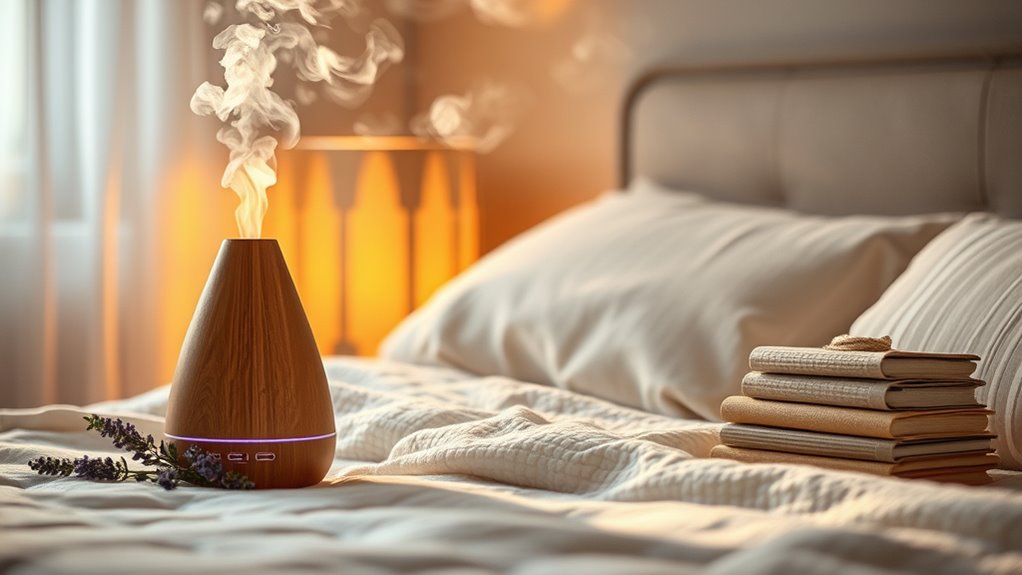
Aromatherapy with calming scents can be a simple yet effective way to signal your body that it’s time to wind down. Using essential oils like lavender, chamomile, or ylang-ylang helps create a relaxing environment. You can add a few drops of these oils to a diffuser or mix them with a carrier oil and apply them to your wrists or pillow. These calming scents work by activating your parasympathetic nervous system, promoting relaxation and reducing stress. Incorporating aromatherapy into your nightly routine can make it easier to shift into sleep. Keep your space quiet and comfortable, and breathe in deeply to maximize the calming effects. Consistent practice of creative activities can also help improve your sleep quality by reducing stress and enhancing relaxation. With consistent use, essential oils and calming scents can become a trusted tool to help you fall asleep faster.
Limit Naps and Manage Stress Levels

Since excessive or poorly timed naps can disrupt your sleep cycle, it’s important to limit their duration and frequency. Poor napping habits can make falling asleep at night harder. To help, try these stress management techniques:
- Practice deep breathing exercises to calm your mind.
- Engage in gentle stretching or meditation to release tension.
- Create a relaxing bedtime routine that signals your body it’s time to wind down.
Managing stress levels reduces racing thoughts that keep you awake. Avoid long or late naps, which can interfere with nighttime sleep. Instead, keep naps short—around 20 minutes—and schedule them early in the day. Incorporating relaxation techniques can also help aura visualization to promote a natural, restful sleep cycle and helps you fall asleep faster.
Frequently Asked Questions
Can Certain Foods Help Me Fall Asleep Faster?
Certain foods can indeed help you fall asleep faster by improving your bedtime nutrition. Sleep-inducing snacks like bananas, almonds, or warm milk provide magnesium, tryptophan, and calcium, which promote relaxation. Eating these before bed can make a difference in your ability to drift off quickly. Incorporate these into your evening routine for better sleep, and remember to avoid heavy or sugary meals that may disrupt your sleep cycle.
How Does Temperature Affect Sleep Quality?
Think of your body as a cozy campsite; the right temperature creates perfect conditions for restful sleep. When your room temperature is too hot or cold, it’s like trying to sleep in a storm or desert. Keep your room cool—around 60-67°F—and choose breathable bedding materials to help your body cool down naturally. This balance allows you to drift into sleep more easily, ensuring restful nights and refreshed mornings.
Are There Specific Herbal Teas Best for Sleep?
You might find herbal teas helpful for better sleep, as many sleep-inducing herbs offer natural benefits. Teas made from chamomile, valerian root, and lavender are especially popular for their calming effects. These herbal tea benefits include reducing anxiety and promoting relaxation, helping you fall asleep faster. Drinking a warm cup before bed can signal your body to wind down, making it easier to drift off peacefully.
What Are Quick Relaxation Techniques for Bedtime?
Picture peaceful pulses of your breath, calming your mind with simple breathing exercises. You can also try progressive relaxation, tensing and releasing muscles from head to toe to soothe your senses. These quick relaxation techniques for bedtime help you shift from tension to tranquility, quieting your thoughts and calming your body. With consistent practice, you’ll find it easier to drift into sleep swiftly and serenely, night after night.
Does Listening to Calming Sounds Improve Sleep Onset?
Listening to calming sounds like white noise or soothing melodies can definitely help you fall asleep faster. These sounds mask background noise and create a consistent, relaxing environment, making it easier for your mind to unwind. You might find that incorporating white noise or gentle melodies into your bedtime routine reduces sleep onset time and promotes a more restful night. Give it a try to see how it improves your sleep quality.
Conclusion
By weaving these natural strategies into your nightly routine, you’re planting seeds for restful nights. Think of your sleep environment as a gentle river, guiding you smoothly to the shores of dreams. With patience and consistency, you’ll nurture a peaceful flow, allowing you to drift off faster and wake refreshed. Embrace these small changes as your personal lullaby, transforming bedtime into a calming voyage toward better sleep and brighter mornings.