Finding the right sleep tracking device for students involves balancing accuracy, ease of use, and affordability. The best overall pick is the Garmin Index Sleep Monitor, which offers detailed sleep insights without being overly complicated. The Beautyrest Sleeptracker Monitor stands out as a wearable-free option with simple integration, ideal for students who prefer minimal devices. Tradeoffs often involve sacrificing some accuracy for convenience or affordability. Keep reading to see how these devices compare and which one suits your needs best.

Get wellness gear delivered free with Prime
- Fast, free delivery on millions of items
- Prime Video, Amazon Music and more included
- Member-only deals all year
Key Takeaways
- Accuracy varies significantly; dedicated sleep monitors generally outperform smartphone apps in tracking quality and patterns.
- Ease of use and comfort are critical for students who need hassle-free devices that don’t interfere with daily routines.
- Wearable-free options like under-mattress sensors can be more appealing for students wary of wearing devices overnight.
- Price points differ widely; finding a balance between features and affordability is essential for student budgets.
- Features like sleep cycle analysis and health insights vary, influencing how much value a device offers beyond basic tracking.
| Garmin Index Sleep Monitor |  | Best Overall Sleep Tracking Device for Students Needing Detailed Data | Physical size: 12.8″ x 2.5″ x 0.02″ | Battery life: Up to 7 nights | Features: Sleep tracking, breathing variations, skin temperature, women’s health insights, smart wake alarm | VIEW LATEST PRICE | See Our Full Breakdown |
| EMAY Sleep Breathing Monitor for Airflow Tracking |  | Best for Respiratory-Focused Sleep Monitoring | Sensor Type: Three sensors in a probe | Material: Food-grade silicone | Weight: 10g | VIEW LATEST PRICE | See Our Full Breakdown |
| Beautyrest Sleeptracker Monitor – Wearable-Free Sleep Tracker with Alexa Integration |  | Best Non-Wearable Sleep Monitoring Solution with Smart Home Features | Type: Sleep tracker | Connectivity: Alexa enabled | Sensor technology: High-accuracy sensors | VIEW LATEST PRICE | See Our Full Breakdown |
| OZI Smart Sleep Tracker, Contactless Under-Sheet Sleep Monitor |  | Best Contactless Monitoring for Comfort-Conscious Students | Type: Under-sheet sleep monitor | No Wearable: Yes | Real-Time Alerts: Yes | VIEW LATEST PRICE | See Our Full Breakdown |
| Withings Sleep – Under Mattress Sleep Tracking Pad with Sleep Cycle Analysis |  | Best for Sleep Cycle and Snoring Monitoring | Type: Sleep Tracking Pad | Placement: Under Mattress | Features: Sleep cycle analysis, snoring detection, heart rate | VIEW LATEST PRICE | See Our Full Breakdown |
| Garmin Index Sleep Monitor (L/XL) – Smart Sleep Band with Advanced Sleep Tracking & Women’s Health Features |  | Best for Detailed Sleep and Health Metrics in a Wearable Band | Size: L/XL | Battery Life: Up to 7 nights | Compatibility: Garmin Connect app | VIEW LATEST PRICE | See Our Full Breakdown |
| sleep tracking devices for student | Features | Type | Compatibility |
|---|---|---|---|
| Garmin Index Sleep Monitor | Sleep tracking, breathing variations, skin temperature, women’s health insights, smart wake alarm | — | — |
| EMAY Sleep Breathing Monitor f | — | — | — |
| Beautyrest Sleeptracker Monito | — | Sleep tracker | Any bed |
| OZI Smart Sleep Tracker | — | Under-sheet sleep monitor | Adults, Kids 5+ |
| Withings Sleep | Sleep cycle analysis, snoring detection, heart rate | Sleep Tracking Pad | — |
| Garmin Index Sleep Monitor | Sleep tracking, HRV, skin temperature, women’s health, Pulse Ox, smart wake alarm | — | Garmin Connect app |
More Details on Our Top Picks
Garmin Index Sleep Monitor
The Garmin Index Sleep Monitor stands out for its comprehensive sleep metrics and advanced health insights, including sleep stages, HRV, and women’s health tracking, making it ideal for students who want a detailed overview of their sleep quality. Compared to the Beautyrest Sleeptracker, it offers more granular data, but requires syncing with a Garmin smartwatch for full functionality, which could be a drawback for those without compatible devices. Its long battery life of up to 7 nights reduces the hassle of frequent charging, and seamless integration with the Garmin Connect app keeps all data consolidated. However, as a non-medical device, its data remains an estimate, and some features like Pulse Ox are region-dependent. This pick is best suited for students who prioritize detailed sleep insights and already own Garmin gear or are willing to invest in it.
Pros:- Accurate sleep stage and health metrics
- Long-lasting battery life of up to 7 nights
- Seamless data sync with Garmin Connect app
- Includes advanced insights like women’s health tracking
Cons:- Requires a Garmin smartwatch for full features
- Not a medical device, data is an estimate
- Pulse Ox feature isn’t available everywhere
Best for: Students seeking highly detailed sleep analysis and already invested in Garmin ecosystem
Not ideal for: Casual sleepers or those without Garmin devices who want simple, straightforward sleep tracking without extra hardware
- Physical size:12.8″ x 2.5″ x 0.02″
- Battery life:Up to 7 nights
- Features:Sleep tracking, breathing variations, skin temperature, women’s health insights, smart wake alarm
Our verdict“This device is best for students who want detailed sleep insights and already use Garmin products or don’t mind an investment.”
EMAY Sleep Breathing Monitor for Airflow Tracking
The EMAY Sleep Breathing Monitor excels at analyzing respiratory events and airflow, providing detailed insights into breathing patterns, which can be especially useful for students with sleep issues related to breathing. Compared with the OZI Smart Sleep Tracker, which offers contactless monitoring, EMAY’s device requires wearing a silicone probe, making it less convenient but potentially more precise in airflow measurement. It’s lightweight at just 10 grams, and its real-time app data helps users track respiratory health overnight. However, it doesn’t record SpO2 or pulse rate, limiting its scope for comprehensive sleep health. It’s not suitable for mouth breathers or those using C-P-A-P masks, narrowing its audience to specific respiratory needs. This device suits students focused on respiratory health or those with mild sleep breathing concerns.
Pros:- Provides detailed respiratory and airflow analysis
- Lightweight and comfortable for overnight wear
- Real-time data via mobile app
Cons:- Cannot be used with C-P-A-P masks or for mouth breathers
- Limited to airflow and respiratory monitoring only
- No SpO2 or pulse rate recording
Best for: Students concerned with airflow and respiratory health, especially those exploring breathing-related sleep issues
Not ideal for: Users seeking comprehensive sleep data like heart rate or SpO2, or those who wear C-P-A-P masks or mouth breathe during sleep
- Sensor Type:Three sensors in a probe
- Material:Food-grade silicone
- Weight:10g
- Monitoring Focus:Nasal breathing, airflow, respiratory events
Our verdict“This device is ideal for students focused on respiratory health but not suited for those needing comprehensive sleep metrics.”
Beautyrest Sleeptracker Monitor – Wearable-Free Sleep Tracker with Alexa Integration
The Beautyrest Sleeptracker offers a non-wearable approach, analyzing sleep through high-accuracy sensors embedded in the bed, making it a practical choice for students who dislike wearing devices. Unlike the Garmin or EMAY options, it works with any bed, and its Alexa compatibility adds convenience for smart home integration. It provides detailed data on respiration, heart rate, and sleep behaviors, plus personalized coaching, making it great for students eager for actionable insights. On the downside, its availability is limited to the USA, and it requires a compatible smart home setup, which could be a barrier. Its ease of use and focus on accuracy make it suitable for students who want sleep tracking without extra gadgets on their body.
Pros:- Non-wearable, compatible with any bed
- Highly accurate sensors for detailed analysis
- Includes sleep coaching and Alexa integration
Cons:- Limited to the US market
- Requires a smart home setup for full features
- Price and subscription details are unavailable
Best for: Students who prefer a non-wearable device and have or plan to have a smart home ecosystem in the US
Not ideal for: International students or those without smart home devices, as the device is US-only and requires Alexa setup
- Type:Sleep tracker
- Connectivity:Alexa enabled
- Sensor technology:High-accuracy sensors
- Compatibility:Any bed
- App features:Sleep data, coaching
- Availability:Only in the USA
Our verdict“This device suits students seeking a hands-free, accurate sleep tracker with smart home features in the US market.”
OZI Smart Sleep Tracker, Contactless Under-Sheet Sleep Monitor
The OZI Sleep Tracker provides a contactless, under-sheet solution that tracks sleep stages, heart rate, breathing, and movement without requiring a wearable. Its design appeals to students who dislike wearing devices or need a device suitable for children or couples. Its real-time alerts and detailed analysis through the app make it practical, but proper placement under the sheet is critical for accuracy. Compared with the Withings Sleep Pad, OZI’s contactless setup can be more convenient, but it’s limited solely to sleep monitoring, with no additional health metrics. It’s less suitable for users who prefer comprehensive health tracking or have difficulty ensuring correct placement. This option works best for students prioritizing comfort over extra data features.
Pros:- Contactless and comfortable to use
- Provides real-time sleep stage and health metrics
- No subscription fees or cameras needed
Cons:- Accuracy depends heavily on correct placement
- Limited to sleep monitoring alone
- May not suit users who prefer wearables or multi-metric devices
Best for: Students who want a comfortable, contactless sleep monitor without extra health metrics
Not ideal for: Those needing detailed health insights beyond sleep stages or who prefer wearable devices for convenience
- Type:Under-sheet sleep monitor
- No Wearable:Yes
- Real-Time Alerts:Yes
- Compatibility:Adults, Kids 5+
- Setup:Easy, no subscription
- Sensor Technology:Contactless biometric
Our verdict“This device is best for students who value comfort and simplicity in sleep tracking without extra health data needs.”
Withings Sleep – Under Mattress Sleep Tracking Pad with Sleep Cycle Analysis
The Withings Sleep under-mattress sensor offers a hands-off approach to sleep tracking, focusing on sleep cycles, snoring detection, and heart rate measurement. Its ability to identify sleep stages and snoring makes it ideal for students worried about sleep quality or partner disturbance. Compared with the Beautyrest Sleeptracker which offers a more interactive app experience, Withings emphasizes sleep cycle insights and cardiovascular health, providing a broader health perspective. Its placement under the mattress suits most beds but may not fit all types, and lack of explicit device compatibility details could be a concern. It’s best for students who want detailed sleep and health data without wearing anything during sleep.
Pros:- Accurately monitors sleep stages and snoring
- Provides detailed sleep cycle analysis
- Includes heart rate measurement for health insights
Cons:- Placement under the mattress might not fit all beds
- No clear info on device compatibility
- Lacks real-time alerts or personalized coaching
Best for: Students interested in sleep quality improvement with focus on sleep cycles and snoring detection
Not ideal for: Students needing real-time alerts or detailed heart rate data from wearable devices, or with specific bed types incompatible with the pad
- Type:Sleep Tracking Pad
- Placement:Under Mattress
- Features:Sleep cycle analysis, snoring detection, heart rate
Our verdict“This under-mattress sensor is ideal for students seeking non-intrusive sleep analysis focused on sleep cycles and snoring detection.”
Garmin Index Sleep Monitor (L/XL) – Smart Sleep Band with Advanced Sleep Tracking & Women’s Health Features
The Garmin Index Sleep Monitor stands out for its ability to provide comprehensive sleep data alongside specific women’s health metrics, making it a strong choice for students interested in understanding their sleep quality on a deeper level. Compared to the Beautyrest Sleeptracker, which offers a contactless, non-wearable approach, this band delivers more detailed data like HRV and skin temperature, but requires wearing the device consistently and depends on Pulse Ox availability in your region. Its long battery life of up to 7 nights reduces charging interruptions, a key advantage over models requiring daily charging. However, since it isn’t a medical device, all metrics remain estimative, and some features depend on an active Garmin ecosystem. Overall, this makes sense for students who want rich sleep insights and are comfortable with a wearable device that tracks multiple health parameters.
Pros:- Provides detailed sleep stages, HRV, skin temperature, and women’s health metrics
- Seamless synchronization with Garmin Connect for comprehensive health insights
- Long battery life of up to 7 nights reduces the need for frequent charging
- Lightweight, breathable design ensures comfort during sleep
Cons:- Requires Pulse Ox sensor, which may not be available in all countries
- Not a medical device; all data is estimative rather than clinically validated
- Features may be limited without a compatible Garmin smartwatch
Best for: Students who want detailed, multi-faceted sleep data and are already familiar with Garmin’s ecosystem or using Garmin smartwatches.
Not ideal for: Those seeking a non-wearable, contactless sleep tracker or students in regions where Pulse Ox sensors are unavailable, limiting the device’s functionality.
- Size:L/XL
- Battery Life:Up to 7 nights
- Compatibility:Garmin Connect app
- Features:Sleep tracking, HRV, skin temperature, women’s health, Pulse Ox, smart wake alarm
Our verdict“This device is best suited for students seeking in-depth sleep and health data in a comfortable wearable, especially if they already use Garmin products.”
How We Picked
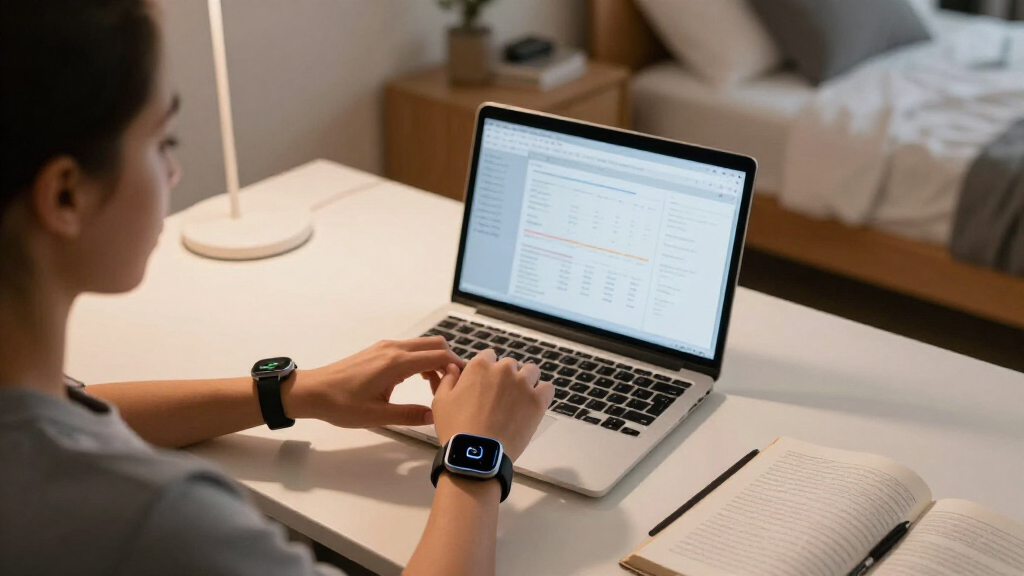
These products were evaluated based on a combination of accuracy, user-friendliness, build quality, and value. Given the busy schedules of students, simplicity and comfort were prioritized to ensure the devices would be used consistently. We also considered the integration of additional health features, battery life, and price to offer options that suit different budgets and preferences. Rankings reflect a focus on those delivering reliable insights without overwhelming complexity or cost, making them practical choices for student lifestyles.| sleep tracking devices for student | Features | Type | Compatibility |
|---|---|---|---|
| Garmin Index Sleep Monitor | Sleep tracking, breathing variations, skin temperature, women’s health insights, smart wake alarm | — | — |
| EMAY Sleep Breathing Monitor f | — | — | — |
| Beautyrest Sleeptracker Monito | — | Sleep tracker | Any bed |
| OZI Smart Sleep Tracker | — | Under-sheet sleep monitor | Adults, Kids 5+ |
| Withings Sleep | Sleep cycle analysis, snoring detection, heart rate | Sleep Tracking Pad | — |
| Garmin Index Sleep Monitor | Sleep tracking, HRV, skin temperature, women’s health, Pulse Ox, smart wake alarm | — | Garmin Connect app |
Factors to Consider When Choosing Sleep Tracking Devices For Students
When choosing a sleep tracking device for students, it’s important to consider factors that impact daily use, accuracy, and affordability. Students need a device that is unobtrusive, simple to operate, and provides meaningful insights to improve sleep habits without adding stress or expense. Below are key considerations to guide your selection, helping you avoid common pitfalls and find a device that truly supports your sleep health.Accuracy and Data Quality
For students, reliable data is essential to identify sleep issues and make meaningful improvements. Devices with advanced sensors or dedicated sleep tracking algorithms tend to offer more precise information than basic smartphone apps or accelerometers alone. However, more accurate devices often come at a higher cost, so balancing budget with the need for trustworthy insights is key.
Ease of Use and Comfort
The best sleep tracker should integrate seamlessly into your nightly routine. Wearable devices can be convenient but may cause discomfort or forgetfulness, especially during busy days. Contactless options like under-mattress sensors eliminate this issue but require proper placement. Prioritize simplicity and comfort to ensure consistent use and reliable data collection.
Budget and Value
Students often face tight budgets, making affordability a significant factor. While cheaper options may lack advanced features, investing slightly more can yield better accuracy and additional insights. Consider long-term value: a device that encourages healthier sleep habits can pay off in better focus and academic performance.
Features and Additional Insights
Look for devices that provide more than just sleep duration—features like sleep cycle analysis, breathing monitoring, or integration with health apps can offer deeper insights. However, be cautious of overcomplicated interfaces that may overwhelm or discourage regular use. Choose a device that strikes a balance between comprehensive data and user-friendliness.
Battery Life and Maintenance
Long battery life minimizes inconvenience, especially for students who may forget to recharge devices. Contactless sensors typically require less maintenance, while wearables need daily charging. Consider your daily routine and select a device that fits seamlessly without frequent interruptions for charging or adjustments.
Frequently Asked Questions
Can a sleep tracker really improve my sleep quality?
Yes, a sleep tracker can help you identify patterns and habits that affect your sleep quality. By providing data on sleep duration, interruptions, and cycles, it enables you to make informed changes, such as adjusting bedtimes or reducing screen time before bed. However, the effectiveness depends on how actively you use the insights to modify your routines.
Are contactless under-mattress sensors accurate enough for students?
Contactless sensors are generally quite reliable for tracking sleep duration and movements, making them suitable for students who prefer not to wear devices overnight. While they may not capture detailed sleep stages as precisely as some wearable monitors, they offer a good balance of convenience and accuracy for routine sleep monitoring.
Is a more expensive sleep tracker worth the investment for students?
Higher-priced devices often provide more accurate data, additional features, and better integration with health apps. If improving sleep quality is a priority, investing in a more advanced device can be worthwhile. However, budget-friendly options can still offer valuable insights, especially if you’re just starting to track and improve your sleep habits.
How important is integration with other health apps or devices?
Integration can enhance the value of a sleep tracker by providing a holistic view of your health, including activity levels, heart rate, and nutrition. For students aiming to optimize overall wellness, compatible apps can facilitate this. But if your primary goal is just sleep monitoring, standalone devices may suffice without the added complexity.
What should I do if my sleep tracker shows poor sleep quality?
Use the insights from your device to identify patterns or habits that may be disrupting your sleep, such as inconsistent bedtimes or screen exposure. Making small adjustments, like establishing a regular sleep schedule or creating a calming bedtime routine, can improve sleep quality over time. Remember, a sleep tracker is a tool, but behavioral changes are key to meaningful improvements.
Conclusion
For students seeking the best overall balance of accuracy, ease of use, and affordability, the Garmin Index Sleep Monitor makes a compelling choice. Those prioritizing a contactless experience may prefer the OZI Smart Sleep Tracker, especially if comfort is a concern. Beginners or students on a tight budget might find the Withings Sleep pad offers great value, while those looking for advanced features and health insights should consider the Garmin Index Sleep Monitor (L/XL). Ultimately, your choice depends on your comfort with technology, budget, and sleep goals — this roundup aims to help you find the best fit for your lifestyle.