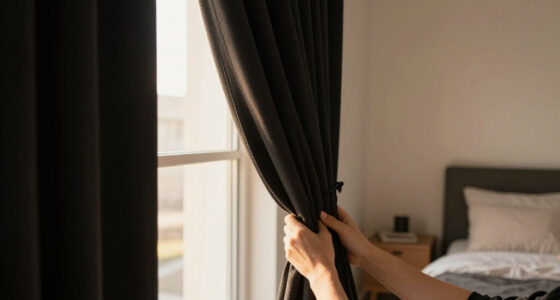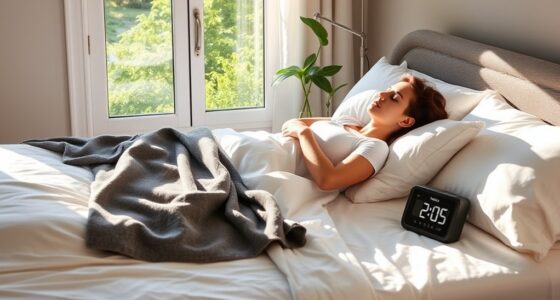
To adapt your sleep habits for seasonal changes, increase natural light exposure during the day by spending more time outdoors or near windows. In winter, use brighter indoor lighting and limit screens in the evening to support melatonin production. Keep your bedroom cool and maintain a consistent sleep environment to help your body adjust. Making these small changes can improve your sleep quality year-round—if you stay attentive, you’ll discover more tips to optimize your rest through each season.
Key Takeaways
- Increase natural light exposure during shorter days to support circadian rhythm and melatonin regulation.
- Adjust indoor temperatures to maintain a cool, comfortable environment conducive to restorative sleep.
- Limit artificial light and screen time in the evening to prevent melatonin suppression.
- Incorporate outdoor activities during daylight hours to enhance mood and sleep quality.
- Modify routines and sleep schedules gradually to align with seasonal changes for optimal rest.
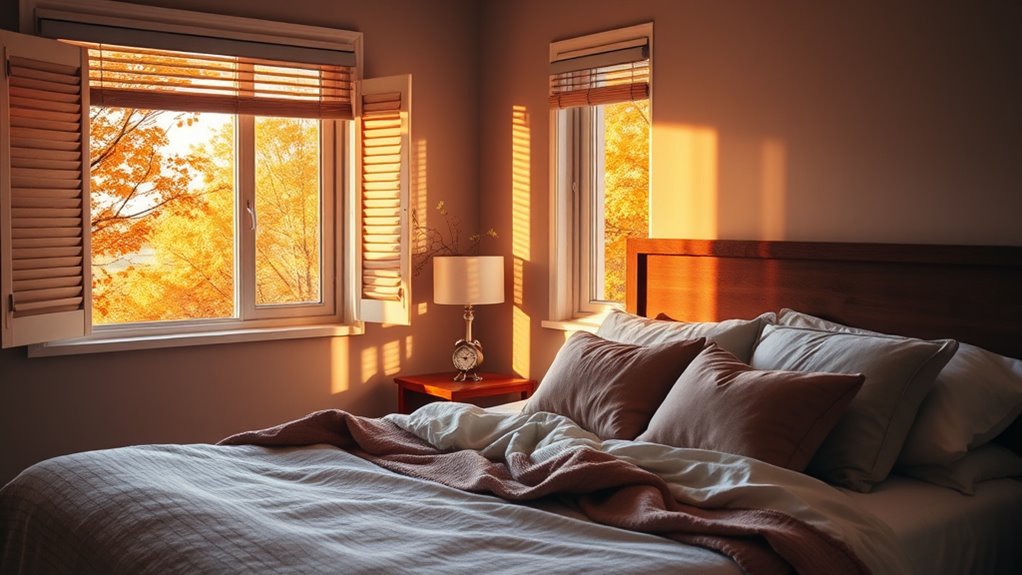
As the seasons shift from summer to fall and winter, many people notice changes in their sleep patterns. Longer nights and shorter days mean your body responds differently to light exposure, which plays a critical role in regulating your circadian rhythm. When daylight diminishes, your body produces more melatonin, the hormone that signals sleepiness. While this natural process helps you fall asleep easier, it can also lead to feeling more sluggish during the day or having trouble waking up in the morning. To adapt, you might consider increasing your exposure to natural light during the day, such as taking a walk outside or sitting near windows, to help reset your internal clock. Conversely, in the evenings, limiting artificial light exposure—especially from screens—can prevent disrupting melatonin production and improve sleep quality.
Temperature regulation also shifts with the seasons and impacts your sleep. Cooler outdoor temperatures often translate to cooler indoor environments, which can benefit sleep by helping your body reach the *ideal* temperature for rest. However, if your bedroom is too warm or too cold, it can interfere with your ability to fall asleep or stay asleep throughout the night. During colder months, using a programmable thermostat or adding extra blankets can help maintain a consistent, comfortable temperature. Conversely, in warmer climates or homes, using fans or air conditioning to keep the room cool can promote deeper sleep. Remember, your body naturally lowers its core temperature as part of the sleep process, so maintaining a comfortable environment supports this *perfect* temperature regulation. Additionally, understanding sleep stages can help you optimize your environment for restorative rest.

Lyridz Plug in Night Light with Motion Sensor and Dusk to Dawn Sensor, Dimmable Warm Nightlight with 1-50lm Adjustable Brightness Indoor for Bedroom, Bathroom, Stairs, Hallway, 2 Pack
- Multiple Scenario Use: Suitable for various indoor spaces
- Motion Auto Mode: Detects motion within 13 ft, 120° angle
- Light Auto Mode: Automatically turns on at night or low light
As an affiliate, we earn on qualifying purchases.
As an affiliate, we earn on qualifying purchases.
Frequently Asked Questions
How Does Daylight Saving Time Affect Sleep Patterns?
Daylight saving time disrupts your circadian rhythm, making it harder to fall asleep and wake up at your usual times. This shift can lead to sleep deprivation, as your body struggles to adjust to the new schedule. You might feel groggy or tired during the day, impacting your alertness and mood. To minimize effects, try to maintain consistent sleep routines and get plenty of natural light to help reset your internal clock.
Can Seasonal Allergies Disrupt Sleep Quality?
Yes, seasonal allergies can disrupt your sleep quality. Allergy symptoms like sneezing, congestion, and itchy eyes often cause sleep disruption, making it hard for you to fall asleep or stay asleep through the night. When you experience these symptoms, your breathing may become shallow, and discomfort increases, leading to frequent awakenings. Managing allergy symptoms with medication or allergy-proofing your sleep environment can help improve your sleep during allergy season.
Are Winter Blues Linked to Changes in Sleep Cycles?
Yes, winter blues are linked to changes in sleep cycles. As you face seasonal affective disorder, your sleep pattern shifts, making you feel more tired or restless. The shorter days and less sunlight disrupt your circadian rhythm, causing those winter blues to settle in. To combat this, try spending time outside during daylight hours and maintaining a consistent sleep schedule to help your body adjust.
How Do Temperature Fluctuations Impact Sleep Comfort?
Temperature fluctuations directly impact your sleep comfort by affecting your thermal comfort and sleep environment. When it’s too hot or cold, your body struggles to regulate temperature, making it hard to fall asleep or stay asleep. To optimize your sleep, maintain a consistent, comfortable temperature in your bedroom, use breathable bedding, and adjust your thermostat or use fans and heaters as needed. Prioritizing thermal comfort guarantees a restful, uninterrupted night.
What Are Effective Strategies for Adjusting Sleep Schedules Across Seasons?
The early bird catches the worm, so adjusting your sleep schedule to seasonal changes is key. To do this, prioritize good sleep hygiene by maintaining a consistent bedtime and wake time, even as daylight hours shift. Expose yourself to natural light during the day, and keep your sleeping environment cool and dark. These habits help align your circadian rhythm, ensuring restful sleep year-round.

DREO Tower Fan for Bedroom, 28ft/s Velocity, 20dB Ultra Quiet, 8 Speeds
- Enhanced airflow with upgraded DC motor: Faster spin up to 28ft/s, 34ft projection
- Ultra-quiet operation: 20dB noise level for peaceful use
- Multiple speed and mode options: 8 speeds and 4 modes for customization
As an affiliate, we earn on qualifying purchases.
As an affiliate, we earn on qualifying purchases.
Conclusion
As seasons shift, your sleep needs and patterns may change too. For example, in winter, you might feel more tired and want to sleep longer, while summer could keep you more alert. By adjusting your bedtime, lighting, and routines accordingly, you can stay rested and healthy year-round. Remember Sarah, who struggled with winter blues until she started waking up with natural light—her sleep improved, and she felt more energized. Embrace seasonal changes to optimize your sleep all year long.

CHOSHOME Cooling Blanket for Hot Sleepers Lightweight Summer Cold Thin Blankets for Sleeping, Hot Flashes Night Sweats, Soft Blanket for Bed, Throw Size, Grey
- Dual-Sided Cooling and Warmth: Cooling fabric and cotton for all-season comfort
- Advanced Cooling Technology: Made of mica nylon for superior heat absorption
- Lightweight and Portable: Easy to carry for travel or home use
As an affiliate, we earn on qualifying purchases.
As an affiliate, we earn on qualifying purchases.

Caromolly Light Therapy Lamp, Happy Lamp 10,000 LUX UV Free with 3 Color Temperature & 5 Brightness Level, Full Spectrum Light Wood Base Round Flaxen Fabric Shade for Home, Office, 4" × 8.4”
- Bright Light Output: 10,000 lux UV-free light therapy lamp
- Adjustable Color Temperature: 3 modes: 2700K-6000K
- Touch Dimming Control: Adjust brightness from 10% to 100%
As an affiliate, we earn on qualifying purchases.
As an affiliate, we earn on qualifying purchases.