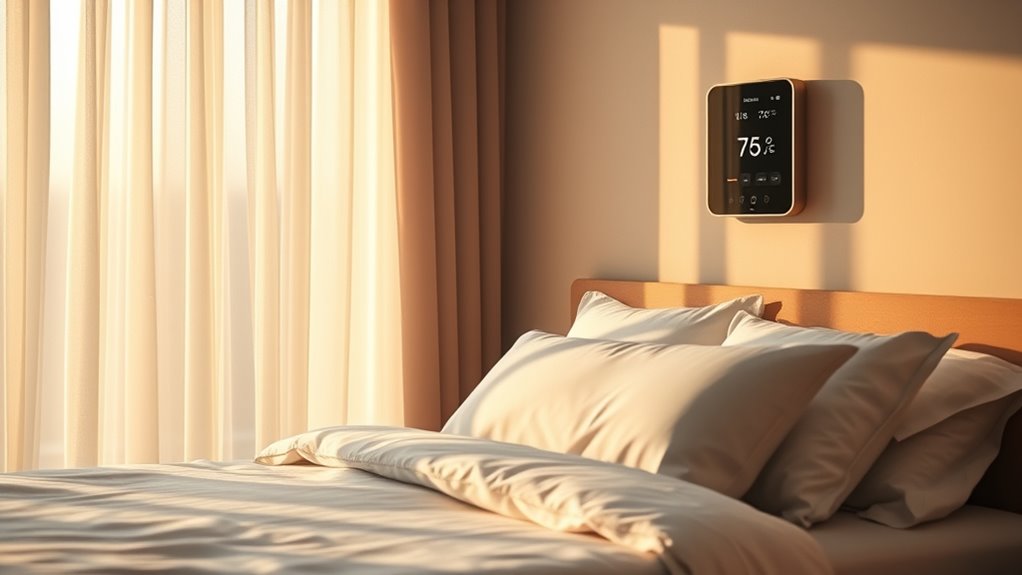

To find your ideal bedroom climate for better sleep, aim to keep your room between 60-67°F (15.5-19.5°C). This range supports your body’s natural thermoregulation, making it easier to fall asleep and stay asleep longer. Maintaining proper humidity around 40-60% also enhances comfort and keeps nasal passages clear. Small appliances like humidifiers or dehumidifiers can help you fine-tune these conditions. Keep exploring to learn more ways to optimize your sleep environment effectively.
Key Takeaways
- Maintain bedroom temperature between 60-67°F (15.5-19.5°C) to support natural thermoregulation and restful sleep.
- Keep humidity levels around 40-60% to prevent nasal irritation, dryness, or excessive moisture that can disrupt sleep.
- Use small appliances like humidifiers or dehumidifiers to regulate room conditions for optimal sleep environment.
- Avoid extremes in temperature and humidity, as they can prolong sleep onset and cause frequent awakenings.
- Creating a comfortable, stable climate promotes longer, more restorative sleep cycles and waking refreshed.

Your body’s ability to fall asleep and stay asleep is heavily influenced by the temperature of your environment. When your bedroom is too hot or too cold, it disrupts your sleep cycle, making it harder to enter deep, restorative sleep stages. Maintaining an ideal temperature helps signal to your body that it’s time to relax and prepare for rest. But temperature isn’t the only factor at play; bedroom humidity also plays a vital role. If the air is too dry, your nasal passages and throat can become irritated, leading to discomfort and frequent waking. Conversely, high humidity levels can make the room feel stuffy and cause sweating, which can also fragment your sleep.
Finding the right balance involves paying close attention to both temperature and humidity. Experts generally recommend keeping your bedroom between 60 and 67 degrees Fahrenheit (15.5 to 19.5 degrees Celsius). This range supports your body’s natural thermoregulation process, helping you fall asleep faster and stay asleep longer. When your body senses the right temperature, it can better regulate its core temperature, which naturally drops as you transition into sleep. If your room is too warm, your body struggles to cool down, prolonging the time it takes to fall asleep. If it’s too cold, you may find yourself shivering or unable to relax fully, also disrupting your sleep cycle.
Bedroom humidity is equally important. Ideally, humidity levels should hover around 40 to 60 percent. Too dry, and your skin and mucous membranes can become irritated, leading to discomfort that interrupts sleep. This dryness can also increase your risk of colds and respiratory issues. On the other hand, high humidity can cause sweating and a feeling of stickiness, making it difficult to stay comfortable through the night. Using a humidifier or dehumidifier can help regulate these levels, making sure the environment stays within the ideal range for sleep. Adjusting your room’s humidity not only enhances comfort but also helps your body maintain a steady core temperature, supporting a more consistent sleep cycle.
Additionally, using small appliances like humidifiers or dehumidifiers can effectively regulate room conditions and improve sleep quality. Ultimately, balancing bedroom temperature and humidity creates the perfect sleep environment. When both are optimized, you’ll notice fewer awakenings, more restorative sleep, and waking up feeling refreshed. It’s a simple yet powerful way to improve your sleep quality, since your body is better equipped to enter and sustain deep sleep stages. Paying attention to these environmental factors guarantees your sleep cycle remains uninterrupted, leaving you well-rested and ready to face the day.

BN-LINK Digital Cooling Thermostat Temperature Controller Outlet Switch
- Effortless Cooling Setup: Simple probe placement and easy interface
- Clear Status Indicators: LED lights show power and cooling status
- Durable Construction: Rugged housing with sensor probe and extended cords
As an affiliate, we earn on qualifying purchases.
As an affiliate, we earn on qualifying purchases.
Frequently Asked Questions
How Does Humidity Affect Sleep Quality?
High humidity levels can make it harder for you to fall asleep and stay asleep, as excess moisture causes discomfort and sweating. Conversely, low humidity can dry out your skin and throat, disrupting sleep. You should focus on moisture control by maintaining a balanced humidity level—ideally between 40-60%. This helps regulate your body’s temperature, reduces irritation, and creates a more comfortable sleep environment for restful nights.
Can Temperature Fluctuations Disrupt Sleep Cycles?
Temperature fluctuations can throw your sleep off like a roller coaster, disrupting your circadian rhythm and causing thermoregulation challenges. When your body struggles to maintain a stable core temperature, you may experience fragmented sleep or difficulty falling asleep. Keeping your bedroom at a consistent, comfortable temperature helps prevent circadian rhythm disruption, allowing your body to naturally cycle through sleep stages and wake up feeling refreshed.
What Are the Signs of an Uncomfortable Bedroom Climate?
You might notice signs of an uncomfortable bedroom climate, like difficulty falling asleep or waking up feeling unrefreshed. Ventilation issues can make the air feel stuffy or stale, while noise disturbances from outside or appliances can prevent deep sleep. You may also experience sweating or chills, and your sleep quality drops. Addressing these signs by improving airflow and reducing noise can help create a more comfortable sleeping environment.
How Do Different Bedding Materials Impact Temperature Regulation?
Imagine yourself in a futuristic space pod, where bedding materials are key. Different fabrics impact temperature regulation; for example, bedding insulation keeps you warm without overheating, while moisture-wicking fabrics draw sweat away to prevent dampness. Cotton offers good breathability, and wool provides natural insulation. Choosing the right materials helps maintain a comfortable sleep environment, ensuring you stay cool or warm as needed, and wake refreshed.
Are There Health Risks Associated With Sleeping in Extreme Temperatures?
Sleeping in extreme temperatures can pose health risks like heat exhaustion or cold exposure. If your room is too hot, you risk dehydration and overheating, leading to heat exhaustion. Conversely, if it’s too cold, you may experience frostbite or hypothermia. To stay safe, keep your bedroom at a comfortable temperature, use appropriate bedding, and make sure proper ventilation. Prioritize your health by avoiding prolonged exposure to extreme conditions during sleep.

Homvana 3.6L Top-Fill Cool Mist Humidifiers for Bedroom, Large Room(Grey)
- 3-in-1 Functionality: Humidifier, aromatherapy, mood light
- Ultra-Quiet Operation: Less than 23dB noise level
- Safe and Certified: BPA-free, auto shut-off for safety
As an affiliate, we earn on qualifying purchases.
As an affiliate, we earn on qualifying purchases.
Conclusion
Creating the perfect bedroom temperature can substantially improve your sleep quality. Imagine a friend who sets their thermostat to 65°F and wakes up feeling refreshed each morning. By adjusting your environment, you too can enjoy deeper, more restorative sleep. Don’t underestimate how much temperature influences your rest—small changes can make a big difference. So, experiment with your climate and discover the ideal sleep temperature that leaves you feeling energized every day.

BEDRED Dehumidifier, 95OZ Dehumidifier for Home 1000 sq ft – Quiet with Auto Shut Off & Relaxing 7 Color Ambient Light, Ideal for Livingroom, Bedroom, Basement (Black)
- Cooling Technology: Thermoelectric dehumidification for moisture removal
- Auto Shutoff: Automatically powers down when tank is full
- Ambient Lighting: 7-color soothing ambient light for mood setting
As an affiliate, we earn on qualifying purchases.
As an affiliate, we earn on qualifying purchases.

Sleep Like Goldilocks Smart Baby Nursery Thermometer, Room Temperature Monitor & TOG Sleepwear Guide with App, Predicted Overnight Temp, Night Light & Time to Rise Sleep Trainer
- Smart Nursery Thermometer: Monitors room temperature and predicts overnight lows
- Sleepwear Guidance: Provides TOG-based sleepwear recommendations
- Temperature Prediction: Displays current and predicted overnight temperatures
As an affiliate, we earn on qualifying purchases.
As an affiliate, we earn on qualifying purchases.