
TL;DR

Get wellness gear delivered free with Prime
- Fast, free delivery on millions of items
- Prime Video, Amazon Music and more included
- Member-only deals all year
Scientists are advancing wearable in-ear sensors that analyze internal body sounds to detect early markers of Alzheimer’s and Parkinson’s. This approach could enable earlier, noninvasive diagnosis, improving treatment outcomes.
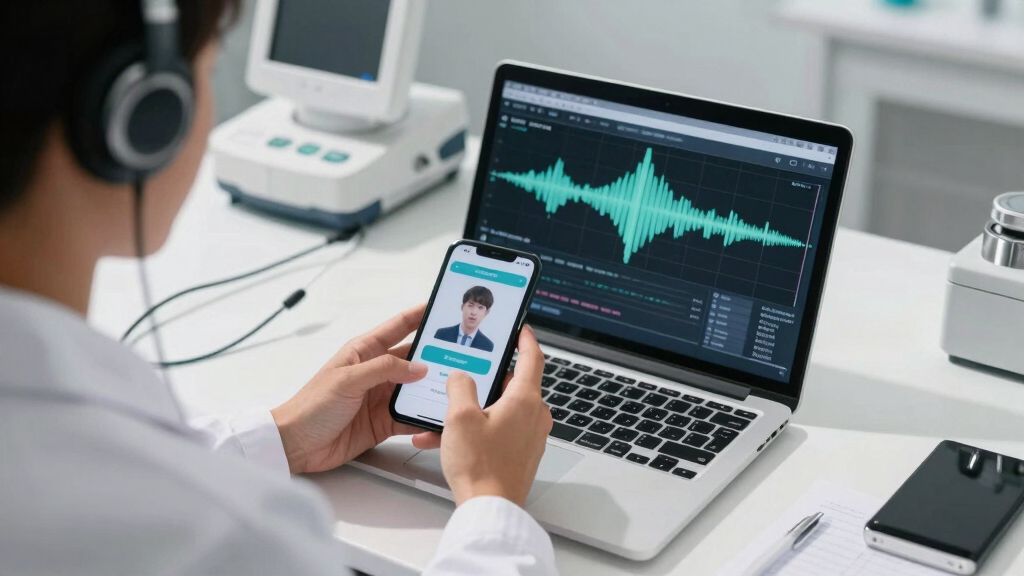
Researchers have developed a miniaturized in-ear device that captures internal body sounds, such as heartbeat, breathing, and swallowing, to detect early signs of Alzheimer’s and Parkinson’s diseases before traditional symptoms appear.
The device, developed through collaboration with ÉTS and other institutions, uses microphones and advanced algorithms to analyze acoustic signals amplified by the occlusion effect when worn inside the ear. Early markers, like alterations in breathing patterns or eye movements, are detectable through these signals. The research team is conducting studies comparing healthy individuals with patients diagnosed with neurodegenerative disorders, aiming to validate the technology’s effectiveness in early diagnosis. Techniques such as machine learning and audio source separation are employed to disentangle overlapping signals, with promising results in detecting stress and other physiological markers linked to disease progression.
Why It Matters
This innovation could revolutionize early diagnosis of neurodegenerative diseases, enabling interventions at stages when treatments are more effective. Noninvasive, continuous monitoring may also improve patient quality of life and reduce healthcare costs by catching diseases earlier.
As an affiliate, we earn on qualifying purchases.
Background
Current diagnosis methods for Alzheimer’s and Parkinson’s often rely on observable symptoms, which appear late in disease progression. Early signs, such as subtle speech changes or breathing irregularities, are difficult to detect clinically. Wearable sensors and advanced signal analysis have been explored in recent years, but the use of in-ear acoustic signals as a diagnostic tool is a novel approach gaining traction.
“Analyzing internal body sounds via in-ear devices offers a promising pathway for early detection of neurodegenerative diseases, potentially before symptoms become evident.”
— Professor at ÉTS
“Our preliminary results show we can detect stress and physiological changes associated with disease progression, which could be crucial for early intervention.”
— Research team spokesperson
wearable acoustic sensor for neurodegenerative diseases
As an affiliate, we earn on qualifying purchases.
As an affiliate, we earn on qualifying purchases.
What Remains Unclear
It is not yet clear how accurately these signals can predict disease onset or differentiate between various neurodegenerative conditions in larger, diverse populations. Further validation and clinical trials are ongoing.
noninvasive early diagnosis device for Alzheimer's
As an affiliate, we earn on qualifying purchases.
As an affiliate, we earn on qualifying purchases.
What’s Next
The research team plans to expand their studies to larger cohorts, refine the algorithms for better accuracy, and explore integration into clinical practice. Regulatory approval processes and long-term validation will follow.
earbud with internal body sound analysis
As an affiliate, we earn on qualifying purchases.
As an affiliate, we earn on qualifying purchases.
Key Questions
How early can this device detect neurodegenerative diseases?
While still under investigation, initial studies suggest it may detect early signs months or even years before clinical symptoms appear.
Is the device safe and comfortable to wear for long periods?
Yes, the device is designed to be noninvasive and comfortable, similar to a standard in-ear hearing aid or earbud.
Can this technology distinguish between Alzheimer’s and Parkinson’s?
Current research aims to identify specific acoustic markers for each disease, but definitive differentiation requires further validation.
When might this technology be available for clinical use?
It is still in the research phase; widespread clinical availability could take several years pending validation and regulatory approval.
Cold & flu season Picks
humidifiers
As an affiliate, we earn on qualifying purchases.