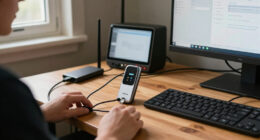
If you’re searching for overnight oxygen monitors, you’re likely focused on reliable, continuous SpO2 tracking to monitor sleep-related oxygen levels. The Wellue O2Ring Pulse Oximeter stands out as the overall best for its comprehensive features, including vibration alerts and app integration. The EMAY Sleep Oxygen Monitor offers solid software support and affordability, making it a strong contender for budget-conscious users. These devices share common challenges, like balancing ease of use with detailed data, and longer battery life with comfort. Keep reading for a detailed breakdown of the top options to help you choose the right monitor for your needs.

Get wellness gear delivered free with Prime
- Fast, free delivery on millions of items
- Prime Video, Amazon Music and more included
- Member-only deals all year
Key Takeaways
- Top picks combine continuous SpO2 tracking with user-friendly alerts, highlighting the importance of real-time notifications during sleep.
- Wearable monitors like the Wellue O2Ring provide greater comfort and mobility compared to traditional fingertip devices, but may have higher costs.
- Battery life varies significantly, with some models offering 24-hour use, which is vital for overnight monitoring without interruption.
- App and software support are critical for interpreting trends; devices with comprehensive reporting features stood out in value.
- Tradeoffs often involve comfort versus feature set—more advanced monitors tend to be bulkier or more expensive.


| overnight oxygen monitor | Connectivity | Battery Life |
|---|---|---|
| Wellue O2Ring Pulse Oximeter | Bluetooth | Up to 16 hours |
| EMAY Sleep Oxygen Monitor with | Bluetooth | — |
| Wellue O2Ring Oxygen Monitor w | Bluetooth 4.0 BLE | 12-16 hours |
| Wellue O2 Pulse Oximeter with | — | — |
| EMAY Sleep Oxygen Monitor with | Record first, sync later | — |
| Wellue O2Ring-S Oxygen Monitor | Bluetooth | 24 hours |
| EMAY SleepO2 Wrist Pulse Oxime | Bluetooth | 10 hours |
More Details on Our Top Picks
Wellue O2Ring Pulse Oximeter, Bluetooth SPO2 Blood Oxygen Saturation Monitor – Wearable O2 Ring Sensor with Vibration Reminder, Free App & PC Report, Rechargeable
This wearable O2Ring stands out for its comfortable, lightweight design, making it ideal for users who want continuous overnight or all-day monitoring without bulk. Compared to the EMAY Sleep Oxygen Monitor, it offers real-time alerts via vibration, which can be a game-changer for those needing immediate notifications. However, it isn’t intended for medical diagnosis, and its Bluetooth dependency means full functionality depends on pairing with a smartphone or PC. Its rechargeable battery lasts up to 16 hours, supporting extended wear, but it has limited built-in storage—only four sessions of 10 hours each. This device is perfect for enthusiasts or athletes tracking oxygen levels but should be skipped by those needing medical-grade accuracy or official diagnosis.
Pros:- Lightweight, comfortable wearable design for all-day use
- Provides detailed reports via app and PC
- Long-lasting rechargeable battery for extended monitoring
Cons:- Not designed for medical diagnosis or treatment
- Requires Bluetooth connection for full features
- Limited internal storage capacity
Best for: Active users who need continuous, wearable oxygen monitoring with alerts
Not ideal for: Medical patients requiring certified diagnostic equipment
- Brand:Wellue
- Model:O2Ring
- Item Weight:15 g
- Fingertip Size Compatibility:2-3.2 inches
- Battery Life:Up to 16 hours
- Connectivity:Bluetooth
Our verdict“This device works best for those seeking a comfortable, wearable monitoring tool rather than medical-grade accuracy.”
EMAY Sleep Oxygen Monitor with PC Software & App, Bluetooth Pulse Oximeter for Overnight & Continuous SpO2 Tracking
This standalone monitor provides a solid option for those who want to record overnight oxygen levels without needing real-time alerts. Compared with the Wellue O2Ring, it offers a longer 72-hour memory and the flexibility of manual data review via PC software and mobile app. Its rechargeable design simplifies operation, but it does not feature real-time alerts or waterproofing, which could limit its usefulness for active or sweaty conditions. Its large LCD display makes data review straightforward, yet the device’s focus on recording rather than immediate notification makes it less suitable for users who need instant oxygen level alerts. It’s an excellent choice for detailed post-hoc analysis but less so for those requiring real-time intervention.
Pros:- Stores up to 72 hours of data for thorough analysis
- Includes free PC software and mobile app for review
- Rechargeable, no batteries needed
Cons:- No real-time alerts or notifications
- Lacks waterproof or sweat-resistant features
- Requires Bluetooth for app connectivity
Best for: People who want in-depth analysis with large data logs and manual review
Not ideal for: Users needing real-time alerts or waterproof features for active use
- Modes:Spot Check, Continuous Tracking
- Memory:72 hours
- Connectivity:Bluetooth
- Battery:Rechargeable
- Compatibility:PC, iOS, Android
Our verdict“This monitor suits those focused on detailed data review over immediate oxygen alerts or active use.”
Wellue O2Ring Oxygen Monitor with Vibration Reminder – Bluetooth Pulse Oximeter with Continuous SpO2 & PR Recording
This model is designed for users wanting 24/7 blood oxygen and pulse rate tracking, with vibration alerts for low oxygen or abnormal heart rate. Compared to the EMAY Sleep Oxygen Monitor, it offers real-time notifications which can be vital for detecting issues during active hours. Its soft silicon sensor and lightweight build make it comfortable for extended wear, and it’s compatible with iOS and Android. However, it is not intended for medical diagnosis, and its focus on sports and aviation use may limit its relevance for clinical needs. The device’s battery life of 12-16 hours supports daily use, but its reliance on Bluetooth and limited storage could be downsides for some users.
Pros:- All-day monitoring with continuous data recording
- Vibration alerts for low oxygen and abnormal heart rate
- Comfortable, lightweight design suitable for extended wear
Cons:- Not intended for medical diagnosis
- Limited to sports and aviation use
- Requires smartphone or PC for full functionality
Best for: Active individuals seeking all-day oxygen and heart rate monitoring with alerts
Not ideal for: Medical patients needing certified diagnostic tools or long-term data storage
- Battery Life:12-16 hours
- Connectivity:Bluetooth 4.0 BLE
- Memory:Stores four groups of 10-hour data
- Compatibility:iOS 9.0+ and Android 5.0+
- Sensor Material:Soft silicon
Our verdict“Ideal for active users who want continuous oxygen monitoring with immediate alerts but not for medical diagnosis.”
Wellue O2 Pulse Oximeter with Smart Reminder
This finger ring device offers wireless connectivity with a free app and PC software, making it simple to share and analyze data. It’s well-suited for users who want a straightforward way to monitor oxygen saturation and pulse rate without needing real-time alerts. Compared with the EMAY Sleep Oxygen Monitor, it emphasizes trend analysis and automatic data uploads, supporting long-term tracking. Its moderate customer rating suggests some users find the experience less seamless, and its non-medical status limits clinical reliability. The device’s long battery life of up to 72 hours after a single charge makes it convenient for extended use, but setup and Bluetooth dependence may be barriers for some.
Pros:- Wireless connectivity with free app and PC software
- Comfortable silicone ring sensor
- Long battery life supporting multiple days of use
Cons:- Not intended for medical diagnosis or treatment
- Moderate customer rating suggests variable user experience
- Requires Bluetooth setup for full features
Best for: Users interested in comprehensive data sharing and trend analysis for athletic or aviation purposes
Not ideal for: Those needing real-time alerts or clinical-grade accuracy
- Brand:Wellue
- Model:CheckmeO2 Max
- Unit Count:1
- UPC:850048347663
- Part Number:Oxiband
- Rank in Health & Household:#82,830
Our verdict“Best suited for users tracking long-term trends rather than immediate oxygen level alerts.”
EMAY Sleep Oxygen Monitor with Built-in Recording Capability
This device provides a straightforward solution for recording blood oxygen and pulse rate over up to 40 hours without real-time connectivity. Compared to the Bluetooth-enabled Wellue O2Ring models, it focuses on manual data review after recording sessions, making it suitable for users who prefer offline data collection. Its large LCD display ensures easy reading of data, but it lacks real-time alerts, which limits its use for immediate health monitoring. Designed primarily for sports and aviation, it should be avoided by those needing diagnostic accuracy or long-term continuous tracking. Its requirement for manual syncing adds an extra step that some may find inconvenient.
Pros:- Records oxygen and pulse data for up to 40 hours
- Large, easy-to-read LCD display
- Allows data export via free app
Cons:- No real-time alerts or notifications
- Requires manual syncing after recording
- Not intended for medical diagnosis
Best for: Individuals who want easy-to-read overnight oxygen data with simple export options
Not ideal for: Users needing real-time monitoring or medical-grade accuracy
- Data Memory:40 hours
- Display:Large digital LCD
- Connectivity:Record first, sync later
- Compatibility:iOS and Android
Our verdict“A practical choice for those seeking straightforward overnight oxygen tracking without real-time features.”
Wellue O2Ring-S Oxygen Monitor with Vibration Reminder, Bluetooth Pulse Oximeter, 24-Hour Battery, 4×10 Hour Memory, Rechargeable
The Wellue O2Ring-S stands out for its seamless continuous tracking, especially for users who want all-day awareness of their oxygen levels and pulse rate. Unlike the EMAY SleepO2, which focuses solely on overnight data, the O2Ring-S offers 24-hour monitoring with vibration alerts for abnormal readings, making it ideal for active users or those managing chronic conditions needing proactive alerts. Its lightweight, ring-based design ensures comfort during extended wear, and Bluetooth connectivity allows easy app synchronization. However, this device isn’t intended for medical diagnosis and relies heavily on smartphone pairing for full functionality, which might be a limitation for some. Compared to the EMAY SleepO2, the O2Ring-S offers more comprehensive alert features but sacrifices the simplicity of standalone overnight recordings. The tradeoff is a device that excels in continuous, alert-enabled monitoring but isn’t a substitute for medical-grade equipment.
Pros:- Continuous 24-hour monitoring with real-time data
- Vibration alerts for abnormal oxygen or heart rate levels
- Lightweight, comfortable fit suitable for all-day wear
- App synchronization for detailed tracking and historical data
Cons:- Requires a smartphone app for full functionality, which may be inconvenient
- Not designed for medical diagnosis or clinical use
- Limited to sports, aviation, or personal health monitoring
Best for: Users needing all-day blood oxygen tracking with real-time alerts, such as those managing sleep apnea or respiratory conditions.
Not ideal for: Individuals seeking a simple, standalone overnight monitor without smartphone dependence or those needing medical-grade precision.
- Battery Life:24 hours
- Memory:4 sets of 10 hours
- Sensor Type:Ring sensor
- Connectivity:Bluetooth
- Perimeter Fit:55-80mm
- Charging:Type-C cable
- Warranty:1 year
Our verdict“This device is best suited for users who want ongoing, alert-enabled oxygen monitoring with minimal fuss during daily activities.”
EMAY SleepO2 Wrist Pulse Oximeter with Recording Capability
The EMAY SleepO2 Wrist Pulse Oximeter makes a compelling choice for those who want straightforward overnight oxygen and pulse data without smartphone reliance. Unlike the Wellue O2Ring-S, which offers all-day monitoring and alerts, the SleepO2 is focused solely on overnight recording, making it ideal for sleep studies or occasional monitoring. Its lightweight design and soft finger probe ensure a comfortable sleep experience. The device stores data internally, allowing users to review detailed reports through the EMAY app without needing to keep a phone nearby during sleep. The primary tradeoff is that it lacks real-time alerts and water resistance, limiting its use to static sleep periods. Compared with the O2Ring-S, it sacrifices continuous monitoring and alerting but gains simplicity and ease of use for overnight assessments.
Pros:- No smartphone needed for overnight recording
- Lightweight and comfortable for sleep
- Built-in data storage for detailed reports
- Rechargeable with up to 10 hours of use
Cons:- Requires Bluetooth connection for data download, adding an extra step
- Limited to overnight use, not suitable for continuous monitoring
- No water resistance or durability details provided
Best for: Individuals who want a no-fuss, standalone device for overnight oxygen and pulse tracking, especially for sleep assessments.
Not ideal for: Active users or those needing real-time alerts or daytime monitoring, as it solely records overnight data without live feedback.
- Battery Life:10 hours
- Weight:20g
- Connectivity:Bluetooth
- Display:Real-time readings via app
- Recording:Internal storage
- Probe Type:Soft finger clip
Our verdict“This pick is perfect for users seeking a simple, reliable overnight oxygen monitor without the complexities of real-time alerts or daytime tracking.”

How We Picked
These products were selected based on their ability to provide reliable, continuous overnight SpO2 monitoring with user-focused features. We prioritized devices that balance ease of use, comfort, and data accuracy, ensuring they are suitable for overnight wear. Battery life, connectivity options like Bluetooth, and the availability of companion apps and software were key factors. We also considered build quality and customer feedback to identify monitors that maintain performance over time. The ranking reflects a combination of functionality, value, and user experience, aiming to guide different types of buyers from beginners to tech-savvy users.| overnight oxygen monitor | Connectivity |
|---|---|
| Wellue O2Ring Pulse Oximeter | Bluetooth |
| EMAY Sleep Oxygen Monitor with | Bluetooth |
| Wellue O2Ring Oxygen Monitor w | Bluetooth 4.0 BLE |
| Wellue O2 Pulse Oximeter with | — |
| EMAY Sleep Oxygen Monitor with | Record first, sync later |
| Wellue O2Ring-S Oxygen Monitor | Bluetooth |
| EMAY SleepO2 Wrist Pulse Oxime | Bluetooth |
Factors to Consider When Choosing Overnight Oxygen Monitors
Choosing the right overnight oxygen monitor involves understanding several factors beyond basic features. Consider how comfort, data clarity, and device reliability impact your experience, especially during sleep. It’s also important to weigh the tradeoffs between price and advanced functionalities, as more comprehensive monitors often come at a higher cost. To make an informed decision, keep in mind key aspects like battery life, software support, and ease of use, which directly affect your ability to monitor oxygen levels consistently and accurately.Comfort and Wearability
Since overnight monitors are worn during sleep, comfort becomes a top priority. Wearable devices like rings or wristbands tend to be less intrusive and allow for freedom of movement, which can improve sleep quality. Avoid bulky or heavy monitors if you’re sensitive to discomfort, but recognize that some highly comfortable models might sacrifice advanced features or battery life. Finding a balance between comfort and functionality is essential for consistent use.Battery Life and Power Management
A monitor’s ability to last through the entire night without needing a recharge is crucial. Devices with 24-hour battery life or quick recharge features reduce the risk of interruption and data gaps. Some models offer rechargeable batteries, which are convenient but require regular charging, while others have longer-lasting batteries but may be bulkier. Consider your typical sleep duration and whether you prefer a device that can be worn multiple nights without recharging.Data Accuracy and Monitoring Features
Accurate readings are the foundation of any effective oxygen monitor. Look for devices that provide continuous SpO2 and pulse rate recordings, with reliable sensors that prevent false alarms. Advanced options often include vibration alerts for desaturation events, which can be life-saving. However, keep in mind that more sophisticated sensors might come with higher costs or complexity, so assess whether their features match your specific health monitoring needs.Connectivity and Data Management
Bluetooth-enabled monitors paired with smartphone apps or PC software help you analyze and store historical data, making it easier to track patterns over time. Ensure the app interface is intuitive, with clear visualizations and export options if needed. Some devices also support real-time notifications or alarms, adding an extra layer of safety. Compatibility with your existing devices and ease of syncing data are important considerations to avoid frustration.Price and Value
Overnight oxygen monitors vary widely in price, from budget-friendly options to premium models with extensive features. Consider what features you truly need—if basic tracking suffices, a more affordable device might be ideal. However, if detailed reports, alerts, or wearability are priorities, investing in a higher-end model could provide better long-term value. Remember, cheaper devices may lack durability or reliable data, so balance cost with the quality and functionality you require.Frequently Asked Questions
Can I use a wrist or finger monitor for overnight oxygen tracking?
While wrist and finger monitors can provide useful snapshots of your oxygen levels, they may not be ideal for overnight tracking due to potential discomfort or movement restrictions. Wearable devices like rings or dedicated chest monitors tend to stay in place better and offer continuous data collection. Finger devices are often less comfortable for long periods and may require frequent repositioning, which can affect data accuracy during sleep.How important is app compatibility for overnight oxygen monitors?
App compatibility enhances your ability to view, analyze, and store data conveniently. The right app can offer detailed graphs, trend analysis, and export options, which are essential for tracking long-term patterns or sharing data with healthcare providers. Devices without robust app support may limit your capacity to interpret results or rely solely on on-device displays, which might not be sufficient for detailed monitoring.Are vibration alerts necessary for overnight oxygen monitors?
Vibration alerts can be a valuable feature, especially if you need immediate notification of desaturation events without disturbing your sleep partner. They add a layer of safety by waking you or alerting you to irregular oxygen levels. However, some users may find alerts disruptive or unnecessary if they are not prone to significant oxygen drops, so consider your sensitivity to alarms and your health condition.What’s the best way to ensure data accuracy with these devices?
Ensuring data accuracy starts with selecting a device from reputable brands with validated sensors. Proper placement and consistent use, such as wearing the monitor correctly and following setup instructions, are also critical. Regularly calibrating or updating the device’s firmware can improve reliability. Comparing readings with clinical-grade equipment occasionally can help verify the monitor’s performance if you have access to medical devices.Is a more expensive monitor worth the extra cost?
Higher-priced monitors often include advanced features like longer battery life, detailed reporting, better sensors, and more comfortable wearability. If you require comprehensive data, real-time alerts, or plan to monitor multiple nights, investing in a premium model can be justified. However, if your goal is basic tracking for occasional use, a more affordable device may meet your needs without unnecessary expense.Conclusion
For those new to overnight oxygen monitoring, a straightforward, comfortable device like the EMAY Sleep Oxygen Monitor offers simplicity and affordability. If you need detailed trend analysis and real-time alerts, the Wellue O2Ring provides a robust solution, making it ideal for health-conscious users or those managing sleep apnea. Budget buyers should focus on models with reliable basic features, while premium users who demand comprehensive data and connectivity may prefer higher-end options like the Wellue O2Ring-S. Ultimately, your choice hinges on your specific health needs, comfort preferences, and budget constraints.