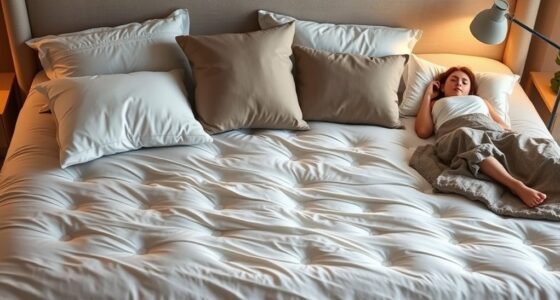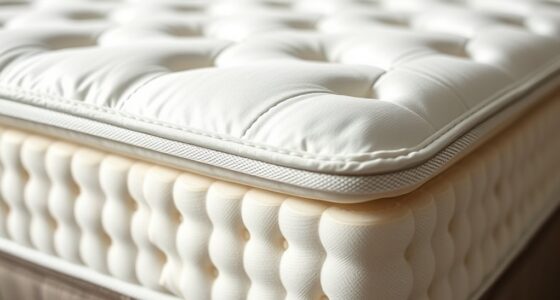
You should consider replacing your mattress every 7 to 10 years, or sooner if you notice signs like sagging, permanent indentations, or visible damage. Pay attention if you wake up sore or feel unrefreshed, as uneven support can cause discomfort and back pain. Regularly check your mattress’s condition — if it’s showing age-related wear or you’re experiencing poor sleep, it’s time for a replacement. Keep going to learn more about recognizing the signs early.
Key Takeaways
- Replace your mattress every 7-10 years to ensure optimal support and comfort.
- Watch for visible signs of damage, such as sagging, tears, or stains, indicating it’s time for a new mattress.
- If you experience persistent waking, back pain, or discomfort, consider replacing your mattress regardless of age.
- Regularly rotate and inspect your mattress; uneven wear or lumps signal support loss.
- Structural issues, support problems, or allergens from aging increase the need for mattress replacement.
Your mattress plays a vital role in your sleep quality, and knowing when to replace it can make all the difference. One of the first signs you should watch for is how well your current mattress matches your bed frame compatibility. If your bed frame is old or incompatible, it can cause uneven support, leading to sagging or discomfort that affects your sleep. Making sure that your mattress fits securely on your bed frame is essential for proper support and prolonging its lifespan. If you notice instability or your mattress shifts frequently, it might be time to consider a replacement or upgrade your bed frame to ensure compatibility.
Another key indicator is the state of your mattress after performing some simple mattress rotation tips. Regularly rotating your mattress—usually every three to six months—helps distribute wear evenly and prevents sagging. If, despite regular rotation, you still notice persistent dips or lumps, those are signs that your mattress is losing its support and comfort. These indentations can cause discomfort, back pain, or disturb your sleep, indicating it’s time for a new one. Additionally, if you wake up feeling stiff or sore, your mattress may no longer be providing adequate support, which is often a consequence of wear and tear.
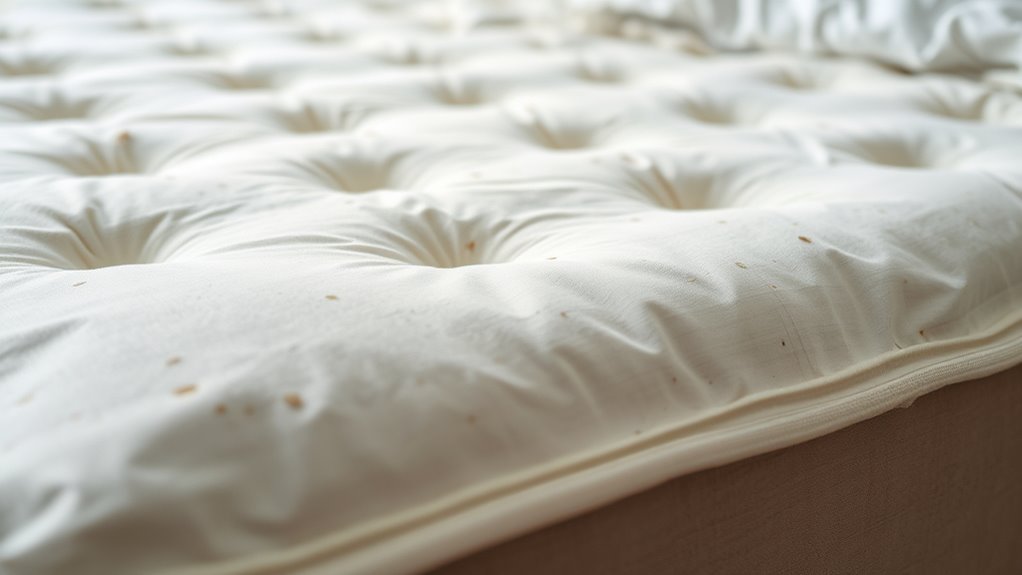
Beyond physical discomforts, pay attention to visible signs of damage. Stains, tears, or noticeable sagging are clear indicators that your mattress’s structural integrity has declined. Even if it looks okay on the surface, these issues can harbor dust mites or allergens, impacting your health and sleep quality. If you’ve owned your mattress for more than seven to ten years, it’s advisable to start considering a replacement, as mattresses tend to lose their supportive qualities over time, regardless of how well you care for them. Proper mattress support is essential for maintaining comfort and longevity.
Lastly, consider your overall sleep quality. If you’re experiencing more frequent waking, tossing and turning, or notice that your partner’s sleep has also been affected, these could be signs that your mattress no longer provides the comfort or support you need. Sometimes, a simple mattress rotation or adjusting the bed frame compatibility can help temporarily, but persistent problems usually mean it’s time for a new mattress. Remember, investing in a good-quality mattress tailored to your bed frame and following mattress rotation tips can considerably extend its lifespan, but knowing the signs of deterioration helps you decide when it’s truly time to replace it.
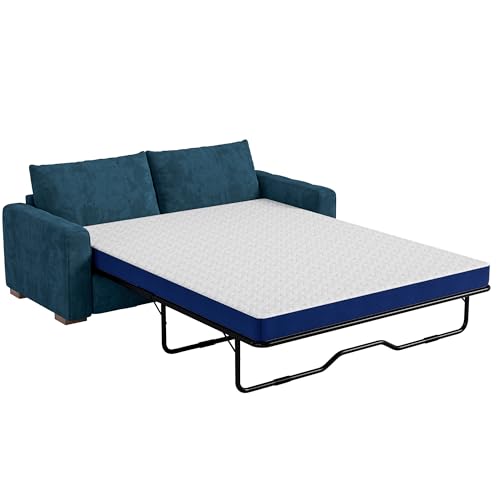
Wellynap 4 Inch Gel Memory Foam Sofa Mattress Queen Size, Mattress Replacement for Sleeper Sofa, Couch Bed, Guest Rooms, RVs & Boats, with Washable Cover
4-Inch Gel Memory Foam: Provides maximum comfort and support, ensuring a perfect sleep climate for you and your…
As an affiliate, we earn on qualifying purchases.
As an affiliate, we earn on qualifying purchases.
Frequently Asked Questions
Can Using a Mattress Topper Extend Its Lifespan?
Using a mattress topper can indeed extend your mattress’s lifespan. It’s a smart part of mattress maintenance because topper benefits include providing extra cushioning and protecting your mattress from wear and tear. By adding a topper, you reduce direct pressure on the mattress surface, helping it stay in good shape longer. Just make certain you clean and replace the topper when needed to maximize its benefits and keep your sleep comfortable.
How Does Mattress Material Affect Replacement Timing?
Think of your mattress as a trusty steed; its material shapes its stamina. Foam durability means it can last longer, resisting sagging and indentations, while spring fatigue signals it’s losing its bounce. If your foam mattress shows wear or your springs feel less supportive, it’s time to replace. The right material keeps you comfortable longer, so pay attention to signs of wear and choose wisely based on durability.
Is It Safe to Sleep on a Damaged Mattress?
Sleeping on a damaged mattress isn’t safe, as it can compromise mattress hygiene and worsen allergy symptoms from dust mites or mold. A sagging or torn mattress may cause discomfort, disrupt sleep, and lead to back pain. To protect your health, consider replacing it promptly when damage is visible. This helps guarantee a cleaner, healthier sleeping environment and reduces allergy considerations, keeping you comfortable and safe night after night.
Do Weight and Sleep Habits Influence Mattress Longevity?
Yes, your weight and sleep habits do influence your mattress’s longevity. Heavier sleepers may cause quicker wear, impacting bed comfort and reducing sleep quality over time. If you toss and turn often or sleep in the same position nightly, it can also lead to uneven mattress wear. To maintain ideal sleep quality, consider these factors and replace your mattress when it no longer provides proper support and comfort.
How Often Should a Guest or Spare Mattress Be Replaced?
You should replace a guest or spare mattress every 5 to 8 years. Studies show that even infrequent use can lead to dust buildup and mattress wear. If your guest mattress develops sagging, stains, or an unpleasant odor, it’s time for a replacement. Keeping your spare mattress fresh guarantees your visitors sleep comfortably and maintains good hygiene, so don’t hesitate to upgrade when signs of wear appear.

Sleepmax Queen Mattress 14 Inch – Hotel-Collection Hybrid Mattress Pain Relief – Extra Lumbar & Hip Support – Cooling Gel Bed in a Box Spine Alignment – CertiPUR-US, Fiberglass-Free, 365-Night Trial
PAIN RELIEF & MOTION ISOLATION – Blending the support of traditional springs with the comfort of contouring memory…
As an affiliate, we earn on qualifying purchases.
As an affiliate, we earn on qualifying purchases.
Conclusion
Knowing when to replace your mattress is key to a good night’s sleep. If you notice persistent discomfort, sagging, or increased allergies, it’s time for a change. Did you know that the average mattress lasts about 7-10 years? Staying alert to these signs can help you avoid sleep problems and maintain your health. Don’t ignore the warning signs—invest in your rest and comfort for better overall well-being.

GAESTE 8 Inch Full Cooling Gel Memory Foam Mattress for Cool Sleep Medium Firm CertiPUR-US Certified Foam, Mattress in a Box Pressure Relief Removable Cover No Fiberglass (Full, 8 in)
ALL-SEASON COOLING MEMORY FOAM – Enjoy a cool and restful night with our gel-infused memory foam. This advanced…
As an affiliate, we earn on qualifying purchases.
As an affiliate, we earn on qualifying purchases.
![ZINUS 12 Inch Comfort Support Hybrid Mattress [New Version], Queen, Fiberglass Free, Medium Plush, Motion Isolation, Certified Safe Foams & Fabric, Mattress in A Box](https://m.media-amazon.com/images/I/41u4Vjo2poL._SL500_.jpg)
ZINUS 12 Inch Comfort Support Hybrid Mattress [New Version], Queen, Fiberglass Free, Medium Plush, Motion Isolation, Certified Safe Foams & Fabric, Mattress in A Box
REJUVENATING RELIEF – The soothing pressure relief of memory foam on top of individually wrapped coils that provide…
As an affiliate, we earn on qualifying purchases.
As an affiliate, we earn on qualifying purchases.