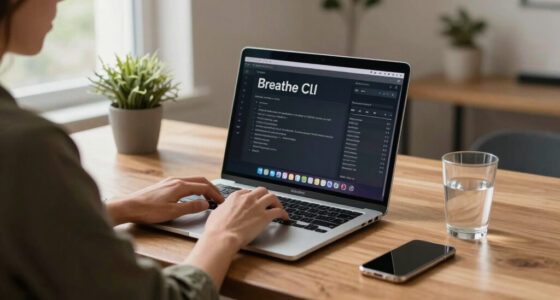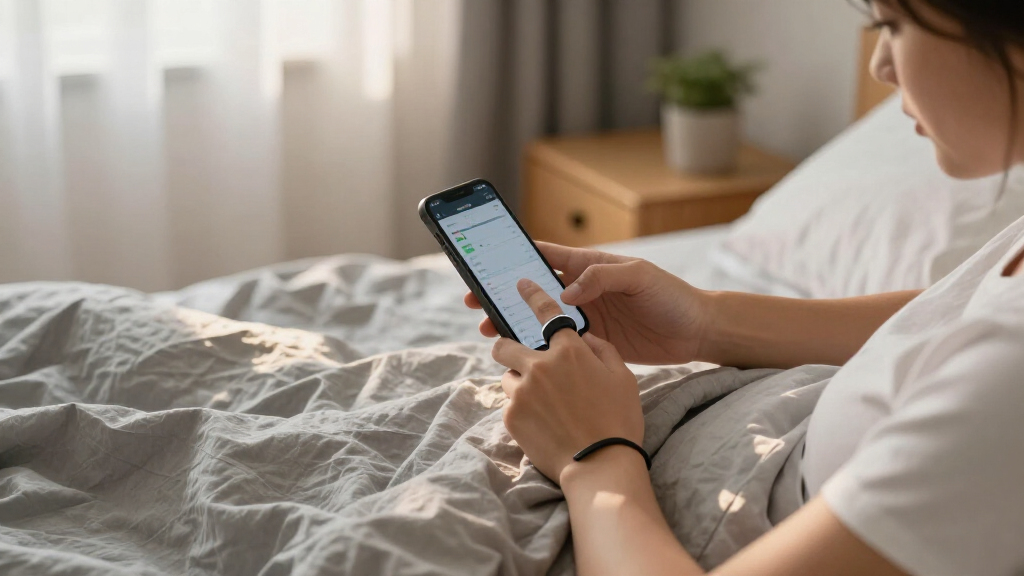

If you want to track your sleep, the realistic choice in 2025 isn’t between two sleep gadgets — it’s usually between using the Apple Watch you might already wear during the day and buying a dedicated wearable like the Oura Ring that’s engineered specifically for around-the-clock physiological tracking. That distinction drives every meaningful difference between them.

Get wellness gear delivered free with Prime
- Fast, free delivery on millions of items
- Prime Video, Amazon Music and more included
- Member-only deals all year

Google Fitbit Inspire 3 Health & Fitness Tracker (Midnight Zen/Black, Small & Large Bands)
- ✔ Color: Midnight Zen/Black
- ✔ Band Sizes Included: Small and Large
- ✔ Heart Rate Monitoring: 24/7

Screenless Fitness Tracker Smart Band with Sleep, HRV, Heart Rate & SpO2 Monitoring
- ✔ Weight: 25g
- ✔ Battery: 180mAh, 20-30 day life, ~2 hour charge
- ✔ Health Monitoring: 24/7 heart rate, SpO2, HRV, stress, sleep

Smart Watch Fitness Tracker with 24/7 Heart Rate, Blood Oxygen & Blood Pressure Monitor, Sleep Tracking, 120 Sports Modes, IP68 W…
- ✔ Display: 1.58-inch ultra high resolution, always-on touchscreen
- ✔ Health Monitoring: 24/7 heart rate, blood pressure, blood oxygen, sleep stages
- ✔ Sports Modes: 120+
The tension is straightforward: the Apple Watch gives you credible sleep stages, a morning readiness readout, and deep integration with your phone, health apps, and workouts — but it’s a relatively bulky object on your wrist at night, it needs near-daily charging, and sleep tracking is one feature among dozens. The Oura Ring is nearly invisible on your finger, lasts up to a week per charge, and was built from the ground up for sleep and recovery metrics — but it costs as much as a mid-tier smartwatch, adds a monthly subscription, has no screen, and won’t run apps, take calls, or track your runs with GPS.
This comparison focuses on sleep tracking performance specifically, but it also weighs the practical realities that decide whether each device works for you: comfort through the night, charging behavior, ecosystem lock-in, ongoing costs, and how much you actually want to interact with your data. By the end, you should know clearly whether the ring earns its place or the watch you already charge every night is enough.
At a Glance
| Criteria | Apple Watch (sleep tracking) | Oura Ring (Gen 3 / Gen 4) | Winner |
|---|---|---|---|
| Sleep tracking accuracy | Good sleep stages; validated reasonably well; heart rate occasionally affected by wrist position | Excellent; ring-based sensors very stable overnight; strong sleep staging reputation | B |
| Comfort during sleep | Bulky on wrist; some users remove it at night; bothersome side-sleepers occasionally | Near-invisible after a few nights; minimal interference with sleep | B |
| Battery life and charging | 18–36 hours; must charge daily, usually in the morning | 4–7 days per charge; weekly top-ups fit easily into routine | B |
| Data and insights quality | Sleep stages, respiratory rate, trends in Apple Health; readiness score now included but less recovery-focused | Sleep score, readiness score, detailed stage breakdowns, temperature trends, period predictions | B |
| Daytime usefulness | Extensive: notifications, calls, apps, GPS workouts, Apple Pay | Minimal: no screen, no notifications, only activity and passive metrics | A |
| Cost of ownership | $249–$799 upfront; no subscription | $299–$549 upfront plus $5.99/month subscription | A |
| Ecosystem and privacy | Requires iPhone; data in Apple Health; no ongoing fee | Works with iOS and Android; data in Oura app; subscription required for full features | A |
| Ease of consistent use | Requires wearing watch to bed AND remembering to charge it — friction is real | Almost effortless once sized correctly; wear it and forget it | B |
Google Fitbit Inspire 3 Health & Fitness Tracker (Midnight Zen/Black, Small & Large Bands)
The Inspire 3 earns the top spot because it is the only device in this lineup where sleep tracking is a core competency rather than a listed feature. It delivers a nightly Sleep Score, automatic sleep stage detection, SpO2 monitoring, and a smart wake vibrating alarm that eases you out of lighter sleep stages — a genuinely useful feature the other two products don’t match. Compared with the screenless smart band, the Inspire 3 gives you a readable display and a far more mature analytics app; compared with the budget smartwatch, it offers a brand with an established reputation for sensor consistency.The tradeoffs are real, though. The most detailed sleep insights sit behind a Fitbit Premium subscription, which means the free experience is thinner than the marketing implies. It also requires a relatively modern phone (iOS 16.4+ or Android 11+), whereas both alternatives support devices nearly a decade old. Battery life is respectable at up to 10 days, but the screenless band triples that. Where the Inspire 3 pulls ahead is cohesion: Daily Readiness Scores, stress management metrics, and sleep data all feed into one coherent picture of recovery, which is what most sleep-focused buyers actually want to see each morning.
Pros:
- Nightly Sleep Score with automatic sleep stage detection and a smart wake alarm
- Full ecosystem including Daily Readiness Score, stress tracking, and SpO2
- Both small and large bands included for a comfortable overnight fit
- Works across modern iOS and Android devices
Cons:
- Advanced sleep metrics require a Fitbit Premium subscription
- Requires iOS 16.4+ or Android 11+ — older phones are excluded
- 10-day battery trails the screenless band by a wide margin
Best for: Buyers who want polished, easy-to-interpret sleep scores and a full health ecosystem from an established brand
Not ideal for: Anyone unwilling to pay a subscription for deeper analytics, or users with older phones
Bottom line: The most complete and readable sleep tracking experience in this lineup — as long as you accept the subscription and modern-phone requirements.
“The most complete and readable sleep tracking experience in this lineup — as long as you accept the subscription and modern-phone requirements.”
Screenless Fitness Tracker Smart Band with Sleep, HRV, Heart Rate & SpO2 Monitoring
This band takes the opposite philosophy from the other two: it has no display at all, which sounds like a limitation but is arguably its biggest advantage for sleep tracking. There is no glowing screen to tempt you at 2 a.m., nothing to check, and at 25 grams it is the lightest option here by far — the kind of device you forget you’re wearing. Compared with the Inspire 3, it adds HRV monitoring, which many sleep-focused buyers specifically want for gauging recovery, and its 20-30 day battery means you charge it roughly once a month instead of weekly.The other major differentiator is economics: the QwatchPro app is completely free with no subscription, while Fitbit gates its best sleep analytics behind a recurring fee. The tradeoff is polish and trust. Sleep data arrives as reference-grade readings rather than curated scores and coaching, and there is no onboard GPS or display — everything routes through your phone. For a buyer whose priority is capturing overnight data comfortably and cheaply, those are acceptable compromises. For someone who wants morning guidance and validated sleep staging, the Inspire 3 remains the stronger choice.
Pros:
- Ultra-lightweight 25g design that stays comfortable all night
- 20-30 day battery life with a quick 2-hour recharge
- Free QwatchPro app with no subscription or hidden fees
- HRV monitoring plus heart rate, SpO2, stress, and sleep tracking in one band
Cons:
- No display or onboard GPS — fully dependent on your phone
- Readings are for reference only and not medically validated
- Less polished analytics than the Fitbit ecosystem
Best for: Sleep-focused buyers who want lightweight, low-maintenance overnight tracking with HRV data and zero subscription costs
Not ideal for: Anyone who wants on-wrist data display, guided sleep insights, or readings with clinical credibility
Bottom line: The most comfortable and lowest-cost-of-ownership sleep tracker here — ideal if you value data capture over data coaching.
“The most comfortable and lowest-cost-of-ownership sleep tracker here — ideal if you value data capture over data coaching.”
Smart Watch Fitness Tracker with 24/7 Heart Rate, Blood Oxygen & Blood Pressure Monitor, Sleep Tracking, 120 Sports Modes, IP68 W…
If the other two products are specialists, this one is the generalist: a 1.58-inch always-on touchscreen with 250+ watch faces, call and message notifications, music control, and a remote camera feature, alongside its sleep tracking. For buyers who want one device that does everything a smartwatch does while still recording sleep stages overnight, it is the most feature-dense option here — and its blood pressure monitoring is something neither competitor offers, even if it should be treated strictly as reference data.The compromises explain the price positioning. The manufacturer is not clearly identified, which makes long-term software support and sensor accuracy harder to assess than with Google-backed Fitbit. GPS route mapping requires a phone connection, matching the screenless band rather than exceeding it. And while the always-on display makes daytime use pleasant, it is the least sleep-friendly hardware of the three — a bright touchscreen on your wrist is more tempting to check at night than the Inspire 3’s slim band or the screenless option’s blank face. Compared directly with the Inspire 3, you get more features but less trustworthy analysis; compared with the screenless band, you get more capability but a third of the battery life per charge.
Pros:
- 1.58-inch high-resolution always-on touchscreen with 250+ watch faces
- 24/7 monitoring including heart rate, blood pressure, and blood oxygen
- 120+ sport modes with all-day activity tracking
- Very wide compatibility, from Android 4.4 to iOS 8.4 and above
Cons:
- Brand and manufacturer not clearly identified, raising questions about support and accuracy
- GPS route mapping requires a phone connection rather than built-in GPS
- Always-on display is the least sleep-friendly hardware in this lineup
Best for: Budget-minded buyers who want a full smartwatch experience with basic sleep and 24/7 health monitoring included
Not ideal for: Buyers who prioritize brand accountability, validated sleep data, or long battery life
Bottom line: The feature-per-dollar leader if you want a smartwatch first and a sleep tracker second — just go in knowing the brand transparency is thin.
“The feature-per-dollar leader if you want a smartwatch first and a sleep tracker second — just go in knowing the brand transparency is thin.”
As an Amazon Associate we earn from qualifying purchases.
Key Differences
The most consequential difference is consistency. Sleep tracking is only useful if it captures every night, and the two devices achieve consistency through opposite mechanisms. The Oura Ring is easy to wear every night because it’s light, unobtrusive, and needs charging only weekly — so it passively accumulates clean, uninterrupted data. The Apple Watch is perfectly capable of measuring sleep, but it competes with your daytime battery drain, and many users who forget to charge it end up with gaps in their sleep history. In practice, a tracker you actually wear beats a tracker with marginally better sensors that sits on the charger.
The second major difference is what the data is for. Oura’s entire product is oriented around recovery: its readiness score, body temperature trends, and sleep stage analysis are designed to answer “how ready am I today, and what should I do about it?” Apple’s sleep features live inside a broader health platform — they’re accurate and improving, and sleep data mixes with heart rate, workouts, and respiratory metrics in Apple Health, but the interpretive layer is thinner unless you add third-party apps. If you want a coach that tells you what your night means, Oura wins; if you want a health data hub you can analyze yourself or feed into other apps, Apple wins.
The third difference is total cost and daytime value. The Oura Ring’s subscription ($5.99/month, effectively $72/year, forever) pushes its five-year cost well past the ring’s sticker price, and it does almost nothing when you’re awake. The Apple Watch is expensive upfront but replaces several devices — phone notifications, workout tracker, wallet, timer — and has no recurring fee. Whether the ring is “worth it” depends almost entirely on how seriously you plan to act on sleep and recovery data.
Detailed Comparison
Sleep tracking accuracy (Oura Ring (Gen 3 / Gen 4) wins — minor)
Both devices estimate sleep stages (light, deep, REM) using movement, heart rate, and heart rate variability, and both are in the credible tier of consumer wearables — independent comparisons generally place them above cheap fitness bands and phone-under-the-pillow apps. Oura has a slight practical edge: a ring on a finger maintains consistent sensor contact all night, while a wrist-worn watch can lose contact depending on arm position, producing occasional odd heart-rate readings that ripple into stage estimates. Apple has closed much of the gap with newer algorithms and added blood oxygen and temperature sensing on recent models.
The honest verdict: for someone tracking trends — “am I getting enough deep sleep this month versus last month?” — the two are functionally equivalent. Neither matches a clinical polysomnography study, so if you suspect a genuine sleep disorder like apnea, neither device is a diagnostic substitute, though both can flag patterns worth raising with a doctor.
Comfort during sleep (Oura Ring (Gen 3 / Gen 4) wins — major)
This is where dedicated sleep wearables justify their existence. A titanium ring weighing a few grams disappears after the first couple of nights; most Oura owners report forgetting they’re wearing it. The Apple Watch, by contrast, is a 30–45 gram slab on your wrist. Many people sleep with it without issue, but side-sleepers who rest their wrist under a pillow, users with smaller wrists, and anyone bothered by nighttime illumination or band pressure often end up removing it — and a removed watch tracks nothing.
The practical consequence: comfort failures don’t show up in spec sheets, they show up as months of missing sleep data. If you’ve already tried sleeping with a watch and hated it, the ring solves a real problem for you. If you’ve slept with a watch comfortably, this criterion shouldn’t drive your decision.
Battery life and charging (Oura Ring (Gen 3 / Gen 4) wins — major)
The Apple Watch lasts roughly a day and a half to two days, which means nightly wear requires a daily charging habit — most users charge it while showering and getting ready in the morning. It works, but it’s a daily discipline, and any lapse leaves the watch dead at bedtime. The Oura Ring runs four to seven days and charges from empty to full in under an hour, so charging becomes a weekly afterthought rather than a daily ritual.
For sleep tracking specifically, battery is not a minor spec issue — it’s the mechanism by which Apple Watch sleep tracking fails in real life. Every missed charge is a missing night in your data. Oura’s advantage here is structural, not marginal.
Data and insight quality (Oura Ring (Gen 3 / Gen 4) wins — moderate)
Both apps present sleep duration, stages, and nightly scores. Oura’s interface is purpose-built around two numbers — Sleep Score and Readiness Score — supported by body temperature deviation, HRV trends, respiratory rate, and, for some users, period prediction. The guidance is actionable: Oura will tell you to take it easy or prioritize an earlier bedtime based on recovery signals. Apple’s native app gives you stages and time-asleep with clean visuals, and its newer Vitals app summarizes overnight deviations, but the interpretation layer is thinner out of the box.
Apple’s counterweight is openness: all data flows into Apple Health where third-party apps like AutoSleep, Gyroscope, or Bevel can build richer analysis on top. If you like analyzing data across many sources, the Apple ecosystem is more flexible. If you want one curated morning verdict, Oura is better at its single job.
Daytime usefulness (Apple Watch (sleep tracking) wins — major)
The Oura Ring does track daytime heart rate, activity, and some workout intensity, but it has no screen, no GPS, no notifications, and no contactless payments. It is a sensor, not a device you interact with. The Apple Watch is a full smartwatch: messages, calls, Apple Pay, GPS running and cycling, fall detection, ECG, and thousands of apps.
This matters for the buying decision even though it isn’t a sleep feature, because most buyers are choosing where to spend their wearable budget. If you don’t already own a smartwatch, buying an Apple Watch gives you sleep tracking plus an enormous amount of daytime capability for similar money. Buying an Oura Ring gives you the better sleep tool and nothing else.
Cost of ownership (Apple Watch (sleep tracking) wins — moderate)
Upfront, the Oura Ring starts at $299 and climbs past $500 for premium finishes. The Apple Watch starts at $249 for SE and reaches $799 for the titanium Ultra model. On sticker price alone they overlap heavily. The real divergence is the subscription: Oura charges $5.99/month for its scores and insights, and without it the ring loses most of its value. Over three years that’s roughly $215 in fees on top of the hardware.
The Apple Watch has no recurring cost — every feature, forever, is included. On a three-year horizon, a $349 Oura Ring costs about as much as a $560 Apple Watch. Whether that’s acceptable depends entirely on how much you value Oura’s recovery-focused interpretation, which is the thing the subscription pays for.
Ecosystem and compatibility (Apple Watch (sleep tracking) wins — minor)
The Apple Watch requires an iPhone — full stop — and locks your data inside Apple’s ecosystem (exportable, but natively Apple-centric). The Oura Ring works equally well with iOS and Android, exposes an API, and integrates with a wide range of third-party health platforms. If you’re an Android user, the Apple Watch isn’t an option at all and the comparison ends there. If you’re an iPhone user who might switch platforms, or who uses non-Apple health services, Oura is the more neutral data citizen.
Ease of consistent use (Oura Ring (Gen 3 / Gen 4) wins — major)
Sleep data is only as good as its completeness, and this criterion combines comfort, battery, and habit into one practical outcome. The Oura Ring’s wear-it-and-forget-it design produces unusually complete datasets: put it on in the morning, ignore it for a week, and every night is captured. The Apple Watch requires a successful daily charge-during-the-day, wear-at-night rotation, and users who travel, forget chargers, or have unpredictable mornings accumulate holes in their sleep history.
For the specific job of building a long-term sleep record, this is arguably the decisive criterion, and it clearly favors the ring.
Apple Watch (sleep tracking): Pros and Cons
Pros:
- No subscription — all features included indefinitely
- Full smartwatch capability: notifications, calls, GPS workouts, payments, safety features
- Deep integration with Apple Health and a large third-party app ecosystem
- Modern models add blood oxygen, temperature, ECG, and sleep apnea notifications
- Likely already owned — sleep tracking costs nothing extra for existing Apple Watch users
Cons:
- Daily charging is required to wear it overnight; missed charges mean missing nights
- Bulky on the wrist for side-sleepers and users with smaller wrists
- Native sleep insights are less interpretive and recovery-focused than Oura’s
- iPhone-only; useless to Android users
- Sleep tracking is a secondary feature, not the design priority
Oura Ring (Gen 3 / Gen 4): Pros and Cons
Pros:
- Near-invisible comfort — most users forget they’re wearing it
- 4–7 day battery makes complete, uninterrupted sleep datasets effortless
- Best-in-class sleep and recovery interpretation: Sleep Score, Readiness Score, temperature trends
- Works with both iOS and Android; open API and broad integrations
- Discreet, screenless design with no notification distractions
Cons:
- $5.99/month subscription is effectively mandatory for meaningful insights
- No screen, GPS, notifications, or payments — zero daytime utility as a device
- Sizing must be right before purchase; resizing is a hassle
- Total cost of ownership exceeds many Apple Watch configurations over time
- Finger-based sensors can be affected by cold hands or ring fit issues
Who Should Choose What
Choose Apple Watch (sleep tracking) if:
- You already own an Apple Watch and charge it daily — your sleep tracking is free and good enough for trend-watching
- You want one device that covers sleep, workouts, notifications, and payments
- You dislike recurring subscriptions on principle
- You enjoy analyzing raw data in Apple Health or third-party apps rather than receiving curated scores
Choose Oura Ring (Gen 3 / Gen 4) if:
- Sleep and recovery are your primary reason for buying a wearable
- You’ve tried sleeping with a watch and found it uncomfortable or kept forgetting to charge it
- You’re an athlete or serious trainer who makes daily decisions based on readiness
- You use Android, or you want your sleep tracker independent of your phone ecosystem
- You value temperature trend tracking for cycle insights or illness detection
Skip both if: You suspect a clinical sleep disorder like sleep apnea — see a doctor and get a proper sleep study instead of self-diagnosing with a consumer wearable. Also skip both if you already know you’ll glance at the score for a week and then ignore it; neither device improves sleep without behavior change behind it.
Value for Money
Value here splits cleanly by ownership status. If you already own an Apple Watch, the marginal cost of tracking your sleep is zero — and the answer to “should I buy an Oura Ring too?” is usually no, unless you’ve demonstrably failed to wear the watch consistently at night. A $300-plus ring plus $72/year to replace a tracker you already own is a poor trade for most people.
If you own neither, the math changes. A $349 Oura Ring over three years (~$565 all-in) buys you the best consumer sleep experience but nothing else. An Apple Watch at a similar total cost buys you a capable sleep tracker plus a full smartwatch. For the average buyer, the Apple Watch is the better value because its cost is spread across many functions. The Oura Ring is the better value only when sleep and recovery data is the product you’re actually buying — for athletes, people managing chronic fatigue, or anyone whose day is genuinely steered by a readiness score. In that case, $72/year for daily actionable interpretation is cheap; for everyone else it’s a subscription to a number they’ll stop reading by March.
Final Verdict
For most people, the Apple Watch is the right choice: it’s a good-enough sleep tracker, it costs nothing extra if you already wear one, it has no subscription, and it does a hundred things the ring cannot. Choose it unless sleeping with a watch has actively failed for you.
Choose the Oura Ring if sleep and recovery are the entire point of your purchase, if you’ve proven you won’t consistently wear or charge a watch overnight, or if you train seriously and act on readiness scores. In those cases its comfort, battery, and interpretive depth are not luxuries — they’re the difference between a complete sleep record and a patchy one.
The single biggest deciding factor is honest self-assessment: will you actually wear and charge the device every single night? If yes, stay with the Apple Watch. If no — and be honest, most people eventually lapse — the ring’s wear-and-forget design is worth paying for. Neither device will fix your sleep by itself; the one that earns its price is the one still on your finger or wrist six months from now.
Frequently Asked Questions
Is the Oura Ring more accurate than the Apple Watch for sleep tracking?
Both are among the more accurate consumer sleep trackers, and independent testing generally puts them in the same credibility tier. Oura has a modest practical edge because a ring maintains stable sensor contact on the finger all night, while a loose or repositioned watch band can degrade heart-rate readings. For tracking personal trends over weeks, the difference rarely changes any conclusion you’d draw.
Can I use both the Apple Watch and Oura Ring together?
Yes, and some users do — wearing the watch by day and the ring at night solves the battery and comfort problems while keeping smartwatch features. But you’d be maintaining two ecosystems and, with Oura’s subscription, paying twice. This setup makes sense mainly for serious athletes or data enthusiasts; for everyone else it’s redundant spending.
Do I need the Oura subscription for sleep tracking to be useful?
Effectively yes. Without the $5.99/month membership, the Oura Ring retains only basic sleep duration and some passive metrics, while its core value — Sleep Score, Readiness Score, and detailed insights — sits behind the paywall. Budget for the subscription as a permanent part of the ring’s cost, roughly $72 per year.
Can either device detect sleep apnea?
They are not diagnostic tools. Recent Apple Watch models can flag signs consistent with sleep apnea for informational purposes, and Oura’s respiratory rate and temperature data can hint at disrupted sleep. But a consumer wearable cannot replace a polysomnography sleep study. If you suspect apnea — loud snoring, gasping, unrefreshing sleep — talk to a doctor rather than relying on a ring or watch.
How do I stop my Apple Watch battery from ruining my sleep tracking?
Build a fixed charging window into your morning routine — while showering and eating breakfast is usually enough to reach full charge. Enable sleep focus so the screen stays dark overnight, and keep a charger at your bedside or in your travel bag. If you find yourself regularly going to bed with a watch under 30% battery despite these habits, that’s a strong signal the Oura Ring’s weekly charging model suits your routine better.
Halloween Picks

Spirit Halloween 4 ft 6 in Scary Sitting Scarecrow Animatronic

MGparty 14.5 ft Halloween Inflatable Walk-In Pumpkin House with LED Lights

9 ft Halloween Inflatable Haunted Castle with Dragon and Ghost
As an affiliate, we earn on qualifying purchases.