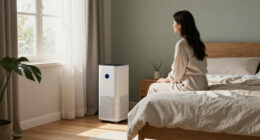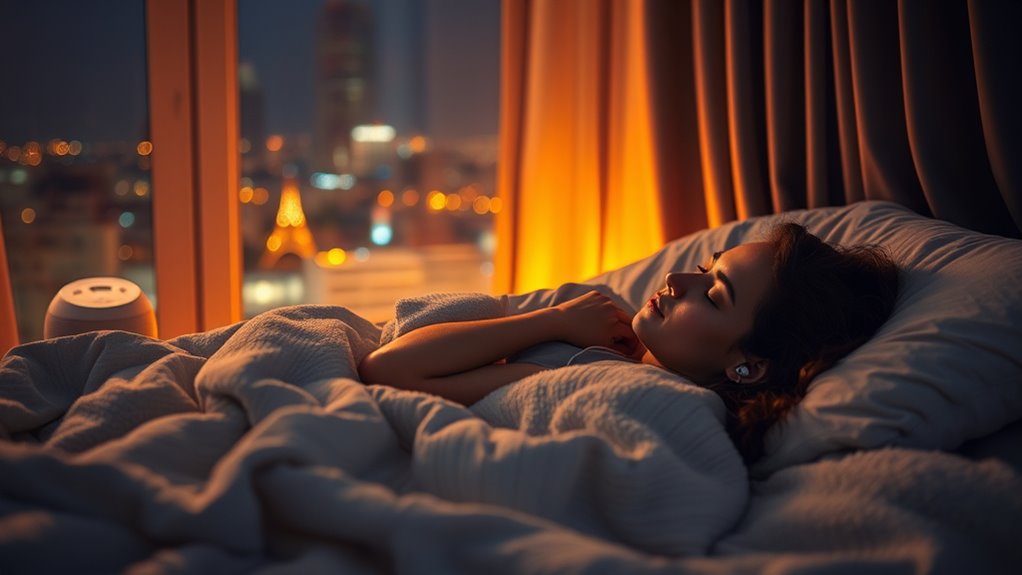

To sleep better in a noisy environment, use white noise machines or fans to mask disruptive sounds, and install blackout curtains to reduce light. Position your bed away from windows or noisy walls, and establish a calming bedtime routine to signal your brain it’s time to relax. Consistently combining sound masking and light blocking helps your body adapt, creating a peaceful space where restful sleep becomes easier—learn how to fine-tune these strategies for improvement.

Get wellness gear delivered free — and shop member deals
- Fast, free delivery on millions of items
- Access to Prime Big Deal Days deals on October 6–7
- Prime Video, Amazon Music and more included
Key Takeaways
- Use white noise machines, fans, or smartphone apps to mask disruptive sounds and create a soothing background.
- Install blackout curtains to block external light and promote a darker, more sleep-friendly environment.
- Position your bed away from noise sources and windows to minimize sound exposure.
- Establish a consistent bedtime routine combining sound masking and light control for lasting sleep improvements.
- Be patient and maintain these strategies regularly to help your brain associate the environment with restful sleep.
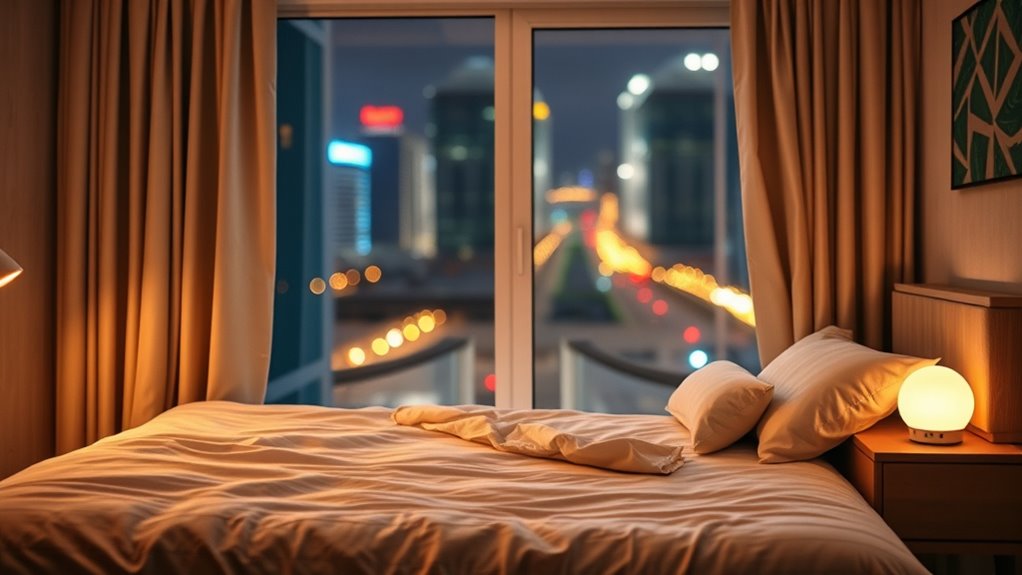
Living in a noisy environment can make it difficult to get restful sleep, but there are effective strategies to improve your sleep quality. One of the most helpful methods is to introduce white noise into your sleeping space. White noise acts as a consistent, soothing background sound that masks disruptive noises like traffic, sirens, or neighborhood chatter. You can use a dedicated white noise machine, a fan, or even a smartphone app that produces calming sounds. The key is to find a sound level that comfortably drowns out external disturbances without being overwhelming or disruptive itself. Over time, your brain starts associating this white noise with sleep, making it easier to drift off and stay asleep during noisy nights. Creating a calm environment is essential to establishing healthy sleep habits in noisy settings.
Another powerful tool to enhance your sleep environment is blackout curtains. Light pollution from streetlights or passing vehicles can interfere with your ability to fall asleep and stay asleep. Blackout curtains block out these external light sources, creating a darker, more sleep-friendly environment. When combined with white noise, blackout curtains can markedly improve your chances of achieving deep, restorative sleep. They help your body recognize that it’s time to rest by mimicking your natural night-time darkness, which regulates your circadian rhythm. Installing blackout curtains is usually straightforward, and they come in various styles and thicknesses to suit your room’s decor and your specific needs. By reducing both noise and light, you create a sanctuary that signals to your brain that it’s time to relax.
Implementing these strategies doesn’t mean you have to overhaul your entire sleeping space. Small adjustments, like positioning your bed away from windows or busy walls, can also help. Pairing these physical changes with white noise and blackout curtains makes a notable difference, especially in environments where external noise and light are unavoidable. Over time, your body adapts to this calmer environment, and you’ll likely notice an improvement in how quickly you fall asleep and the quality of your rest. Remember, consistency is key—using white noise and blackout curtains every night helps condition your brain to associate these cues with sleep, making it easier to drift off even on particularly noisy or bright nights. With patience and the right tools, you can create a peaceful sleep environment despite the external chaos.
Frequently Asked Questions
Can Earplugs Cause Ear Infections or Damage?
You might wonder if earplugs can cause ear infections or damage. While earplugs are generally safe, improper use can lead to earwax buildup or ear canal injuries. If you insert them too forcefully or don’t clean them regularly, you risk trapping dirt or bacteria, which could cause infections. Always use earplugs gently, keep them clean, and avoid inserting them too deep to protect your ears from harm.
Are There Natural Remedies to Block Noise Effectively?
You’re looking for natural remedies to block noise effectively. Sound masking can help by introducing calming background sounds that drown out noise, making it easier to sleep. Herbal remedies like chamomile or lavender tea may also promote relaxation. These natural options work by calming your mind and reducing stress. Combining sound masking with herbal remedies can create a peaceful environment, helping you sleep better despite external noise.
How Does Noise Pollution Affect Long-Term Sleep Quality?
They say “what’s heard is often believed,” and noise pollution can have a serious noise impact on your sleep. Over time, persistent sleep disruption from noise can lead to fatigue, impaired concentration, and health issues like heart disease. Long-term exposure affects your sleep quality by disrupting REM cycles and decreasing overall restfulness. Protecting your sleep from ongoing noise is crucial; otherwise, your health might pay the price.
What Types of White Noise Are Most Effective?
White noise is a popular sound masking tool that helps block out disruptive sounds, making it easier for you to fall asleep. The most effective types include fan sounds, nature sounds like rain or ocean waves, and consistent static noise. These sounds create a steady background that masks unpredictable noises, allowing you to relax. You can use a white noise machine or app, ensuring the volume isn’t too loud for comfortable sleep.
Can Certain Sleep Positions Reduce Noise Disturbance?
Did you know that your sleep posture can influence how much noise disturbs you? By choosing a side-lying or fetal position, you can reduce sound waves reaching your ears. Using soundproof pillows enhances this effect, muffling noise effectively. Adjusting your sleep posture with supportive, noise-reducing pillows helps create a barrier against external sounds, so you can enjoy quieter, more restful sleep even in a noisy environment.
Conclusion
Now that you know how to tame the noisy beast around you, sleep can become your peaceful island in a storm. Block out the chaos with earplugs or white noise, and create a calming bedtime routine that gently lulls you into rest. Think of your sleep space as a quiet sanctuary, where noise fades into the background like distant thunder. With these simple steps, you’ll drift into restful nights, waking refreshed, ready to face each new day.
Fall Picks
fall essentials
As an affiliate, we earn on qualifying purchases.