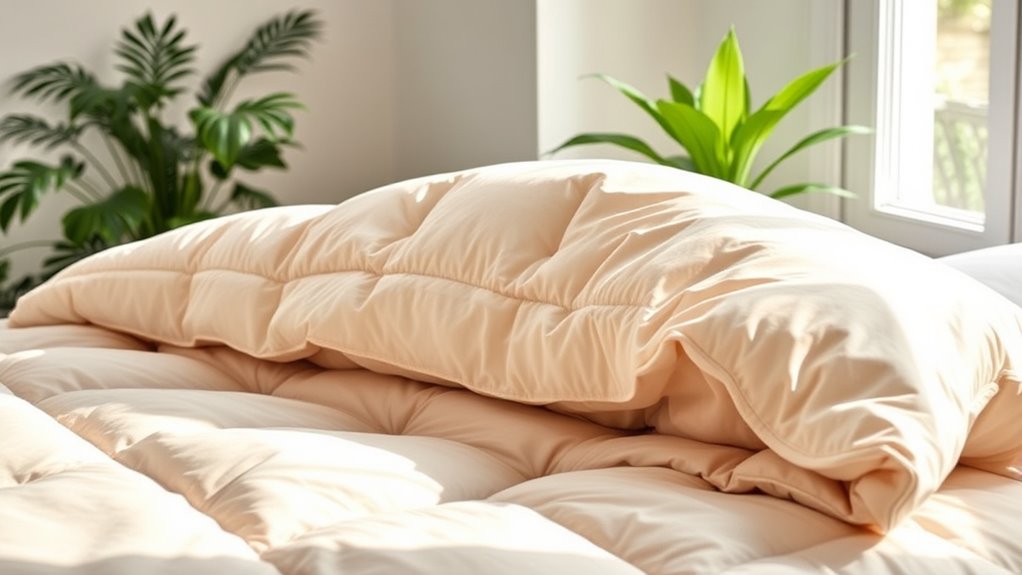

Eco-friendly duvets with down alternatives and sustainable fillings help you sleep better while reducing your environmental impact. Organic cotton offers a natural, breathable, and chemical-free option, perfect for safe, comfortable nights. Recycled polyester fills are lightweight, insulating, and made from post-consumer plastics, cutting down waste. Both choices support eco-conscious living and meet strict safety standards. Want to discover how these eco-friendly options can improve your sleep and benefit the planet? Keep exploring to find out more.
Key Takeaways
- Eco-friendly duvets often use natural organic cotton covers free from harmful chemicals, promoting safe and sustainable sleep environments.
- Recycled polyester fillings made from post-consumer plastics reduce waste and offer lightweight, insulating alternatives to traditional down.
- Certifications like GOTS and OEKO-TEX ensure materials meet strict environmental and safety standards for sustainable bedding.
- Down alternatives such as organic cotton and recycled polyester provide cruelty-free, cruelty-free, hypoallergenic options for eco-conscious consumers.
- Sustainable manufacturing practices and eco-friendly materials help minimize environmental impact while maintaining comfort and durability.

As more people seek sustainable living options, eco-friendly duvets have gained popularity for their comfort and environmental benefits. You’re likely looking for a bedding choice that aligns with your eco-conscious values without sacrificing softness or warmth. Two common sustainable fillings you might consider are organic cotton and recycled polyester, both offering different advantages while helping reduce your ecological footprint.
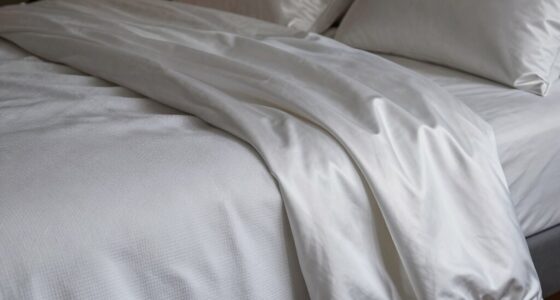
Organic cotton is a natural, renewable resource grown without synthetic chemicals or pesticides. When used as a duvet filling, it provides a breathable and lightweight layer that’s ideal for warmer climates or those who prefer a cooler sleep environment. Because it’s grown organically, it doesn’t contribute to soil degradation or water pollution, making it a healthier choice for the planet—and for you. Organic cotton duvets often feature a soft, cozy feel that improves with each wash, maintaining comfort over time without the need for chemical treatments. Plus, if you opt for a duvet with organic cotton batting, you can rest assured that no harmful dyes or finishes have been added, ensuring a pure and safe sleep surface.
Organic cotton duvets are breathable, soft, and chemical-free for a healthier, eco-conscious sleep.
Recycled polyester, on the other hand, is a synthetic fiber repurposed from post-consumer plastics like water bottles. Choosing a duvet filled with recycled polyester helps divert plastic waste from landfills and oceans, turning what would be trash into a functional, warm bedding material. Recycled polyester duvets tend to be lightweight yet insulating, offering excellent warmth without added bulk. They also dry quickly and resist mold or mildew, making them a practical choice for those living in humid environments or for easy care. The manufacturing process of recycled polyester consumes less energy compared to virgin synthetics, further reducing environmental impact.
Both options serve eco-conscious consumers but cater to different needs and preferences. Organic cotton is ideal if you prefer natural, breathable fibers and want to avoid synthetic materials altogether. Recycled polyester appeals if you seek a durable, moisture-resistant filling that makes use of recycled plastics. When shopping for an eco-friendly duvet, always check for certifications like GOTS for organic cotton or OEKO-TEX for recycled polyester, ensuring the materials meet strict environmental and safety standards. Additionally, choosing products made with sustainable manufacturing practices can further enhance your eco-friendly bedding choices.

Bedsure 100% Organic Cotton Queen Duvet Cover Set, Linen, 90" x 90"
- Pure Organic Cotton: GOTS and OEKO-TEX certified for sensitive skin
- Soft Sateen Finish: 300TC combed cotton with brushed softness
- Breathable and Comfortable: Balanced 300TC weave for airflow and comfort
As an affiliate, we earn on qualifying purchases.
As an affiliate, we earn on qualifying purchases.
Frequently Asked Questions
Are Eco-Friendly Duvets Suitable for Allergy Sufferers?
Yes, eco-friendly duvets are suitable for allergy sufferers because they often feature hypoallergenic properties. Many options are made from vegan materials like organic cotton, bamboo, or recycled fibers, which resist dust mites and allergens. These sustainable fillings provide a comfortable, healthy sleep environment without compromising your eco-conscious choices. Just make certain you choose a duvet labeled hypoallergenic to maximize allergy protection and enjoy a peaceful, allergen-free rest.
How Long Do Sustainable Fill Duvets Typically Last?
Imagine your sustainable duvet beginning on a durability testing marathon—enduring endless washes and nightly use. Typically, it lasts 5-10 years if you follow maintenance tips like gentle washing and proper storage. With proper care, your eco-friendly duvet can withstand the test of time, staying cozy season after season. Think of it as an investment in comfort that refuses to give up, no matter how many restless nights you throw at it.
Can Eco-Friendly Duvets Be Washed Frequently Without Damage?
Yes, eco-friendly duvets can be washed frequently without damage if they have good machine washability and fabric durability. To keep them in great shape, use gentle cycles and mild detergents, avoiding high heat. Regular washing helps maintain freshness and hygiene, but always check the care label for specific instructions. Choosing duvets made from durable, well-constructed fabrics guarantees they withstand frequent cleanings without losing their comfort or integrity.
What Certifications Verify the Sustainability of Duvet Fillings?
You’ll want to look for certifications that verify the sustainability of duvet fillings, like GOTS, OEKO-TEX Standard 100, or GRS. These eco labels guarantee that the materials meet strict certification standards, confirming their eco-friendly and ethical origins. When you choose duvets with these certifications, you can enjoy peace of mind, knowing your bedding aligns with sustainable practices and reduces environmental impact.
Are There Any Drawbacks to Using Down Alternatives?
Using down alternatives can have drawbacks, such as concerns over synthetic fibers and durability. Synthetic fibers may trap heat less effectively and might not last as long as natural fillings. You should consider that some alternatives may flatten or clump over time, reducing comfort and lifespan. While they’re a great eco choice, understanding these potential issues helps you select a duvet that meets your needs for comfort and longevity.

REWARDOWN Down Comforter King Size with Kapok Blend, Luxury All Season Duvet Insert, Fluffy Breathable Soft, Hotel Quality Comforter Ivory Color 90x106in
- All-Season Comfort: Suitable for year-round use
- Luxuriously Fluffy: Creates a plush, airy feel
- Safe and Skin-Friendly: OEKO-TEX Standard 100 certified
As an affiliate, we earn on qualifying purchases.
As an affiliate, we earn on qualifying purchases.
Conclusion
Choosing an eco-friendly duvet is like planting a seed for a greener future—you help nurture the planet with every restful night. Down alternatives and sustainable fillings let you enjoy cozy comfort without harming our earth. By making mindful choices, you’re weaving a tapestry of sustainability that benefits both you and the environment. So, sleep peacefully knowing you’re part of the solution—because a greener world starts with small, conscious steps, one duvet at a time.

Olive + Crate Cooling Down Alternative Comforter – Hypoallergenic Queen Size Duvet Insert Lightweight – All Seasons Plush Design Bamboo Comforter – 100% Bamboo Viscose Outer Cover – White 88"x90"
- Outer Material: 100% Bamboo Viscose
- Size Options: Queen, King, California King, Twin XL, Oversized King
- Comfort & Fill: 60% Recycled Polyester, 40% Bamboo Viscose
As an affiliate, we earn on qualifying purchases.
As an affiliate, we earn on qualifying purchases.

Farm To Home Organic Cotton Feather and Down Comforters Queen Size, 100% Organic Cotton Cover, All Seasons Duvet Insert, 4 Corner Tabs, Naturally Breathable White Bedding Comforters, 90"x90"
- Premium Organic Cotton Cover: 260 thread count, Oeko-Tex certified
- Hypoallergenic Feather and Down Fill: 95% white feather, 5% white down
- All-Season Medium Weight: Even fill distribution, no cold spots
As an affiliate, we earn on qualifying purchases.
As an affiliate, we earn on qualifying purchases.